

E-Financial
Secret Service Seizes $400M in Crypto, Cold Wallet among World’s Largest

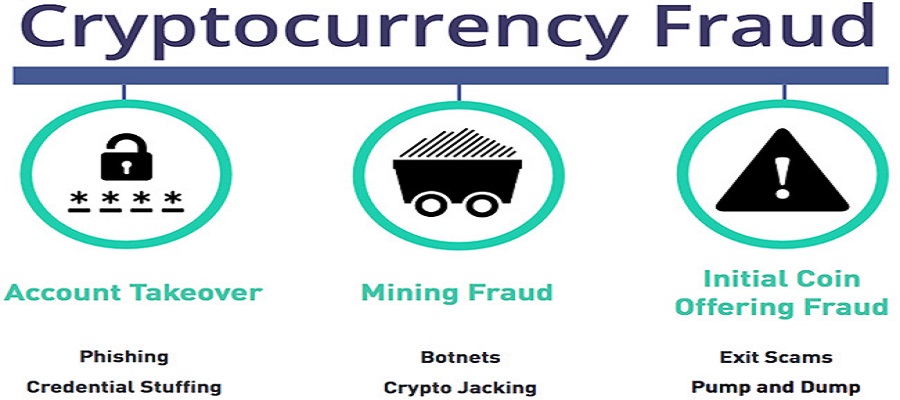
US Secret Service has quietly seized nearly $400 million in digital assets over the past decade, amassing one of the world’s largest crypto cold wallets, Bloomberg reported at the weekend, citing people familiar with the matter.

The agency’s Global Investigative Operations Center (GIOC) has tracked funds through open-source tools, blockchain analysis, and patience, Jamie Lam, an investigative analyst with the US Secret Service, reportedly told law enforcement officials in Bermuda last month.
The agency’s crypto trove, much of which sits in a single cold-storage wallet, results from a string of investigations into scams. Scammers lure targets into seemingly legitimate crypto investment platforms in one typical scheme.
Victims often see initial profits before the sites vanish with their deposits.
“That’s how they do it,” Lam said. “They’ll send you a photo of a really good-looking guy or girl. But it’s probably some old guy in Russia.”

Lam’s team uses domain records, blockchain transactions, and VPN slip-ups to identify fraudsters. In one case, a cryptocurrency payment led investigators to another wallet. In another one, a brief VPN failure exposed an IP address, helping agents piece together the scam’s digital trail.
At the helm of the Secret Service’s crypto strategy is Kali Smith, who directs a team that has trained officials in over 60 countries to unmask online financial crimes.
The agency has focused on jurisdictions with weak oversight or programs selling residency to foreign nationals. “Sometimes after just a week-long training, they can be like, ‘Wow, we didn’t even realize that this is occurring in our country,’” Smith said.
The Secret Service’s work has uncovered scams ranging from romance-investment schemes to sextortion cases. One investigation involved an Idaho teenager who sent a nude photo to an online stranger. The scammer extorted $300 twice before the teen went to the police.
Analysts traced the payments through another coerced teenager acting as a money mule, leading to an account tied to nearly $4.1 million in transactions under a Nigerian passport.
British police arrested the suspected extortionist when he arrived in Guildford, England, where he remains in custody pending extradition.


Securities and Exchange Commission (SEC) has commenced the implementation of a fully electronic registration process for capital market operators, enabling designated regulatory services to be completed entirely online as part of efforts to modernise Nigeria’s capital market and improve regulatory efficiency.

In a statement issued on Wednesday, the Commission said the new electronic registration (e-Registration) platform, deployed through its ePortal, marks another milestone in its digital transformation agenda and its drive to build a technology-driven regulatory environment.
SEC explained that the platform allows Capital Market Operators (CMOs) to complete designated registration processes online, covering application submission, regulatory review, approvals and communication of decisions, thereby eliminating manual processing for the services included in the current phase.
The Commission said the initiative is expected to simplify regulatory interactions, reduce administrative bottlenecks, shorten processing timelines and provide applicants with greater visibility into the status of their applications.
It added in the statement that the migration to a fully digital registration system would improve operational efficiency while strengthening regulatory oversight through standardised workflows, electronic documentation, secure digital record management and enhanced audit trails.
“The new platform represents a major step towards creating a seamless digital regulatory ecosystem that enhances operational efficiency while strengthening regulatory effectiveness,” the Commission said.
Furthermore, SEC explained that the e-Registration platform aligns with its strategic objective of leveraging technology to improve market efficiency, enhance the ease of doing business, and deliver better services to stakeholders.
“Beyond improving efficiency, the platform will enhance the integrity of regulatory processes by reducing delays associated with paper-based documentation and improving the quality of regulatory data for decision-making.
“The digital platform would also provide a stronger foundation for regulatory analytics and future innovations aimed at improving oversight of Nigeria’s capital market”.
SEC said the implementation is being carried out in phases to ensure a smooth transition for market participants while maintaining the stability and integrity of regulatory processes.
It clarified that the current phase is limited to post-registration services for existing Capital Market Operators, adding that applications for the registration of new entrants into the Nigerian capital market are not yet covered.
“The commencement of electronic processing for new registration applications will be announced at a later date.”
It urged all Capital Market Operators to familiarise themselves with the new platform and comply with implementation timelines to ensure a seamless transition to the electronic registration process.
It said the initiative forms part of its broader modernisation agenda designed to improve regulatory efficiency, strengthen market infrastructure, enhance transparency and support the continued growth, resilience and global competitiveness of Nigeria’s capital market.
National Insurance Commission (NAICOM) has revoked the operating licence of Nigeria Reinsurance Corporation over its failure to meet the statutory Minimum Capital Requirement (MCR).

It has appointed Dr. Muiz Banire (SAN), as receiver/provisional liquidator to wind up the company’s affairs.
The appointment took effect on August 3, 2026, following the cancellation of the corporation’s certificate of registration by the insurance regulator.
In a notice dated August 4, Banire said he was appointed by NAICOM, in the exercise of its statutory powers, to take charge of the receivership and liquidation of Nigeria Reinsurance Corporation (RR-002).
According to the notice, the company’s licence was revoked after it failed to comply with the prescribed Minimum Capital Requirement applicable to its category of licence within the stipulated compliance period, in accordance with the Nigerian Insurance Industry Reform Act (NIIRA) 2025 and other extant laws, regulations and guidelines.
Banire said his appointment empowers him to immediately trace, recover, secure and take possession of all assets belonging to the company; collate and settle its liabilities in accordance with the NIIRA 2025; liaise with NAICOM on matters relating to the liquidation; and submit periodic reports to the Commission.
He directed banks, financial institutions, insurance policyholders and members of the public not to honour any instruction relating to the company except those issued by him or persons expressly authorised by him.
As part of the liquidation process, Banire said all bank accounts belonging to Nigeria Reinsurance Corporation had been frozen with immediate effect, pending further directives from his office.
He warned that any transaction carried out without his authorisation would be at the risk of the parties involved.
“Members of the general public, banks and financial institutions in Nigeria are hereby informed that no financial transactions should be conducted pursuant to any instruction from anyone except those that I issue as the Receiver/Provisional Liquidator,” the notice stated.
According to him, only instructions bearing his official seal and stamp as a legal practitioner, or those issued by persons duly authorised by him, will be recognised throughout the liquidation process.
The regulatory action marks a significant enforcement measure by NAICOM and underscores the Commission’s resolve to ensure that insurance and reinsurance companies operating in Nigeria comply with statutory capital requirements designed to safeguard policyholders and strengthen the financial stability of the industry.
The liquidation process is expected to involve the recovery and realisation of the company’s assets, the verification and settlement of valid claims and liabilities, and the orderly winding up of its affairs in accordance with the provisions of the law.
The notice reminds policyholders, creditors, banks and other stakeholders that all dealings concerning Nigeria Reinsurance Corporation must henceforth be channelled through the Receiver/Provisional Liquidator until the liquidation process is concluded.
E-Financial
Access Holdings Deepens Sustainable Finance Impact, Expanding Green Assets to ₦92.14 Billion

Access Holdings Plc has published its Sustainability Report for the year ended 31 December 2025 on the Nigerian Exchange Limited, demonstrating how the Group is translating sustainability commitments into measurable business, environmental and social outcomes.

The report shows a green asset portfolio of ₦92.14 billion, a 28.47 per cent reduction in operational greenhouse gas emissions against its 2022 baseline and expanded access to finance for about 2.53 million low-income individuals.
The report reinforces the Group’s strategic shift from scale to value by showing how sustainability is being embedded in capital allocation, risk management, product development and operations.
Access Bank Plc, the Group’s largest subsidiary, accounts for a significant portion of the reported outcomes.
The green asset portfolio has grown from ₦22 billion in 2021 and ₦72.32 billion in 2024 to ₦92.14 billion at year-end 2025, advancing towards the Group’s long-term target of ₦475 billion. During the year, Access Holdings deployed ₦72.3 billion under its Sustainable Finance Framework to eligible environmentally beneficial projects and grew its cumulative sustainability-focused loan book to US$1.269 billion.
The emissions reduction reported in 2025 reflects operational changes designed to lower the environmental footprint of the Group’s activities. Operational emissions fell to 49,352 tonnes of carbon dioxide equivalent from 57,176 tonnes in 2024, supported primarily by branch solarisation across 263 locations and the deployment of 323 solar-powered ATMs, largely across Access Bank in Nigeria. The Group applies the operational-control approach under the Greenhouse Gas Protocol, accounting for emissions across its African footprint, with Access Bank representing the largest share.
Beyond environmental outcomes, the report highlights the Group’s contribution to inclusive economic participation. In 2025, Access Holdings extended access to finance to 2,528,117 low-income individuals and onboarded 78,438 new MSMEs onto its financing platform.
Across the Group, 2.8 billion transactions were processed during the year, underscoring the institution’s role as core financial infrastructure for Africa’s real economy. Gender-lens lending also progressed, with 354,156 loans extended to women and women-owned businesses, totalling ₦67.4 billion, equivalent to 24 per cent of the relevant loan portfolio.
The Group’s Corporate Social Investment programmes reached 2,439,480 beneficiaries across education, health, entrepreneurship and the environment, delivered with partners including UNICEF, HACEY Health Initiative and the Kenya Forest Service. Employees recorded 359,500 volunteer hours with 100 per cent participation, while more than 50,000 trees were planted.
The Group notes that 2025 community figures follow a Board-mandated tightening of its impact-measurement methodology and are not directly comparable with prior years. Women represent 49 per cent of the workforce, and the Access Holdings Board comprised nine directors with 44.4 per cent female representation. Employee satisfaction rose to 87 per cent against an 80 per cent target, while attrition eased from about 13 per cent to about 11 per cent.
To strengthen credibility and comparability, the report was prepared using the IFRS Sustainability Disclosure Standards, specifically IFRS S1 and IFRS S2, as the primary framework, with the GRI Standards (2021) and the SASB Standards applied as complementary references. Selected disclosures were independently assured by CSR-in-Action Consulting Limited under ISAE 3000 (Revised) on a hybrid reasonable and limited assurance basis.
Sustainability governance is integrated into senior oversight and credit decision-making. The Board Human Resources and Sustainability Committee oversees the agenda, supported by the Board Risk Management Committee. Climate and ESG risk is reflected in capital planning through the ICAAP, while an ESG Toolkit is embedded in the credit-approval system, enabling facilities to be screened against IFC Performance Standards and the Equator Principles.
The Group also reported zero material regulatory penalties relating to sustainability for a second consecutive year and zero cybersecurity breaches.
Access Holdings mobilised US$185.38 million, equivalent to ₦266.83 billion, in concessional funding from development finance institutions during the year and allocated a sustainability budget of ₦4.8 billion from profit before tax.
Sales-facing staff in the banking subsidiary carry green-portfolio targets within their individual performance measures, linking strategic sustainability goals to day-to-day execution across governance, strategy, risk management, capital allocation, products and operations.
Commenting on the report, Innocent C. Ike, Group Chief Executive Officer, Access Holdings Plc, said: “Our 2025 Sustainability Report reflects the discipline with which we are converting scale into value. We reduced operational emissions by 28.47 per cent, grew our green asset portfolio to ₦92.14 billion and extended financial access to about 2.5 million low-income individuals.
These outcomes show that sustainability is not separate from our business; it is central to how we create value, manage risk and support inclusive growth across Africa.”
Looking ahead, the Group will focus on deepening the measurable impact of its sustainability agenda, accelerating the transition of its portfolio towards low-carbon and climate-resilient assets, growing the green asset portfolio towards the ₦475 billion target.
It will also improve data quality for financed and Scope 3 emissions through adoption of the PCAF methodology, scaling renewable-energy adoption, deepening development finance partnerships, and further integrating climate risk into financial planning.
Consistent with its mission to be the most respected African financial services group, Access Holdings frames these commitments as a disciplined, evidence-based approach to building long-term value for customers, communities, shareholders and the wider African economy.

ITUC-Africa Faults FG’s Plans to Remove Electricity Subsidy

SEC Begins Full e-Registration for Capital Market Services

NAICOM Revokes Nigeria Reinsurance’s Licence over Failure to Meet MCR

Many Nigerian Airlines May Collapse within 30 Days – Onyema

Ogbaga, Abuja Lawyer to Sue Telcos, DStv over Alleged Unfair Practices

NRC, Ponzi Scheme Collapses Resulting Loss of Billions of Naira

From Scarcity to Scale: What Africa Can Learn from India’s Agricultural Transformation

EFCC Busts NIS Visa Overstay Racket, Uncovers N700m in an Account

BON Establishes Six Ad Hoc Committees to Modernize Broadcasting

How EFCC Turned Recovered Loot Into School Supplies for Thousands of Nigerian Students




 E-Business2 days ago
Kaspersky Identifies Cyberespionage as a Growing Threat Across Africa, Others

 Broadcasting2 days ago
NBC Files Fresh Appeal against Judgment Barring it from Imposing Fines on Broadcast Stations

 News2 days ago
INTERPOL Report Shows AI Powers 55% of Cybercrimes in Africa Amid $484m Losses

 E-Financial2 days ago
Nigerians Lost N25.85Bn to Digital Payment Fraud in 2025 –CBN

 Telecom2 days ago
Why Strong Institutions Remain Africa’s True Growth Engine

 News2 days ago
Nigeria Expands Deep-tech Skills Pipeline

 General News2 days ago
ASUS and Konga Unveil West Africa’s First Flagship Experience Store in Lagos

 E-Financial2 days ago
NRS Announces 30 Percent Tax on Corporate Crypto Income