

News
SEC DG Seeks Stakeholders Engagement to Ensure Nigeria Tap into $3.25tr Islamic Finance Industry


Lamido Yuguda, the Director General, Securities and Exchange Commission (SEC), has called for a stronger stakeholder engagement to enable Nigeria tap deeper into the Islamic finance industry currently valued at $3.5 trillion and global sukuk issuances pegged at $182.72 billion.

To realise this, Yuguda said the Commission was strongly focused on strengthening the development of the Non-Interest Finance segment in Nigeria by collaborating with the Islamic Financial Services Board (IFSB), an international standard-setting body.
The SEC boss stated these in Abuja on Wednesday at the first annual SEC-IFSB international forum on non-interest capital market.
Yuguda, while acknowledging IFSB’s pivotal roles in ensuring stability and resilience in the Islamic finance segment globally, said the body has also been of immense help to SEC Nigeria and indeed all other IFSB members in Nigeria in capacity building, technical support, and global visibility.
He revealed that the Islamic finance segment of the financial industry in Nigeria reached an estimated size of $2.9 billion as at the end of 2022, with outstanding sukuk forming the largest part at 57%, followed by Islamic banks at 42% (total assets), and the remaining 1% split between Islamic funds (total assets) and takaful (total contributions).
“This shows that the Nigerian market makes up just 0.9% of the global non-interest market, indicating the dire need for more growth. With the country boasting a large population and a significant proportion unbanked, the long-term potential for Islamic finance in Nigeria is immense.
The Non-Interest (Islamic) Capital Market in Nigeria has undergone transformational growth, becoming an integral part of our financial framework, offering a distinctive platform for ethical and Shari’ah-compliant investments.
“Since the debut of Sukuk in Nigeria in 2017, the Debt Management Office has raised almost N1 trillion to finance over 5,000 kilometres of critical roads & bridges with all such issuances oversubscribed.
The oversubscription of the most recent 6th Federal Government of Nigeria Sukuk by 435% underscores investor confidence, showcasing the strategic role of Sukuk in infrastructure development and financial inclusion.
“The Pension Industry’s Fund VI is presently not able to find enough instruments to fill its demand. This means that there is ready demand for sukuk issuances.
“Why are we not maximizing the potential. This brings us to the challenge of low awareness. This is one of the reasons for this forum and other efforts the SEC and other regulatory bodies attending this forum must continue to work towards exploring the full potential of this segment of the market.
“SEC Nigeria has a 10-year (2015-2025) Capital Market Masterplan which was revised in November 2022. The attainment of the Masterplan targets by 2025 remains a challenging distance.
These targets encompass the introduction of 100 retail Shari’ah-compliant products, the attracting at least 1 million retail investors in Shari’ah-compliant products, the securing of at least N5 trillion in investments from institutional investors in Shari’ah-compliant products, and the facilitation of 50 listings of Shari’ah-compliant products with a market capitalization of no less than N5 trillion by 2025”, he explained.
In his keynote address, Dr. Bello Lawal Danbatta, Secretary-General of IFSB noted that 2023 has been marked by a tumultuous series of events but expressed joy Nigeria and other economies showed strong resilience in the face of daunting adversities.
He added that the challenges present significant potential for the non-interest and Shariah-compliant financial services industry to drive the sustainable development agenda.
Danbatta said the optimism was hinged on the limited exposure of many non-interest financial services industry to global conflicts, gradual recovery and reopening of economies, an accelerated digital transformation process, the improved financial soundness and resilience in advancing inclusive and sustainable socio-economic growth.
“The non-interest financial system, with its emphasis on risk-sharing, asset-backed arrangements, and project-specific execution, naturally aligns with public-private partnerships in the infrastructure sector.
“Moreover, non-interest finance offers flexibility, demonstrated by the diverse structures available for those seeking financial backing. For example, it can be transformed into marketable credit instruments, such as Sukuk, linked to specific assets,” he explained.


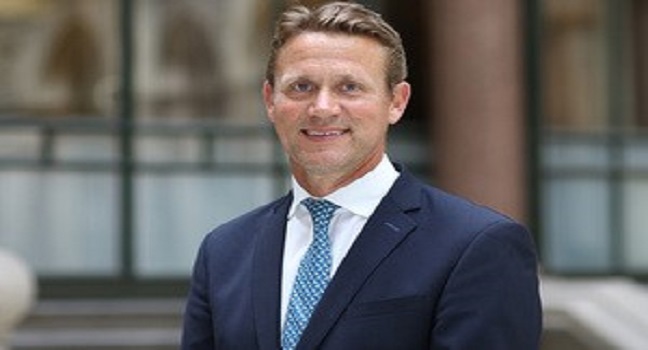
The UK Government has announced the appointment of Mr Peter Vowles as the next British High Commissioner to the Federal Republic of Nigeria.

Mr Vowles succeeds Dr Richard Montgomery CMG and is expected to take up his post in Abuja in September 2026. Dr Montgomery remains in post until that time.
Mr Vowles brings extensive diplomatic and development experience to the role, having served as His Majesty’s Ambassador to Zimbabwe from 2023 to 2026 and previously as Ambassador to Myanmar from 2021 to 2022.
He has held senior leadership positions across the FCDO and its predecessor department DFID, including as Transformation Director and Director for Asia, Caribbean and Overseas Territories.
Earlier in his career, Mr Vowles worked in international development across South Asia, Central Africa and East Africa, including postings in Bangladesh, India, the Democratic Republic of Congo and Kenya. He began his career in Zimbabwe, where he worked in education and development.
Peter Vowles said: “I am honoured to be appointed as British High Commissioner to Nigeria. Nigeria is a country of immense importance to the United Kingdom, and I look forward to working closely with Nigerian partners to strengthen our relationship across trade, development and security.”

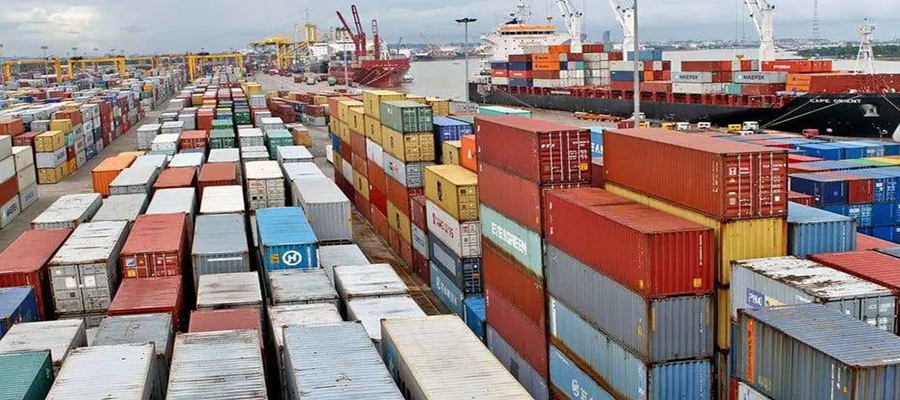
World Bank has ranked the Apapa and Tin Can Island Port complexes in Lagos among the world’s 20 most improved ports in its 2025 Container Port Performance Index (CPPI), released in June 2026.

The ranking places both ports in the “Top 20 Port Improvement Since 2020” category, reflecting significant gains in operational efficiency and vessel turnaround time.
The CPPI is a global benchmark used to assess the efficiency of container ports based on factors such as cargo handling speed, ship turnaround time and overall logistics performance.
According to the report, the improvement highlights ongoing reforms and modernization efforts within Nigeria’s maritime sector.
The Managing Director of the Nigerian Ports Authority (NPA), Mr Abubakar Dantsoho, attributed the recognition to ongoing policy reforms and infrastructure upgrades in the sector.
He said the development reflects the impact of economic policies of President Bola Tinubu and the support of the Minister of Marine and Blue Economy, Mr Adegboyega Oyetola.
“With the investor-friendly policies of President Bola Ahmed Tinubu providing the impetus for increased investment to drive our port infrastructure and equipment modernisation programme, coupled with the unflinching support of the Honourable Minister of Marine and Blue Economy, Adegboyega Oyetola, we have all it takes to further enhance trade facilitation, improve competitiveness and boost the national economy,” he said.
The NPA said the recognition is expected to strengthen investor confidence in Nigeria’s maritime sector and enhance the country’s position as a regional trade and logistics hub.
It noted that improvements in port operations are already contributing to increased efficiency in cargo movement and reduced delays at key terminals.
The authority also pointed to ongoing efforts to modernise port infrastructure and expand digital systems aimed at improving service delivery.
Earlier in February 2026, the NPA said the federal government had intensified efforts to position Nigeria as a leading maritime destination through port rehabilitation and modernization projects.
It also highlighted public-private partnership initiatives, including developments at the Lekki Deep Sea Port, as part of broader reforms aimed at improving efficiency and attracting investment.
The CPPI ranking is expected to further boost Nigeria’s maritime profile and encourage additional investment in the sector.
As digital payment adoption continues to grow across Nigeria and emerging markets, the next phase will depend not just on innovation, but on the strength, reliability, and trustworthiness of the infrastructure behind it.

While the ecosystem has made clear progress in recent years, trust remains a critical issue for users, businesses, and operators alike. Questions around resilience, security, interoperability and transaction reliability continue to shape how the market evolves and how confidently digital payments can scale.
These issues will be central to the deliberations at Digital Pay Expo 2026, where fintech leaders, payment operators, and other ecosystem stakeholders will gather under the theme, “Seamless Digital: Fostering Pan-African Market Expansion in the Era of AI.”
PalmPay’s participation reflects its continued commitment to building trusted and scalable payment infrastructure, while contributing to the broader industry efforts to strengthen systems, standards, and partnerships needed to support long-term ecosystem growth.
Speaking ahead of the event, Olorunfemi Hanson, Head of Marketing and Communications at PalmPay Nigeria, said: “As the financial services ecosystem continues to grow, trust and reliability become even more important.
“The industry’s next phase will be shaped not only by innovation, but by the strength of the infrastructure supporting it. Digital Pay Expo provides an important platform to address the resilience, interoperability, and trust issues that will shape the future of digital payments growth across Africa.”
The event, scheduled to be held from the 17th to the 18th of June, 2026, will feature Chika Nwosu, Managing Director of PalmPay Nigeria, alongside other distinguished guests, including the Director-General, Payment System Management Department (PSMD), Central Bank of Nigeria. The event will examine how the industry can balance innovation, regulation, and scalability while strengthening trust across the digital payments value chain.
For PalmPay, this event reinforces its role in supporting a more resilient, secure and scalable payments ecosystem for Nigeria and emerging markets more broadly.

FG Bans Use of Gmail, Other Personal Emails for Civil Service Operations

Indwelt Studios Seeks Increased Awareness @ World Sickle Cell Day

Standard Bank Targets $15.4b SME Growth in Nigeria, Others with Trade Expansion Drive

Payaza Launches AI-powered Storefront Platform to Drive Cross-border Commerce

NAICOM’s 18 Months Management Spill @ African Alliance Ends

CBN Extends PoS Geo-Fencing Enforcement Deadline to August 2026

FG Targets Alleged N3tn Capital Flight, Opens Airtime Credit Market to Nigerian Fintechs

NCC Drafts New Rules for Virtual Mobile Operators

London Strengthens Global Investment Ties with Africa @ First Ever London-Africa Business Summit

Japan, UNESCO Boost Digital Learning in 15 CoEs with Donation of ICT Equipment




 E-Business3 days ago
NIPOST Plans Digital Postcodes for Every Building in Nigeria

 Broadcasting3 days ago
Nigeria Launches FreeTV Nationwide

 E-Financial2 days ago
FG Issues Transition Guidelines for Tax Acts 2025

 Telecom2 days ago
Telecom Regulator, NCC, Digital Encode, AfriGoPay Support eBusinesslife Girls In ICT Campaign

 E-Financial2 days ago
How Fraudsters Stole N134Bn from Banks, Customers in 6 Years – CBN

 Telecom2 days ago
Mobile Technologies Boost Africa’s Economy by $240B in 2025, Commences a New Phase of Digital Transformation

 Telecom3 days ago
Enugu to Host The Gathering on 100 as MTN-Backed Youth Movement Expands Across Nigeria

 Telecom3 days ago
First Lady Expands Digital Inclusion Drive With New ICT Centre in Benue