

News
Role of Technology in an Uncertain Economy

As instability continues to ripple through the global economy, it’s clear that no one is immune to the effects of tighter credit and slower consumer and business spending.
But while it’s impossible to predict how long the current uncertainty will last or what the final impact will be on jobs and growth, I am optimistic about long-term economic prospects, here and around the world. The trends that have made the last decade so dynamic for businesses in every corner of the globe haven’t changed. Technology continues to improve. Productivity continues to rise. New business opportunities continue to emerge.
At the same time, there’s no doubt that this is a time when thoughtful business leaders must carefully assess how to best utilize their resources to weather the uncertainty that lies ahead. I believe information technology can play an important role in helping companies respond to this difficult and rapidly changing economic environment.
In the near term, for many organizations the emphasis will be on cutting costs and reducing risk. Today, there are a number of technologies that are helping companies lower expenses and improve effectiveness and efficiency.
One example is virtualization. A technology that makes it possible to run more than one operating system on a single computer, virtualization reduces costs and lowers energy consumption by enabling organizations to use more of the computing power that they already own. Another example is unified communications technologies that bring voice communications, e-mail, and instant messaging together to allow organizations to replace traditional phone systems with integrated software solutions that reduce hardware and maintenance costs.
Cutting back on travel is an obvious way that companies can save money. Today, video conferencing and new collaboration tools are making virtual meetings much more like face-to-face interaction and enabling people to share and collaborate more effectively. In addition, companies are finding that reducing computer energy usage is one of the most effective ways to lower costs without hampering organizational capabilities.
We’re using many of these approaches at Microsoft. For example, our internal IT department moved 25 percent of its servers into a virtualized environment during 2007. The resulting savings top $10 million and today, it takes just four people to manage the group’s 3,500 servers. By implementing a unified messaging system we’re saving $5 million each year through reduced hardware and maintenance costs.
Of course Microsoft isn’t the only company that is delivering software that can help companies reduce expense. For example, implementation of our unified communications technology has resulted in significant strategic cost reductions at banks such as First City Monument Bank (FCMB) and Intercontinental Bank. The travel requirements for employees in various locations in the country have reduced due to the availability of enterprise IP based video and voice conferencing. This has also reduced telephone costs in addition to increasing staff productivity.
Cutting costs is an important way to respond to the challenges of the current economic climate. But I believe it’s possible to see some of these challenges as opportunities. Many of the technologies mentioned above are enabling forward-looking companies to build information systems that are not only more cost-effective but that also enable people to understand and respond to changing business conditions with greater insight and speed than ever before.
This focus on people is critical. Ultimately, economic growth depends on innovation. Innovation is built on the ability of people to transform new ideas into products that deliver new value to customers.
The danger is that as the global economy slows, companies will shift so much of their focus to controlling expenses that they will lose sight of the critical importance of investment in innovation. The fact is that in any economy, innovation is the foundation for creating opportunity and success. Companies that continue to pursue innovation position themselves to better weather difficult economic times. And they create the conditions for more rapid growth when the economic climate improves.
Today, there’s no doubt that we’ve entered a period where companies and individuals are facing a new set of economic challenges. But at the same time, we’re in the midst of a period when key technology trends—more powerful devices, new ways of connecting to each other and to information, new ways of interacting with computers—are converging in ways that will revolutionize the role that computing plays in our lives at home and at work. Companies that take advantage of these trends to transform their businesses and deliver new innovations to their customers will have an important competitive advantage, today and in the years ahead.
Onyeje is Country Manager, Microsoft Nigeria


News
London Strengthens Global Investment Ties with Africa @ First Ever London-Africa Business Summit

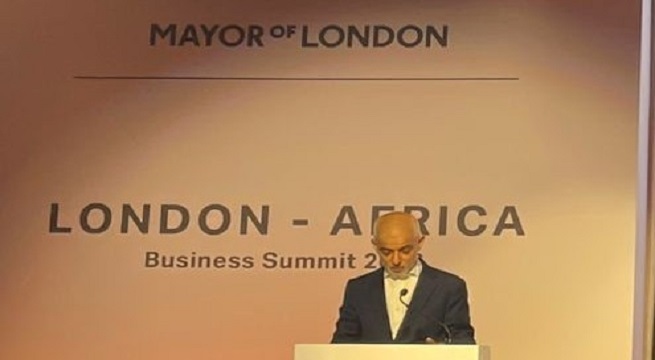
The Mayor of London, Sadiq Khan, has today hosted City Hall’s first ever London-Africa business summit, bringing together 200 business and political leaders from across the continent to strengthen trade and investment ties between London and Africa.

Held in the heart of the City of London, the summit included the Minister of Trade for Agribusiness and Industry in Ghana and representatives from SOAS, the Nigerian Exchange Group, Ventures 54 and London Africa Network to showcase London as the global city of choice for African companies looking to expand internationally and attract investment.
The Mayor announced the summit during his 2025 trade mission to Nigeria, Ghana and South Africa, where he led a delegation to promote London as a global destination for investment. Since the visit, African businesses have invested more than £30 million into London through foreign direct investment.
117 African organisations are listed on the London Stock Exchange, spanning sectors from telecoms and finance to energy and technology. Companies include telecoms giant Airtel Africa and energy supplier Seplat Energy. By comparison, fewer than 20 African organizations are listed on the New York Stock Exchange, underlining London’s deep economic and cultural links with the continent.
The summit builds on growing economic momentum between the UK and Africa. Total UK-Africa trade reached approximately £52 billion in 2025 despite continued global economic uncertainty, while UK exports to Africa increased to nearly £26.2 billion, reflecting rising demand for UK goods and services across African markets.
Africa is increasingly recognised as one of the world’s most important long-term growth regions, driven by rapid urbanisation, infrastructure investment, population growth and expanding consumer markets.
The UK remains among Africa’s top 10 supplying markets and continues to strengthen trade relationships through agreements covering 18 African countries. There are also huge community links between the UK and Africa. The UK has the second largest Nigerian diaspora population, second only to the US, with an estimated 215,000 Nigerians living here.
The Mayor’s London Growth Plan identified the need to attract more foreign direct investment to help grow London’s economy by £107 billion by 2035 and support the creation of 150,000 good jobs by 2028. London continues to lead as the top destination for African foreign direct investment in Europe and the US, ranking second globally outside Africa behind only Dubai.
The summit also highlighted major opportunities for collaboration across sectors, including financial services, digital technology, education, healthcare, energy transition, infrastructure and the creative industries, with London well positioned to deepen its role as a strategic trade and investment partner for African markets.
The Mayor of London, Sadiq Khan, said: “I am proud to host City Hall’s first ever London-Africa business Summit, bringing together investors, entrepreneurs and businesses to showcase London as the best city in the world for African companies to expand internationally and attract investment.
“With more African companies listed on the London Stock Exchange than any other exchange, it is one of the most globally important growth regions. I am delighted that my African trade mission last year has encouraged both inward investment and outward expansion, creating jobs and further strengthening the links between us. I look forward to more opportunities developing from this Summit as we continue to build a better, more prosperous London for everyone.”
Mr. Mark Smithson, Country Director, UK Department for Business and Trade, Nigeria, and Anglo West Africa said: “The London-Africa Business Forum has brought together ambition, capital and creativity, reinforcing London’s role as a global gateway for African enterprise.
“As we look to the next chapter, we are deepening partnerships that drive sustainable growth, shared prosperity and long-term opportunity across both regions. In Nigeria, we are working closely with key partners, businesses and investors to unlock investment, create jobs and deliver tangible economic outcomes.”
Soren Nikolajsen, Managing Director, Industry Engagement Defence and Trade at Natwest said: “London remains one of the world’s leading destinations for international investment, underpinned by its deep financial expertise and global connectivity. Bringing together investors from across Africa in this way is a valuable opportunity to strengthen relationships, showcase the breadth of opportunity here, and support long-term, mutually beneficial growth.”
Olukorede (K.O.) Adenowo, Chief Executive Officer, FirstBank UK, said: “FirstBank UK is proud to support the strengthening of the Africa–UK corridor, where growing demand for capital and expertise continues to drive cross-border opportunity. London remains a powerful gateway for African businesses seeking to scale internationally, while Africa offers compelling long-term investment potential.
“At FirstBank UK, we are focused on supporting cross-border trade and facilitating capital flows by connecting clients to global markets and structuring bankable opportunities. Through stronger collaboration, we can unlock greater investment and deliver sustainable growth across both regions.”
Dylan Martin, Chief Executive Officer of Teybridge Capital said: “Our expansion in London marks an important milestone for Teybridge Capital Europe and reflects the strength of our growth in the UK market. With over 60 per cent of our client base in the UK, this was a natural step in deepening our presence on the ground and investing in a high-performance, locally based team to support our next phase of growth.”
The Federal Government has received a major boost in its drive to strengthen teacher education and digital learning, as the Government of Japan, through the UNESCO International Institute for Capacity Building in Africa (IICBA), donated ICT equipment and learning materials to 15 teacher training institutions across Nigeria.

Speaking at the official handover ceremony held at the Federal Ministry of Education in Abuja, the Minister of State for Education, Prof. Suwaiba Said Ahmad, described the intervention as a significant contribution to the country’s efforts to improve teacher quality, digital literacy and inclusive education.
She said the donation forms part of a regional initiative launched in 2024 by UNESCO-IICBA, the Government of Japan and the African Union to strengthen teacher training and promote continuous access to safe, quality education for girls in West Africa.
According to the minister, the project, which covers Nigeria, Burkina Faso, Cameroon, Chad, Mali and Mauritania, aligns with the Federal Ministry of Education’s priorities under the Renewed Hope Agenda, particularly in the areas of equity, quality education, digital transformation and inclusion.
“Teachers remain the backbone of every education system. No education reform can succeed without well-trained, motivated and digitally empowered teachers,” Ahmad said, noting that the equipment would modernise teacher training institutions and improve access to digital learning resources.
The beneficiaries comprise 15 federal and state colleges of education spread across Nigeria’s six geo-political zones, including the Federal College of Education, Kontagora; Federal College of Education, Zaria; Federal College of Education (Technical), Gombe; Federal College of Education, Yola; Federal College of Education (Technical), Asaba; Federal College of Education (Special), Oyo.
Others are Federal College of Education (Technical), Umunze; College of Education, Zuba, FCT; Isaac Jasper Boro College of Education; Enugu State College of Education (Technical); Sa’adatu Rimi College of Education, Kano; Adamu Augie College of Education, Argungu; Shehu Shagari College of Education, Sokoto; Adamawa State College of Education, Hong and Taraba State College of Education, Zing.
The donated items include 65 laptop computers, 71 tablets, four desktop computers, five interactive smart boards, 19 all-in-one desktop computers, 14 projectors, 15 printers and 15 backup hard drives.
Ahmad said the facilities would enhance both pre-service and in-service teacher training by promoting innovation, digital competence and learner-centred teaching approaches, while preparing educators for the demands of a technology-driven world.
The event also featured a national consultation on school safety and infrastructure security, with participants discussing strategies for creating safer and more inclusive learning environments.
The minister stressed that safe schools remain critical to achieving quality education, particularly for girls and other vulnerable learners, adding that the ministry would continue to prioritise policies and programmes aimed at strengthening school security.
She further highlighted the ministry’s focus on Technical and Vocational Education and Training (TVET), Science, Technology, Engineering and Mathematics (STEM), girl-child education, quality assurance, data management and digital transformation as key pillars for improving educational outcomes nationwide.
Ahmad also disclosed plans to implement new interventions aimed at empowering female teachers and school leaders in crisis situations through mobile-based learning platforms, as well as programmes designed to integrate out-of-school children into formal education.
She commended UNESCO-IICBA, the Government of Japan, the African Union and other development partners for supporting teacher education in Nigeria and urged beneficiary institutions to utilise the equipment responsibly to improve learning outcomes and build a more resilient education system.
“The equipment will enhance digital literacy among our pre-service teachers and boost the attainment of education goals in Nigeria,” she said.
In their separate remarks, the Director of the UNESCO International Institute for Capacity Building in Africa (IICBA), Dr. Quentin Wodon, and the Chargé d’Affaires of the Embassy of Japan in Nigeria, Hitoshi Kozaki, reaffirmed their commitment to supporting efforts aimed at improving teacher education and expanding access to quality learning opportunities across Nigeria and the West African region.
They noted that the donation of ICT equipment to the beneficiary colleges of education reflects the shared commitment of UNESCO, the Government of Japan and their partners to strengthening the capacity of teacher training institutions, particularly in the area of digital learning.
According to them, equipping teachers with modern technological skills is critical to improving learning outcomes and ensuring that education systems are responsive to the demands of the 21st century.

African electric vehicle (EV) platform Spiro has raised $215 million in equity to scale electric mobility and energy infrastructure across the continent.

The funding is backed by institutional investors including Impact Fund Denmark and Equitane.
The investment will accelerate the expansion of Spiro’s battery-swapping network, industrial footprint and next-generation EV infrastructure across high-growth African markets, the company said.
This funding comes as economies in the region aim to reduce dependence on imported fuel, reinforce energy and industrial sovereignty, and modernise urban transport systems.
Driven by rising fuel costs, growing demand for affordable transportation and increasing policy support for clean energy, investors are backing scalable EV platforms poised to support Africa’s next phase of urban and industrial growth.
Building on support from long-standing institutional partners such as the Fund for Export Development in Africa, Spiro’s latest equity round draws capital from Europe and Africa, reflecting growing global confidence in scalable infrastructure-led business models in emerging markets.
With operations in seven African countries—Kenya, Rwanda, Uganda, Togo, Benin, Nigeria and Cameroon—and plans to expand local production and enter new markets such as the Democratic Republic of Congo and Ethiopia, Spiro is building one of Africa’s most advanced EV and battery-swapping ecosystems.
Its industrial footprint includes manufacturing plants in Kenya, Rwanda and Uganda, alongside a battery recycling facility in Nigeria.
“This past year marked a defining strategic milestone for Spiro. Across seven active markets, our deployment of 100,000 electric vehicles and 2,500 smart-swap stations has made sustainable mobility an affordable, everyday reality,” said Gagan Gupta, founder of Spiro and chairman of Equitane.
“Spiro has become a major driver of local industrialisation, value creation and manufacturing across African markets, providing 6,000 sustainable direct and indirect jobs. Supported by our global investors, we are entering our next growth chapter to deliver clean, cost-effective energy and transport alternatives to millions of riders across the continent.”
Lars Bo Bertram, CEO of Impact Fund Denmark, added: “We are investing in Spiro and bringing Danish pension capital into one of Africa’s most promising growth markets because we see potential for significant commercial growth in Spiro and electric mobility across Africa, as well as measurable climate impact. That is exactly the type of investment we want to make.”

FG Seeks Inclusive, Human-centred Artificial Intelligence Policies

Glo to Improve Customers’ Digital Lifestyle with “More Data, More Value” Package

Chinese Bank Supports Nigeria Towers Project

London Strengthens Global Investment Ties with Africa @ First Ever London-Africa Business Summit

NASENI Trains 50 Women in Kano on Renewable Energy Technologies Under She-Powers Initiative

MTN, VDT, Zoracom, Digital Realty Back 2026 Girls in ICT Campaign

Vitel Wireless Partners Fintechs to Expand Access to Services

CPN Begins Crackdown on Quack IT Professionals, Vows Tougher Action against Cybercrime

FG to Launch Nationwide Free Digital TV Platform June 17

Nigeria Hit by 24.1m Data Breaches – Surfshark




 Telecom2 days ago
Legend Internet Reports Losses despite N505m Revenue

 E-Business2 days ago
INEC Probes Claims of Leaked Voter Data from CVR System

 Telecom1 day ago
Aba to Host MTN’s “The Gathering” with Pitchathon Offering ₦5 Million Prize Pool for Emerging Startup Founders

 E-Financial3 days ago
Supreme Court Endorses Unity, Providus Bank Merger

 E-Financial2 days ago
Ecobank Raises Record $450m in Nature Bond for Africa’s Biodiversity

 E-Business3 days ago
NDPC Records 2,000 Cyberattacks in One Week

 E-Financial2 days ago
NPS, New Payment Infrastructure Hits 153,000 Transactions in Pilot Phase

 E-Business2 days ago
Firm Warns of Attackers Using Text Symbols to Form Malicious QR Codes