

E-Financial
CBN Unveils Payment System Vision 2028, Targets 95% Financial Inclusion

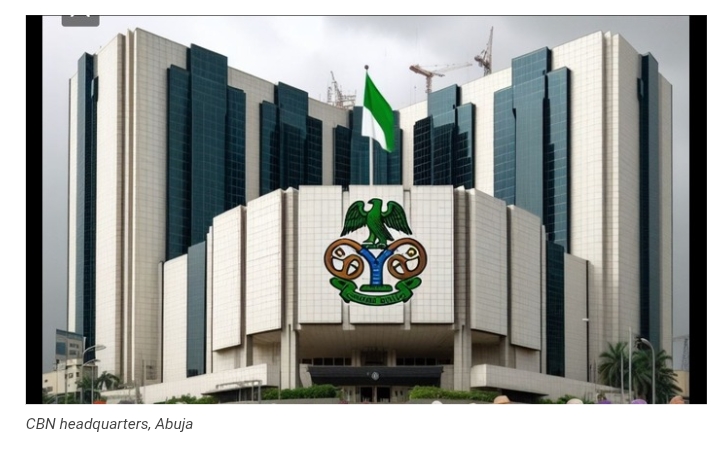
Central Bank of Nigeria (CBN) has launched the Payment System Vision (PSV) 2028, a strategic roadmap aimed at expanding financial inclusion to 95 per cent of the adult population and strengthening Nigeria’s position as Africa’s leading digital payments hub.

CBN
Speaking at the launch of the initiative in Abuja, the Governor of the CBN, Olayemi Cardoso, said the vision was designed to transform how Nigerians transact, save, invest and participate in the digital economy over the next three years.
Cardoso said the roadmap was expected to bring an estimated 50 million additional Nigerians into the formal financial system by 2028 through increased access to banking and digital financial services.
“Today, we unveil more than a payment strategy. We unveil a vision for how Nigerians will transact, trade, save, invest and participate in an increasingly digital economy,” he said.
According to him, Nigeria has made significant progress in digital payments over the past two decades, driven by innovations in instant payments, financial technology and broader adoption of digital financial services.
He said the new vision would build on these achievements by accelerating the transition to a more inclusive, secure and technology-driven financial ecosystem.

“Inclusion and not exclusion must define our future. Under Vision 2028, I would like to see this reaching 95 per cent inclusion. That means 50 million more market women, farmers and young people will have a bank account or wallet in their name, with their name and BVN protecting them,” Cardoso said.
The CBN governor noted that payment infrastructure had become a strategic national asset capable of driving productivity, reducing transaction costs, enhancing transparency and supporting trade and investment.
Under the roadmap, the apex bank aims to reduce the volume of cash circulating outside the banking system to below 40 per cent of total currency in circulation.
The vision also targets the deployment of more than 10 million Quick Response (QR) code and tap-to-pay acceptance points across markets, transportation hubs, rural communities and commercial centres nationwide.
Cardoso disclosed that the CBN would leverage artificial intelligence and advanced identity verification systems to reduce fraud losses to less than 0.001 per cent of total transactions.
He added that the Nigeria Inter-Bank Settlement System (NIBSS) currently processes millions of instant payment transactions daily, with most settlements completed in less than 10 seconds.
According to him, the objective is to further improve transaction speed, reliability and accessibility across the financial system.
The roadmap also places significant emphasis on open banking and innovation, with more than 100 licensed application programming interfaces (APIs) already available to support collaboration and product development within the financial services industry.
The CBN said the initiative aligns with the Federal Government’s broader economic reform agenda and is expected to improve access to financial services for underserved populations, including women, farmers, traders and young entrepreneurs.
It added that the framework would also support opportunities arising from the African Continental Free Trade Area (AfCFTA) by enabling faster, more efficient and secure cross-border payment systems.
Cardoso stressed that the success of the initiative would depend on effective implementation and collaboration among financial institutions, fintech companies, regulators and other stakeholders.
“The success of PSV 2028 will not be measured by the quality of the document. It will be measured by execution,” he said.
Nigeria has emerged as one of Africa’s leading digital payment markets, supported by the rapid growth of fintech companies, mobile money services, digital banking and instant payment platforms.
Industry analysts say the successful implementation of the Payment System Vision 2028 could significantly deepen financial inclusion, boost economic activity and strengthen Nigeria’s position as a regional leader in digital finance.



Central Bank of Nigeria (CBN) has launched a new digital platform to track every foreign exchange transaction involving Bureaux De Change (BDC) operators, marking a major step in its efforts to improve transparency and strengthen oversight of the country’s retail forex market.

In an operational guidance issued on July 15 to authorised dealer banks and licensed BDCs, the apex bank introduced the FX BDC Purchase Tracker (FXBT), a centralised electronic portal designed to monitor foreign exchange purchases by BDCs from the point of request through approval, settlement and eventual sale.
The CBN said the portal will require BDCs to upload real-time or same-day data on all FX purchases made through the Nigerian Foreign Exchange Market (NFEM), giving the regulator transaction-level visibility across the retail FX market.
According to the bank, the platform is designed to prevent abuse by making it easier to detect operators attempting to exceed the weekly purchase limit of $150,000, obtain allocations from multiple banks or divert foreign exchange outside approved channels.
The launch of the tracker builds on the CBN’s February policy that restored direct access for licensed BDCs to purchase foreign exchange from authorised dealer banks through the NFEM. While that policy improved access to official FX, the new platform provides the digital infrastructure to monitor how the funds are used.
Under the new framework, authorised dealer banks must conduct comprehensive Know-Your-Customer (KYC) and customer due diligence checks before selling foreign exchange to any BDC.
The new guideline also says banks must verify beneficial ownership information, retain incorporation documents and carry out enhanced due diligence for higher-risk operators.
Any BDC that fails these checks will not be allowed to access official foreign exchange.
The guidance also requires banks to acknowledge BDC purchase requests submitted through the FXBT portal within two business hours and immediately notify operators whether their requests have been approved or rejected.
To discourage speculation, the CBN directed that any forex purchased through the NFEM but left unused must be sold back into the market within 24 hours after the expiration of the utilisation period.
BDCs are also required to disclose any previously unused balances when submitting fresh requests.
In addition, all foreign exchange transactions between banks, BDCs and customers must be settled through registered accounts with licensed financial institutions.
Third-party transactions are prohibited, and any transfer outside a BDC’s registered settlement account will be treated as a regulatory violation.
The apex bank also said all authorised dealer banks and licensed BDCs are expected to comply with the new regulatory guidance and operational procedures with immediate effect.


President Bola Tinubu has signed the Presidential Executive Order on Virtual Assets Coordination, 2026, introducing a coordinated framework to regulate Nigeria’s fast-growing virtual assets sector, combat fraud and strengthen oversight without creating a new regulatory agency.

The Executive Order, which took immediate effect, establishes a Virtual Asset Council to harmonise the activities of financial, revenue and capital market regulators while promoting responsible innovation in the digital economy.
According to a statement issued on Friday by the President’s Special Adviser on Information and Strategy, Bayo Onanuga, the order was signed pursuant to Section 5 of the 1999 Constitution to address growing regulatory gaps as virtual assets increasingly blur the boundaries between currencies, commodities, securities and payment systems.
The Presidency said the fragmented regulatory landscape had exposed Nigeria to risks including money laundering, terrorism financing, cybercrime, data privacy breaches, fraud and significant revenue losses, with fraudulent operators exploiting loopholes to defraud unsuspecting investors.
Under the new framework, the Central Bank of Nigeria (CBN) will chair the Virtual Asset Council, while the Nigeria Revenue Service (NRS) and the Securities and Exchange Commission (SEC) will serve as vice-chairmen. Other members include the Nigerian Financial Intelligence Unit (NFIU) and the Office of the National Security Adviser (ONSA).
The Council will coordinate policy, strengthen collaboration among regulators and work with the Attorney-General of the Federation to develop a harmonised legal framework that aligns virtual asset regulation with Nigeria’s economic, security and social priorities.
The Executive Order also establishes a Virtual Asset Office, domiciled at the CBN, to serve as the Council’s operational secretariat. The office will coordinate information sharing, applications and reporting among participating agencies through an integrated supervisory technology platform while allowing each institution to retain control over its data.
The Presidency stressed that the order does not establish a new regulator or transfer statutory powers from existing agencies. Instead, it creates a coordination mechanism under which regulatory responsibilities will depend on the nature of the virtual asset or activity involved.
Under the arrangement, the SEC will continue to regulate virtual assets classified as securities, while the CBN will oversee payment, settlement, custody and other non-security virtual asset services. The Council will resolve jurisdictional disputes where responsibilities overlap.
As part of the reforms, the CBN will launch a regulatory sandbox that will allow eligible firms to test virtual asset products and blockchain-based solutions under close regulatory supervision before they are introduced into the wider market.
Similarly, the Nigeria Revenue Service will issue a dedicated tax policy for the virtual assets sector to clarify tax obligations, improve voluntary compliance and ensure the rapidly expanding industry contributes fairly to government revenue.
The Federal Government is also finalising a comprehensive Virtual Assets White Paper, which will outline Nigeria’s long-term policy direction for the sector.
President Tinubu directed the newly established Council to produce a Harmonised Implementation Framework within 30 days to facilitate the immediate implementation of the Executive Order and strengthen confidence in Nigeria’s digital economy.

Securities and Exchange Commission (SEC) has commenced a nationwide enlightenment campaign to help Nigerians recover unclaimed dividends and other monies arising from capital market transactions.

The campaign, which began with a town hall meeting in Lagos on Thursday, is aimed at sensitising investors on the existence of unclaimed monies, the role of the National Investor Protection Fund (NIPF) and the procedures for verifying and recovering legitimate claims.
Emomotimi Agama, director-general of SEC, who was represented at the event by Hafsat Rufai, director, Registration and Exchanges, Market Infrastructure Department, said the initiative was necessary to ensure that funds belonging to investors were returned to their rightful owners.
Agama said unclaimed monies administered by the NIPF included return monies from public offers, scheme consideration from mergers, acquisitions and corporate restructuring transactions, as well as other funds belonging to investors that had remained unclaimed.
He noted that the Commission considered it unacceptable for investors’ funds to remain unclaimed, adding that many investors and their families were either unaware that such monies existed or did not know the procedures for recovering them.
Agama said the SEC Board had approved a nationwide public enlightenment campaign to sensitise Nigerians on unclaimed monies, the role of the NIPF and the process for making legitimate claims.
He said the Lagos programme marked the commencement of the outreach, which would subsequently cover the six geopolitical zones and the Federal Capital Territory.
The director-general said the campaign would also address the transmission of securities following the death of an investor, noting that families were often unaware that their deceased relatives owned shares or other capital market investments.
He said even when beneficiaries were aware of such investments, many lacked knowledge of the legal and administrative procedures required to obtain probate or letters of administration and transmit the investments to the rightful beneficiaries.
Agama said the Lagos programme included an expert session on probate administration and the transmission of securities to demystify the process and provide practical guidance to investors and their families.
He urged investors to maintain proper records of their investments and encouraged families to take steps to preserve inherited wealth.
The SEC DG also warned Nigerians against Ponzi schemes and other fraudulent investment arrangements, saying fraudsters continued to exploit economic pressures and digital platforms to lure unsuspecting members of the public with promises of guaranteed and unusually high returns.
He urged the public to be cautious of investment opportunities offering risk-free returns, stressing that investor education and vigilance remained critical to combating financial fraud.
Speaking on behalf of Lawal Pedro, attorney-general and commissioner for Justice,Lagos State, Olujoke Ogunojemite, deputy director in the Ministry of Justice, commended the SEC for extending the campaign to Lagos and recognising the role of legal institutions in resolving issues relating to unclaimed dividends and other assets.
She said the issue had a practical impact on beneficiaries who were unable to access assets after the death of their loved ones.
Ogunojemite said the ministry was committed to ensuring that legal processes did not become barriers to beneficiaries seeking to recover legitimate assets.
She described the SEC’s outreach as commendable, saying it would help restore assets to their rightful beneficiaries.

Dangote Refinery’s Private Placement Reportedly Hits $2.5Bn

FG, UNODC Plan National Strategy against Organized Crime

EFCC Busts NIS Visa Overstay Racket, Uncovers N700m in an Account

CBN to Monitor Every Dollar with FXBT, Forex Tracker

NCC, NDLEA Partner to Fight Piracy and Drug Trafficking

NRC, Ponzi Scheme Collapses Resulting Loss of Billions of Naira

NASENI Moves to Digitize CCB’s 5m Assets Declaration and Operations

Lebara Nigeria Launches Lebara Play, Africa’s First Telecom-Owned Micro-Drama Platform

CANAL+ Partners Samsung to Pre-Load DStv Stream on New Samsung TVs In Nigeria, Other African Countries

Tokenization, Blockchain Technology will Transform Financial Institutions – IMF




 News3 days ago
ValueJet Expands Fleet with Boeing Aircraft, Targets Wider African Network

 Telecom3 days ago
Helios Towers Secures $29m Facility to Expand Across Africa

 News3 days ago
Court Orders Final Forfeiture of 48 Properties Linked to Former AGF Abubakar Malami

 News3 days ago
Court Grants Former CCT Chairman Danladi Umar N100m Bail Over EFCC Charges

 E-Financial3 days ago
First Securities Brokers Empowers Nigerians to Trade in the Stock Market with the Launch of FirstInvest App

 Telecom3 days ago
NCC Begins Stakeholder Consultation on MVNO Business Rules

 Broadcasting3 days ago
NBC Scraps Annual Digital Access Fee on DSO

 Telecom3 days ago
Surge in Fibre Cuts Hobbles Service Provisioning