

Telecom
[Review] Sandisk Ultra Dual Drive Luxe USB Type C: Your Stylish Way to Transfer Data between devices

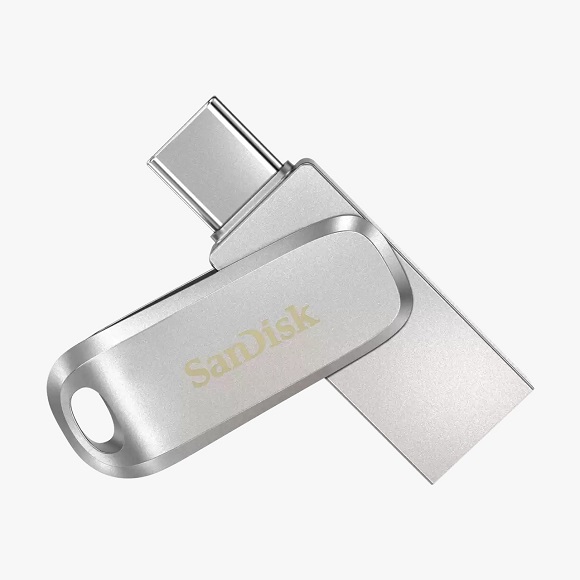
SanDisk Ultra Dual Drive Luxe USB Type-C Flash Drive aims to not just be an external file support solution for the iPad Pro, but also for your older USB-A gear, with a splash of style.

All flash drives are not created equal. Flash media is used in everything from the extremely fast NVMe implementations, all the way down to the storage keys you can buy at the gas station.
In between, are the higher-performing storage keys, like the SanDisk Ultra Dual Drive Luxe USB-C Flash Drive. It isn’t something you want to use as, say, a system drive, but it is a good solution to “sneakernet” files between a USB-A computer and a USB-C one, like a new MacBook Pro, or iPad Pro.
Ultra Dual Drive Luxe USB-C Flash Drive key specifications
- USB Type-C and USB Type-A connections
- 32GB capacity. 64GB, 128GB, 256GB, 512GB, 1TB also available.
- Up to 150MB/s read speeds
- 1.75 inches by 0.48 inches by 0.34 inches
- Reversible swivel design
- Five-year limited warranty
Ultra Dual Drive Luxe USB-C Flash Drive – design
On the face of it, the drive is a compact device that doesn’t look that much different from other thumb drives. It’s small and light, and has a covering section that swings around to protect some of its contacts. Pick protection for USB-A or USB-C, because you can only cover one at a time.
With an exterior enclosure completely from metal, the drive offers a premium appearance and construction, which is unusual for such drives. It also includes a hole in the swinging cover, so it can be attached to a keyring and be always available to users.
Being metal, the exterior of the drive case gets a little warmer to the touch when in use than a plastic enclosure does. But, this is a good thing, as the entire enclosure is a heat sink, keeping performance as high as possible.
Double duty connectivity
The metal body is only one of the differentiating factors for the drive that brings it another level up from the rest of the pack, and that it has two connectors. This drive falls into the category that a few other do, in that it can be used to connect to both USB Type-C devices as well as USB Type-A ports.
For some users, this can be invaluable, and offers the opportunity to make their data highly portable between devices. It could easily be used with an iPad Pro’s USB Type-C port or the Thunderbolt 3 port of modern Macs, while USB Type-A allows it to work with older Macs and PCs that don’t have either USB Type-C or Thunderbolt 3 connections.
As the connectors are on opposite ends of the main body, the swinging cover can protect one connection type at a time, leaving the other exposed. Given the smallness of the connector, it’s probably advisable to keep the USB Type-C end protected as much as possible.
The drive boasts USB 3.1 Gen 1 support, which WD claims will facilitate read speeds of up to 150MB/s. The Blackmagicdesign Disk Speed Test tool showed this to be an accurate claim, as the drive managed 150.3MB/s read speeds for the USB Type-A connector, with it effectively the same at 150.6MB/s using Type-C.
While these are more than good enough for a portable flash drive, the write speeds are less stellar. On USB Type-A, the write speed was just 61.6MB/s, while Type-C didn’t do much better at 63.7MB/s. This is to be expected, though, given the media.
The drive isn’t ideal for those who need to write files to it on a very frequent basis. It’ll get the job done — you just need to be more patient than you’d have to be with a more expensive NVMe drive.
Stylish with some uses
Flash drive manufacturers aren’t generally known for innovation. Outside of making them faster or adding dual connectors to it, there’s little else you can do to radically change the concept.
The SanDisk Ultra Dual Drive Luxe Type-C doesn’t rock the boat, nor was it ever really intended to. It treads very well-worn concepts that other products in the past have come up with.
Its Luxe element with a premium metal construction goes beyond just design, bringing an effective heat sink to the table. The fact that it doesn’t look too out of place on a keychain also works in its favor, as will its hardiness.
The dual connector system is nice for those who need to work with both types of ports on a variety of hardware, or simply want to transfer files from an iPad Pro or MacBook Pro made in the last five years to an older Mac. Its speed won’t blow your hair back, but is better than many drives in its class, and good enough for occasional use.
This drive isn’t really meant as an external storage upgrade for your Mac or iPad Pro. But, as a way to ferry files between devices or to make some space available on a constrained iPad Pro while on the move, it’s not a bad choice.


Telecom
SERAP Demands Probe of Disappearance of N27.9Bn from USPF, Calls Out Minister, Secretary of Fund

Socio-Economic Rights and Accountability Project (SERAP) has called on President Bola Ahmed Tinubu to immediately order an investigation into the alleged disappearance or diversion of N26.9 billion from the Universal Service Provision Fund (USPF).

SERAP warned the scandal could worsen Nigeria’s digital divide and deny millions access to basic connectivity.
In a letter dated May 9, 2026, and signed by Kolawole Oluwadare, deputy director, SERAP urged the president to direct Dr. Bosun Tijani, minister of Communications, Innovation and Digital Economy, as well as Yomi Arowosafe, secretary of the USPF, to explain the whereabouts of the funds.
The organisation also asked Lateef Fagbemi (SAN), attorney general of the Federation and minister of Justice, alongside anti-corruption agencies, to investigate the allegations and prosecute anyone found culpable.
SERAP said the accusations were contained in the 2022 audited report by the Auditor-General of the Federation, published on September 9, 2025.
According to the group, the report exposed several financial irregularities, including unremitted operating surpluses, undocumented expenditures, questionable contract awards, and payments for services allegedly not rendered.
“The USPF is vital to expanding telecommunications access in underserved and rural communities, and any diversion of its funds directly undermines its mandate to bridge the digital divide, support infrastructure development, and promote inclusive connectivity,” the letter stated.
Among the allegations cited by SERAP was the failure of the USPF to remit over ₦13.8 billion in operating surplus between 2016 and 2019.
The Auditor-General reportedly warned that the money may have been diverted and recommended recovery and remittance to the treasury.
The report also allegedly questioned over ₦11.7 million claimed for international training in October 2020 without supporting documents such as invitations, invoices, or certificates of participation.
SERAP noted that the spending was especially suspicious because of travel restrictions during the COVID-19 lockdown.
Other claims included contracts worth ₦2.8 billion allegedly awarded without due approval, ₦8 million paid to a non-existent fund manager, ₦6.4 billion spent on projects not captured in the approved 2020 budget, and over ₦2.8 billion reportedly spent between January and May 2021 without documentation.
SERAP further alleged that the USPF failed to collect and remit over ₦333 million in stamp duties and did not deduct more than ₦144 million in withholding tax from consultant payments.
It also cited payments exceeding ₦390 million to consultants for projects allegedly lacking proof of execution.
According to the group, mismanagement of the fund has serious implications for millions of Nigerians, especially residents of rural and underserved areas who depend on the USPF to access telecom infrastructure and internet services.
“Poor access to reliable and affordable internet connectivity directly affects Nigerians’ ability to exercise a range of fundamental human rights, including freedom of expression, access to information, education, and participation in public affairs,” SERAP said.
The organisation warned that lack of accountability could deepen inequality, limit economic opportunities, and further exclude vulnerable communities from essential digital services.
SERAP gave the federal government seven days to act on its demands or risk legal action aimed at compelling the government, the Nigerian Communications Commission (NCC), and the USPF to respond in the public interest.

Federal Government has warned telecommunications operators to improve service quality or face regulatory sanctions, stating that recent reforms have stabilized the sector and removed excuses for poor network performance.

Telcos
Minister of Communications, Innovation and Digital Economy, Dr. Bosun Tijani, issued the warning in a statement on Sunday, emphasizing that Nigeria’s connectivity gaps were largely structural, driven by years of underinvestment and constraints on operators.
The government has tackled these problems through long-term infrastructure planning and immediate sector-stabilization measures aimed at restoring sustainability and investor confidence.
These long-term reforms focus on expanding infrastructure through new fibre deployment and tower rollout initiatives designed to close critical gaps in the digital backbone.
Funding has been secured with support from the World Bank for Project BRIDGE, alongside additional investments in satellite capacity to boost nationwide coverage. These interventions are expected to transform connectivity over the next two to five years, enabling businesses and households to access reliable high-speed internet beyond unstable mobile connections.
“When we assumed office, it was clear that Nigeria’s connectivity challenges were structural, driven by years of underinvestment in infrastructure and constraints that limited the ability of operators to deliver quality service,” the Minister noted.
“We have addressed this on two fronts. First, the long-term structural solution. We have secured funding, led by the World Bank, and established the framework for a special purpose vehicle with Project BRIDGE, to deliver nationwide open access fibre infrastructure.
Deployment of fibre will commence, alongside new tower rollouts through NUCAP, before the end of the year even as we also expand our satellite capability.”
Regarding immediate interventions, the government has stabilized the sector through tariff adjustments, the designation of telecom infrastructure as critical national infrastructure, tax harmonization efforts, and broader macroeconomic reforms.
These changes have restored operator profitability and created a more transparent, market-driven environment, giving telcos the capacity to invest in network improvements.
“It is now the responsibility of telecom operators such as MTN Nigeria, Airtel Nigeria, Globacom, and 9mobile to take all necessary steps to resolve network challenges and deliver the level of service Nigerians expect,” the minister insisted.
The Nigerian Communications Commission (NCC) has been fully empowered to monitor performance, enforce standards, and ensure compliance, with sanctions expected for defaulting operators.
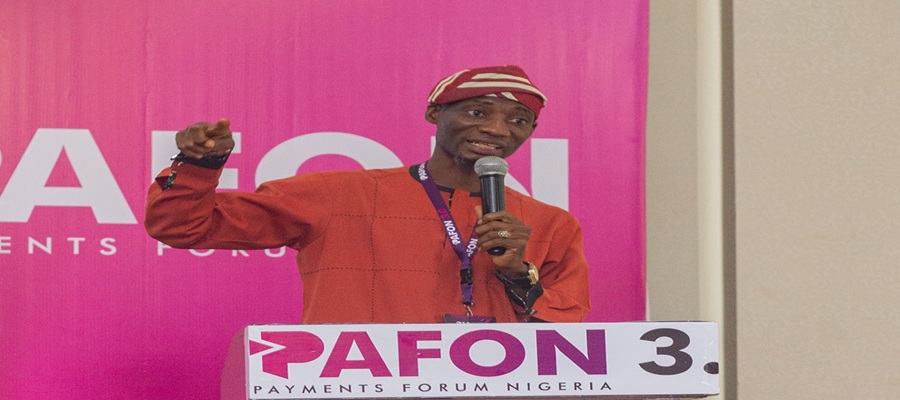
Dr. Obioha Oti, National President of the Association of Mobile Money and Bank Agents in Nigeria (AMMBAN), has described agency banking as Nigeria’s most critical last-mile channel for achieving meaningful financial inclusion, stressing that millions of Nigerians, particularly in rural and underserved communities, remain financially excluded despite notable progress in the sector.

PAFON 3.0
Speaking at the third edition of the Payments Forum Nigeria (PAFON 3.0), themed “Fair Digital Payments as a Catalyst for Deepening Financial Inclusion in Nigeria,” Oti, represented by Alhaji Yusuf Adeyemo, vice president of the Association of Mobile Money and Bank Agents in Nigeria (AMMBAN), said agency banking has become Nigeria’s most practical and scalable solution for bridging the persistent financial access gap caused by poor infrastructure, low financial literacy, trust deficits, and high service delivery costs.
According to him, without effective last-mile financial access, Nigeria’s financial inclusion ambitions may remain unattainable.
Oti noted that through extensive agent networks, Nigerians now enjoy convenient access to critical financial services including cash deposits, withdrawals, transfers, bill payments, account opening, and other essential banking products, adding that beyond transactional services, agency banking offers trust, human interaction, and proximity-factors that purely digital channels cannot fully replicate.
“Agency banking has emerged as the most practical, scalable, and human-centred solution,” he stated, adding that agents serve as trusted financial intermediaries within local communities.
Highlighting AMMBAN’s contributions, Oti said the association has played a central role in strengthening Nigeria’s financial inclusion ecosystem through policy advocacy, professional training, rural agent expansion, fraud awareness campaigns, consumer protection initiatives, and strategic collaborations involving banks, fintechs, telecom operators, and mobile money providers.
He further noted that the agency banking sector has created millions of jobs and unlocked significant economic opportunities nationwide.
Oti acknowledged the contributions of major ecosystem drivers, including the Central Bank of Nigeria (CBN), which he said continues to provide regulatory support through financial inclusion frameworks, consumer protection policies, and interoperability initiatives.
He also credited the Shared Agent Network Expansion Facilities (SANEF) for accelerating agent expansion across the country, while Enhancing Financial Innovation and Access (EFInA) was recognized for its support through research, innovation funding, and data-driven insights.
Despite these achievements, Oti warned that the sector continues to grapple with significant obstacles such as liquidity shortages, network instability, fraud risks, poor agent profitability, infrastructure deficits, and overlapping regulations.
He stressed that these challenges must be urgently addressed to sustain growth and deepen inclusion. “For inclusion to truly deepen, digital payments must be affordable, reliable, transparent, and accessible to all Nigerians,” he said, insisting that fairness in digital payments is essential to closing the financial inclusion gap.
He warned that unfair pricing structures, unstable systems, and exclusionary payment models could further marginalize vulnerable populations.
Looking ahead, Oti urged stakeholders across the financial ecosystem to prioritize stronger collaboration, improved agent profitability, infrastructure development, enhanced financial literacy, increased financing access for agents, and supportive regulatory frameworks.
He projected that Nigeria’s financial inclusion future will be “phygital,” combining physical agent networks with digital platforms to create seamless financial access.
According to him, agents are rapidly evolving beyond transaction points into community-based financial service hubs capable of driving grassroots economic development. “Agency banking is no longer just a distribution channel; it is the backbone of financial inclusion in Nigeria,” Oti declared.
He reaffirmed AMMBAN’s commitment to working with regulators, financial institutions, and technology providers to strengthen the ecosystem, empower underserved populations, and build a more inclusive national financial system.

Mastercard, BMONI Launch Multi-Currency Payment Cards in Nigeria

NCDC Enhances Monitoring, Releases Advisory amid Rising Global Hantavirus Cases

Metro Digital, Nigerian Firm Accuses Multichoice Of Refusal to Obey Court Judgements

SERAP Demands Probe of Disappearance of N27.9Bn from USPF, Calls Out Minister, Secretary of Fund

Moniepoint Partners GDG Lagos, Women Techmakers to Empower the Next Generation of Women Architects in Tech

Kaspersky Discovers Vulnerability in Qualcomm Snapdragon Chips that can Lead to Data Loss & Device Compromise

MTN Suspends Data, Airtime Borrowing Service over New FCCPC Lending Rules

Bank Customers to Pay N1,500 for ATM Card Issuance, Replacement – CBN

FCCPC Licenses 5 Firms for Airtime, Data Lending as Telcos Step Aside

ATM Card Fees Jump to ₦1,500 as CBN Scraps Maintenance Charges




 E-Financial1 day ago
Transcorp Excites Shareholders with ₦20.3 Billion Dividend @20th AGM

 E-Financial1 day ago
Africa Prudential Launches Sabivest to Boost Digital Investment Access

 Telecom1 day ago
PAFON 3.0: Agency Banking Key to Reaching Millions of Unbanked Nigerians – AMMBAN

 General News1 day ago
Interswitch Inducts 3rd Interns into Its Developer Academy

 General News1 day ago
PIN Records 3.07Bn Media Reach, Expands Digital Rights Impact Across Africa in 2025

 General News1 day ago
UK Reaffirms Commitment to Press Freedom, Science Journalism Training for Nigerian Media

 Telecom3 hours ago
MTN, Airtel, Glo Under Pressure as FG Demands Better Service Delivery
 E-Financial2 hours ago
Mastercard, BMONI Launch Multi-Currency Payment Cards in Nigeria