

Broadcasting
5 Business Lessons to Learn from Showmax’s Freemen

In Nigeria, entrepreneurship and business enterprises play a pivotal role in the economy, with businesses spread across all corners of the country. However, when seeking advice on business matters, one group stands out – the Igbo people, renowned for their enduring affinity with commerce, notably through the Igbo apprenticeship system.

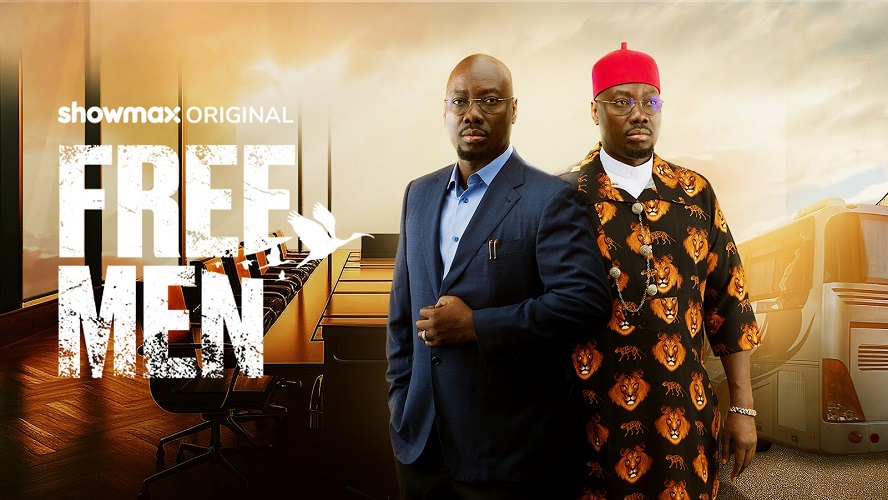
This system has nurtured numerous millionaires and notable figures in Nigeria’s business landscape. And Showmax’s compelling documentary, Freemen, delves into their journey, showcasing their rise, stories, and the rich culture of the longstanding “Igba Boi” tradition.
From the chairman of Coscharis Group, Dr Cosmas Maduka, to the chairman of Innoson Group of Companies, Chief Innocent Chukwuma, the Founder/Group Executive Chairman, Chicason Group, Sir Alex Chika Okafor and the renowned entrepreneur Obi Cubana, the documentary imparts invaluable lessons from their experiences and successes.
Here are 5 business lessons we’ve learned from Freemen.
1. You Can’t Do It Alone
In the world of business, collaboration is key. Just like in Igbo apprenticeship where a master mentors their apprentice, building a network of support and guidance can significantly enhance chances of success.
Speaking in the first episode of the documentary, the Executive Producer of Freemen, Nigerian rapper, and actor, Tobechukwu ‘Illbliss’ Ejiofor, emphasised the importance of togetherness in building a successful business empire.
He revealed: “When I came into Lagos, I realised that my journey wasn’t going to be complete if I didn’t create an opportunity for others from my own hustle. When you get in, you bring in your brother; it’s a philosophy that we built and ran with. I just know that I need to be able to get in and pull other people in, showing them exactly what it is that needs to be done”.
Obi Cubana captures it all in the same episode: “Never leave a brother behind”, he concluded.
2. Master One Thing; Not All
According to Freemen, rather than spreading yourself too thin by trying to do everything, concentrate on mastering one aspect of your business.
Dr Cosmas Maduka’s story in episode two of the documentary is a prime example. Having begun his apprenticeship as early as the age of seven, even though he absorbed the knowledge of supply management, inventory control, accountancy, and administration which the Igbo apprenticeship system availed him, he focused on “internal combustion engine” under the tutelage of his uncle who had a catalogue for motorcycles. This led him to discover not just the contents but all the working parts of motorcycles and automobiles.
Unsurprisingly, Dr Cosmas’ breakthrough came from selling motorcycle crash bars, a product in scarce supply, at a substantial markup.
For Chief Innocent Chukwuma, one of Nigeria’s most successful car manufacturers, he had to spend seven months studying and mastering motorcycle parts before proceeding to work with his brother under whose auspices he became an apprentice. Before long, he was able to build a motorcycle by himself. In fact, he once brought the price of a motorcycle down from ₦150,000 to ₦60,000 due to his homemade brand.
In the near future, Chief Innocent Chukwuma aims to produce homemade cars that are cheaper than imported cars, in order to make automobiles more affordable.
3. Keep Developing
Continuous learning and improvement are essential for staying ahead in business. Just as apprentices in Igbo culture undergo rigorous training and skill development, entrepreneurs must continually invest in their own growth and development.
Engr Okezie Onyemelukwe, owner of Soundhouse Digital Multimedia, an independently owned and operated full-service event management company based in Enugu, is a testament to how developing one’s skill and talent can be the biggest pathway to success. In the third episode of Freemen, Engr Okezie revealed how he started from his local church, joining the team in charge of sound production. Before long, he joined his uncle’s music outfit which started with only a keyboard and a microphone. However, he honed his skill for years, ensuring that people rely on him before they can get their music production jobs done.
Today, some of the most competent sound engineers and live event professionals in southeast Nigeria have gone through Okezie’s tutelage as apprentices.
“When people see me driving the cars I drive, they want to be like me,” he said. “But they don’t see all the efforts and discipline that went into getting here. When you want to copy and paste someone’s life, make sure you copy from their past, not only their present”, Okezie said on the importance of discipline and development in running a successful business.
4. Find a Niche, Where There’s a Gap
Identifying an unmet need or underserved market niche is a recipe for success. Similar to how Igbo apprenticeships often specialise in specific trades or crafts, Freemen reveals that entrepreneurs must seek out opportunities where they can fill a gap in the market.
Reflecting on his journey, Dr Cosmas Maduka recalled how he identified a niche market opportunity within Boulos Enterprises. He seized the chance to sell motorcycle crash bars, a product in scarce supply, at a substantial markup. This strategic move propelled his success and layed the foundation for the highly influential business mogul he is today. By offering unique solutions or products tailored to a specific audience, you can carve out a profitable niche for your business.
5. Be Ready to Serve
At the core of a successful business lies a commitment to serving others. In Igbo apprenticeship, both masters and apprentices understand the importance of service in their relationship.
For Anene Cyril Okeke, CEO of Lastborn Investment Ltd, a business owner who currently has over 14 apprentices working under him and over 20 who have graduated through him, he too had to go through his period of service.
“At a point, I regretted being an apprentice at my brother’s because he was hard on me. I would be the one to go on errands, I would be the one to fetch water, I would be the one to cook”, he said.
“It is now that I know that all of those were trainings that I should have gone through. If not, all the things I know now, I wouldn’t know”.
For Dr Cosmas Maduka, he had to serve and go through the Igbo Apprenticeship System at an early age, leading him to eventually take on the management of automobile branches in Jos, Sokoto, Nnewi, and Lagos.
During his years of service, Dr Maduka was under the guidance of his uncle, who was a motorcycle spare parts trader. However, they lived in humble conditions: “My uncle himself had just started a business and lived in his own uncle’s house in a one-bedroom with his wife. In that bedroom, they used curtains to divide the sitting room from the bedroom. A man that is sleeping in a passage went to get an apprentice so you can know where my bedroom would be,” he said.
That humble beginning of service, which is enclosed in the “Igba Boi” system, not only propelled his success but also enabled him to amass his first million dollars by the age of 24. By 25, his wealth had doubled to more than 2 million dollars.
Freemen is a captivating exploration of the Igbo Apprenticeship System, known locally as “Igba Boi”. Binge all seven episodes of Freemen now on www.showmax.com.


Lebara Nigeria has announced the launch of Lebara Play, described as Africa’s first telecoms-owned micro-drama platform aimed at expanding opportunities for African storytellers and distributing local content to global audiences.

The company said the platform is designed to support creators by providing a new distribution channel for African narratives while making content accessible to both subscribers and non-subscribers worldwide.
Lebara Nigeria added that the platform will debut with an original production titled Imported Bahu, produced by Forever 7 and starring Osas Ighodaro.
The project is directed by Hamisha Daryani Ahuja, known for her work on Namaste Wahala, and is positioned as the first in a series of original content offerings.
According to the company, Lebara Play is built to serve both creators and audiences, with a focus on showcasing African stories to a global market and strengthening the continent’s growing digital entertainment ecosystem.
Speaking on the company’s vision at the launch, Teniola Stuffman, chief executive officer, Lebara Nigeria, said the organisation was focused on building a telecommunications ecosystem that combined innovation, connectivity, and customer-centric digital experiences.
Stuffman said, “This platform represents an important step in our vision of building a telecommunications brand that delivers more than connectivity. We are creating an ecosystem where technology, innovation, and entertainment come together to provide meaningful experiences for customers while unlocking new opportunities for creative talent and content development across Africa.”
Beyond entertainment, she said, industry stakeholders believed the initiative demonstrated how global telecommunications expertise could be adapted to local market realities.
“Drawing from decades of experience across multiple international markets, Lebara is expected to introduce additional innovative services aimed at enhancing convenience, engagement, and value for Nigerian consumers,” she said.
Stuffman added that the company’s strategy reflected growing recognition that today’s telecom customers demanded more than network access, pointing out that consumers increasingly seek brands that offer seamless digital experiences, personalised services, and access to content that enriches everyday life.
Stuffman stated that LebaraPlay also aligned with the company’s commitment to supporting Africa’s creative economy by creating new distribution channels for content creators, producers, and digital storytellers.
“Through a combination of original productions and strategic partnerships, the platform seeks to create opportunities for talent while delivering quality entertainment to audiences,” she said.
Hamisha Daryani, founder of Forever7 Entertainment, expressed excitement over the partnership with Lebara Nigeria and the premiere of her latest micro-drama series on the LebaraPlay platform.
She stated that Lebara’s customer-centric vision aligns closely with the values of Forever7 Entertainment, making the collaboration a natural fit for both organisations.
Daryani revealed that the new microdrama featured a star-studded cast drawn from both Bollywood and Nollywood, in a compelling romantic story designed specifically for mobile audiences.
According to her, the production is developed with mobile-first consumers in mind, delivering premium entertainment in short, engaging formats at an affordable cost.
“Microdrama, which typically consists of short episodes of about three minutes, is redefining how audiences consume entertainment. It offers a convenient, immersive, and affordable viewing experience for people who increasingly access content through their mobile devices,” she said.
She added that the platform was created to support seamless creative expression while providing new opportunities for content creators across the continent.
Daryani further explained that the microdrama format has already achieved significant success in Asia and the Americas and is now gaining traction across Africa.
She said the initiative would create opportunities for emerging creatives through knowledge sharing, skills development, content curation, and industry collaboration, with the Nigerian rollout of the featured series expected to commence in July.
Broadcasting
CANAL+ Partners Samsung to Pre-Load DStv Stream on New Samsung TVs In Nigeria, Other African Countries

Following an expanded partnership between CANAL+ and Samsung Electronics, the DStv Stream app will now be pre-installed on new Samsung Smart TVs sold in Nigeria and 17 other African countries.

The agreement covers English and Portuguese-speaking African markets, including Nigeria, Kenya, Angola, Tanzania, Uganda, Zambia, Zimbabwe and South Africa. It marks the first pre-installation rollout of a MultiChoice Group streaming application on Samsung Smart TVs.
The development comes after the completion of the combination between CANAL+ and MultiChoice Group. It also extends an existing relationship between both companies that already spans 40 markets across Europe, French-speaking Africa, and Asia.
Through the integration, Samsung customers can now access DStv Stream directly from the television home screen. The app provides access to premium sports and entertainment content, including coverage of the FIFA World Cup 2026, English Premier League football, domestic and international rugby, and local and international television programming.
With the introduction of this connected television which kicked off on June 1, televisions can now connect to the internet, allowing users to stream content directly without requiring a separate decoder or satellite dish. The pre-installation of the app removes the need for users to search for and download it themselves, reducing friction and improving content discoverability.
The rollout is one of the first major distribution initiatives following the integration of CANAL+ and MultiChoice. The combined group has identified streaming growth and enhanced digital distribution as key priorities across Africa, where connected television adoption continues to increase.
David Mignot, CEO of CANAL+ Africa and CEO of MultiChoice Group, affirmed, “We are delighted to extend our longstanding partnership with Samsung across new English and Portuguese-speaking African countries. It marks a significant milestone in the synergies created by the combination of CANAL+ and MultiChoice Group.
“Mignot added, “As viewing habits continue to evolve rapidly across the continent, strengthening the accessibility and discoverability of our content offer on connected devices is key. By expanding the availability of our applications on Samsung Smart TVs across key African markets, we are making it even easier for millions of MultiChoice Group’s subscribers to seamlessly access the content that define the uniqueness of the CANAL+ and MultiChoice Group experience.”
This extended partnership is expected to strengthen Samsung’s position as a key distribution partner for streaming services globally while providing CANAL+ and MultiChoice with a broader route to market as competition intensifies among international and regional streaming platforms across Africa.
The Court of Appeal in Abuja has dismissed an appeal filed by the National Broadcasting Commission (NBC) challenging a Federal High Court judgment that restrained the commission from imposing fines on broadcast stations.

Delivering judgment, Justice Jane Esienanwan Inyang held that the appeal was fundamentally defective and therefore incompetent.
The appeal stemmed from a Jan. 17, 2024 judgment delivered by Justice Rita Ofili-Ajumogobia of the Federal High Court, Abuja, which barred the NBC from enforcing N5 million fines imposed on several broadcast stations in 2022.
The sanctions had been issued over allegations that the stations aired documentaries on banditry and insecurity considered by the commission to be capable of undermining national security.
The affected broadcasters included Multichoice Nigeria Limited, owners of DStv, TelCom Satellite Limited, Trust TV Network Limited and NTA StarTimes Limited.
The suit was instituted by Media Rights Agenda (MRA), which challenged the legality of the fines imposed by the commission.
In her ruling, Justice Inyang pointed to a discrepancy in the appeal documents, noting that the respondent before the Federal High Court was listed as the “National Broadcasting Commission,” while the notice of appeal identified the appellant as the “Nigerian Broadcasting Commission.”
According to the court, the inconsistency was substantial enough to deprive it of the jurisdiction required to entertain the appeal.
“The notice of appeal is the foundation of an appeal and a condition precedent to the exercise of appellate jurisdiction by this court,” the judge held.
Consequently, the appeal was struck out without consideration of the substantive issues raised by the commission.
The ruling represents another setback for the NBC in its efforts to defend its authority to sanction broadcast organisations through administrative fines.
In April 2026, the Court of Appeal similarly dismissed a separate appeal by the commission against another judgment that restricted its powers to impose fines on broadcasters.
Earlier, in May 2023, the Federal High Court in Abuja ruled that the NBC lacked the judicial authority to impose penalties on media organisations without recourse to the courts.
The controversy over the commission’s sanctioning powers dates back to March 2019 when the NBC imposed N500,000 fines on 45 broadcast stations for alleged violations of the Nigerian Broadcasting Code during the general elections.
At the time, the then Director-General of the commission, Is’haq Kawu, said the sanctions were imposed for ethical breaches and violations of broadcasting regulations.
Legal analysts say the latest judgment reinforces previous court decisions limiting the commission’s authority to impose fines on broadcasters without judicial intervention.

FCMB Turns Normal Banking into Rewards with New Mobile App Upgrade

Despite Warnings, FG Draws Down $1.5Bn as First Tranche of FAB $5Bn Loan Deal

PalmPay Strengthens Data Protection Culture with Employee Privacy Workshop and Privacy Champions Programme

Paystack Unveils AI-powered Payments Tools

NRS, CITN Deepen Partnership to Strengthen Tax Awareness

CBN Extends PoS Geo-Fencing Enforcement Deadline to August 2026

London Strengthens Global Investment Ties with Africa @ First Ever London-Africa Business Summit

FG Targets Alleged N3tn Capital Flight, Opens Airtime Credit Market to Nigerian Fintechs

Mobile Internet Gender Gap Widest in Africa – GSMA

Japan, UNESCO Boost Digital Learning in 15 CoEs with Donation of ICT Equipment




 Telecom2 days ago
6 Easy Ways to Enjoy the 2026 World Cup with Google and Gemini

 News2 days ago
MTN ASAP Enugu Stakeholders’ Conference Rallies More Action Against Youth Drug Abuse, Unveils N33Bn ASAP Impact
 E-Financial2 days ago
EFCC, CAC Raise Concerns over Unregistered PoS Operators

 E-Financial2 days ago
Providus, Unity Bank Begin Integration Phase after Supreme Court Nod

 E-Financial2 days ago
FG Proposes Africa-Wide Payment Card without Conversion through US Dollar

 Telecom2 days ago
NITDA, Meta Roll Out New Programme to Keep Nigerian Youths Safe Online

 Telecom2 days ago
NCC Launches Maiden Women’s Leadership Mentorship Programme
 E-Financial1 day ago
NRS, CITN Deepen Partnership to Strengthen Tax Awareness