

Broadcasting
Canal+ Offer for MultiChoice Gains Shareholders’ Support

Some MultiChoice shareholders have expressed relief at the offer by Canal+ to buy Africa’s pay TV giant for $2.9 billion, essentially viewing the potential deal as a vehicle for them to be rescued from an investment that has turned sour.

On April 8,, the deal inched closer to being cemented when the board of MultiChoice agreed to cooperate with Canal+, a sign that it was warming to a tie-up with France’s broadcasting conglomerate.
The board initially rejected the offer by Canal+ to buy the MultiChoice shares that it does not already own for R105 each, saying it was too low and undervalued the company’s growth prospects.
But MultiChoice has been convinced to reconsider its position after Canal+ improved the offer to R125 per share. Canal+ already owns 40.01% of MultiChoice shares on the JSE and wants to pay R35-billion to buy the rest of the company and take control of it.
The next big test is whether MultiChoice shareholders will support or reject Canal+’s offer, which requires support from 90% of shareholders to get the multibillion-rand deal over the line.
Daily Maverick canvassed the views of MultiChoice shareholders and industry players about the merits of the deal and whether they planned to throw their weight behind it when it comes up for a vote in the coming months.
Early indications are that some shareholders view the deal as a blessing and an opportunity to bail out from their investment in MultiChoice.
Before Canal+ made a move on MultiChoice, the latter’s share price had been down by 22% as its operations came under pressure from declining DStv subscriber numbers and intense competition from streaming services such as Netflix, Amazon Prime and Disney+.
Its earnings have also taken a hit of billions of rands because of the depreciation of African currencies against the US dollar, especially the Nigerian naira.
MultiChoice also had a run-in with regulators; in Nigeria, it ran into problems relating to outstanding tax payments. In South Africa, competitors including the SABC and eMedia (the owner of e.tv) have complained to regulators, accusing MultiChoice of anti-competitive behaviour and using its dominant position to restrict access to its broadcasting platforms and dictating restrictive licensing agreements.
The investment community response
Anthony Sedgwick, the cofounder of Abax Investments, was withering in his assessment of MultiChoice’s investment prospects. “Put frankly, we were relieved to see Canal+ finally step up and bail us out of the position,” he said.
According to MultiChoice’s latest annual report, Abax Investments held 0.34% of its shares. But Abax recently sold those shares, taking advantage of MultiChoice’s 25% share price jump since Canal+ initially tabled its buyout offer in February.
“We think Multichoice is a great business that produces an incredible variety of content, creates opportunities for so many talented people, supports a huge variety of good causes and is a real South African business champion.
“But it operates in unfriendly regulatory countries … and faces some headwinds from hard currency priced content and broadcast costs,” Sedgwick said.
Asief Mohamed, the chief investment officer of Aeon Investment Management, shared Sedgwick’s concerns about MultiChoice.
“My guess is that the other shareholders will likely accept the R125 offer. Governance has for a long time been a concern of some shareholders, including ourselves,” Mohamed told Daily Maverick.
MultiChoice’s latest annual report puts Aeon’s shareholding in it at 0.43%.
Merits of the deal
Canal+ has argued that the aim of buying MultiChoice would be to combine both businesses to create an entertainment giant that can survive a market facing intense competition and declining advertising revenue.
A combined Canal+ and MultiChoice will boast media businesses in many African countries, from South Africa and Nigeria to Senegal and Cameroon.
Not all investors are pessimistic about MultiChoice, its business fundamentals and investment prospects. In fact, when MultiChoice ran into tax troubles in Nigeria in July 2021, which precipitated a steep decline in its share price (to a low of R115), Argon Asset Management saw it as a buying opportunity. It bought MultiChoice shares and has since maintained its holding in the company to about 0.41%.
Asked why Argon remained bullish about MultiChoice, the asset management firm’s equity analyst, Richard Court, said: “Simplistically, there are two parts to MCG [MultiChoice Group]. There is the mature South African business, which, for the most part, was highly profitable and cash-generative.
“Then there is the business that MCG is building in the rest of Africa, which was actually a drag on profitability, and it was still quite small in the life of MCG from a bottom-line perspective. Nigeria takes up a lot of the bandwidth.
“We think the market was overly pessimistic on the prospects of the rest-of-Africa segment. We thought the market was overreacting to the possibility of a tax penalty coming out of Nigeria. The share price fell back and we just took the buying opportunity. We thought that MCG share was worth more than the levels at the time.”
Court said MultiChoice had managed to defend its premium TV segment (consumers who subscribe to DSTV premium packages) despite the arrival of international streaming services in South Africa.
“It did quite well in the lower segment and in the lower-cost offerings by growing subscriptions in those markets. Management was doing the right thing strategically and executing quite well on that strategy,” he said.
MultiChoice’s investments into Showmax strengthened its defence position, he said.
Argon’s house view is that Canal+’s R125 offer undervalues MultiChoice and its growth prospects.
“At the moment, we are unlikely to accept at R125. In a few years from now, if they’re able to build Showmax and if Nigeria stabilises, which we can’t say when, then I think the outlook for MCG is going to be a lot rosier than what it is now. I think the market would recognise that and that should reflect in the share price,” Court said. He was unwilling to comment on what he thought would be a fair offer from Canal+.
Canal+ said the media industry in which MultiChoice was operating “is becoming increasingly globalised and competitive, with regional media companies having to compete with the firepower of global media titans, with enormous resources to invest in content, marketing and technology…”
With a customer base of 22 million, MultiChoice’s growth strategy involves investing in local and international content for its streaming service, Showmax, and Canal+ is likely to provide capital to fund the growth.
Peter Takaendesa, the head of equities at Mergence Investment Managers, has argued that only companies with scale and a strong balance sheet are likely to survive changes in the entertainment industry.
“Canal+ and MultiChoice can leverage content and financial strength. However, there is still no guarantee of success, as the fight against global streaming giants is intense.”
Other large MultiChoice shareholders are yet to opine on the deal. They include the Public Investment Corporation (PIC), which holds 13%, M&G Investments (more than 7%) and Allan Gray (6%). Allan Gray declined to comment to Daily Maverick, and M&G and the PIC were not available to do so.
Another MultiChoice shareholder that is not ready to express its view on the Canal+ deal is Sanlam Investments, which has a 1.9% interest in the broadcasting company. Sanlam said it opted not to express its stance or intentions “considering the sensitive nature of ongoing negotiations” pertaining to the deal.
“While we understand the importance of transparency and accountability, we believe it is essential to maintain confidentiality and prudence when dealing with such matters,” Sanlam said.
The MultiChoice-Canal+ deal is likely to take two years to be completed, as it still requires regulatory approval.
Credit: Daily Maverick


MTN Group has begun rolling out MTN One TV, a new entertainment proposition designed to make digital video content more accessible, relevant, and flexible for customers across African markets.

Introduced in line with MTN’s Ambition 2030 strategy, MTN One TV brings together local storytelling, live channels, international programming, and market-specific viewing options tailored to how customers across the continent access and pay for digital entertainment.
The proposition is designed to give customers greater choice in how they watch content, with viewing models that may vary by market and can include free-to-view content, advertising-funded experiences, pay-as-you-watch access, and subscription offerings.
Depending on local availability, customers may also be able to pay through airtime, Mobile Money, and other locally supported payment methods, helping to reduce common barriers to streaming access.
Beyond enhancing customer experiences, MTN One TV creates new opportunities for African creators, broadcasters, advertisers, and ecosystem partners by helping connect content to wider audiences through MTN’s scale across connectivity, payments, and digital services.
By bringing together a broad mix of content experiences under a single proposition, MTN aims to support greater content discovery, broader audience reach, and sustainable growth across Africa’s digital entertainment ecosystem.
Anchored in MTN’s strategic platforms of Connectivity, Fintech, and Digital Infrastructure, MTN One TV forms part of the Group’s broader ambition to build digital experiences that create value for customers while enabling participation and growth across Africa’s digital economy.
“Entertainment is increasingly becoming an important gateway to digital participation,” said Selorm Adadevoh, MTN group chief commercial, strategy and transformation officer.
“Through MTN One TV, we are leveraging the scale of our connectivity, fintech, and digital capabilities to make relevant content more accessible while creating new opportunities for Africa’s creative and digital economies. This is aligned with our ambition to deliver digital solutions for Africa’s progress.”
MTN One TV is being introduced progressively across MTN markets through a phased rollout approach that reflects local market needs, existing services, and partnership opportunities.
Over time, MTN will bring together a combination of video capabilities, content partnerships, and customer experiences under the MTN One TV brand to create a more consistent and scalable entertainment proposition across its footprint.
Through MTN One TV, MTN continues to extend its role beyond connectivity by combining entertainment, payments, and digital services to deliver experiences tailored to the needs of African consumers.
The rollout supports MTN’s Ambition 2030 vision of leading digital solutions for Africa’s progress while expanding access to digital entertainment across the continent.

International Air Transport Association (IATA) has identified Nigeria as one of the most expensive countries in the world for airline operations, citing high taxes, charges and operational costs that continue to weigh heavily on local carriers.

IATA’s Regional Vice President for Africa and the Middle East, Kamil Al-Awadhi, disclosed this during the association’s Annual General Meeting held in Rio de Janeiro.
Al-Awadhi said that although Nigeria’s Minister of Aviation and Aerospace Development, Festus Keyamo, had been pursuing reforms aimed at improving the aviation sector, airlines operating in the country still faced enormous cost pressures.
According to him, the high-cost operating environment has continued to affect the profitability and competitiveness of Nigerian airlines, making it difficult for the industry to realise its full potential.
He noted that excessive taxes, regulatory charges and other operating expenses remained major obstacles to airline growth across the region, with Nigeria ranking among the most challenging markets from a cost perspective.
Al-Awadhi urged member states of the Economic Community of West African States to adopt a proposed 25 per cent reduction in aviation taxes and charges to ease the burden on airlines and passengers.
According to him, lowering taxes and charges would reduce airfares, stimulate passenger traffic and strengthen the competitiveness of carriers operating within West Africa.
He stressed that a more supportive policy environment was critical to unlocking the economic benefits of aviation, including increased trade, tourism and regional integration.
Industry stakeholders have consistently advocated lower taxes and regulatory fees, arguing that the current cost structure makes air travel less affordable and limits the growth of the sector.
IATA’s latest remarks add to calls for governments in West Africa to implement policies that will promote a more sustainable and competitive aviation industry across the region.
Broadcasting
NASENI Trains 50 Women in Kano on Renewable Energy Technologies Under She-Powers Initiative

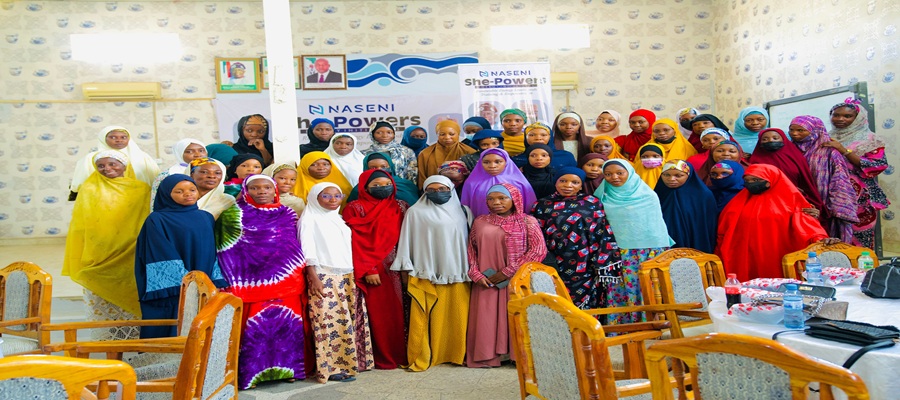
The National Agency for Science and Engineering Infrastructure (NASENI), under the leadership of its Executive Vice Chairman/CEO, Khalil Suleiman Halilu, has trained 50 women in Kano State on inverter and battery technologies through its She-Powers Energy Initiative.

The three-day programme, held at the Technology Incubation Centre, Farm Centre, Kano which ended yesterday, was designed to equip participants with practical renewable energy skills, promote women-led enterprises, and enhance sustainable livelihoods.
The initiative forms part of NASENI’s broader commitment to empowering women, creating economic opportunities, and expanding participation in Nigeria’s growing clean energy sector. It also aligns with the Renewed Hope Agenda of President Bola Ahmed Tinubu by supporting job creation, entrepreneurship, and inclusive economic development.
Through targeted interventions such as the She-Powers Energy Initiative, NASENI continues to demonstrate its commitment to leveraging technology and innovation to improve lives and drive sustainable development across the country.
Photos: Participants at the She-Powers Energy Initiative training organised by the National Agency for Science and Engineering Infrastructure (NASENI) held at the the Technology Incubation Centre, Farm Centre, Kano yesterday.

UK, Nigeria Launch £15 million Growth Programme to Accelerate Economic Transformation

Haleon Introduces New Corporate Identity in Nigeria

NITDA Unveils Ambitious Strategy to Turn Southwest into Nigeria’s Next Innovation Powerhouse

Airtel Africa Foundation Publishes Inaugural Annual Report

Mobile Internet Gender Gap Widest in Africa – GSMA

CBN Extends PoS Geo-Fencing Enforcement Deadline to August 2026

Jumia Nigeria Records Strong Q1 2026 Growth as Technology-Led Strategy Drives Market Expansion

NCC Drafts New Rules for Virtual Mobile Operators

TD Africa, HPE Drive Conversations on the Future of Intelligent Networking

Anthropic Raises $65 Bn to Expand AI Research, Innovation




 E-Business2 days ago
Firm Discovered a New Corporate Phishing Technique using a Popular AI Web Development Platform

 E-Financial3 days ago
Senate Moves to Regulate Crypto Sector, Seeks Investor Protection

 Telecom2 days ago
No More Deleting and Reposting: Instagram Unveils Long-Awaited Profile Update

 General News3 days ago
IMF Warns Nigeria of Risks in $5Bn Swap Deal with First Abu Dhabi Bank

 Telecom2 days ago
Airtel Nigeria Launches Web Data Calculator to Give Customers Greater Visibility into Data Usage

 Telecom2 days ago
All Set for 2026 Nigeria DigitalSENSE Forum and Awards: NLNG, IHS, and others rally support

 Telecom2 days ago
NCC Board Reviews Telecom Sector, Notes Progress in Network Expansion, Consumer Compensation

 Broadcasting3 days ago
MTN Launches One TV with Free-to-View, Pay-as-You-Go