

Broadcasting
Canal+ Offer for MultiChoice Gains Shareholders’ Support

Some MultiChoice shareholders have expressed relief at the offer by Canal+ to buy Africa’s pay TV giant for $2.9 billion, essentially viewing the potential deal as a vehicle for them to be rescued from an investment that has turned sour.

On April 8,, the deal inched closer to being cemented when the board of MultiChoice agreed to cooperate with Canal+, a sign that it was warming to a tie-up with France’s broadcasting conglomerate.
The board initially rejected the offer by Canal+ to buy the MultiChoice shares that it does not already own for R105 each, saying it was too low and undervalued the company’s growth prospects.
But MultiChoice has been convinced to reconsider its position after Canal+ improved the offer to R125 per share. Canal+ already owns 40.01% of MultiChoice shares on the JSE and wants to pay R35-billion to buy the rest of the company and take control of it.
The next big test is whether MultiChoice shareholders will support or reject Canal+’s offer, which requires support from 90% of shareholders to get the multibillion-rand deal over the line.
Daily Maverick canvassed the views of MultiChoice shareholders and industry players about the merits of the deal and whether they planned to throw their weight behind it when it comes up for a vote in the coming months.
Early indications are that some shareholders view the deal as a blessing and an opportunity to bail out from their investment in MultiChoice.
Before Canal+ made a move on MultiChoice, the latter’s share price had been down by 22% as its operations came under pressure from declining DStv subscriber numbers and intense competition from streaming services such as Netflix, Amazon Prime and Disney+.
Its earnings have also taken a hit of billions of rands because of the depreciation of African currencies against the US dollar, especially the Nigerian naira.
MultiChoice also had a run-in with regulators; in Nigeria, it ran into problems relating to outstanding tax payments. In South Africa, competitors including the SABC and eMedia (the owner of e.tv) have complained to regulators, accusing MultiChoice of anti-competitive behaviour and using its dominant position to restrict access to its broadcasting platforms and dictating restrictive licensing agreements.
The investment community response
Anthony Sedgwick, the cofounder of Abax Investments, was withering in his assessment of MultiChoice’s investment prospects. “Put frankly, we were relieved to see Canal+ finally step up and bail us out of the position,” he said.
According to MultiChoice’s latest annual report, Abax Investments held 0.34% of its shares. But Abax recently sold those shares, taking advantage of MultiChoice’s 25% share price jump since Canal+ initially tabled its buyout offer in February.
“We think Multichoice is a great business that produces an incredible variety of content, creates opportunities for so many talented people, supports a huge variety of good causes and is a real South African business champion.
“But it operates in unfriendly regulatory countries … and faces some headwinds from hard currency priced content and broadcast costs,” Sedgwick said.
Asief Mohamed, the chief investment officer of Aeon Investment Management, shared Sedgwick’s concerns about MultiChoice.
“My guess is that the other shareholders will likely accept the R125 offer. Governance has for a long time been a concern of some shareholders, including ourselves,” Mohamed told Daily Maverick.
MultiChoice’s latest annual report puts Aeon’s shareholding in it at 0.43%.
Merits of the deal
Canal+ has argued that the aim of buying MultiChoice would be to combine both businesses to create an entertainment giant that can survive a market facing intense competition and declining advertising revenue.
A combined Canal+ and MultiChoice will boast media businesses in many African countries, from South Africa and Nigeria to Senegal and Cameroon.
Not all investors are pessimistic about MultiChoice, its business fundamentals and investment prospects. In fact, when MultiChoice ran into tax troubles in Nigeria in July 2021, which precipitated a steep decline in its share price (to a low of R115), Argon Asset Management saw it as a buying opportunity. It bought MultiChoice shares and has since maintained its holding in the company to about 0.41%.
Asked why Argon remained bullish about MultiChoice, the asset management firm’s equity analyst, Richard Court, said: “Simplistically, there are two parts to MCG [MultiChoice Group]. There is the mature South African business, which, for the most part, was highly profitable and cash-generative.
“Then there is the business that MCG is building in the rest of Africa, which was actually a drag on profitability, and it was still quite small in the life of MCG from a bottom-line perspective. Nigeria takes up a lot of the bandwidth.
“We think the market was overly pessimistic on the prospects of the rest-of-Africa segment. We thought the market was overreacting to the possibility of a tax penalty coming out of Nigeria. The share price fell back and we just took the buying opportunity. We thought that MCG share was worth more than the levels at the time.”
Court said MultiChoice had managed to defend its premium TV segment (consumers who subscribe to DSTV premium packages) despite the arrival of international streaming services in South Africa.
“It did quite well in the lower segment and in the lower-cost offerings by growing subscriptions in those markets. Management was doing the right thing strategically and executing quite well on that strategy,” he said.
MultiChoice’s investments into Showmax strengthened its defence position, he said.
Argon’s house view is that Canal+’s R125 offer undervalues MultiChoice and its growth prospects.
“At the moment, we are unlikely to accept at R125. In a few years from now, if they’re able to build Showmax and if Nigeria stabilises, which we can’t say when, then I think the outlook for MCG is going to be a lot rosier than what it is now. I think the market would recognise that and that should reflect in the share price,” Court said. He was unwilling to comment on what he thought would be a fair offer from Canal+.
Canal+ said the media industry in which MultiChoice was operating “is becoming increasingly globalised and competitive, with regional media companies having to compete with the firepower of global media titans, with enormous resources to invest in content, marketing and technology…”
With a customer base of 22 million, MultiChoice’s growth strategy involves investing in local and international content for its streaming service, Showmax, and Canal+ is likely to provide capital to fund the growth.
Peter Takaendesa, the head of equities at Mergence Investment Managers, has argued that only companies with scale and a strong balance sheet are likely to survive changes in the entertainment industry.
“Canal+ and MultiChoice can leverage content and financial strength. However, there is still no guarantee of success, as the fight against global streaming giants is intense.”
Other large MultiChoice shareholders are yet to opine on the deal. They include the Public Investment Corporation (PIC), which holds 13%, M&G Investments (more than 7%) and Allan Gray (6%). Allan Gray declined to comment to Daily Maverick, and M&G and the PIC were not available to do so.
Another MultiChoice shareholder that is not ready to express its view on the Canal+ deal is Sanlam Investments, which has a 1.9% interest in the broadcasting company. Sanlam said it opted not to express its stance or intentions “considering the sensitive nature of ongoing negotiations” pertaining to the deal.
“While we understand the importance of transparency and accountability, we believe it is essential to maintain confidentiality and prudence when dealing with such matters,” Sanlam said.
The MultiChoice-Canal+ deal is likely to take two years to be completed, as it still requires regulatory approval.
Credit: Daily Maverick


Nigerian Education Loan Fund (NELFUND) says it is investigating about 34 tertiary institutions over allegations that they failed to refund students whose tuition fees were paid twice under the Federal Government’s student loan scheme.

The Managing Director of NELFUND, Mr Akintunde Sawyerr, disclosed this during an interview on Arise Television.
Sawyerr said the agency had deployed a five-member investigative team, including operatives of the Economic and Financial Crimes Commission (EFCC) and internal auditors, to examine the allegations.
According to him, the investigation was prompted by numerous complaints received from affected students.
“As of right now, there are 34 institutions that we are looking at closely with respect to this issue,” he said.
Sawyerr explained that the double payment issue arose because President Bola Tinubu directed that the student loan scheme commence in the middle of an academic session instead of at the beginning.
He said the decision compelled many students to pay their tuition fees to meet registration deadlines while awaiting approval of their loan applications.
“What happened is that a lot of schools got double payment; some from the students and some from us,” he said.
“The refund process is entirely out of our hands. It is the recipient of the double payments that is obliged to make refunds to the students.”
The NELFUND boss noted that many students had borrowed money from family members, friends and other sources to pay their tuition with the expectation of receiving refunds once the loans were disbursed.
He said while some institutions had promptly refunded affected students, others had failed to do so.
“Some have been very good at this. Others haven’t been so good at it,” Sawyerr said.
“I reserve judgement on the intentionality around it because, for some of them, they just didn’t have the process to make refunds.”
Sawyerr disclosed that NELFUND was exploring a tokenised payment system that would enable students to authorise tuition payments directly to their institutions, thereby reducing the likelihood of duplicate payments.
He said the agency deliberately chose not to disburse tuition loans directly to students to minimise the risk of fund diversion.
“Paying the funds to the students could really lead to the temptation for them to divert and do other things,” he said.
The managing director, however, acknowledged that NELFUND lacked the statutory powers to compel institutions to refund students or prosecute officials found culpable.
He added that many frustrated students had submitted complaints not only to NELFUND but also to anti-corruption agencies, including the EFCC and the Independent Corrupt Practices and Other Related Offences Commission (ICPC).
Sawyerr also expressed concern over increases in tuition fees by some institutions following the introduction of the student loan scheme.
He said NELFUND had declined to pay institutions that increased their tuition fees beyond acceptable levels.
“Some schools, because they get paid easily, started to put up their fees. We refused, point blank, to pay institutions who had hiked their fees beyond a certain level,” he said.
He reaffirmed the agency’s commitment to investigating every reported irregularity and strengthening the implementation of the student loan programme through continuous monitoring and internal reviews.
Broadcasting
Obi, NDC Presidential Candidate Faces N50Bn Defamation Claim over Alleged Podcast Remark

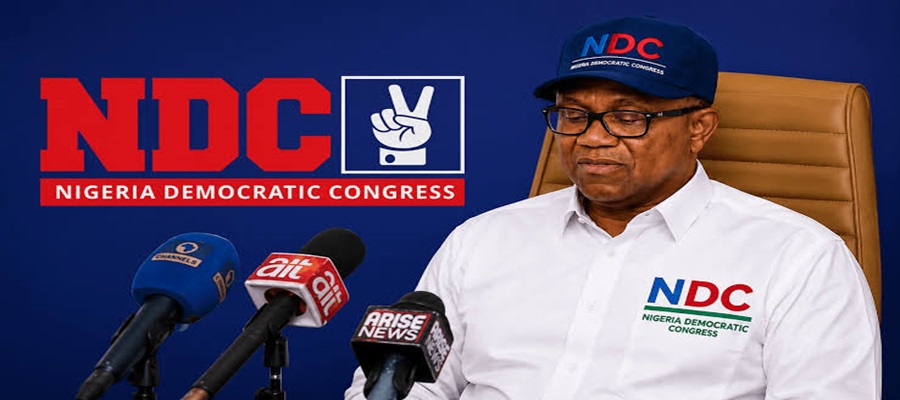
Abayomi Arabambi, national vice chairman (South-West) of the Labour Party, has demanded a public apology, a retraction, and N50 billion in damages from Peter Obi, presidential candidate of the Nigeria Democratic Congress (NDC), over an alleged defamatory statement made during a podcast interview.

The demand was contained in a letter issued by the law firm Neplus Ultra Attorneys and signed by Anderson U. Asemota, Peter O. Asimegbe, and Stanley C. Eziefulle on behalf of Arabambi.
According to the letter, the legal dispute arose from comments allegedly made by Obi during the interview, where he reportedly stated that Arabambi “does not have an address.”
Arabambi’s legal team described the statement as false, malicious, and defamatory, arguing that it portrayed their client as a faceless individual without legitimacy, credibility, or standing in public life.
The lawyers further claimed that the interview was widely circulated on television stations and digital platforms, exposing Arabambi to public ridicule and damaging his reputation.
“Our client has had a known residential and business address, maintains professional and political affiliations within Nigeria, and has never been a person whose whereabouts or identity were unknown,” the letter stated.
The legal team maintained that the alleged publication caused embarrassment and harmed Arabambi’s public image and political standing.
As part of their demands, the lawyers called for an unreserved public apology to be aired on national television, published on Obi’s verified social media platforms, and carried as full-page apologies in national newspapers.
They also demanded the payment of N50 billion as compensation for the alleged injury to Arabambi’s reputation, dignity, political standing, and public image.
Broadcasting
Why We’re Partnering With NIHOTOUR To Bring Nigerians In South Africa Home – Steve Babaeko


When Nigerians began arriving back home on emergency flights following an ultimatum from anti-migrant groups in South Africa, Steve Babaeko, alongside The Nigerian Institute of Hospitality and Tourism (NIHOTOUR), saw an opportunity to step up for his fellow citizens.

Steve Babaeko
The CEO of X3M Ideas explains that he saw a deep obligation, one that had nothing to do with advertising and everything to do with hospitality. For Babaeko, it was a reminder that an agency owes a duty of care to the community it exists within.
That conviction shaped the creative agency’s partnership with the Nigerian Institute of Hospitality and Tourism (NIHOTOUR) for the newly launched ‘Welcome Home’ pilot programme at Murtala Muhammed International Airport (MMIA) in Lagos. Rather than simply crafting a messaging campaign around the crisis, X3M Ideas helped design a tangible, physical system.
“This wasn’t built as a campaign about a crisis,” Babaeko said. “It was a hospitality agency deciding what it owes its own citizens the moment they land.”
For Babaeko, what X3M has built is infrastructure, something returnees can physically walk through, use, and benefit from the instant they clear the arrival gate.
With the MMIA pilot now officially running, NIHOTOUR directs returnees to immediate support services and issues them a Returnee Card. This card grants individuals a free first night at partner hotels, immediate transport assistance from the airport, and fast-tracked business registration support.
Furthermore, the initiative features a dedicated Restart Desk to assist returnee entrepreneurs and tradespeople with job placement referrals and business registration. This operates alongside a public Homecoming counter that tracks the cumulative number of returnees welcomed, businesses restarted, and jobs facilitated.

DSS Spyware Acquisition Enables Illegal Wiretaps, Detentions – The ICIR

Microsoft to Lay Off 4,800 Workers

Access Bank, Fifth Chukker and UNICEF Renew Commitment to Expanding Educational Opportunities for Nigeria’s Most Vulnerable Children

IHS Nigeria, FCT-HSES Concludes Clean Cooking Energy Campaign “Project Breathe Clean Air” in Abuja

Kaspersky Transforms Threat Intelligence Reporting into an Interactive Content Hub

Mobile Internet Gender Gap Widest in Africa – GSMA

Nigeria Launches FreeTV Nationwide

NASENI Moves to Digitize CCB’s 5m Assets Declaration and Operations

CANAL+ Partners Samsung to Pre-Load DStv Stream on New Samsung TVs In Nigeria, Other African Countries

UK, Nigeria Launch £15m Growth Programme to Accelerate Economic Transformation




 E-Financial2 days ago
Tokenization, Blockchain Technology will Transform Financial Institutions – IMF

 General News2 days ago
NIS Deploys Advanced Surveillance Masts, other Critical Infrastructure to Boost Border Security

 Broadcasting2 days ago
Obi, NDC Presidential Candidate Faces N50Bn Defamation Claim over Alleged Podcast Remark

 E-Business2 days ago
Weebly Websites to Shut Down for Nigeria, 66 Other Countries from September

 Telecom2 days ago
No Plans for Fresh Tariff Hike – MTN

 E-Financial2 days ago
FG Denies N8 Trillion ‘Shadow Budget’, Says IMF Quoted out of Context

 General News2 days ago
PufferPay CEO to Keynote Business Journal Fintech & Financial Inclusion Roundtable 2026

 Telecom2 days ago
Airtel Africa Foundation Equips 200 Young Women with Digital Skills to Drive Nigeria’s Tech Economy