

Telecom
The NCC, Telcos and the Tariff Discourse

By Dr. Falade Muritala Adesola
The telecoms sector in Nigeria is viewed by some as a model of regulatory excellence. Other African countries often visit Nigeria to study the sector, aiming to understand the regulatory framework established by the NCC. This regulatory excellence is evident in the growth and success of the telecoms industry, which currently contributes over 16% to Nigeria’s GDP.

Aminu Maida, executive vice chairman, NCC
The telecoms industry in Nigeria is a source of pride for everyone; it’s arguably the only sector that can be considered a successful model of liberalization in the country.
Amidst all the successes, the industry is still faced with multiple challenges, including multiple taxation, vandalisation, and changing macro realities. Noteworthy of mention is efforts by the NCC under the new Executive Vice Chairman, Dr Maida to further reposition the industry. Whilst the focus in the past has always been quality of service (QoS) the direction under the new EVC has shifted to quality of experience (QoE) which is more customer-centric and places more demands on the telecoms operators.
The EVC has continued to emphasize this at various engagements with stakeholders in the industry. Beyond advocacy, the visible steps taken so far by NCC under Dr Maida aimed at safeguarding telecom infrastructure deserve commendation. The recent incident of multiple fibre cut, which resulted in widespread network disruptions for one of the major telecoms operators, prompted swift action from the EVC. His advocacy for stricter penalties against perpetrators led to moves by the government to criminalize cable damages and vandalisation of telecoms infrastructure. This proactive stance not only deters future recklessness but also instils confidence among telecoms operators regarding the safety of their investments. However, the long-term viability of the industry hinges on a multifaceted approach that will include protection of telecoms infrastructure, which the NCC is currently spearheading, and sustainable pricing mechanism.
The Nigerian economy is currently grappling with new economic realities that continue to threaten its stability. These realities are not unique to Nigeria but rather a global phenomenon affecting countries around the world. A complex set of factors are exerting considerable pressure on the global economy and causing a slowdown in global growth. This is occurring alongside a marked increase in inflation. As a result, businesses are confronted with a range of challenges including rising costs of capital, a tight labour market, and geopolitical risks. These challenges have been worsened by disruptions due to the COVID-19 pandemic, the war in Ukraine, Israel, and the tensions between the US and China. Many countries are revisiting their policies and implementing new strategies to navigate the turbulent waters.
In Nigeria, the struggle to strengthen the value of the naira to the dollar has continued to gallop as the Central Bank of Nigeria (CBN) continues to pursue new approaches to address the situation. However, challenges such as infrastructural deficit and security concerns continue to persist, further exacerbating the issue. Yet, Nigeria continues to face a significant rise in food prices over the past few years, worsened by the removal of subsidies on petrol, amongst other things. This has resulted in a weakened purchasing power for many citizens with attendant effects on businesses.
In recent times, Nigeria’s naira has tumbled across both official and unofficial markets due to increased forex demand, causing a significant spike in prices of goods and services across the country. The National Bureau of Statistics (NBS) reported that items contributing to the inflation’s headline index on a year-on-year basis are food and non-alcoholic beverages (16.42%), housing, water, electricity, gas and other fuel (5.30%), clothing and footwear (2.24%), and transport (2.06%). The NBS explained that the rise in food inflation on a month-on-month basis is due to an increase in the average prices of bread and cereals, potatoes, yams, and other tubers, fish, coffee, tea, and cocoa.
These developments paint a bleak picture of the current economic situation in Nigeria and amid all these, discourse around telecoms tariff review is beginning to take centre stage, drawing attention to the need for a delicate balance between economic realities, quality of experience, which impacts directly on customer satisfaction, and telecommunications industry sustainability. For over a decade, major telecom operators like Airtel, MTN, and GLO have maintained their pricing structures, despite mounting challenges such as currency devaluation and inflation while other sectors have adjusted prices to cope with economic fluctuations.
For instance, entertainment giant, DStv, has increased its prices more than two times in the past year. Netflix has also reviewed its prices. Nigerian Breweries have also adjusted their prices to reflect the current realities, but telecom operators have maintained their pricing despite economic fluctuations, grappling with a devalued currency and rising operational costs.
In Nigeria’s telecommunications sector, diesel consumption is a critical factor influencing service reliability and progression. With numerous sites dispersed across the nation, a substantial portion operates on generators 24/7, necessitating continuous fuel supply. This escalating cost of diesel not only directly impacts operational expenses but also cascades into broader challenges such as site accessibility and infrastructural maintenance. As prices soar across various sectors, the telecom industry continues to grapple with the dilemma of maintaining quality services while operating within constrained pricing frameworks.
The prevailing reality suggests that the long-term viability of the telecoms sector now hinges on striking a delicate balance between affordability and quality of experience for consumers on the one hand, and profitability and survival for operators on the other hand.
Quality of experience stands at the forefront of consumer expectations in the telecom sector. However, the telecoms operators must continue to invest to maintain superior quality of experience. In the same vein, continuous and increased investment is a function of profitability. The telcos can only invest from their profits. There can be no investment without profitability. One way to gurantee profitability and sustainability of the industry is a review of the existing pricing structure.
Pricing autonomy is a linchpin for industry sustainability. The ability to set cost-reflective tariffs is indispensable for ensuring adequate returns on investment and fostering long-term viability. Telecom operators require a more transparent and collaborative approach to tariff adjustments, emphasizing the importance of a pricing framework aligned with operational realities. The current pricing window, sanctioned by regulators, is a foundation, but the industry needs greater flexibility to navigate cost fluctuations while ensuring service quality and accessibility remain uncompromised.
The clamour for cost-reflective tariffs is not merely about short-term gains but a strategic imperative to sustain the sector’s growth trajectory. The transition from 2G to 5G and with 6G on the way symbolizes the industry’s evolution, made possible by substantial investments that fuel innovation and expand service capabilities. However, without conducive regulatory frameworks that incentivize investment, the industry risks stagnation, jeopardizing future advancements and undermining service availability.
The telecommunications industry in Nigeria is currently at a crossroads where infrastructural challenges, pricing dynamics, and regulatory frameworks intersect, offering a unique opportunity for swift and collective action. A thriving and resilient telecommunications ecosystem has the potential to empower individuals, drive economic growth and enrich lives across the nation of Nigeria. Whilst the industry regulator has delivered commendably, prevailing realities demand a new approach to ensure continued viability of the sector.
Dr. Falade Muritala Adesola is a Senior Lecturer and former HOD, Computer and Information Sciences Department, Trinity University.


MTN Nigeria has announced the temporary suspension of its airtime and data advance service, Xtratime, following new regulatory requirements introduced by the Federal Competition and Consumer Protection Commission (FCCPC).

The telecom giant disclosed the development in a filing to the Nigerian Exchange Limited (NGX) on Thursday, stating that the move is necessary to comply with the FCCPC’s Digital, Electronic, Online or Non-Traditional Consumer Lending Regulations, 2025.
Xtratime, widely used by prepaid subscribers, allows customers to borrow airtime or data and repay on their next recharge.
In the disclosure signed by Uto Ukpanah, company secretary, the firm confirmed the halt, noting, “MTN Nigeria Communications PLC hereby notifies the Nigerian Exchange Limited and the investing public that the company has temporarily suspended its airtime and data credit advance service (‘Xtratime’).”
The company explained that the service now falls within the scope of the FCCPC’s expanded regulatory framework, which mandates fresh licensing and stricter compliance procedures for digital credit providers.
“The suspension relates to the implementation of processes under the Digital, Electronic, Online or Non-Traditional Consumer Lending Regulations, 2025, which introduced a new compliance and licensing framework for entities providing digital or non-traditional consumer credit services,” the statement added.
Despite the suspension, MTN reassured subscribers that alternative channels for purchasing airtime and data remain fully operational. It also downplayed the financial impact of the move.
“Given the scale within the revenue mix, we do not expect the temporary suspension to have a material impact,” the company said, adding that it is closely monitoring customer behaviour and will provide further updates in its first-quarter 2026 results.
The FCCPC’s 2025 regulations significantly broaden oversight of Nigeria’s digital lending ecosystem, bringing telecom operators and other providers of short-term credit services under stricter scrutiny. Companies offering such services are now required to register and obtain regulatory approval to continue operations.
The Commission had initially introduced a framework for digital lending in 2022, but expanded it in 2025 amid rising concerns over consumer debt, data privacy and lending practices.

Nokia and Orange are co-developing new strategies to maximise spectral efficiency across existing and future mobile bands, including the upper 6 GHz range, as networks transition toward 6G.

This follows an announcement of a partnership with NVIDIA to develop and evaluate Artificial Intelligence Radio Access Network (AI-RAN) technologies.
The initiative will combine the anyRAN 5G software of Nokia with the AI infrastructure of NVIDIA to improve network performance and energy efficiency.
The collaboration aims to transform service delivery for Orange across Europe, the Middle East, and Africa, says Nokia.
Under a new structured co-innovation framework, the partners will explore how GPU-based radio processors can boost performance via advanced receivers.
The goal is to integrate artificial intelligence (AI) directly into the RAN to automate environments, support sensing services and drive resource utilisation.
“By collaborating with Nokia and NVIDIA, we can better understand how the AI-native architecture enabled by AI-RAN can improve the efficiency of key radio algorithms such as scheduling, beamforming, and power optimisation — enhancing both spectral efficiency and energy performance, while also enabling advanced capabilities like predictive optimisation and radio sensing. This collaboration is an important step in our long-term network strategy,” says Laurent Leboucher, group chief technology officer at Orange.
Pallavi Mahajan, chief technology and AI officer at Nokia, comments: “AI is reshaping how networks are designed, introducing new levels of intelligence and flexibility across the radio layer.
“Through this collaboration with Orange, we are exploring how Nokia and NVIDIA’s AI-RAN solution brings advanced AI and RAN functions together in a unified architecture. This will be instrumental in enabling the industry’s transition toward cognitive, AI native networks.”
Orange is currently the fourth-largest telecoms operator in Africa with 18 markets on the continent. The partnership marks a significant attempt to leverage AI to accelerate digital transformation as the first wave of 6G approaches.
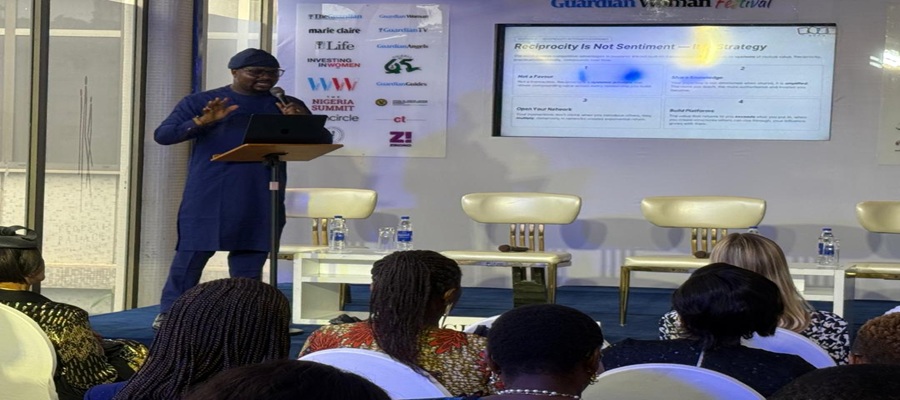
Zoho Nigeria partnered with Guardian Newspapers for the Guardian Woman Festival, a month-long initiative celebrating women’s contributions to business, governance, and social development while promoting digital empowerment for female entrepreneurs.

Kehinde Ogundare
Held at the Federal Palace Hotel in Victoria Island, Lagos, the festival focused on the theme “Reciprocity,” encouraging the exchange of value, networks, and digital innovation to strengthen women-led businesses and foster collaboration.
During the event, Kehinde Ogundare, Country Head of Zoho Nigeria, delivered a keynote address titled “Give Value, Gain Growth: Women Driving Reciprocal Innovation in the Digital Economy”. In his remarks, he highlighted the urgent need to bridge the digital gap for female entrepreneurs.
While Nigeria has the highest concentration of women-owned businesses in Africa, fewer than 30% currently use digital tools to manage or grow their operations. Ogundare noted that technology does not replace the strengths women already bring to business, such as relationship building and community engagement. Instead, it amplifies them, enabling entrepreneurs to reach wider audiences and scale more efficiently.
“The difference is not talent. Not capital. Not ambition. It is digital adoption,” said Ogundare during his keynote. “Smart tools create smart businesses. Smart businesses create strong economies. When women entrepreneurs and leaders have access to the right tools, the possibilities for growth are limitless.”
Zubaida Aliyu, Sales Manager at Zoho Nigeria, also brought her expertise to the festival’s panel session on ‘Women in the Business of Digital Innovation’. She highlighted how women are uniquely positioned to create shared value in digital spaces by building platforms that encourage knowledge sharing, mentorship, and collaboration.
Aliyu also challenged organisations that continue to view women’s digital inclusion primarily as corporate social responsibility rather than a strategic business priority.
“Tech creates a level playing field,” she said, noting that digital platforms remove limitations related to location and infrastructure size. Addressing organisations that overlook the economic value of inclusive digital strategies, she added, “They are leaving money on the table — they need to think of it as a strategy not charity”.
Through its participation in the Guardian Woman Festival, Zoho reaffirmed its commitment to providing affordable and accessible enterprise-grade technology to businesses of all sizes. By helping women transition from manual effort to digital efficiency, Zoho aims to support entrepreneurs build scalable enterprises and ensure their sustained success in Africa’s digital economy.

MTN Suspends Data, Airtime Borrowing Service over New FCCPC Lending Rules

Nigeria Customs Deploys AI to Cover Revenue Leaks

Top 7 Reliable Virtual Cards for Running Ads in Nigeria

Nokia, Orange Partner on AI-native 6G Networks

NDPC Issues Critical Advisory as Hackers Target Nigeria’s Key Digital Systems

Kuda MFB Increases Kuda for Her Business Grants to ₦10 Million

Canal+ to Cut Jobs as Part Sweeping Restructuring

Nigeria tops global rankings for USDT, USDC ownership

NBC Boss Urges Content Ceators to Participate in DSO

NITDA Takes Over National Digital Architecture System




 General News3 days ago
Guinness Nigeria Surpasses ₦1Trillion Market Capitalisation, Signalling Strong Investor Confidence and Sustained Value Creation

 News3 days ago
CISA Asks NDPC, Police to Act on Alleged Data Breach by NIPSS

 Telecom3 days ago
Amazon Satellite to Challenge Starlink in Africa with Globalstar Acquisition

 E-Financial3 days ago
FG Investigates ‘Sharp Sharp’ Loan Operators over Alleged Privacy Violations

 Broadcasting3 days ago
Fela Makes History as First African to be Inducted into Rock and Roll Hall of Fame

 News3 days ago
Kaspersky Reports Online Scam Exposure Remains Widespread Despite High Levels of Self-assurance

 E-Financial3 days ago
Ecobank Delivers Strong Results, Posts $801m in Pre-Tax Profit for 2025

 News3 days ago
Tinubu Tasks NRS to Restore Public Trust Amid Fiscal Changes