

/home/kenneth/web/nigeriacommunicationsweek.com.ng/public_html/wp-content/themes/zox-news/parts/post-single.php on line 153
">
Warning: Undefined array key 0 in /home/kenneth/web/nigeriacommunicationsweek.com.ng/public_html/wp-content/themes/zox-news/parts/post-single.php on line 153
Warning: Attempt to read property "cat_name" on null in /home/kenneth/web/nigeriacommunicationsweek.com.ng/public_html/wp-content/themes/zox-news/parts/post-single.php on line 153
Cost Prohibitive for Broadband Revolution – Garg

Anurag Garg is managing director of Direct On PC, a leading Internet Service Provider in the Nigeria.
Garg joined DOPC eight years ago from Zenith Computer Limited, India and he has vast knowledge of the country’s internet service market having served as chief operating officer of the Company before his appointment as managing director in 2010.
He spoke to chike onwuegbuchi on issues around growing internet service market in the country and refocusing of the company’s business.
Direct on PC offload of 4G Business to Swift Networks
Currently, we are fully focused on providing services to corporate & enterprise customers.
We are providing customized hybrid solutions using satellite and terrestrial networks like fibre and radio.
Why Offload
Offloading 4G services was a strategic decision which we took last year.
Earlier we were dealing in all segments of the market covering from home users to enterprise class customers.
This somehow was shadowing full utilization of our core strength in providing enterprise class services.
So, we decided to hive out the retail business and decided to fully focus on corporate & enterprise customers.
This decision has enabled us in better utilization of resources.
Were Abuja and Port Harcourt 4G Services Sold Too?
Entire 4G services were handed over to Swift.
Service network in Abuja and PHC was rather small.
As per information to me, Swift is working on the network to upgrade and launch the services in these cities again.

Higher Bandwidth for Your Enterprise Customers,
Demand for high speed internet and VPN connections is increasing. As I mentioned earlier, understanding of enterprise business is our core strength.
We know that enterprise customers need rugged connections with high speed and low latency. At the same time, due to slowness in economy, these customers are not able to spend more on their IT or connectivity requirements.
Keeping this in mind, we have invested into making our services more bandwidth efficient which gave us the edge of providing increased bandwidth to our enterprise customers without increasing their expense on the services.
We are getting very good feedback from the customers who have appreciated this upgrade.
NCC’s Auction of 2.3Ghz Spectrum
In my opinion, issuing more spectrum is always good for the market as it broadens the scope of providing better services to the market.
At the same time; how it’ll assist in the quest for broadband revolution depends on; how soon and at what level the services will be rolled out using the issued frequency spectrum.
ISPs Avoiding Last Mile Services and Preference for Corporate Customers
Last mile service is always involved whether an ISP is serving to retail customers or to corporate customers. Various ISPs are playing in their respective areas.
There are some ISPs which are only concentrating on retail services while some others are catering to corporate customers only.
I think; the key lies in utilising and building up on the core strength of any ISP.
Undersea Cables and Cost Reduction
You are right that lot of internet cables have reached Lagos and ample capacity is available on these cables.
We have 5 undersea cables reaching Lagos now but the problem is on the terrestrial distribution part.
For providing the benefit of this huge capacity to all Nigerians, the bandwidth needs to be carried from Lagos to various parts of the country. And for an ISP today, the cost of leasing capacity from Lagos to Port Harcourt is more than the cost of leasing the capacity from London to Lagos.
So, while people across Nigeria keep listening that more and more fibre is coming and the cost of bandwidth is going down, the benefit doesn’t really reach them.
Apart from this; in-country terrestrial network is highly unreliable in terms of uptimes. We, as an ISP, keep facing fibre cuts which hamper the flow of data traffic from Lagos to other upcountry locations.
For providing high uptimes to customers, we need to have back-up fibre or VSAT which further adds to the cost.
So, due to all these, you don’t see the real effect of ample bandwidth in upcountry locations.
Intention to Launch Mass Market Services
The decision of carving out our 4G services was based on our strategy of focusing on the core strength of enterprise services.
As of now, we do not intend to start mass market services and the plan is to rather grow our enterprise business by bringing latest technology to the market and by providing customized solutions to the corporate customers.


Warning: Undefined array key 0 in /home/kenneth/web/nigeriacommunicationsweek.com.ng/public_html/wp-content/themes/zox-news/parts/post-single.php on line 493
Warning: Attempt to read property "cat_ID" on null in /home/kenneth/web/nigeriacommunicationsweek.com.ng/public_html/wp-content/themes/zox-news/parts/post-single.php on line 493


Human Rights Writers Association of Nigeria (HURIWA) has opposed a bill seeking to compel major global social media companies to establish physical offices in Nigeria.

The rights advocacy group urged the National Assembly to discard the proposed legislation, warning that it could become a tool for censorship and undermine citizens’ constitutional right to freedom of expression, despite being presented as a measure to strengthen Nigeria’s digital economy and improve corporate accountability.
The position was contained in a presentation submitted yesterday by Emmanuel Onwubiko, national coordinator, HURIWA, to the chairman of the Senate Committee on ICT and Cyber Security.
The bill, sponsored by Senator Ned Munir Nwoko, has already passed second reading in the Senate and is before the committee for further legislative consideration.
HURIWA said it carefully reviewed the proposed legislation and concluded that compelling global technology companies to establish offices in Nigeria was unnecessary and potentially counterproductive.
The organisation argued that while the firms generate substantial revenue from Nigeria’s vast digital market, they already engage Nigerians through existing structures, including paying eligible content creators, working with local technology professionals and participating in legal proceedings whenever required.
According to the group, appointing local representatives where necessary would adequately address concerns about engagement with regulators and users without forcing the companies to maintain physical offices.
It also dismissed claims that mandatory country offices would significantly improve consumer complaint resolution, technology transfer or employment generation.
HURIWA maintained that the platforms already have effective feedback mechanisms for resolving users’ complaints and routinely appear before Nigerian courts through their representatives whenever litigation arises.
The group, however, said its greatest concern was the potential for the proposed law to be used as an instrument for restricting freedom of expression.
It argued that establishing local offices could expose global social media companies to pressure from government authorities to remove online content considered critical of those in power.
According to the rights group, the presence of social media companies in Nigeria could become an avenue for authorities to pressure them into abandoning internationally recognised digital rights standards in favour of politically motivated content moderation.
It recalled previous attempts to regulate social media in Nigeria that generated widespread concerns over possible restrictions on free speech, stressing that any legislation affecting the digital space must contain clear safeguards against abuse.
The organisation warned that the proposed law should never become “a backdoor mechanism for government surveillance, arbitrary content removal or political censorship.

Prof. Chukwuma Soludo, governor, Anambra State, has approved an indefinite ban on graduation ceremonies in kindergarten, primary and secondary schools across the state as part of efforts to reduce the financial burden on parents.

Prof. Chukwuma Soludo, governor, Anambra State,
The directive was confirmed by Dr. Law Mefor, commissioner for Information and Value Reformation, in a statement issued on Friday.
According to the commissioner, the government deemed it necessary to clarify the policy following public inquiries and concerns over the scope of the ban.
Mefor explained that the directive applies to all graduation-related ceremonies in both public and private schools across the state.
He said the ban covers events described as graduation, passing-out, crossover or any other ceremony organised to mark the completion of kindergarten, primary or secondary school levels.
The government said the decision was taken to discourage unnecessary financial obligations often imposed on parents through elaborate school celebrations.
The commissioner clarified that students completing Senior Secondary School (SS3) are exempt from the directive.
However, he stressed that graduation ceremonies for SS3 students are not compulsory and may only be held without imposing any financial burden on students or their parents.
According to him, schools choosing to organise such ceremonies must ensure that no levies, compulsory contributions or hidden charges are demanded from parents.
Mefor warned that the state government would not hesitate to sanction any school that violates the directive.
He said schools found organising prohibited graduation ceremonies or imposing illegal charges on parents risk severe penalties, including possible closure.
The commissioner urged school proprietors and administrators to comply fully with the directive in the interest of parents and the education sector.
The state government said the policy is part of broader efforts to make education more affordable and eliminate unnecessary expenses associated with school activities.
Many parents have previously complained about the increasing costs of graduation ceremonies, including compulsory levies for gowns, entertainment, souvenirs and other related expenses.
The government expressed optimism that the directive would ease the financial pressure on families while encouraging schools to focus more on academic excellence than ceremonial activities.
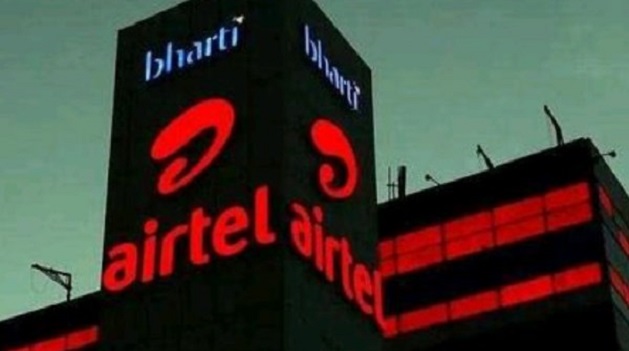
Airtel Nigeria has secured a fresh 10-year renewal of its spectrum licence from the Nigerian Communications Commission (NCC), reinforcing the telecom operator’s long-term commitment to expanding broadband connectivity and improving digital access across the country.

The renewed licence covers Airtel’s spectrum holdings, which are critical to the delivery of voice and high-speed data services, providing regulatory certainty for continued investments in network expansion, capacity upgrades and improved customer experience.
According to the company, the renewal underscores confidence in Nigeria’s telecommunications sector and will support its ongoing efforts to bridge the country’s digital divide by extending quality connectivity to more underserved communities.
Sunil Taldar, chief executive officer, Airtel Africa, said the renewal provides the company with the confidence to continue investing in Nigeria’s digital infrastructure.
He said, “The spectrum renewal reaffirms our long-term commitment to Nigeria, our largest market. It gives us the certainty required to continue investing in network expansion, improve service quality and accelerate digital inclusion for millions of Nigerians.”
Taldar added that Airtel remains focused on expanding broadband access and supporting Nigeria’s digital economy agenda through sustained investments in telecommunications infrastructure.
He further said, “We appreciate the Nigerian Communications Commission and the Federal Government for their continued support in creating an enabling environment for investment. We remain committed to delivering reliable and affordable connectivity while contributing to Nigeria’s socio-economic development.”
Meanwhile, Industry observers said the licence renewal removes regulatory uncertainty and allows Airtel to pursue long-term capital investments, including the expansion of 4G and 5G networks, as demand for mobile data and digital services continues to grow across Nigeria.
The renewal comes as telecom operators continue to invest heavily in broadband infrastructure to meet rising data consumption and support government efforts to achieve Universal digital access.
Furthermore, It also aligns with the NCC’s objective of ensuring efficient spectrum management while encouraging sustained private sector investment in the country’s telecommunications industry.

HURIWA, CLO Protests Bill Asking Social Media Firms’ to Open Shops Nigeria

Anambra Govt Bans Graduation Ceremonies in Anambra Schools

Airtel Secures Another 10-year Spectrum Renewal in Nigeria

Moniepoint as a Key Driver in Expanding Financial Access for Businesses in Nigeria

Nigeria, Israel Strengthen Research, Technology Collaboration

NRC, Ponzi Scheme Collapses Resulting Loss of Billions of Naira

EFCC Busts NIS Visa Overstay Racket, Uncovers N700m in an Account

Tokenization, Blockchain Technology will Transform Financial Institutions – IMF

From Scarcity to Scale: What Africa Can Learn from India’s Agricultural Transformation

Spotify partners Afro Nation Portugal to expand African music experience




 E-Business2 days ago
Kaspersky Warns Mobile‑data Buyers about Scammers Posing as Telecoms Operators

 E-Financial2 days ago
ChatPay Unveils Public Waitlist for WhatsApp-Based Banking Platform

 General News2 days ago
Three Entrepreneurs Secure ₦5 Million at The Gathering on 100 Pitchathon

 News2 days ago
African Judges Pledge Support for AfCFTA’s Success

 Telecom2 days ago
Airtel Africa Backs London Listing

 Telecom2 days ago
GSMA Says High Smartphone Costs Threatens Africa’s AI Future

 E-Business2 days ago
Nigeria Leads Africa in Online Gambling Regulation – GCI

 General News2 days ago
CBN Has Not Published Annual Financial Statements Since 2022 despite Legal Requirement