

/home/kenneth/web/nigeriacommunicationsweek.com.ng/public_html/wp-content/themes/zox-news/parts/post-single.php on line 153
">
Warning: Undefined array key 0 in /home/kenneth/web/nigeriacommunicationsweek.com.ng/public_html/wp-content/themes/zox-news/parts/post-single.php on line 153
Warning: Attempt to read property "cat_name" on null in /home/kenneth/web/nigeriacommunicationsweek.com.ng/public_html/wp-content/themes/zox-news/parts/post-single.php on line 153
Cyberoam, CYREN Found Malware URLs Increased 131% in 2013

It is no news that any website can easily be compromised if not updated regularly; enabling malware developers to exploit security vulnerabilities in common content management systems.
According to the Security Yearbook for 2013 by CYREN- a Cyberoam partner, the number of malware URLs was found to have increased by 131% during 2013.
The most common Web category that was found to be hacked in 2013 were the “Education” sites.
In addition to this, the number of phishing URLs also saw an increase by 264% during the course of 2013.
Most common categories included Free Web pages, Education, Sports, Computers and Technology, small shopping and small business sites.
Findings in the security year book also confirmed that with almost 150 million registered account holders, it is not surprising that PayPal regularly tops as a subject used in phishing attacks.
Every day around 750 new phishing websites were uncovered that specifically target PayPal users.
This equates to more than 270,000 sites annually.
Cybroam and CYREN discovered the “Exploit Kits” being used to deliver platform specific malware. This particular trend was seen throughout 2013.
In this model, users visit an infected website and their computer is scanned by an ‘invisible’ script that chooses the appropriate malware that can exploit known vulnerabilities associated with the browser, OS, PDF reader, etc.
Users were typically led to these threats by posts on social networking sites or email messages with embedded links.
Current events were increasingly used as bait to attract users to websites contaminated with malware.
Popular subjects in 2013 included the papal election and the royal baby, with the conflict in Syria being referenced when it had barely begun.
Also, Malware is increasingly tailored for specific countries.
While German email users receive fake train bookings from Deutsche Bahn or Lufthansa tickets, Americans will receive fake gift vouchers from U.S. companies, bills from their tax authorities, or even speeding fines from the police.
Other highlights from the Security Yearbook included details about new Android malwares, the huge rise in ransomware, reducing spam levels, and more.
It also includes Infographic information on ‘Top 10 countries for hijacked computer in 2013’ and a comprehensive review of ‘the Internet Security in 2013’.
In addition to these, details on ‘the returning Diet and Stock spam’ and ‘10 countries that produce 50% of spam’, are also covered in the report.
The report concludes with useful information on the ‘Security Outlook for 2014’.
Cyberoam Technologies, a Sophos Company, is a global Network Security appliances provider, offering future-ready security solutions to physical and virtual networks in organizations with its Next-Generation Firewalls (NGFWs) and Unified Threat Management (UTM) appliances.
Also, CYREN is the global leader in information security solutions for protecting web, email, and mobile transactions.
Its GlobalView Security Lab continuously innovates, their cloud-based threat detection and proactive data analytics to provide comprehensive security solutions for businesses of all sizes.


Warning: Undefined array key 0 in /home/kenneth/web/nigeriacommunicationsweek.com.ng/public_html/wp-content/themes/zox-news/parts/post-single.php on line 493
Warning: Attempt to read property "cat_ID" on null in /home/kenneth/web/nigeriacommunicationsweek.com.ng/public_html/wp-content/themes/zox-news/parts/post-single.php on line 493

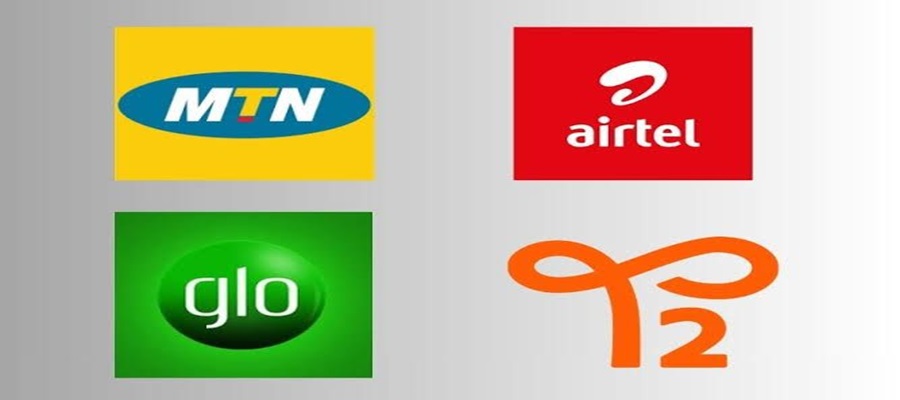
Telecom operators in Nigeria recorded a sharp decline of 33,153,633 subscribers in three years (May 2023 – April 2026), according to the Nigerian Communications Commission’s (NCC) latest industry statistics.

According to the telecom industry statistics, the figure showed that 4,270,285 of mobile subscribers were lost between May 2023 (220,931,688) and April 2024 (216,661,403), while the sector had repeat of the negative record with a huge drop of 46,338,623 subscribers between May 2024 (219,005,878) and April 2025 (172,667,255).
There was a significant positive increase between May 2025 (172,474,626) and April 2026 with 187,778,055 subscribers as of the latest figure issued by NCC.
The period recorded a huge increase of 15,303,429 subscribers.
In May 2023, when the current government came into power, the telecom sector had 220,931,688 subscribers. But as at April 2026 which marks exactly three years, the sector has a record of 187,778,055 subscribers.
This indicates a decline of 33,153,633 subscribers during the period under review.
Overall, according to the NCC’s figures, MTN, the largest operator with a subscriber figure of 88,675,062 as at April 2023, was a major factor in the statistics.
It gained 7,716,357 subscribers during the period under review which currently pulls 96,391,419 subscribers as at April 2026, while Airtel which had 60,331,845 subscribers in April 2023 recorded an increase of 4,338,173 subscribers, bringing its current subscriber base to 64,670,018.
On the flip side, Glo, which was trailing MTN with an impressive figure of 60,927,963 subscribers, suffered a massive loss of 37,749,366 subscribers. The development reduced its figure to 23,178,597 it currently has.
In the same vein, T2 (formerly 9mobile) which was accommodating 13,403,345 subscribers in May 2023, lost 9,865,324 subscribers.
The network, according to NCC’s April 2026 statistics, has only 3,538,021 subscribers on its base.
Despite the sharp decline recorded in the period, market stability has slowly returned.
Latest NCC figures indicate that by early 2026, telcos had started recovering lost ground, even rolling out large-scale compensation programmes to over 75 million customers due to poor network quality.
The reduction in the telcos’ active subscriptions between 2023 and 2026 can be attributed to the disconnection of SIMs that were not linked with the National Identification Number (NIN) as mandated by the government.
The development resulted in the decline of subscriptions for mobile services in the country.
During the period which witnessed the impact of foreign exchange (FX) unification and the removal of the premium motor spirit subsidy, the biting economic pressures reduced consumer purchasing power which led many Nigerians to give up multiple or redundant SIM cards to cut back on monthly data costs.
The service providers lost most subscribers as a result of the Federal Government, through the industry regulator, relevant agencies and institutions like banks which came up with poicies that demanded Subscriber Identification Module (SIM) updates and verifications. A change in the minimum age requirement for SIM registration (from 16 to 18 years) also contributed to a decline in gross new connections.
During the period, the industry regulator, NCC, issued new guidelines to telecommunication companies, directing them to deactivate phone lines unused for six consecutive months for Revenue Generating Event (RGE).
The new rule took a toll on the telecom operators, as many subscribers who are using more than one phone line could not be able to retain the others due to the harsh economic environment of the country.
According to the regulator, “A subscriber line may be deactivated if it has not been used, within six months, for a Revenue Generating Event (RGE), and if the situation persists for another six months, the subscribers may lose their numbers, except for a network-related fault inhibiting an RGE.”
It is common knowledge that some Nigerians are migrating to other countries of the world, and most of them may likely not continue to use their Nigerian networks’ SIM either voluntarily or perhaps any policy that needs revalidation comes up.
There was also a standing order for those who had issue(s) with their SIM cards, as the National Identity Number (NIN) in the registration of Subscriber Identity Module (SIM) cards by all mobile telecommunication network operators was mandatory.
The development undoubtedly interrupted the growth trend of telecom subscribers as indicated in the three years’ statistics by NCC.

President Bola Tinubu on Thursday urged Nigerians to pay their taxes, because the revenue is critical for his administration’s Renewed Hope Agenda to fund public infrastructure like roads, hospitals, and amenities across the country.

President Bola Tinubu
He spoke during the commissioning of interchange at Arterial Road N16 – Ring Road III Intersection linking Jahi District to Gwarimpa District of the FCT.
The project was among those earmarked to celebrate his third year anniversary and he was represented at the commissioning by Godswill Akpabio, Senate President.
He said: “I’m very proud to stand here to commission this Arterial road interchange N16 linking Jahi district to Gwarimpa District of the FCT.
“This is not just a bridge and slip roads, this is freedom of movement and time returned to the people, this is renewed hope that you can even drive on. This intersection used to choke the entirety of Abuja, gridlock stretched from Maitama to Gishiri, from Jahi to Gwarimpa; hours lost, fuel wasted, business were lost but today that story ends.
“This interchange opens up critical districts of the FCT and connects them smoothly to the rest of the FCT. Workers will get home earlier, security will improve because criminals strive when security stands still.
“Ladies and gentlemen, infrastructure is the foundation of prosperity which is the cardinal principle of this administration. Roads are the arteries of a nation, when we connect districts we connect destines and that is the logic of the renewed hope agenda, build the roads unlock the economy and let Nigerians strive.
“The Jahi-Gwarimpa interchange is prove that Nigeria is not beyond redemption. With focus, discipline, and political will, Nigeria will deliver and we are delivering, the FCT is delivering.”
The president also charged Nigerians and residents of the FCT to pay their taxes.
According to Tinubu, it would allow his administration to provide more infrastructural projects.
“Also pay your taxes and levies so that government can do even more for you,” he added.

Nigerian Communications Commission (NCC) has launched its maiden Women in Leadership Programme aimed at empowering female professionals and strengthening leadership development across Nigeria’s telecommunications and technology sector.

The initiative, unveiled during an event in Abuja, is designed to provide mentorship opportunities for emerging female professionals by connecting them with experienced women leaders within the Commission and the broader telecommunications industry.
Speaking at the launch, Dr Aminu Maida, executive vice-chairman of the NCC, highlighted the significant contributions women have made to the Commission, noting that they continue to excel in strategic leadership positions and play a vital role in driving the organisation’s success.
According to him, women currently head several critical departments within the Commission, including Legal Services, Information Technology, Procurement, Public Affairs, Consumer Affairs and Internal Audit, demonstrating both competence and effective leadership.
Dr Maida explained that the Women in Leadership Programme was conceived to inspire younger female professionals to aspire to senior management and executive positions by learning directly from accomplished women who have excelled in their careers.
“We have a lot of very strong women. Not only are they in positions of authority, but they also deliver. This event is needed to encourage the younger women to aspire to reach the top level of their careers,” he said.
The NCC boss also acknowledged the unique challenges women face in balancing professional responsibilities with family commitments. He commended their resilience, dedication and ability to deliver results despite these competing demands, stressing that their efforts deserve recognition and support.
Delivering the keynote address, Maryam Idris, managing director of NNPC Trading Company, urged women to deliberately invest in their personal and professional development by acquiring relevant skills, building competence and embracing lifelong learning.
She advised female professionals to confidently communicate their achievements while maintaining integrity throughout their careers, noting that technical expertise alone may not be sufficient for career advancement.
“Build your competence. Read, manage your career, find mentors and sponsors, and continue building your capacity. What you know is something nobody can take away from you,” Idris said.
Also speaking at the event, Rimini Makama, executive commissioner for Stakeholder Management, described the mentorship initiative as a strategic effort to institutionalise leadership development for women within the Commission.
She explained that the programme would establish a sustainable network of accomplished female leaders who would mentor younger professionals, ensuring that leadership development remains a continuous process beyond the tenure of individual office holders.
Makama noted that the Commission already enjoys substantial female representation in leadership positions and intends to build on that progress by preparing more women to assume strategic responsibilities in the future.
The Women in Leadership Programme underscores the NCC’s commitment to promoting gender inclusion, nurturing female talent and creating a stronger pipeline of women leaders capable of driving innovation and sustainable growth in Nigeria’s telecommunications sector.

Telcos Lose 30m Subscribers in 3-Year Slump due to NIN-SIM Link Policy

Pay Your taxes for Me to Do More – Tinubu

NCC Launches Maiden Women’s Leadership Mentorship Programme

FG Proposes Africa-Wide Payment Card without Conversion through US Dollar

Providus, Unity Bank Begin Integration Phase after Supreme Court Nod

CBN Extends PoS Geo-Fencing Enforcement Deadline to August 2026

London Strengthens Global Investment Ties with Africa @ First Ever London-Africa Business Summit

FG Targets Alleged N3tn Capital Flight, Opens Airtime Credit Market to Nigerian Fintechs

Mobile Internet Gender Gap Widest in Africa – GSMA

Japan, UNESCO Boost Digital Learning in 15 CoEs with Donation of ICT Equipment




 News3 days ago
PalmPay MD Seeks Stronger Infrastructure, Access to Finance for SMEs @ Digital Pay Expo 2026

 Telecom3 days ago
Africa Projected to Lead Global 5G Growth

 Broadcasting2 days ago
Lebara Nigeria Launches Lebara Play, Africa’s First Telecom-Owned Micro-Drama Platform

 News3 days ago
Kaspersky Identifies over 336 Unique Domains Impersonating the Official World Cup Website

 General News3 days ago
Paystack Launches Programme to Support Nigerian Businesses

 Telecom2 days ago
NITDA Unveils Bold Vision to Make Nigeria an AI Powerhouse

 E-Financial2 days ago
SEC Bars Dangote Refinery IPO Adverts

 E-Business2 days ago
Privacy Crisis May Undermine Local Hosting of Data by Banks, Fintechs