

Telecom
Salesforce Unveils Einstein Service Agent an Autonomous AI Agent which would Revolutionise Chatbot Experiences


Salesforce on Friday announced Salesforce’s first fully autonomous AI agent. Einstein Service Agent makes conventional chatbots obsolete with its ability to understand and take action on a broad range of service issues without preprogrammed scenarios, helping make customer service far more efficient.

Unlike traditional chatbots — which can only handle specific queries that have been explicitly programmed into their system and don’t understand context or nuance — Einstein Service Agent is intelligent and dynamic. Built on the Einstein 1 Platform, Einstein Service Agent interacts with large language models (LLMs) by analysing the full context of the customer’s message and then autonomously determining the next actions to take.
It uses generative AI to create conversational responses — grounding its responses in a company’s trusted business data, including Salesforce CRM data — tailored to a company’s brand voice, tone, and guidelines with a few clicks. For service organisations, this means they can offload a large number of tedious inquiries that bog down their productivity so they can focus on tasks that require a human touch. For customers, this means they get the answers they need much faster because they no longer need to wait for human agents.
Einstein Service Agent is standing ready 24/7 to communicate with customers in natural language, respond across self-service portals and messaging channels, and perform tasks proactively while operating within clear guardrails that companies can define using the Einstein 1 Platform. And when more complicated, high-touch issues arise, requiring escalation to a human worker based on the parameters set by the company, Einstein Service Agent performs the handoff quickly and easily.
Currently in pilot and generally available later this year, Einstein Service Agent can be set up in minutes with user-friendly interfaces, pre-built templates, and low-code actions and workflows.

“Salesforce is delivering a future where human and digital agents join forces to improve the customer experience,” said Linda Saunders, Head Solution Engineering for Africa. “Einstein Service Agent, our first fully autonomous AI agent, will not just complete service jobs on its own; it will augment how human agents work and completely transform how service teams operate, making them far more efficient and productive. We are reimagining customer service for the AI era.”
Studies show most companies use chatbots today, but 81% of customers would rather wait to speak to a live agent because the current generation of chatbots aren’t meeting their expectations and the experience can be frustrating. Yet, 61% of customers say they’d rather use self-service to resolve simple issues, underscoring an opportunity and need to deliver more intelligent, autonomous agents powered by generative AI.
Einstein Service Agent has fluid, intelligent conversations with customers. It uses its reasoning engine to interpret and process information to provide answers and solve problems for customers. The advanced reasoning engine interacts with LLMs by analysing the full context of the customer’s input to understand their intent, drawing logical inferences from the data, and connecting various pieces of information to determine the right set of actions to take.
Einstein Service Agent executes those actions and uses generative AI to create responses that align with a company’s brand voice, tone, and guidelines.
Einstein Service Agent grounds its responses in a company’s trusted business data, including Salesforce CRM data. Using Data Cloud and Unified Knowledge, companies can even integrate data and knowledge from third-party systems, like SharePoint, Confluence, Google Drive, and company websites and files, to help Einstein Service Agent generate accurate responses that are personalised to every customer’s specific needs and preferences.
Einstein Service Agent is built on the Einstein 1 Platform and leverages the Einstein Trust Layer to perform functions like masking personally identifiable information (PII) and defining clear parameters and guardrails for Einstein Service Agent to follow.
Einstein Service Agent doesn’t require thousands of lengthy structured dialogues for setup. It can be turned on in minutes with its out-of-the-box templates, Salesforce components, and an LLM. Companies can even reuse existing Salesforce objects, like flows, Apex code, and prompts, to equip Einstein Service Agent with skills faster and create custom actions that are specific to their business needs using a low-code builder and natural language instructions to save time and money.
Einstein Service Agent can assist customers anytime across self-service portals and messaging channels, like WhatsApp, Apple Messages for Business, Facebook Messenger, and SMS. Because Einstein Service Agent understands text, images, video, and audio, customers can send photos when their issue is too difficult to explain in words.
If an inquiry is off topic or falls outside of Einstein Service Agent’s scope, it will easily transfer the conversation to a human agent using Service Cloud. The human agent will have full context of the conversation and can pick up where Einstein Service Agent left off without asking the customer to repeat themselves.


MTN Nigeria is accelerating investments in network expansion and modernization to address rising demand for mobile and data services across the country.

The operator is deploying additional base stations, upgrading existing infrastructure, and expanding fiber connectivity to improve network capacity, coverage, and service quality.
The investments are designed to support increasing smartphone adoption, higher data consumption, and the growing use of digital services by consumers and businesses.
MTN said the expansion aligns with its long-term strategy to enhance customer experience while strengthening Nigeria’s digital infrastructure.
The company expects the ongoing upgrades to improve connectivity, support economic growth, and enable broader access to reliable telecommunications services as demand for high-speed broadband continues to increase.

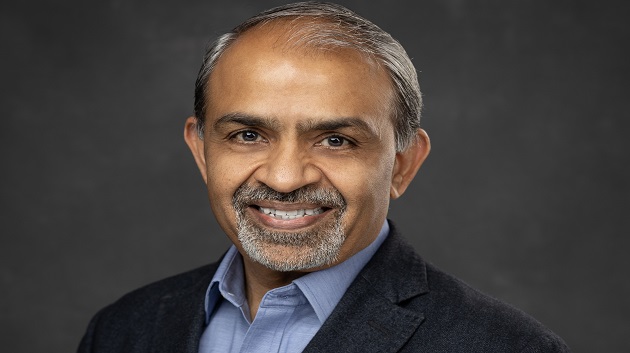
Airtel Africa’s CEO, Sunil Taldar, has announced the telco’s commitment to connecting 5,000 schools across its operating countries in Africa to the internet by 2027 through its philanthropic arm, Airtel Africa Foundation, in partnership with the United Nations Children’s Fund (UNICEF).

So far, the $57m partnership, which was launched in 2021, has cumulatively connected 3,296 schools and provided access to over 2 million learners and about 40,000 teachers. 64 digital learning platforms have been zero-rated thereby enabling more than 11m users to access educational content at no cost.
Speaking during a visit to St. Monica’s Girls School in Lusaka, which is one of the 300 schools already connected to the internet in Zambia, the Airtel Africa CEO stated that the initiative is having a profound impact on the quality of education by expanding access to digital learning resources for African children, in collaboration with governments.
Mr Taldar added: “Students are accessing best-in-class education from the curriculum developed by UNICEF in partnership with various Ministries of Education and provided through Airtel’s connectivity.
“We are also training teachers, so that they deliver digital education effectively. We aim to continue deepening meaningful connectivity in schools by providing free internet access, zero‑rated platforms and training teachers across the continent”.
Expressing her appreciation, the Headmistress of St. Monica’s Girls’ School, Sr Matilda Soloko said: “Being among the first schools connected in the initial stage, our learners have been able to study using the learning portal and their studies have been intensified. We remain grateful to Airtel and UNICEF.”
UNICEF’s Country Representative for Zambia, Dr Saja Farooq Abdullah said: “What this partnership has brought is really bridging the equality gap and the digital divide. It is making sure that every child learns wherever they are. It was exciting and interesting to see and hear from the girls how they can learn at their own pace, how they can review the materials, and how they do their homework with comfort.
The Director of Secondary Education in Zambia’s Ministry of Education, Yvonne Mwemba Chuulu lauded UNICEF and Airtel for the partnership saying: “At the Ministry of Education, we cannot do it alone, and we are grateful for the partnership that we have today.
“Our children are able to learn in a blended fashion, where we have a teacher who is also employing digital devices. We have also heard from the learners that they are able to access the portal when they are at home, which is a good thing because our learners continue to learn in the comfort of their homes”.
The School Connection programme is expanding digital learning to learners in 13 countries: Chad, Congo, Democratic Republic of Congo, Gabon, Kenya, Madagascar, Malawi, Niger, Nigeria, Rwanda, Tanzania, Uganda, and Zambia. By equipping these schools with internet connectivity and training teachers on using the digital tools, it is providing children, particularly in underserved and remote regions, with the digital tools and skills they need to thrive.
Airtel Africa Foundation is advancing inclusive development across four strategic pillars, Financial Inclusion, Education, Environmental Sustainability and Digital Inclusion.

MultiChoice has officially become a wholly owned subsidiary of French media company Canal+, marking the completion of one of the largest acquisitions in Africa’s media and entertainment industry.

The integration brings the South Africa-based pay television operator under the full ownership of Canal+, a global media group with operations in 70 countries.
Announcing the completion of the transaction on Thursday, Chief Executive Officer of Canal+ Africa and MultiChoice, David Mignot, described the development as the beginning of a new phase of growth for the broadcaster.
“MultiChoice is now a full subsidiary of a truly international media group operating in 70 countries.
“The group was founded in France, is listed in London and Johannesburg, and has a strong African presence with operations in more than 45 countries,” Mignot said.
The acquisition combines Canal+’s international operations with MultiChoice’s extensive footprint across sub-Saharan Africa, where it serves millions of households through its DStv and GOtv platforms, as well as the Showmax streaming service.
According to Canal+, the integration will strengthen MultiChoice’s competitive position by giving it access to broader financial resources, technology, content partnerships and operational expertise.
The company said the combined business would increase investment in local content production, sports broadcasting and streaming services as competition intensifies from global platforms such as Netflix, Amazon Prime Video and Disney+.
The transaction is also expected to provide MultiChoice with greater access to international markets at a time when traditional pay television operators are adapting to changing consumer viewing habits and the rapid growth of digital streaming platforms.
Canal+ has expanded steadily across Africa over the past decade and now assumes full control of a business operating in more than 45 African countries, further strengthening its position in the continent’s media and entertainment sector.
The acquisition followed Canal+’s gradual increase in its shareholding in MultiChoice, which began in 2024.
After exceeding the regulatory threshold, the company launched a mandatory offer in April 2024 to acquire the remaining shares of the Johannesburg-listed broadcaster.
Following regulatory approvals and shareholder acceptance, Canal+ secured control of MultiChoice in 2025 before completing the process that has now made the company a wholly owned subsidiary.
Industry observers describe the acquisition as one of the most significant media transactions involving an African company, reflecting a broader trend of consolidation as global entertainment firms seek greater scale to compete in the streaming era.

Police Busts Syndicate Who Allegedly Stole N3Bn from Financial Institution

MTN Accelerates Network Expansion to Meet Surging Telecom Demand

Court Remands Akujobi, Ex Access over alleged Theft of N294.5m

TeKnowledge, Equinix Partner to Advance Nigerian Digital Infrastructure

NSIB Faults Runway Identification, Reveals Cockpit Disagreement in Asaba Jet Incident

NASENI Moves to Digitize CCB’s 5m Assets Declaration and Operations

Mobile Internet Gender Gap Widest in Africa – GSMA

Nigeria Launches FreeTV Nationwide

CANAL+ Partners Samsung to Pre-Load DStv Stream on New Samsung TVs In Nigeria, Other African Countries

Lebara Nigeria Launches Lebara Play, Africa’s First Telecom-Owned Micro-Drama Platform




 Telecom2 days ago
NCC Seeks Cost-Based Pricing Framework for Ducts

 E-Financial2 days ago
CBN Warns against Rejection of N100 Banknotes

 Telecom1 day ago
Fixed Wired Internet Market Lags as Mobile Gains Ground

 News2 days ago
Flutterwave Secures Circle Ventures Investment to Deepen USDC Payment

 Telecom2 days ago
Meta Introduces Muse Image With Advanced AI Image Editing Across WhatsApp and Instagram

 E-Financial2 days ago
BVN Enrollments Hit 69.55m- NIBSS

 News2 days ago
How EFCC Turned Recovered Loot Into School Supplies for Thousands of Nigerian Students

 News2 days ago
CJN Warns Judges: Reject Gifts or Risk Petitions and Ruined Careers