

News
GSMA Highlights Nigeria’s AI-driven Path to Economic Growth and Climate Impact


The GSMA has identified Nigeria as a pivotal player in the advancement of artificial intelligence (AI) for driving socio-economic progress and climate impact in its new report, “AI for Africa: Use Cases Delivering Impact – Nigeria Deep Dive“.

It follows the continent-wide report, funded by the UK Foreign, Commonwealth and Development Office (FCDO), which highlighted that while Africa currently accounts for only 2.5% of the global AI market, emerging AI applications hold the potential to boost African economic growth by an astonishing $2.9 trillion by 2030.
The newly-released analysis on Nigeria, also funded by the FCDO, highlights AI’s transformative capacity in the country in key sectors such as agriculture, energy and climate action, and underscores Nigeria’s potential to lead in AI-driven development across the continent.
Agriculture: enhancing productivity and food security
Agriculture remains a significant sector in Nigeria, employing nearly 40% of the population and contributing a quarter of the GDP. The report identifies substantial opportunities for AI and digital technologies to enhance resource efficiency, increase productivity, improve market access, and reduce post-harvest losses.
AI-powered solutions like Crop2Cash’s FarmAdvice and ThriveAgric’s Agricultural Operating System are already making strides by providing tailored advice and financial services to farmers.
However, challenges such as limited data availability, high costs, and a significant digital skills gap among smallholder farmers hinder the widespread adoption of AI.
Energy: optimising access and efficiency
Nigeria’s energy sector faces challenges including an ageing infrastructure and a reliance on fossil fuels. The deployment of AI technologies in the field remains nascent in Nigeria but has significant potential to improve energy distribution and reliability.
Innovations like Beacon Power Services’ AI-enabled grid management platform and Husk Power Systems’ AI-driven mini-grids can optimise energy usage and extend access to rural areas.
These solutions are critical in addressing the energy sector’s needs, providing both on-grid and off-grid systems with the tools to enhance efficiency and sustainability. Where access is lacking, AI could also play a role by helping inform energy planning and supporting the financing of solar appliances to reduce energy poverty.
Climate action: building resilience
Despite low greenhouse gas emissions, Nigeria is highly vulnerable to climate change. Existing AI-driven solutions include Google’s flood forecasting tool and Chemotronix, a carbon credit platform enabled by AI.
While climate-related AI applications are currently limited in Nigeria, there is potential to further leverage AI capabilities for climate action, especially around natural resource management.
Satellite imagery could help biodiversity mapping and monitoring, while climate modelling could help understand the future impact of climate change in highly polluted areas, helping Nigeria mitigate and adapt to environmental challenges.
Addressing key challenges
To fully leverage AI’s potential, the report identifies several critical areas of focus:
– Data availability and accessibility: investing in localised, domain-specific data collection and ensuring safe data handling practices are essential. Increasing access to high-quality data will help customise AI solutions to local needs.
– AI infrastructure and computing: expanding infrastructure, enhancing access to high-performance computing, and prioritising edge computing capabilities are necessary steps. Investments in these areas will support AI scalability and effectiveness.
– Skills development: enhancing AI and data science education, accelerating digital literacy, and building capacity for AI users and builders are vital. Developing a skilled workforce will drive innovation and adoption of AI technologies.
– Policy and ecosystem support: establishing clear policy roadmaps, encouraging cross-sector collaboration, and promoting local investment are key to fostering a robust AI ecosystem. Strengthening these areas will create an enabling environment for AI growth.
Strategic recommendations
The report provides targeted recommendations to support AI deployment in Nigeria:
– Invest in localised data collection: support the financing of hardware and devices, including drones, IoT sensors, and smartphones to accelerate data collection across sectors, and support initiatives building local language datasets.
– Enhance infrastructure and compute capabilities: invest in data centres, promote clean energy sources, and develop edge computing solutions for low-resource environments.
– Foster AI skills and education: capitalise on Nigeria’s young population by enhancing AI and data science curricula, providing scholarships, and supporting capacity-building initiatives.
– Strengthen AI ecosystem: encourage public-private partnerships, mitigate investment risks, and boost funding for R&D to promote innovation and sustainable development.
Max Cuvellier Giacomelli, Head of Mobile for Development at the GSMA, said: “Nigeria’s potential to harness AI for transformative change is immense. The innovative applications we are already seeing in agriculture, energy, and climate action are just the beginning. With further progress around data availability, connectivity, or skills development, the country can truly enable AI to drive significant socio-economic progress.”



Consumer advocates, health professionals and policymakers have called for urgent regulatory reforms to eliminate added sugars in infant foods, warning that current standards may be exposing Nigerian babies to avoidable long-term health risks.

Chiso Ndukwe-Okafor, Executive Director of CADEF
The call was made on Thursday at a high-level stakeholders’ meeting in Abuja organised by the Consumer Advocacy and Empowerment Foundation (CADEF) in partnership with Public Eye, where new findings on sugar content in baby foods triggered widespread concern.
Public Eye’s research focused on Cerelac, Nestlé’s widely consumed infant cereal across Africa. Laboratory tests on nearly 100 samples purchased in over 20 African countries revealed that 94 per cent contained added sugar. On average, products recorded about 6 grams of added sugar per serving equivalent to roughly one and a half sugar cubes with some markets reaching between 7 and 7.5 grams. Nigerian samples averaged 5 grams, with peaks of 6.1 grams.
The figures refer strictly to sugar added during manufacturing and exclude naturally occurring sugars present in ingredients such as grains, fruits and milk.
Nestlé however maintained that its products comply with local regulations and are fortified to address nutritional deficiencies.
However, the company has not explained why sugar-free formulations are available in Europe while African markets receive variants containing added sugar.
Opening the session, Chiso Ndukwe-Okafor, Executive Director of CADEF, stressed that the advocacy is not targeted at any single company but aimed at safeguarding children’s health and advancing a zero-added-sugar standard for infant foods in Nigeria.
“African babies are being fed sugar Europe would never accept,” she said, highlighting disparities in product formulations across regions.
Citing the findings, she noted that some cereal-based infant foods contain “over four grams, almost five grams of sugar,” but clarified that manufacturers are not breaching existing laws.
“They are complying with current regulations, which are based on Codex standards developed over 30 years ago,” she said, pointing to the outdated nature of the framework as the core issue.
She urged regulatory authorities to align national standards with current global health recommendations.
CADEF warned that early exposure to added sugars can shape children’s taste preferences and increase their risk of obesity, diabetes, dental disease and other non-communicable conditions later in life echoing guidance from the World Health Organization, which advises against added sugars in infant foods.
While acknowledging that existing sugar levels fall within Nigeria’s Codex-based standards, the organisation argued that the framework is no longer sufficient to protect infant nutrition.
It clarified that its concerns relate specifically to sugars deliberately added as sweeteners or enhancers, not naturally occurring sugars in raw ingredients.
Stakeholders at the meeting called on key regulators including the Standards Organisation of Nigeria (SON) and the National Agency for Food and Drug Administration and Control (NAFDAC) to review existing standards and enforce clearer, more transparent labelling requirements.
CADEF emphasised that parents deserve accurate, easy-to-understand information when making nutritional choices, noting that Nigerian consumers should enjoy the same level of product quality and protection available in other markets.
Among its recommendations is the introduction of mandatory front-of-pack labelling that clearly identifies and distinguishes sources of sugar, alongside policies to drive reformulation toward zero added sugar.
“We need front-of-pack labelling in simple language that separates the source of sugar on each product,” Ndukwe-Okafor said, adding that regulators and paediatric stakeholders expressed support for reform.
Also speaking, Adeyemo Adebayo of the Nutrition Division at the Federal Ministry of Health stressed that policy reforms must be complemented by sustained public advocacy to achieve meaningful impact.
He called for broader health education efforts beyond formal legislation, including engagement with traditional and religious leaders to drive grassroots awareness that infants do not require added sugar.
Jubril Mohammed, representing the Standards Organisation of Nigeria, said the agency’s role is to facilitate consensus-driven standards rather than impose unilateral decisions.
He noted that proposals such as eliminating added sugar must be backed by evidence and stakeholder agreement, adding that review processes can take up to a year.
He, however, expressed the agency’s willingness to collaborate with CADEF.
From a clinical perspective, Dr. Anthony Bawa, representing the Paediatric Association of Nigeria (PAN), called for stronger multi-sector collaboration involving academia, health institutions and lawmakers to address the risks associated with added sugars in infant diets.
He emphasised the importance of National Assembly involvement in enacting effective legislation to protect children’s health.
The meeting also highlighted international precedents. In India, sustained advocacy and regulatory pressure have compelled manufacturers to introduce multiple no-added-sugar variants of infant foods, demonstrating that reform is achievable.
As interim guidance, advocates urged parents to limit processed foods, avoid sugary drinks and sweets for young children, and prioritise natural options such as fruits.
“Don’t give children soft drinks. Don’t give them sweets,” Ndukwe-Okafor advised, recommending healthier alternatives like bananas and mangoes.
The coalition said it will engage senior policymakers and the National Assembly to push for stricter regulations, including a zero-added-sugar benchmark for infant foods in Nigeria.
Stakeholders agreed that a combination of regulatory reform, industry accountability and consumer education will be critical to safeguarding infant health and securing a healthier future.
News
UK–Nigeria Skills and Schools Trade Mission Concludes with Strong Foundations for Education Partnership
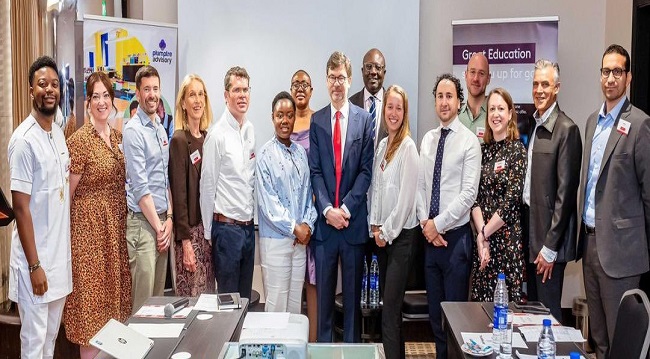
A high-level UK delegation has concluded a week-long skills and schools trade mission to Nigeria, marking a significant step forward in education and skills cooperation between the two countries.

Running from 19-23 April 2026 across Abuja and Lagos State, the mission brought together leading UK private schools, skills providers, and education institutions with Nigerian partners, schools, and the Honourable Minister of Education Dr Tunji Alausa.
The mission follows the high profile and well received state visit to the UK in March, which also included education engagements. Supported by the UK’s Department for Business and Trade (DBT), the mission forms part of its new International Education Strategy, under which Nigeria has been identified as one of five priority education markets, spearheaded by Professor Sir Steve Smith, who is looking forward to visiting the country again this year.
The mission focused on in-country delivery of education, the establishment of world-renowned UK schools in Nigeria, and the development of skills and Technical and Vocational Education and Training (TVET) systems aligned with industry demand.
In Abuja, the delegation met with Nigeria’s Honourable Minister of Education, Dr Tunji Alausa, securing strong political backing for UK–Nigeria education partnerships and set the groundwork for ongoing institutional collaboration across both schools and skills.
In Lagos, delegates engaged further with potential partners and investors. In both cities the delegation was thrilled to visit local British curriculum schools and colleges to further enable them to experience first-hand the teaching and learning environment.
British Deputy High Commissioner, Jonny Baxter, said: “The UK and Nigeria share a deep and longstanding relationship, and opportunities in education are one of its most exciting frontiers.
“This mission has demonstrated the strong appetite on both sides to deepen collaboration in education and skills.”
“By bringing together UK schools and skills providers with Nigerian partners and policymakers, we are laying the foundations for even more long-term partnerships that support Nigeria’s education priorities, strengthen skills aligned to industry needs, and create opportunities for sustainable, in-country delivery as well as positioning Nigeria as the regional hub for high quality education.”
DBT Head of International Education, Sarah Chidgey, said: “This mission is a perfect example of the International Education Strategy being put into action, building on multiple two-way visits and the UK and Nigeria’s warm relationship. It has been heartening to see all the progress in UK Nigeria education collaboration since my first visit to Nigeria, as part of a wider delegation, in 2022.”
DBT’s mission concluded with a strong pipeline of follow-up activity, including targeted one-to-one meetings, MoU discussions, and agreed next steps between UK and Nigerian counterparts.
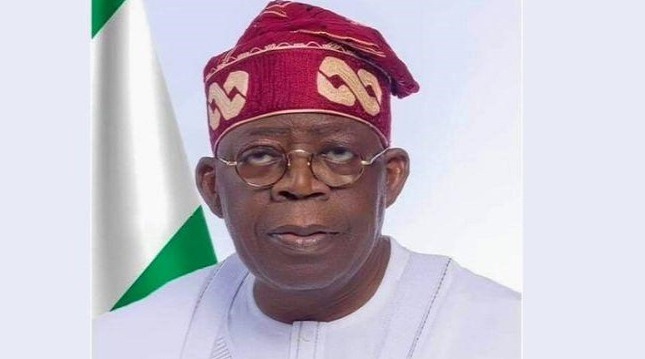
President Bola Tinubu has requested Senate approval for a $516.3 million foreign syndicated loan to fund key sections of the Sokoto-Badagry superhighway, a cornerstone of his Renewed Hope Agenda.

Tinubu
In a letter read by Senate President Godswill Akpabio during Thursday’s plenary, Tinubu invoked Sections 16 and 21 of the Debt Management Office Act, 2011, to secure financing via Deutsche Bank AG for Sections 1, Phase 1A, and 1B. The 1,000-kilometre project will span Sokoto, Kebbi, Niger, Kwara, Oyo, Ogun, and Lagos states, linking Illela to Badagry and boosting trade, connectivity, and goods movement.
The nine-year loan, with a three-year grace period and interest at SOFR plus 5.3 per cent, includes a partial risk guarantee from the Islamic Corporation for the Insurance of Investment and Export Credit (ICIEC). The Federal Government will provide over ₦265 billion in counterpart funding for land acquisition and infrastructure.
Akpabio referred the request to the Senate Committee on Local and Foreign Debts for a one-week turnaround report. He endorsed the borrowing, stating it advances road safety and national integration.
The highway aims to cut travel times and stimulate economic corridors, with the Federal Executive Council already approving the plan.

NCC Blames Growing Data Demand Network Quality Issues

EFCC Detains Ayeni, Ex-Skye Bank Chairman over Alleged N36.5Bn, $30m Fraud

Bank Customers to Pay N1,500 for ATM Card Issuance, Replacement – CBN

Summit Factory Opens in Ogun, Targets Hygiene Market Expansion

Kaspersky Discovers Vulnerability in Qualcomm Snapdragon Chips that can Lead to Data Loss & Device Compromise

NITDA Takes Over National Digital Architecture System

FG to Gift Nigerians over 100 Free TV Channels from May 15

FG Shifting Focus to “Meaningful Connectivity” to Drive Inclusion – Minister

Microsoft Revamps Copilot in Workplace AI Push

Dangote Refinery Debunks Speculations on IPO




 Telecom3 days ago
NCC Orders Telcos to Give Users Free Airtime for Poor Network Service
 Telecom2 days ago
NCC Blames Growing Data Demand Network Quality Issues

 Telecom3 days ago
MTN to Pay Subscribers After NCC Cracks Down on Service Failures

 E-Financial3 days ago
EXPLOSIVE: How Titan Trust Bank Allegedly Used Union Bank’s Own Assets to Fund Its Takeover
 E-Financial2 days ago
Bank Customers to Pay N1,500 for ATM Card Issuance, Replacement – CBN

 E-Financial2 days ago
ATM Card Fees Jump to ₦1,500 as CBN Scraps Maintenance Charges

 Telecom3 days ago
From Malta to Marriott: IPv6 Council Nigeria Inauguration Solidifies 16-Year Path to Digital Sovereignty
 E-Business2 days ago
Kaspersky Discovers Vulnerability in Qualcomm Snapdragon Chips that can Lead to Data Loss & Device Compromise