

Telecom
Huawei Partners Galaxy Backbone in Building Nigeria’s First Dual-Certified Tier IV Data Center

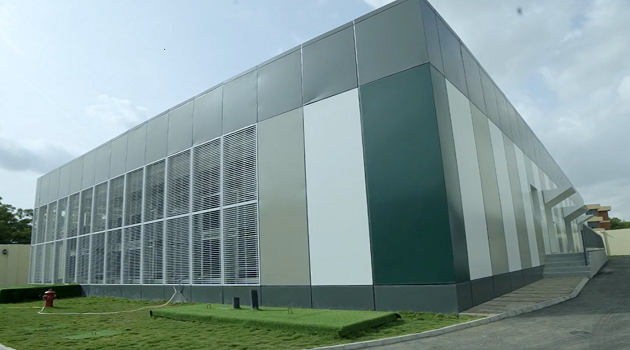
Galaxy Backbone (GBB), a digital transformation company in Nigeria, recently achieved Uptime Tier IV certification for its second data center, making it the first data center in Nigeria to obtain the Tier IV design and facility certifications.

This accomplishment signifies that GBB Data Center’s design and facilities meet the highest international standards, ensuring high reliability and availability. It also strengthens GBB’s capability to provide cloud, disaster recovery and business continuity services to organizations in both the public and private sectors.
Furthermore, this milestone accelerates Nigeria’s digital transformation and accelerates the nation’s journey towards becoming one of the leading digital economies across the African continent.
Uptime Tier certification is one of the world’s most authoritative data center rating systems. The certification system ranges from Tier I to Tier IV, with Tier IV being the highest. It encompasses three dimensions: design, facility, and operations. Tier IV data centers offer the highest level of redundancy and fault tolerance, achieving an availability of 99.995%.
The global digital economy is booming. As Africa’s largest economy and most populous country, Nigeria has been promoting the digital economy. Recent initiatives include the National Digital Economy Policy and Strategy 2020–2030 and the National Broadband Plan 2020–2025. These efforts aim to accelerate digital infrastructure construction, increase broadband penetration, narrow the digital divide, and promote sustainable economic growth.
Established by the Federal Government of Nigeria, GBB provides ICT facilities and services for government ministries, departments, and agencies, and is responsible for building and operating the National Information and Communication Technology Infrastructure Backbone (NICTIB), a fiber optic network that spans the country and has connected nearly 30 states with high-speed fiber connectivity. In phases 1 and 2 of the project, data centers were built in Abuja and Kano, respectively, to meet growing network demands.
Huawei Join Hands with GBB to Build Prefabricated Modular Data Centers and Achieve Ultimate TTM
Building a traditional data center takes up to 30 months from planning and design to onsite construction, which is not conducive to rapid service rollout. After several rounds of evaluation, GBB chose Huawei. In the phase 2 of the project, GBB adopted Huawei’s FusionDC1000B prefabricated modular data center solution.
This solution transforms the traditional sequential construction mode into one that features concurrent onsite construction and factory prefabrication, achieving fast delivery and on-demand deployment.
The data center consists of 17 prefabricated containers and integrates multiple systems such as the smart module, modular UPS, lithium battery, data center infrastructure management (DCIM), and iCooling. Through engineering productization, prefabrication, and pre-commissioning, only simple hoisting and assembly are required onsite, significantly reducing onsite construction waste and achieving dust-free construction.
It takes only one month to hoist 17 containers and complete equipment installation and testing, making it the fastest construction time among local data center projects of similar size.
Additionally, the prefabricated containers have a service life of 50 years and can withstand magnitude 3 earthquakes and scale 12 winds. They meet IP55 dustproof and waterproof standards, providing building-like quality and experience.
The Highly Reliable Tier IV Data Center Helps Nigeria Accelerate Digital Transformation
High reliability and availability are the eternal pursuits of data center construction. However, most of the existing data centers in Nigeria are Tier III. Therefore, to meet market demands, GBB partnered with Huawei to build Nigeria’s first Uptime Tier IV data center with dual certifications.
In designing the data center, GBB drew on the exterior and interior layout of the industry’s best data centers and pre-integrated the equipment and power distribution rooms.
And for the first time, peripheral power supply and distribution equipment, air conditioner indoor and outdoor units, and maintenance and visitor’s passages are prefabricated into modules. As a result, the data center achieves an industry-leading prefabrication rate and passes the Uptime Tier IV certification in both design and facilities.
Professor Ibrahim Adeyanju, Managing Director and CEO of Galaxy Backbone, said, “Achieving this Tier IV certification from Uptime Institute is a testament to our unwavering dedication to excellence in cloud, data center, and business continuity services.
“This certification assures our clients that they can rely on us for the highest levels of service availability and security. We remain committed to driving innovation and delivering world-class services to support the digital transformation of Nigeria and beyond.”
Huawei will continue to work with GBB to build green, simple, smart, and reliable (GSSR) digital infrastructures across Nigeria and other African countries interested in similar services.
This partnership aims to help Nigeria bridge the digital divide, share digital dividends, and illuminate the future of West Africa with digital advancements, powering the digital era forward.


Airtel Africa Plc has announced a strategic initiative in partnership with Barclays Capital Securities Limited to execute on-market share purchases totaling up to $110 million.

This initiative will be divided into non-discretionary and discretionary segments, marking a proactive step in optimizing the company’s capital structure and enhancing shareholder value.
In a statement released on the Nigerian Exchange and signed by Simon O’Hara, group company secretary, Airtel Africa described this share buyback program as a key component of its broader strategy to return cash to shareholders.
It noted that the program aims to repurchase up to one percent of the company’s issued share capital as of the date of this announcement.
“This decision by the Board reflects the organization’s strong financial position and its commitment to maintaining flexibility while continuing to invest for growth across its markets.
“The initial phase of the program will see Airtel Africa collaborating with Barclays Capital Securities to facilitate the purchase of its ordinary shares,” the statement noted.
According to Airtel Africa, the agreement features two key components operating concurrently: a non-discretionary segment allowing Barclays to purchase up to $60 million of ordinary shares independently of the company, and a discretionary segment where Airtel Africa can guide Barclays in purchasing an additional $50 million, adhering to the regulations set forth by the Market Abuse Regulation (EU) No 596/2014.
“The program is set to commence today and is expected to conclude by November 27, 2026, unless terminated earlier under the agreement’s terms. Airtel Africa has signaled that as the initiative progresses, further tranches may be announced to achieve its objective of repurchasing up to one percent of its issued share capital.
“The primary aim of this buyback program is to streamline the company’s capital. Accordingly, all shares purchased will be cancelled, contributing to a more efficient capital structure. Any transactions will be performed in alignment with pre-defined parameters outlined in the agreement with Barclays and comply with the authority granted by shareholders for share repurchases.”
At the annual general meeting on July 9, 2025, shareholders authorized the company to buy back a maximum of 366.073 million ordinary shares.
Following the previous buyback program, the remaining authority now stands at a maximum of 357.042 million ordinary shares, demonstrating ongoing support from shareholders for these initiatives.
Nigerian Communications Commission (NCC), Nigeria’s telecom regulator has released draft rules for mobile virtual network operators (MVNOs) as authorities seek to organize a market that is still at an early stage.

The NCC published the proposed “Business Rules for Mobile Virtual Network Operations in Nigeria” and opened a consultation process for industry stakeholders.
Comments can be submitted until June 29, while a public consultation is scheduled for July 9.
According to the NCC, the proposed rules define the obligations and responsibilities of both MVNOs and host network operators (HNOs).
The framework also sets conditions for licensing, compliance, interconnection, numbering resources, SIM and eSIM management, and network hosting agreements.
Regulators also seek to guarantee fair access to telecom infrastructure and reduce delays tied to the integration of MVNOs into existing mobile networks.
The text further includes provisions related to service quality, customer protection, network reliability, and data security.
Violations could lead to administrative sanctions or corrective measures under existing telecom laws.
Nigeria officially opened the MVNO market in 2023. That year, the NCC awarded licenses to 25 operators for a combined 5.9 billion naira, or about $4.3 million. Since then, around 40 licenses have been issued, with operators such as Vitel and Visafone already launching services.
Authorities see MVNOs as a way to improve competition in the telecom sector while helping extend services to underserved and unserved populations.
As of March 2026, Nigeria counted 185.7 million mobile subscribers and 153.8 million internet subscribers, according to NCC data.
Despite the size of the market, digital access remains uneven across the country.
Government estimates show that nearly 20 million Nigerians still remain outside the digital ecosystem.
The GSMA estimated that about 120 million Nigerians did not use mobile internet in 2023.
High service costs and inconsistent service quality also remain major concerns in the telecom sector.


An Australian federal court has upheld a fine against social media platform X over failures to comply with child internet safety regulations, bringing to an end a three-year legal dispute between the company and Australian authorities.

The case stemmed from a demand issued in February 2023 by Australia’s online safety regulator, the eSafety Commission, requesting detailed information on how the platform, then known as Twitter, was combating the spread of child sexual abuse material online.
Following the platform’s transition to X under billionaire entrepreneur Elon Musk, regulators accused the company of submitting incomplete responses to repeated requests for information.
A federal court had earlier ruled in October 2024 that X was legally obligated to comply fully with the notice issued by the regulator.
On Thursday, the court ordered the company to pay a fine of 650,000 Australian dollars (approximately 464,900 U.S. dollars).
Federal Justice Michael Wheelahan said the penalty was necessary to ensure compliance by large technology firms.
“A penalty near the maximum is appropriate in the case of the respondent, which is a substantial corporation, so that it operates as a real deterrent and is not simply a cost of doing business,” he said.
Australia has emerged as one of the leading countries advocating stricter regulation of major technology platforms.
The country recently introduced world-first legislation aimed at banning children under the age of 16 from accessing certain social media platforms.
Countries including France, United Kingdom and Canada are reportedly considering similar measures following consultations with Australian authorities.
Reacting to the judgment, eSafety Commissioner Julie Inman Grant said transparency remained essential in holding technology companies accountable.
“Meaningful transparency is critical to holding technology companies to account,” she said.
“This is not only a key part of our work as Australia’s online safety regulator, it also provides the Australian public with important information about how these companies are tackling the worst-of-the-worst content on their platforms,” she added.

WHO Says Ebola Risk Now at Highest Level

Airtel Africa Launches $110m Share Buyback Programme for Capital Efficiency

NCC Drafts New Rules for Virtual Mobile Operators

LG Electronics Showcases Advanced HVAC Solutions at Mega Clima Nigeria 2026

FG Unveils AI Public Services Platform

MTN, VDT, Zoracom, Digital Realty Back 2026 Girls in ICT Campaign

Vitel Wireless Partners Fintechs to Expand Access to Services

Kaspersky Discovers Vulnerability in Qualcomm Snapdragon Chips that can Lead to Data Loss & Device Compromise

Bank Customers to Pay N1,500 for ATM Card Issuance, Replacement – CBN

FG Okays 112 as Toll-Free National Emergency Response Number




 Telecom3 days ago
Google unveils Gemini-powered advertising, commerce tools at Marketing Live 2026

 E-Financial3 days ago
Griffin Capital Group Launches Integrated Financial Services Group Positioned to Strengthen Capital Formation in Nigeria, Africa

 E-Financial3 days ago
CBN to Simplify Bank Alerts over Rising Customer Complaints

 E-Business3 days ago
Kaspersky Detected More than 92,000 Malware Attacks Disguised as AI Services in Four Months

 Telecom3 days ago
Telcos in Nigeria, other Emerging Markets Squeezed by Diesel Crisis

 Telecom3 days ago
Nigeria gets AI-ready Lagos data centre

 Telecom2 days ago
MTN to Turn its African Tower Network Into a Distributed AI Compute Grid

 News2 days ago
Elon Musk to Become First World’s Trillionaire with SpaceX Historic IPO