

News
FG, Chinese Firm Sign MoU on Electric Bicycles, Renewable Energy

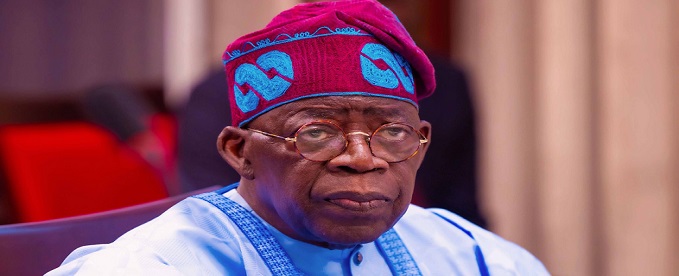
Federal Government on Tuesday signed a Memorandum of Understanding with a Chinese Company, Mutual Commitment Company Limited for the assembly of electric tricycles and establish a renewable energy training centre.
The MoU signing ceremony, facilitated by the Rural Electrification Agency, was attended by Adebayo Adelabu, minister of Power, and Mr Abba Aliyu, managing director of REA.
In a statement on Tuesday byBolaji Tunji, Adelabu’s spokesman, it was disclosed that the event took place in Beijing on the eve of the opening of the African-China Co-operation Summit.
Adelabu was quoted as saying that the MoU event was important and will go down as a memorable day for Nigeria.
He congratulated the REA and the National Power Training Institute of Nigeria on the event, saying it will aid in achieving Nigeria’s vision for the renewable energy sub-sector of the entire electricity sector value chain.
Adelabu added, “I know Nigeria and China have a lot of things in common, one of which is the fact that Nigeria and China are both high population countries and with a country with high population, you have so much pressure.
“The first pressure is that of energy access, and the second is job creation. So when you take steps to achieve both, it is a thing of joy. I am particularly happy that this is happening during the tenure of President Bola Tinubu, as it is in line with achieving the Renewed Hope Agenda of the administration for the country.”
The minister reiterated the fact that Tinubu has prioritised the power sector as the driver for all other critical sectors of the economy and, he is giving the sector all the support to ensure it delivers his electoral promises.
He highlighted that energy access and expansion is the government’s major priority because nothing can be achieved without a strong, stable, functional, and reliable electricity sector.
“We have relied so much on centralisation of our power sector for so long that it is not taking us anywhere,” he stated.
Adelabu revealed that almost 40 per cent of Nigeria’s population lacks access to energy with its attendant consequences.
“So, moving away from centralisation, we have decided to adopt the distributed power model to ensure that every Nigerian has access to energy.
“A lot of our population resides in rural areas, and a lot of our educational and tertiary health institutions are isolated, and they are still facing epileptic power supply.
“We have also found out that the adoption of the distributed energy model will expand the energy net for our rural dwellers, the rural businesses, our universities and tertiary health institutions; which is why the focus is on renewable energy which we believe is scalable and can exist in isolation of national grid that is currently facing lots of pressure,” he explained.
According to him, as Nigeria continues to expand energy access, the country also wants to achieve a transition to cleaner sources of energy that are sustainable and environment friendly.
He said the MoU would achieve the vision for the renewable energy sub-segment of the power sector.
“We will be able to produce jobs for our large youthful population that is growing every day.
“Our polytechnics, technical colleges, and universities are turning up graduates every year without assurance of job placement.
“This will go a long way to make it happen. At the same time, we will be able to achieve our energy access expansion,” he added.
He noted that northern African countries such as Tunisia, Morocco, Egypt, and Algeria have achieved 100 per cent electrification of their countries and in South Africa, about 95 per cent.
“Unfortunately, Nigeria is still at 62 per cent, though there are still some African countries with worse levels of achievements, but this is not where we belong. If these countries can achieve this, why is it not possible for Nigeria with the level of our natural endowment?
“We have the gas, and the dams are also there for the hydropower electric. The wind, both desert and coastal, is there while sunshine is also effective. So, what are we waiting for?
“A step like today’s will enable us to move up on our level of electrification. This will consequently lead to growth in our Gross Domestic Product because of the economic activities that would be created.
“This will also save us foreign exchange expenditure on importation and create jobs for our people if we assemble these things locally,” he posited.
Earlier, the REA boss reiterated the importance of the ceremony as it is capable of delivering on the presidential mandate of building local capacity and creating more job opportunities.
“We will track this and ensure the delivery of the commitment within the tenure of the present administration.
“We will also track the economic factor that this initiative will drive, the level of GDP contribution, the employment opportunities provided, and the socio-economic activities that will crystallise,” Aliyu remarked.
He said the MCC is presently engaged in Nigeria with the construction of 12 megawatts and 3 megawatts power plants in Maiduguri and Kaduna, respectively.
The Vice Chairman of MCC, Yan Zhezhu, who spoke through an interpreter, expressed appreciation for the power minister’s commitment to Nigeria’s energy growth.
Credit: Punch



The UK Government has announced the appointment of Mr Peter Vowles as the next British High Commissioner to the Federal Republic of Nigeria.

Mr Vowles succeeds Dr Richard Montgomery CMG and is expected to take up his post in Abuja in September 2026. Dr Montgomery remains in post until that time.
Mr Vowles brings extensive diplomatic and development experience to the role, having served as His Majesty’s Ambassador to Zimbabwe from 2023 to 2026 and previously as Ambassador to Myanmar from 2021 to 2022.
He has held senior leadership positions across the FCDO and its predecessor department DFID, including as Transformation Director and Director for Asia, Caribbean and Overseas Territories.
Earlier in his career, Mr Vowles worked in international development across South Asia, Central Africa and East Africa, including postings in Bangladesh, India, the Democratic Republic of Congo and Kenya. He began his career in Zimbabwe, where he worked in education and development.
Peter Vowles said: “I am honoured to be appointed as British High Commissioner to Nigeria. Nigeria is a country of immense importance to the United Kingdom, and I look forward to working closely with Nigerian partners to strengthen our relationship across trade, development and security.”
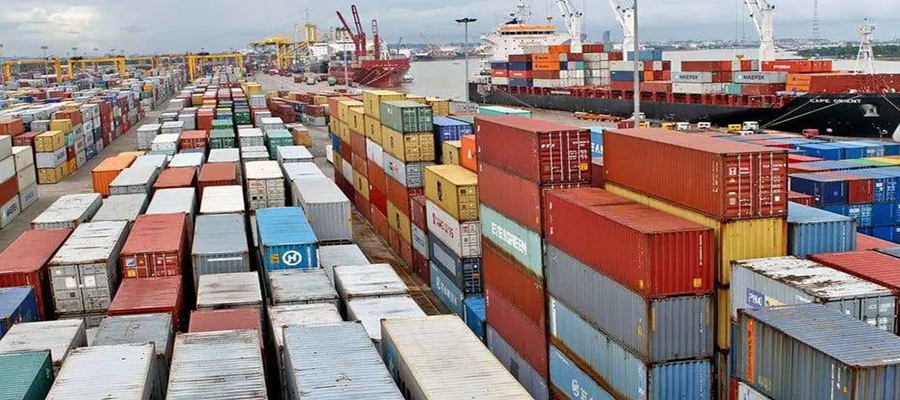
World Bank has ranked the Apapa and Tin Can Island Port complexes in Lagos among the world’s 20 most improved ports in its 2025 Container Port Performance Index (CPPI), released in June 2026.

The ranking places both ports in the “Top 20 Port Improvement Since 2020” category, reflecting significant gains in operational efficiency and vessel turnaround time.
The CPPI is a global benchmark used to assess the efficiency of container ports based on factors such as cargo handling speed, ship turnaround time and overall logistics performance.
According to the report, the improvement highlights ongoing reforms and modernization efforts within Nigeria’s maritime sector.
The Managing Director of the Nigerian Ports Authority (NPA), Mr Abubakar Dantsoho, attributed the recognition to ongoing policy reforms and infrastructure upgrades in the sector.
He said the development reflects the impact of economic policies of President Bola Tinubu and the support of the Minister of Marine and Blue Economy, Mr Adegboyega Oyetola.
“With the investor-friendly policies of President Bola Ahmed Tinubu providing the impetus for increased investment to drive our port infrastructure and equipment modernisation programme, coupled with the unflinching support of the Honourable Minister of Marine and Blue Economy, Adegboyega Oyetola, we have all it takes to further enhance trade facilitation, improve competitiveness and boost the national economy,” he said.
The NPA said the recognition is expected to strengthen investor confidence in Nigeria’s maritime sector and enhance the country’s position as a regional trade and logistics hub.
It noted that improvements in port operations are already contributing to increased efficiency in cargo movement and reduced delays at key terminals.
The authority also pointed to ongoing efforts to modernise port infrastructure and expand digital systems aimed at improving service delivery.
Earlier in February 2026, the NPA said the federal government had intensified efforts to position Nigeria as a leading maritime destination through port rehabilitation and modernization projects.
It also highlighted public-private partnership initiatives, including developments at the Lekki Deep Sea Port, as part of broader reforms aimed at improving efficiency and attracting investment.
The CPPI ranking is expected to further boost Nigeria’s maritime profile and encourage additional investment in the sector.
As digital payment adoption continues to grow across Nigeria and emerging markets, the next phase will depend not just on innovation, but on the strength, reliability, and trustworthiness of the infrastructure behind it.

While the ecosystem has made clear progress in recent years, trust remains a critical issue for users, businesses, and operators alike. Questions around resilience, security, interoperability and transaction reliability continue to shape how the market evolves and how confidently digital payments can scale.
These issues will be central to the deliberations at Digital Pay Expo 2026, where fintech leaders, payment operators, and other ecosystem stakeholders will gather under the theme, “Seamless Digital: Fostering Pan-African Market Expansion in the Era of AI.”
PalmPay’s participation reflects its continued commitment to building trusted and scalable payment infrastructure, while contributing to the broader industry efforts to strengthen systems, standards, and partnerships needed to support long-term ecosystem growth.
Speaking ahead of the event, Olorunfemi Hanson, Head of Marketing and Communications at PalmPay Nigeria, said: “As the financial services ecosystem continues to grow, trust and reliability become even more important.
“The industry’s next phase will be shaped not only by innovation, but by the strength of the infrastructure supporting it. Digital Pay Expo provides an important platform to address the resilience, interoperability, and trust issues that will shape the future of digital payments growth across Africa.”
The event, scheduled to be held from the 17th to the 18th of June, 2026, will feature Chika Nwosu, Managing Director of PalmPay Nigeria, alongside other distinguished guests, including the Director-General, Payment System Management Department (PSMD), Central Bank of Nigeria. The event will examine how the industry can balance innovation, regulation, and scalability while strengthening trust across the digital payments value chain.
For PalmPay, this event reinforces its role in supporting a more resilient, secure and scalable payments ecosystem for Nigeria and emerging markets more broadly.

FG Bans Use of Gmail, Other Personal Emails for Civil Service Operations

Indwelt Studios Seeks Increased Awareness @ World Sickle Cell Day

Standard Bank Targets $15.4b SME Growth in Nigeria, Others with Trade Expansion Drive

Payaza Launches AI-powered Storefront Platform to Drive Cross-border Commerce

NAICOM’s 18 Months Management Spill @ African Alliance Ends

CBN Extends PoS Geo-Fencing Enforcement Deadline to August 2026

London Strengthens Global Investment Ties with Africa @ First Ever London-Africa Business Summit

FG Targets Alleged N3tn Capital Flight, Opens Airtime Credit Market to Nigerian Fintechs

NCC Drafts New Rules for Virtual Mobile Operators

Japan, UNESCO Boost Digital Learning in 15 CoEs with Donation of ICT Equipment




 E-Financial3 days ago
FG Issues Transition Guidelines for Tax Acts 2025

 E-Financial3 days ago
How Fraudsters Stole N134Bn from Banks, Customers in 6 Years – CBN

 Telecom3 days ago
Telecom Regulator, NCC, Digital Encode, AfriGoPay Support eBusinesslife Girls In ICT Campaign

 Telecom3 days ago
Mobile Technologies Boost Africa’s Economy by $240B in 2025, Commences a New Phase of Digital Transformation

 General News3 days ago
Police Uncovers N7.7Bn Telecom Data Fraud Syndicate, Recovers Assets Worth Millions

 Telecom2 days ago
TikTok, ICC Gather Nigeria’s Entrepreneurs to Drive Small Business Growth and Digital Transformation
 E-Business2 days ago
Payaza Launches AI-powered Storefront Platform to Drive Cross-border Commerce

 Telecom2 days ago
How a New NITDA-TikTok Partnership Could Transform Thousands of Nigerian Businesses