

Broadcasting
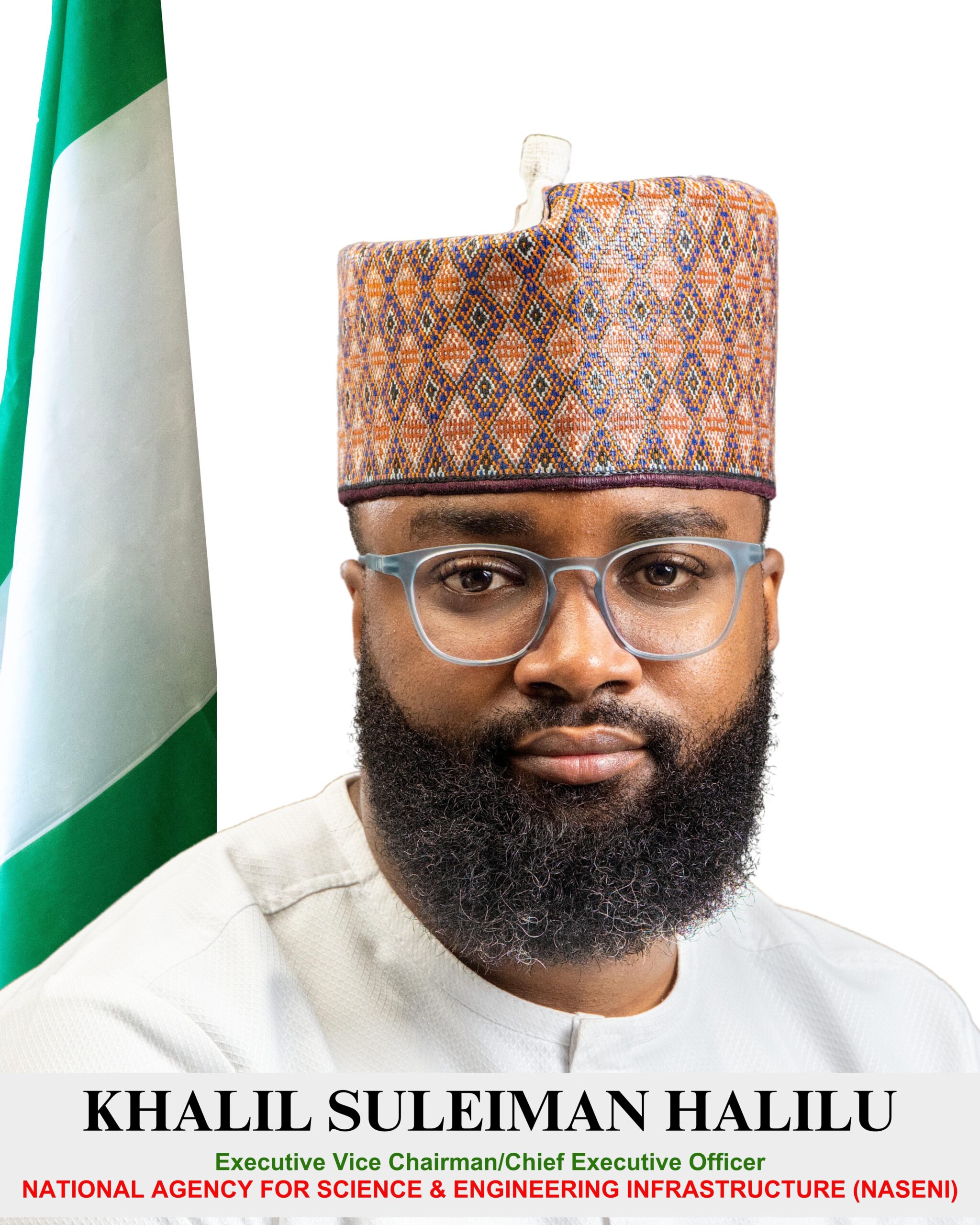
Khalil Halilu’s 365 Days Outstanding Transformations at NASENI

By Olusegun Ayeoyenikan
National Agency for Science and Engineering Infrastructure (NASENI) is mandated to make available in the Nigerian market the primary and intermediate capital products required for machine and equipment design, fabrication, and mass production to provide an enabling environment for sustainable industrialization of the country.

The agency, established in 1992, continues to make progress in Nigeria’s technological advancement, driving home-grown innovation and improving manufacturing capabilities. While playing this role, NASENI has successfully developed more than 150 innovative products as well as prototypes bolstered by its Development Institutes and Centres, thus contributing to fostering excellence in science, engineering technology and manufacturing.
Commendable so far, however, the NASENI’s socio-economy trajectories or real-time impacts in the country, its previous challenges included lack of patronage of its technologies and products by local entrepreneurs or businesses, exacerbated by low R&D results commercialization activities, leaving most research outcomes to waste away on shelves. True, NASENI always could boast of having various innovative products but it had very weak linkage with Small & Medium Enterprises (SMEs) or big corporations whose day-to-day activities required the use of various technologies, machines and equipment already developed by the agency.
As this particular challenge persisted over the years, then came on Monday 4th September 2023 a new executive Vice Chairman/chief executive, Mr. Khalil Suleiman Halilu who was appointed by President Bola Ahmed Tinubu to lead NASENI. It is good to note that the President Tinubu himself is the Chairman of the Governing Board of NASENI in line with the agency’s establishment Act 2004. Immediately on assumption of office, Halilu like a man who knew where the proverbial shoes pinched the most brought a dramatic management change of focus towards full commercialization of NASENI’s resources, to make available in the market and also end users its R&D products, machines and other equipment to boost the economy.
NASENI today stands as a beacon of hope for Nigeria’s indigenous technological advancement, aligning with its core mission of fostering needed dynamic science and engineering Infrastructure for national progress. The agency under the leadership of Halilu has articulated a bold vision and promoted a shared management-staff philosophy hinged on 3Cs principles of Creation, Collaboration and Commercialization to fuel Nigeria’s innovation and sustainable future. This approach has indeed opened more doors to result-based NASENI’s partnerships with both national and international corporate communities.
Inspired by previous experience as a techpreneur and businessman before his appointment to lead NASENI, Halilu’s leadership model is to do everything to conserve resources, avoid duplication of efforts, and shorten go-to-market time. What this means is that wherever NASENI finds serious partners who are already operating in areas of interest, it will work with them to improve the agency’s products and take these products to the market. As a government agency, Halilu said NASENI under him is not out to compete with the private sector. Instead, the agency will serve as partners and enablers, helping the private sector to achieve everything from design to testing, or helping companies in scaling-up production capacity and to seek out new markets.”
As a result of this strategy, within a space of one year the agency had unveiled to the general public some branded technological products manufactured in collaboration with its partners. They included solar irrigation systems, electric vehicles (ranging from tricycles to motorcycles), NASENI home solar system, animal feed milling machines, laptop, smartphone, solar street lamp and lithium battery. All these efforts were geared towards creating jobs and to reduce import bills.
Halilu brought a mix of deep private sector experience and working knowledge of the public sector, amassed from delivering high-impact technology and digital solutions across both sectors. In the private sector, before his sojourn in NASENI, Khalil Halilu had founded two start-ups-Shap shap technologies Limited, a Nigerian logistics start up focusing on the last-mile delivery market, as well as Africa’s first on-demand commodity marketplace, an innovation incubator and the CANs-the first eco-friendly Technology Hub in West Africa. In his consulting work, Halilu built and deployed solutions tailored to improve the quality of government-citizen engagement, election monitoring including support for victims of gender-based violence amongst others.
In September 2023, Halilu hit the ground running with the launching of a NASENI Strategic Launchpad which simplified attainable goals concerning the mandate, vision, mission and operations of the Agency into short, medium and long-term plans. Secondly, he changed the NASENI corporate logo to portray a predominant blue colour to reflect the agency’s operational affinity with the private sector or the business world. Halilu introduced a well thought out corporate plan called ‘strategic Launchpad’ which outlined four pillars that encapsulated the agency’s vision namely: Enhancing Nigeria’s Manufacturing Capacity, Reducing Nigeria’s Import Dependency through Research and Development, Strategically Repositioning NASENI and Leveraging the Comparative Advantages of Nigeria’s 36 States and the Federal Capital Territory.
Halilu’s philosophy on the need for a strategic plan before getting down to business was in line with the popular adage that “he who fails to plan, has planned to fail already”. The NASENI strategic document amongst others clarified in simple languages the mandate, objectives, targets and achievable goals of the agency within a stipulated or achievable time-frames, taking into account the factors of human, material and other resources given to the agency by the Federal Government. So far, the document has provided an effective guide for deployment of resources, its optimization and measurements leading to all the achievements which everyone now could see or touch.
The past 12 months: NASENI had deliberately signed critical Memorandum of Understandings (MOUs) with local and international partners aimed at advancing Nigeria’s economic growth and development. Some of them include a $150 million deal with Schenzen LEMI Technology Development Company Ltd to establish a lithium battery manufacturing and processing factory in Nigeria.
It signed agreements with three other Chinese companies for new projects valued at $2 billion. They include Shanghai Launch Automotive Technical Co Ltd – to establish a new energy automobile facility for the production of new energy electric vehicles; China Great Wall Industry Corporation-for the turnkey delivery of Unmanned Aerial Vehicles (UAV) assembly line projects; and Newway Power Technology Company Ltd-for the transfer of technology on lithium batteries, electric vehicles and allied technologies.
Others are: Galaxy Backbone Ltd to support NASENI’s High Performance Computing 2.0 projects; Rural Electrification Agency (REA) to provide technical support assistance and expertise using home grown renewable energy technologies; and PT Saputra Global Harvest of Indonesia to establish coal-based fertilizer plants in Nigeria. NASENI had signed MoU with Nasarawa State Government and Bobtrack Tractors to establish a tractor assembly and production factory at its Agricultural Machinery and Equipment Development Institute (AMEDI), Lafia to enhance food security; the Ministry of Defence and DICON to establish an ammunition production factory; a $21.7 million counterpart funding with the Technical Agency of the Czech Republic (TA-CR) for take-off of Delta-2 Projects; Niger State government for Agric mechanization; Family Homes Funds Ltd for affordable housing development; and Caverton Helicopters for the establishment of a drone assembly plant, a drone training school, and a service centre for helicopters; amongst other agreements.
NASENI is also collaborating with the Federal Ministry of Agriculture and Food Security to deploy existing technical competencies and exchange of resources by the two institutions to improve Agro-allied-industries development targets, climate change mitigations and smart solar irrigation aimed at dry-season farming. These partnerships will have a profound impact, generating hundreds of thousands of direct and indirect jobs, contributing significantly to Nigeria’s economic growth, agricultural sector, food security, and renewable energy development. The efforts have no doubt positioned NASENI as a catalyst for Nigeria’s economic transformation, driving progress in critical sectors such as agriculture, healthcare, housing, energy, transportation, ICT and manufacturing.
The entry of Mr. Khalil S. Halilu has brought into the agency many strategic infrastructure development projects, including cutting-edge research facilities and technology hubs installed at NASENI headquarters and its development institutes. He has revitalised partnerships with local and international stakeholders, fostering collaboration and knowledge sharing, innovative initiatives to promote entrepreneurship, job creation, and economic growth.
He has not left any stone unturned in contributing to the promotion of the green energy initiative of the Federal Government and mitigation of climate change. His recent partnership with Portland Gas Limited resulted in the establishment of NASENI-Portland CNG Conversion and Training Centre at Utako, Abuja which has raised the bar of sustainable alternative fuel solution to reduce greenhouse gas emissions and save fuel costs for vehicle owners.
Also, Halilu did not neglect the issue of staff welfare and human capital development. Notable achievements in this area were the introduction of enhanced staff welfare package and training programmes including capacity building initiatives described as unprecedented. As at today, there is no staff of NASENI (from low to highest ranks) who have not attended one form of training or the other within the range of local and international trainings to improve work performance; inspiring a new mindsets and attitudes to work even as he is deliberately engineering new NASENI generation scientists, engineers, and innovators including other support staff to dream big for the agency. This new trend of focusing on staff development has created a renewed sense of purpose and optimism by the entire workforce. Many staff are saying that “it is a new NASENI indeed under the leadership of Khalil Suleiman Halilu as executive vice chairman and chief executive”
The NASENI family now is cultivating a culture of innovation, emphasizing continuous training and skill development to meet global standards and also to produce world-class products. This commitment to leveraging NASENI’s capabilities and fostering a culture of innovation has positioned it to make a substantial impact in Nigeria and beyond.
As NASENI continues to move ahead with Nigeria’s technological advancements and infrastructure development focus, the impacts on the economy will be profoundly felt soon. With focus on innovation, collaboration, and transformative leadership, the agency is set to make remarkable differences in shaping Nigeria’s technological landscapes toward economic prosperity. Exciting times lie ahead for NASENI as it continues on its forward-looking paths to propel innovation and economic growth for Nigeria under Mr. Khalil Suleiman Halilu as NASENI CEO. It’s truly a remarkable one year of renewed hope, 365 days of giant strides and transformation of the agency.
Olusegun Ayeoyenikan is the Director of Information, NASENI. He writes from the agency’s headquarters in Abuja.


Lebara Nigeria has announced the launch of Lebara Play, described as Africa’s first telecoms-owned micro-drama platform aimed at expanding opportunities for African storytellers and distributing local content to global audiences.

The company said the platform is designed to support creators by providing a new distribution channel for African narratives while making content accessible to both subscribers and non-subscribers worldwide.
Lebara Nigeria added that the platform will debut with an original production titled Imported Bahu, produced by Forever 7 and starring Osas Ighodaro.
The project is directed by Hamisha Daryani Ahuja, known for her work on Namaste Wahala, and is positioned as the first in a series of original content offerings.
According to the company, Lebara Play is built to serve both creators and audiences, with a focus on showcasing African stories to a global market and strengthening the continent’s growing digital entertainment ecosystem.
Speaking on the company’s vision at the launch, Teniola Stuffman, chief executive officer, Lebara Nigeria, said the organisation was focused on building a telecommunications ecosystem that combined innovation, connectivity, and customer-centric digital experiences.
Stuffman said, “This platform represents an important step in our vision of building a telecommunications brand that delivers more than connectivity. We are creating an ecosystem where technology, innovation, and entertainment come together to provide meaningful experiences for customers while unlocking new opportunities for creative talent and content development across Africa.”
Beyond entertainment, she said, industry stakeholders believed the initiative demonstrated how global telecommunications expertise could be adapted to local market realities.
“Drawing from decades of experience across multiple international markets, Lebara is expected to introduce additional innovative services aimed at enhancing convenience, engagement, and value for Nigerian consumers,” she said.
Stuffman added that the company’s strategy reflected growing recognition that today’s telecom customers demanded more than network access, pointing out that consumers increasingly seek brands that offer seamless digital experiences, personalised services, and access to content that enriches everyday life.
Stuffman stated that LebaraPlay also aligned with the company’s commitment to supporting Africa’s creative economy by creating new distribution channels for content creators, producers, and digital storytellers.
“Through a combination of original productions and strategic partnerships, the platform seeks to create opportunities for talent while delivering quality entertainment to audiences,” she said.
Hamisha Daryani, founder of Forever7 Entertainment, expressed excitement over the partnership with Lebara Nigeria and the premiere of her latest micro-drama series on the LebaraPlay platform.
She stated that Lebara’s customer-centric vision aligns closely with the values of Forever7 Entertainment, making the collaboration a natural fit for both organisations.
Daryani revealed that the new microdrama featured a star-studded cast drawn from both Bollywood and Nollywood, in a compelling romantic story designed specifically for mobile audiences.
According to her, the production is developed with mobile-first consumers in mind, delivering premium entertainment in short, engaging formats at an affordable cost.
“Microdrama, which typically consists of short episodes of about three minutes, is redefining how audiences consume entertainment. It offers a convenient, immersive, and affordable viewing experience for people who increasingly access content through their mobile devices,” she said.
She added that the platform was created to support seamless creative expression while providing new opportunities for content creators across the continent.
Daryani further explained that the microdrama format has already achieved significant success in Asia and the Americas and is now gaining traction across Africa.
She said the initiative would create opportunities for emerging creatives through knowledge sharing, skills development, content curation, and industry collaboration, with the Nigerian rollout of the featured series expected to commence in July.
Broadcasting
CANAL+ Partners Samsung to Pre-Load DStv Stream on New Samsung TVs In Nigeria, Other African Countries

Following an expanded partnership between CANAL+ and Samsung Electronics, the DStv Stream app will now be pre-installed on new Samsung Smart TVs sold in Nigeria and 17 other African countries.

The agreement covers English and Portuguese-speaking African markets, including Nigeria, Kenya, Angola, Tanzania, Uganda, Zambia, Zimbabwe and South Africa. It marks the first pre-installation rollout of a MultiChoice Group streaming application on Samsung Smart TVs.
The development comes after the completion of the combination between CANAL+ and MultiChoice Group. It also extends an existing relationship between both companies that already spans 40 markets across Europe, French-speaking Africa, and Asia.
Through the integration, Samsung customers can now access DStv Stream directly from the television home screen. The app provides access to premium sports and entertainment content, including coverage of the FIFA World Cup 2026, English Premier League football, domestic and international rugby, and local and international television programming.
With the introduction of this connected television which kicked off on June 1, televisions can now connect to the internet, allowing users to stream content directly without requiring a separate decoder or satellite dish. The pre-installation of the app removes the need for users to search for and download it themselves, reducing friction and improving content discoverability.
The rollout is one of the first major distribution initiatives following the integration of CANAL+ and MultiChoice. The combined group has identified streaming growth and enhanced digital distribution as key priorities across Africa, where connected television adoption continues to increase.
David Mignot, CEO of CANAL+ Africa and CEO of MultiChoice Group, affirmed, “We are delighted to extend our longstanding partnership with Samsung across new English and Portuguese-speaking African countries. It marks a significant milestone in the synergies created by the combination of CANAL+ and MultiChoice Group.
“Mignot added, “As viewing habits continue to evolve rapidly across the continent, strengthening the accessibility and discoverability of our content offer on connected devices is key. By expanding the availability of our applications on Samsung Smart TVs across key African markets, we are making it even easier for millions of MultiChoice Group’s subscribers to seamlessly access the content that define the uniqueness of the CANAL+ and MultiChoice Group experience.”
This extended partnership is expected to strengthen Samsung’s position as a key distribution partner for streaming services globally while providing CANAL+ and MultiChoice with a broader route to market as competition intensifies among international and regional streaming platforms across Africa.
The Court of Appeal in Abuja has dismissed an appeal filed by the National Broadcasting Commission (NBC) challenging a Federal High Court judgment that restrained the commission from imposing fines on broadcast stations.

Delivering judgment, Justice Jane Esienanwan Inyang held that the appeal was fundamentally defective and therefore incompetent.
The appeal stemmed from a Jan. 17, 2024 judgment delivered by Justice Rita Ofili-Ajumogobia of the Federal High Court, Abuja, which barred the NBC from enforcing N5 million fines imposed on several broadcast stations in 2022.
The sanctions had been issued over allegations that the stations aired documentaries on banditry and insecurity considered by the commission to be capable of undermining national security.
The affected broadcasters included Multichoice Nigeria Limited, owners of DStv, TelCom Satellite Limited, Trust TV Network Limited and NTA StarTimes Limited.
The suit was instituted by Media Rights Agenda (MRA), which challenged the legality of the fines imposed by the commission.
In her ruling, Justice Inyang pointed to a discrepancy in the appeal documents, noting that the respondent before the Federal High Court was listed as the “National Broadcasting Commission,” while the notice of appeal identified the appellant as the “Nigerian Broadcasting Commission.”
According to the court, the inconsistency was substantial enough to deprive it of the jurisdiction required to entertain the appeal.
“The notice of appeal is the foundation of an appeal and a condition precedent to the exercise of appellate jurisdiction by this court,” the judge held.
Consequently, the appeal was struck out without consideration of the substantive issues raised by the commission.
The ruling represents another setback for the NBC in its efforts to defend its authority to sanction broadcast organisations through administrative fines.
In April 2026, the Court of Appeal similarly dismissed a separate appeal by the commission against another judgment that restricted its powers to impose fines on broadcasters.
Earlier, in May 2023, the Federal High Court in Abuja ruled that the NBC lacked the judicial authority to impose penalties on media organisations without recourse to the courts.
The controversy over the commission’s sanctioning powers dates back to March 2019 when the NBC imposed N500,000 fines on 45 broadcast stations for alleged violations of the Nigerian Broadcasting Code during the general elections.
At the time, the then Director-General of the commission, Is’haq Kawu, said the sanctions were imposed for ethical breaches and violations of broadcasting regulations.
Legal analysts say the latest judgment reinforces previous court decisions limiting the commission’s authority to impose fines on broadcasters without judicial intervention.

MTN Chairman Blasts Xenophobia, Says South Africa Is Nothing Without Africa

Telcos Lose 30m Subscribers in 3-Year Slump due to NIN-SIM Link Policy

Pay Your taxes for Me to Do More – Tinubu

NCC Launches Maiden Women’s Leadership Mentorship Programme

FG Proposes Africa-Wide Payment Card without Conversion through US Dollar

CBN Extends PoS Geo-Fencing Enforcement Deadline to August 2026

London Strengthens Global Investment Ties with Africa @ First Ever London-Africa Business Summit

FG Targets Alleged N3tn Capital Flight, Opens Airtime Credit Market to Nigerian Fintechs

Mobile Internet Gender Gap Widest in Africa – GSMA

Japan, UNESCO Boost Digital Learning in 15 CoEs with Donation of ICT Equipment




 News3 days ago
PalmPay MD Seeks Stronger Infrastructure, Access to Finance for SMEs @ Digital Pay Expo 2026

 Broadcasting3 days ago
Lebara Nigeria Launches Lebara Play, Africa’s First Telecom-Owned Micro-Drama Platform

 General News3 days ago
Paystack Launches Programme to Support Nigerian Businesses

 News3 days ago
Kaspersky Identifies over 336 Unique Domains Impersonating the Official World Cup Website

 Telecom3 days ago
Africa Projected to Lead Global 5G Growth

 E-Business2 days ago
Privacy Crisis May Undermine Local Hosting of Data by Banks, Fintechs

 Telecom2 days ago
NITDA Unveils Bold Vision to Make Nigeria an AI Powerhouse

 E-Financial3 days ago
SEC Bars Dangote Refinery IPO Adverts