

E-Business
Better Digital Payments Infrastructure is Facilitating Access to New Markets for Enterprise


By Doreen Lukandwa, Head, Commercial Strategy at Onafriq
Saying that small and medium-sized enterprises (SMEs) are the backbone of economies in East Africa is an understatement. SMEs make up the largest part of all registered entities in nearly every industry and sector in most East African countries, averaging between 60% to 90%, including micro-enterprises.

As the region continues to experience significant progress and development, the SME ecosystem plays a crucial role in creating employment opportunities, encouraging innovation and entrepreneurship, and diversifying economies.
However, only a few of these SMEs will grow into larger-sized firms or expand their reach into markets beyond the area they operate. This is mainly due to the constraints they face that limit their ability to expand and scale their business, such as inadequate financing and access to investment and financial services and insufficient integration into international capital markets.
Historically, the finance sector in East Africa has shown a preference for traditional banks, which have been restricted in terms of geographical reach and other factors. This has resulted in limited access to financial services for many merchants in the region, hindering economic growth and development. But this is changing.

The emergence of an increasingly robust digital payments infrastructure in East Africa presents an incredible opportunity for businesses to scale by opening up access to new markets in the region, across the continent, and around the globe.
Expanding the global footprint of enterprise
Africa accounts for 70% of the world’s $1 trillion in mobile money value, mainly due to the boom in digital instant payment solutions and inclusive interoperable payment systems across the continent. East Africa makes up the largest mobile money market on the continent, with transaction values worth $491 billion for 390 million registered accounts in 2022.
These booming, secure, efficient, and interconnected digital payment systems are transforming the business landscape by breaking down geographical barriers and broadening enterprises’ ability to collect and make payments to and from anywhere in the world.
Trailblazing fintech firms are revolutionising the digital payments space and helping enterprises solve their revenue collection and payments challenges, reducing operational costs and leaving them free to focus on operational efficiency.
Now, SMEs can scale their existing services into new African and global markets by capitalising on the growing digital payment infrastructure without the need to build their payment infrastructure or platforms. With just the right payment partner, businesses can expand into new territories by establishing a virtual financial presence, helping duplicate their services in the new market.
By leveraging the shared infrastructure and resources from their payment partner, enterprises can now mitigate risks while gaining access to local knowledge and networks.
Enabling enterprise to meet its full potential
The increased access to new markets for enterprises, facilitated by the digital payments space, enables their ability to scale up, compete with larger firms, and increase their growth potential.
By scaling effectively, East African SMEs can keep up with customer and market demands, improve their efficiencies and find new avenues of revenue growth without being held back by a lack of resources or infrastructure. It encourages innovation, which could see the development of new products and services, increase sales opportunities, and further their ability to serve more customers and expand into new markets.
As the rapid growth of digital payments technology continues, we can expect to see more enterprises take advantage of the increased access to new markets, resulting in the growth of SMEs across the region and subsequently driving the creation of better-paid jobs, economic growth and ensuring more competitive economies.


Jumia Nigeria, the country’s e-commerce platform, has introduced a new instalment payment option on its marketplace through a partnership with Buy Now, Pay Later (BNPL) provider Klump, giving customers another way to pay for purchases without bearing the full cost upfront.

The new option allows eligible customers to spread payments for selected purchases over a period of up to 12 months after making an initial deposit of between 20 and 30 percent. The partnership is expected to widen access to products such as smartphones, electronics, home appliances, and other everyday essentials for consumers who may prefer structured repayment plans over one-time payments.
Customers selecting the option at checkout can compare financing offers from participating financial institutions, complete a digital credit assessment, and, once approved, begin repayment through fixed monthly instalments. The introduction of instalment payments comes as digital commerce continues to evolve in Nigeria, with retailers exploring payment options that respond to changing consumer spending patterns and the growing demand for financial flexibility.
Commenting on the partnership, Chief Executive Officer of Jumia Nigeria, Temidayo Ojo, said the initiative reflects the company’s commitment to making online shopping more accessible to a wider range of consumers.
“We are constantly looking at practical ways to remove barriers to online shopping. For many customers, affordability is not always about the price of a product but about having payment options that fit their financial reality. By introducing instalment payments with Klump, we are giving customers greater flexibility while making quality products more accessible.”
He added that expanding payment choices forms part of Jumia’s wider effort to improve the overall customer experience and support the company’s ambition of becoming Nigeria’s everyday retail destination.
“Whether we are strengthening our logistics network, expanding product selection, or introducing new payment solutions, the goal remains the same: to make shopping on Jumia simpler, more convenient, and more accessible for customers wherever they are,” Ojo said.
Founded to simplify access to goods across Africa, Jumia has continued to invest in technology, logistics, and payment solutions to make digital commerce easier for consumers in both major cities and emerging markets across Nigeria.
The addition of instalment payments complements the range of payment methods already available on the platform and comes at a time when consumer demand for flexible financing options is increasing across the retail sector.
Celestine Omin, Co-founder and Chief Executive Officer of Klump, said the partnership aligns with Klump’s objective of expanding access to responsible consumer credit.
“When we started Klump, our mission was simple: to give Nigerians access to affordable credit wherever they shop. Today, we’re pleased to partner with Jumia to bring flexible instalment payments to one of Africa’s largest e-commerce marketplaces, making it easier for more customers to access the products they need,” Omin said.
Under the arrangement, Klump will provide the financing infrastructure while customers complete the application process digitally during checkout. Financing offers are provided through participating financial institutions, subject to approval.
For Jumia, the partnership represents another step in expanding the range of services available on its marketplace while supporting broader efforts to deepen digital commerce and financial inclusion. As more Nigerians turn to online shopping, the availability of flexible payment options is expected to lower one of the barriers to e-commerce adoption, particularly for higher-value purchases.
Customers can access the instalment payment option by selecting Klump at checkout on eligible products available on the Jumia platform.
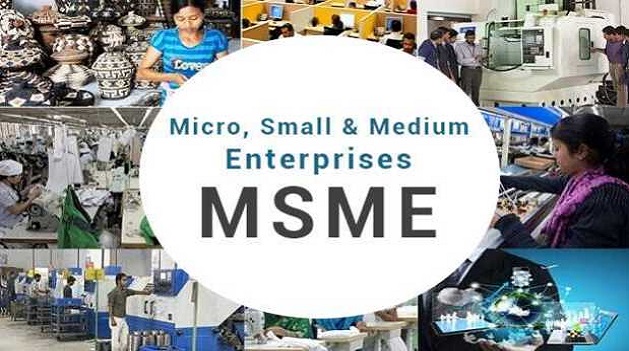
The Lagos State Government has launched a new financing initiative that will provide single-digit interest loans of up to N10 million to micro, small and medium enterprises (MSMEs), in a major push to improve access to affordable credit and stimulate business growth across the state.

The initiative, known as the Lagos State Access to Finance for SMEs through Cooperatives (LASMECO) programme, offers eligible businesses loans at a fixed 9 per cent annual interest rate, with repayment periods of up to 36 months for term loans and 24 months for working capital facilities. Beneficiaries will also enjoy moratoriums of six months and three months respectively.
The scheme was unveiled on Monday during the opening of a three-day LASMECO Accelerator Training Workshop organised by the Ministry of Commerce, Cooperatives, Trade and Investment, in Lagos.
In her keynote address, the Commissioner for Commerce, Cooperatives, Trade and Investment, Mrs Folashade Bada Ambrose-Medebem, said the programme was designed to bridge the financing gap facing thousands of Lagos businesses that have been priced out of conventional lending because of high interest rates and stringent collateral requirements.
Ambrose-Medebem, represented by the Director of Cooperative Services, Adeyinka Adeyemi, noted that MSMEs account for about 80 per cent of employment and contribute roughly 75 per cent of Lagos State’s Gross Domestic Product (GDP), yet many struggle to access affordable credit as commercial lending rates range between 35 and 40 per cent.
According to the commissioner, LASMECO addresses the challenge by using registered cooperative societies as financial intermediaries and guarantors, allowing entrepreneurs to obtain loans without relying solely on conventional collateral.
Under the financing framework, she said borrowers will provide 10 per cent cash collateral, while their cooperative societies will guarantee 25 per cent of the loan, adding that Sterling Bank Plc would provide a 50 per cent guarantee, creating a layered risk-sharing structure that makes lending more accessible and sustainable.
The programme targets businesses in agriculture, manufacturing, healthcare, the digital economy, creative industries, tourism, environmental sustainability and education.
The commissioner disclosed that the Lagos State Government has released its counterpart funding, while the Bank of Industry (BOI) has matched the state’s contribution, paving the way for loan disbursement, saying that BOI would serve as co-funder and final loan approver, while Sterling Bank would process applications, conduct credit assessments, disburse funds and recover repayments.
The commissioner reaffirmed the Lagos State Government’s commitment to ensuring the success of the initiative, expressing confidence that the programme would unlock affordable financing for thousands of entrepreneurs while boosting employment, productivity and economic development across the state.
Earlier, the Permanent Secretary in the ministry, Mr Babatunde Onigbanjo, said the workshop marked the transition of LASMECO from policy to implementation, stressing that the programme was fully funded and ready for rollout.
He said all necessary groundwork had been completed, including the release of counterpart funding, execution of memoranda of understanding and onboarding of accelerator organisations, adding that participants were now being equipped to begin recruiting and preparing loan beneficiaries.
According to him, the three-day workshop is designed to prepare accelerator organisations to identify eligible MSMEs, assess their credit readiness, compile loan applications and support borrowers from application through disbursement and repayment.
Onigbanjo urged participants to focus on quality rather than quantity in recruiting loan applicants, warning that poorly prepared businesses could increase loan defaults and undermine the programme.
He stressed that accelerator organizations would only be paid when the businesses they support successfully secure funding, saying the arrangement was intended to align their interests with the success of the programme.
The permanent secretary also emphasised that every loan applicant must belong to a registered cooperative society, describing the cooperative model as central to the programme because cooperatives provide a 25 per cent guarantee for every facility while helping to formalise informal businesses.
He disclosed that Lagos has more than 13,000 registered cooperative societies, although only about 1,900 to 2,200 are currently active, adding that reviving dormant cooperatives would significantly expand access to the financing scheme.
Onigbanjo warned accelerator organizations against charging applicants processing, training or evaluation fees, stressing that the only approved deductions are a N200,000 accelerator support fee and a one per cent BOI appraisal fee, both payable only after successful loan disbursement.
He said the state would closely monitor loan recovery, business growth, job creation, cooperative compliance and portfolio performance, adding that only accelerator organisations that deliver strong results would remain in the programme.
The permanent secretary described LASMECO as more than a loan scheme, saying it is also a strategy to formalise businesses, strengthen cooperatives, promote industrialization and drive inclusive economic growth across Lagos.
He urged participants to make full use of the workshop to prepare for immediate enrolment of qualified businesses, insisting that the programme had moved beyond planning and was now ready for implementation.


Socio-Economic Rights and Accountability Project (SERAP) has threatened to drag the National Assembly to court over a proposed amendment to the Nigeria Data Protection Act, which it alleges could indirectly empower the government to shut down social media platforms in Nigeria.

SERAP, which made the threat in an open letter to Godswill Akpabio, Senate President, and Tajudeen Abbas, speaker of the House of Representatives, urged them to immediately reject and withdraw the Nigeria Data Protection (Amendment) Bill, 2026, sponsored by Senator Ned Nwoko (APC, Delta North).
The civil organisation described the proposed legislation as a “backdoor attempt” to regulate social media and expand government control over online expression.
It further warned that if the bill is enacted in its current form or a substantially similar one, it would “promptly take all appropriate legal actions” to challenge its legality in the public interest and protect the fundamental rights of Nigerians.
The bill seeks to compel social media platforms, data controllers, and data processors operating in Nigeria to establish physical offices in the country.
It further empowers the Nigeria Data Protection Commission (NDPC) to shut down or prohibit the operations of any entity that fails to comply within 30 days.
SERAP, in the letter dated July 18, 2026 and signed by Kolawole Oluwadare, deputy director, SERAP, argued that the proposed powers could enable an administrative agency to impose what would effectively amount to a nationwide restriction on digital communication without adequate judicial or procedural safeguards.
“The Bill constitutes a backdoor attempt to regulate social media and increase governmental control over online expression through corporate localisation requirements rather than through transparent and constitutionally permissible regulation,” the organisation said.
It also maintained that the proposed localisation requirement could increase government leverage over technology companies, facilitate political pressure, and make censorship demands easier to enforce.
SERAP further warned that requiring companies to establish local offices could expose their employees in Nigeria to retaliation.
The organisation said the proposed amendment could affect millions of Nigerians who rely on digital platforms to exercise their rights to freedom of expression, access information, associate with others, participate in political life, conduct business, pursue education, and engage in civic advocacy.
SERAP particularly criticised the proposed power of the NDPC to prohibit entities from operating in Nigeria after a 30-day period of non-compliance.
It said the bill contains no requirement for prior judicial authorisation, no obligation to consider less restrictive alternatives, and no meaningful safeguards to assess the impact of a prohibition on the fundamental rights of millions of Nigerians.
“In effect, the Bill empowers an administrative agency to impose sanctions comparable to a nationwide restriction on digital communication without the procedural guarantees ordinarily required whenever fundamental rights are at stake,” it said.
SERAP argued that the proposed provision could not withstand scrutiny under Section 45 of the Nigerian Constitution, which permits restrictions on fundamental rights only when prescribed by law, pursued in the pursuit of a legitimate aim, and reasonably justifiable in a democratic society.
While recognising the government’s legitimate interest in ensuring that digital platforms comply with Nigerian law, the organisation contended that such regulation must meet the constitutional criteria of necessity and proportionality.
“There is no evidence that existing powers under the Nigeria Data Protection Act are inadequate, that current enforcement mechanisms have failed, or that less restrictive alternatives would be insufficient,” it stated.
SERAP further cautioned that the proposed legislation could recreate the repercussions of the Federal Government’s suspension of Twitter, which the ECOWAS Court of Justice previously criticised
In SERAP and Others v. Federal Republic of Nigeria, the regional court ruled that the Twitter suspension infringed rights to freedom of expression, access to information, and media freedom protected under the African Charter on Human and Peoples’ Rights.
Although the proposed amendment differs from the Twitter suspension, SERAP argued that it might produce a similar outcome indirectly by empowering regulators to bar digital platforms from operating in Nigeria.
“The National Assembly should not enact legislation capable of producing, through indirect regulatory means, the very restrictions on fundamental rights that regional human rights law prohibits,” the organisation emphasised.
It also cited Section 39 of the Nigerian Constitution, Article 19 of the International Covenant on Civil and Political Rights, and Article 9 of the African Charter, as securing freedom of expression and access to information.
SERAP maintained that international human rights standards mandate restrictions on freedom of expression to be lawful, necessary, proportionate, and the least intrusive means available to achieve a legitimate public goal.
The organisation additionally warned that mandatory localisation requirements could undermine Nigeria’s digital economy and innovation ecosystem by raising compliance costs for technology firms, start-ups, open-source projects, educational institutions, research organisations, and artificial intelligence developers.
It argued that the proposed amendment might make Nigeria less attractive to technology investors and conflict with the objectives of the Nigeria Startup Act 2022 and the National Digital Economy Policy and Strategy.
“The National Assembly should not achieve indirectly through regulatory localisation requirements what it cannot constitutionally achieve directly through restrictions on social media. The practical consequences for millions of Nigerians would be indistinguishable from a platform ban,” SERAP stated.
It urged Akpabio and Abbas to reject and withdraw the bill, warning that its enactment would breach the Nigerian Constitution and Nigeria’s commitments under international and regional human rights instruments.
“The National Assembly should seize this opportunity to demonstrate its commitment to constitutional democracy, the rule of law, and Nigeria’s digital future by immediately withdrawing the Bill,” SERAP added.

YEDC Warns Customers, Says 20 Percent Electricity Bonus is Scam

FG to Support 12 Tech Startups with N482m under iDICE

NBC, INEC, Plan Joint Broadcast Monitoring Framework ahead of 2027 Elections

No Going Back on July 31 Deadline for Insurance Firms’ Recapitalisation – NAICOM

Court Affirms FCCPC’s Power to Regulate Digital Lending

NRC, Ponzi Scheme Collapses Resulting Loss of Billions of Naira

NASENI Moves to Digitize CCB’s 5m Assets Declaration and Operations

Lebara Nigeria Launches Lebara Play, Africa’s First Telecom-Owned Micro-Drama Platform

CANAL+ Partners Samsung to Pre-Load DStv Stream on New Samsung TVs In Nigeria, Other African Countries

Tokenization, Blockchain Technology will Transform Financial Institutions – IMF




 News1 day ago
NIMASA Unveils Accelerator Scheme to Drive Innovation, Sustainable Growth

 E-Financial1 day ago
Access Holdings Sells 7.44% Stake in Ghana Unit

 E-Financial1 day ago
NRS Issues July 31 Deadline for e-Invoicing Compliance

 E-Business1 day ago
SERAP to Sue NASS over Bill Empowering NDPC to Regulate Social Media

 E-Financial1 day ago
NDIC Urges Youths to Shun Ponzi Schemes, Embrace Savings

 News1 day ago
ICPC Secures Final Forfeiture of N941m Linked to IPPIS Fraud

 News1 day ago
Adebutu, PDP Chieftain Accuses Nigerian Governors of Embezzling LG Allocations

 News1 day ago
eBusinessLife Advocates Greater Support for Girls in ICT as Students Showcase AI Innovations