

News
Nigeria to Enhance National Grid with Additional 150 MW – Adelabu

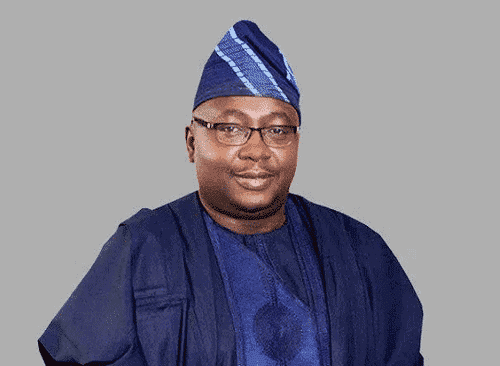
Nigeria is set to boost its national grid by an additional 150 megawatts (MW) of electricity before the end of the year, according to Adebayo Adelabu, the minister of power.

Minister Adebayo-Adelabu
Speaking to journalists after a closed-door meeting with President Bola Tinubu and German President Frank-Walter Steinmeier at the presidential villa in Abuja, Adelabu said the milestone would be achieved following the successful completion of the pilot phase of the presidential power initiative (PPI).
The minister explained that the initiative, implemented in partnership with Siemens, aims to improve Nigeria’s electricity supply through strategic projects.
“We believe that before the end of the year, an additional 150 megawatts will be added upon completion of the entire pilot phase,” Adelabu said.
Highlighting international collaboration as critical to Nigeria’s energy development, the minister underscored the country’s partnership with Germany.
“We have a bilateral relationship with the Republic of Germany that focuses on energy and electricity support,” he said.
“The name of the game now is about cooperation, collaboration, and partnership.”
Adelabu described the Siemens project as a flagship component of the partnership, focusing on implementing both brownfield and greenfield transmission substations under the PPI.
He noted that since the agreement was signed in December 2023 at COP 28 in Dubai, Nigeria has made significant progress. “We have completed the pilot phase of this project up to 80%,” he said.
The pilot phase includes the importation and installation of 10 power transformers and 10 mobile substations, with eight already commissioned.
“The positive impact of this is that it has added nothing less than 750 megawatts to our transmission grid capacity,” he said.
Adelabu outlined plans for the next phase, which will involve revamping 14 existing substations and establishing 23 new ones across the country.
“The entire grid is quite fragile and dilapidated. We need to revamp it to ensure stability going forward,” he added.
In addition to addressing immediate power needs, the minister reaffirmed Nigeria’s commitment to renewable energy as part of its long-term strategy. “We have an energy transition plan to achieve net-zero emissions by 2060,” he said.
Adelabu highlighted Germany’s expertise in renewable technologies, which aligns with Nigeria’s natural resources.
“Germany has technology; we have the sun and wind,” he said, noting that over 30 states in Nigeria enjoy a minimum of 10 hours of sunshine daily.
The minister also discussed plans for off-grid solutions, proposing a distributed power model where each state would have its own generating plants.
“This model will shield states from problems on the national grid and ensure rural electrification,” he said.
“Germany’s involvement extends beyond traditional energy sources; it includes significant investments in green energy projects.”
Adelabu concluded by expressing optimism about Nigeria’s energy future, emphasizing that partnerships with Germany and other stakeholders will help build a robust energy infrastructure to support economic growth.



Sen. Afolabi Salisu, the Chairman, Senate Committee on ICT and Cyber Security, has said efforts were ongoing to review the National Data Protection Act (2023) to meet emerging threats associated with technological advancement.

Salisu disclosed this on Tuesday at the opening of a three-day workshop, on Data Protection Awareness Promotion organised for the Joint National Assembly Committee on ICT by Nigeria Data Protection Commission (NDPC) and Ampersand Development Partners.
He said that since the enactment of the Act in 2023, there have been new developments such as Artificial Intelligence (AI) and the United Nations Convention on Cyber Crimes.
The lawmaker said that there is a nexus between data governance and cyber crimes hence the need to look at the Act and strengthen the handshakes where necessary.
According to him, we need to ensure the security of our country, particularly in the cyber space and our data governance as well as technology advancement like AI.
“As legislators, we need to have knowledge on data privacy and protection for us to be able to effectively legislate in that area.
“You cannot legislate in an area that you are not sufficiently knowledgeable in; this workshop affords us the opportunity to build our capacity to understand modern principles of data protection and to be in position to review the National Data Protection Act
“It has been three years down the line, how has this law addressed the need of the nation, particularly given the emerging technologies and how it compares with other other countries.
“At the end of this exercise, we would be able to come up with a roadmap, a timeline, with a view to review the National Data Protection Act,” he said.
The lawmaker tasked all Nigerians on private data protection saying that it is the duty of all citizens to ensure safety of their data.
He said that many free public WiFi and Apps are not always free as users pay with their data and adverts without knowing it.
Also speaking, the Chairman, House Committee on ICT and Cyber Security, Rep. Stanley Olajide (APC- Oyo) said that data is gold and Nigeria’s next prosperity was not going to be oil but data.
He said that no investor would bring foreign funds or capital into Nigeria, without making sure that the right data protection law is in place, which Nigeria has.
“Whatever data that we have is our sovereign wealth, is something that belongs to us. How do we protect it? We have to make sure that the right legal frameworks are put in place, so that those data, once bridged, you can actually hold entities, corporation, the countries responsible when they’ breach your data law.
“In the U.S., they have their data law; if you put anything in their cloud, is owned by the United States. So we also have to have something here.
“Anything that resides here in Nigeria and is generated here must be home and protected by our country; so we are put in the right laws and framework in place just to do that,” he said.

By Blaise Udunze
When the word “xenophobic” is talked about, most affected African countries tend to focus on the pains being experienced by their citizens in South Africa. For a moment, it calls for Nigeria and the rest of the African continent to pause and ask, how did we get here?

Xenophobic Violence
The recent happenings across the streets of Johannesburg, Pretoria, and Durban, a painful pattern continues to unfold with frightening and fearful regularity, as Nigerian-owned businesses are looted, migrants hunted, families displaced, and African nationals reduced to targets of rage. If asked, the majority would chorus that the recurring images of xenophobic violence in South Africa are disturbing enough, and no doubt, yes, but the deeper tragedy is beyond the flames and bloodshed. It lies in the silent failures back home that forced many Nigerians into vulnerable exile in the first place.
The reality, as a matter of fact, is that to understand the suffering of Nigerians in South Africa, one must first confront the uncomfortable truth that xenophobia is not merely a South African problem. It is also a Nigerian governance problem exported abroad.
Nigeria, often celebrated as the “Giant of Africa,” has now become the “Mama Africa” who has failed to nurture her many children, with the fact that behind every Nigerian fleeing hardship for survival, known as the “japa” syndrome, in another African country is a story shaped by economic frustration, failed institutions, poor leadership, unemployment, and a financial system disconnected from the realities of ordinary citizens.
One apt way to confirm these inimical factors, the South African president, Cyril Ramaphosa, recently acknowledged this uncomfortable reality when he urged African leaders to address the domestic failures driving mass migration across the continent. Speaking amid renewed anti-foreigner tensions, Ramaphosa identified “misgovernance” as one of the factors forcing Africans to seek refuge in countries like South Africa. Of a truth, his comments may have generated debate, and some “patriotic Nigerians” may also want to prove him wrong, but they reflected a painful reality many African governments would rather avoid.
Nigeria, despite its vast human and natural resources, has increasingly become a country where millions no longer see a future at home. This is a critical irony and the height of it all because a nation blessed with oil wealth and entrepreneurial energy and one of the youngest populations in the world is yet burdened by systemic corruption, policy inconsistency, infrastructural collapse, and a leadership class that has often prioritised politics over productivity, especially with the imminence of an election.
It is so detestable and at the same time fearful that the result is a generation of young Nigerians trapped between hopelessness and migration.
One regrettable experience that has continued to haunt the country for decades, is that successive governments have squandered opportunities that could have transformed Nigeria into an industrial and economic powerhouse. Public resources that should have been invested in power, roads, healthcare, manufacturing, education and enterprise development have either disappeared into private pockets or become trapped in wasteful bureaucratic structures.
Reports indicating that over $214 billion in public funds may have been lost, diverted, or trapped in opaque fiscal systems over the last decade capture the scale of Nigeria’s accountability crisis. Whether exact or conservative, such figures reveal a country losing resources or funds rapidly from severe bleeding that could have changed millions of lives.
Looking intently at these developments, one would know that the tragedy is not merely corruption itself but the opportunities corruption destroyed.
Come to think of this fact that with proper governance and strategic economic planning, Nigeria could have developed a thriving SME ecosystem capable of employing millions of citizens. Instead, unemployment and underemployment have become defining realities of national life. The World Economic Forum recently identified unemployment and lack of economic opportunity as Nigeria’s greatest economic threat, yet the country continues to struggle with coherent employment data and long-term economic direction.
This economic suffocation explains why migration has become less of a choice and more of a survival strategy for many Nigerians.
At the centre of this crisis is another troubling contradiction, which is that Nigeria’s banking sector appears increasingly profitable while the real economy continues to deteriorate.
Ordinarily, banks in developing economies are expected to function as engines of growth by financing productive sectors, supporting innovation, and empowering small businesses. Across the world, SMEs are recognised as the backbone of grassroots economic development, and the tangible result is that they create jobs, stimulate local production, and expand economic participation.
In Nigeria, SMEs account for over 70 per cent of registered businesses, contribute nearly half of the country’s GDP and generate between 84 to 90 per cent of employment. Yet, despite their enormous economic importance, SMEs receive barely between 0.5 per cent and one per cent of total commercial bank lending.
This is not just a policy failure; it is an economic tragedy. Rather than financing entrepreneurs and productive enterprises, Nigerian banks have increasingly found comfort in investing heavily in government treasury securities. In 2025 alone, major Nigerian banks reportedly generated N6.68 trillion from total investment securities and treasury bills, benefiting from high-yield government debt instruments instead of supporting businesses capable of creating jobs.
The banking sector’s recapitalisation exercise, which successfully raised N4.56 trillion, was celebrated as a regulatory achievement. But the critical question remains. The recapitalisation is for what purpose?
If stronger banks continue to avoid the productive economy while SMEs remain starved of affordable credit, recapitalisation merely strengthens financial institutions without strengthening national development.
Today, private sector credit in Nigeria remains significantly low compared to many African economies. High interest rates, excessive collateral demands, weak credit infrastructure and risk-averse banking practices have created an environment where small businesses struggle to survive, and these implications are devastating.
Every denied SME loan is a denied employment opportunity. Every failed business is another frustrated entrepreneur. Every frustrated entrepreneur is another Nigerian considering migration.
This is how economic dysfunction transforms into human displacement. In a situation like this, it is noteworthy to state that South Africa naturally becomes an attractive destination because of its relatively advanced infrastructure and larger economy. Today, this has informed Nigerians and other African countries alike to migrate there, not because they hate their country but because they are searching for dignity through work and enterprise.
Yet, in a cruel twist, many become targets of xenophobic violence. Foreign nationals are accused of “taking jobs,” dominating businesses, and contributing to crime. Shops are attacked. Businesses are burned. Lives are lost.
It is not a surprise anymore that the disturbing rhetoric surrounding xenophobia has become increasingly normalised and perceived as fighting against saboteurs. Another major concern is that social media posts celebrating violence against Nigerians reveal a frightening and fearful dehumanisation of fellow Africans. This has continued to be heralded unaddressed, as some extremist anti-migrant groups now openly mobilise hostility against foreign nationals under the guise of economic nationalism.
Yet, as opposition leader Julius Malema rightly asked during one of the recent xenophobic debates. “After attacking foreigners and shutting down their businesses, how many jobs have actually been created?” If you are smart enough to know, it is glaring that this is a question that cuts through the emotional manipulation surrounding xenophobia, which also reflects the fact that destroying a Nigerian-owned shop does not solve unemployment, nor does killing migrants create prosperity. Violence against fellow Africans does not fix structural inequality.
Malema’s argument was blunt but accurate in revealing that xenophobia is not an economic strategy. It must be perceived with the right perspective as the symptom of deeper failures, poverty, inequality, weak governance, and political frustration.
Historically, just like other colonised African countries, South Africa itself carries deep old wounds. The legacy of apartheid left enduring economic inequalities, spatial segregation, unemployment, and psychological scars, but this should not continue to shape social tensions today. What is of concern is that the same people, like other African countries, experienced, were expected to remain forward-looking and forge ahead rather than dwell in the past.
It is even more pathetic that decades after the fall of apartheid, millions of Black South Africans remain trapped in poverty and exclusion; perhaps they are not to be blamed for their failures as they claimed, but the foreigners who didn’t stop them from exerting their skills become the scapegoats.
That frustration often seeks an outlet, and immigrants become easy scapegoats. This, however, does not excuse the brutality.
The stories emerging from xenophobic attacks are horrifying and very dastardly and humiliating, as African migrants have reportedly been beaten, burned alive, stoned, and hunted in communities where they once sought refuge, as two Nigerian citizens were said to have been beaten and burnt to death. To say the least, the pain becomes even more ironic when viewed against history.
Because Nigeria played a major role in supporting South Africa’s anti-apartheid struggle, ranging from financial assistance to diplomatic pressure, scholarships, activism, and cultural solidarity, Nigerians stood firmly with Black South Africans during some of apartheid’s darkest years, which was enough to prevent such ugly events. Nigeria did so much to the point that Nigerian students contributed financially to anti-apartheid campaigns. Nigerian musicians used music to mobilise continental resistance. Successive governments invested enormous diplomatic and material resources into the liberation struggle.
The children and grandchildren of those who made such sacrifices are now among those facing hostility in South Africa today.
History makes the tragedy even heavier. Yet, Nigeria must also confront its own failures honestly. The truth is, if Nigeria had invested half the energy it spent supporting external liberation struggles into building a functional domestic economy, perhaps millions of Nigerians would not be fleeing abroad in search of economic survival today.
The painful reality is that many Nigerians abroad are not economic adventurers; they are economic exiles.
The ugliest side of it all is that they are exiled by unemployment, exiled by corruption, and exiled by policy failures. Again, they are exiled by a system that has repeatedly failed to convert national wealth into shared prosperity but into embezzlement that still finds its resting place in a foreign account.
This is why solving xenophobia requires more than diplomatic protests or emotional outrage as exuded in the National Assembly by some members like Adams Oshiomhole and others. This calls for the political actors and those in the financial space to fix the conditions that force Nigerians into vulnerable migration in the first place.
One undeniable fact is that, as a country, Nigeria must fundamentally rethink governance and economic management as it takes into consideration the following solutions.
First, public accountability must become non-negotiable and should not be compromised anywhere. Corruption and resource mismanagement are critical and have robbed generations of opportunities, and these are the major traits fueling the exile. Infrastructure, industrial development, education, and healthcare must become genuine priorities rather than campaign slogans, as all these must become a reality, not a feeble promise.
Second, the banking sector must reconnect with the real economy. Financial institutions cannot continue generating enormous profits from government securities while productive sectors collapse. The government should hold a roundtable discussion with banks, which must be incentivized and, where necessary, compelled to increase lending to SMEs and productive industries capable of generating employment.
Third, there must be deliberate and conscious investment in skills, innovation, and entrepreneurship. Young Nigerians should not have to leave their homeland merely to survive because it is an aberration for a country that is enormously rich but still has some of its best hands eloping from the country.
Finally, African governments must reject the politics of division and scapegoating. This contradiction is at its height because Africa cannot claim to pursue continental unity while Africans are hunted in other African countries.
In all of the deliberation, the truth remains the same, in the sense that the story of Nigerians suffering xenophobic violence in South Africa is ultimately a story about failed systems on both sides, one on the side of economic failures pushing migrants out and the social failures turning migrants into enemies.
Until these structural realities are confronted with honesty and urgency, the cycle will continue. More young Nigerians will leave. More migrants will become vulnerable. More African societies will turn inward against each other.
But this trajectory is not irreversible. One gift that can’t be taken away from Nigerians is that Nigeria still possesses the talent, entrepreneurial energy, and human capital necessary to build a prosperous economy that gives its citizens reasons to stay rather than flee. The truth is that what has been lacking is not potential but responsible leadership and economic vision.
The true solution to xenophobia may therefore begin far away from the streets of Johannesburg or Durban. It may begin in Abuja, with governance that works, institutions that serve, banks that invest in people, and leadership that finally understands that national dignity is measured not by speeches but by whether citizens can build meaningful lives at home.
Until then, the “japa” flag will keep flying, as many Nigerians will remain exiled, not merely by borders, but by the failures of the country they still desperately want to believe in.
Blaise, a journalist and PR professional, writes from Lagos and can be reached via: [email protected]
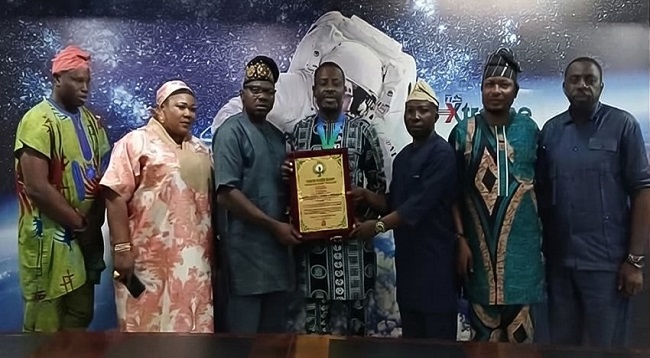
ipNX Director, Dr. Olusola Teniola, has been awarded the prestigious Golden Leadership Excellence Award by the Yoruba Study Group. Dr Teniola, who leads Strategic Business Initiatives (SBI) at ipNX, the leading Nigerian technology and telecommunications company, was conferred with this award at the ipNX Corporate Headquarters, Victoria Island, Lagos.

Dr. Teniola was recognised as an Icon of Excellence & Most Outstanding Administrator of the Year 2025/2026 for his remarkable contributions to the advancement of Nigeria’s telecommunications industry, as well as his unwavering commitment to making data more affordable and accessible to millions of Nigerians.
The award celebrates his embodiment of the revered Omoluabi ethos of Yorubaland, defined by integrity, diligence, excellence, and strong character. His leadership and impact have been particularly notable through his work with the Association of Telecommunications Companies of Nigeria (ATCON) and the Alliance for Affordable Internet, where he has played a pivotal role in shaping policies and initiatives that drive digital inclusion and connectivity across Nigeria.
In its citation, the Yoruba Study Group commended Dr. Teniola for his “exemplary contributions to the advancement and management of telecommunications in Nigeria, his unquantifiable efforts in ensuring affordable data for the teeming masses, and his outstanding record of quality service delivery.”
Reacting to the recognition, Dr. Teniola said “I am deeply honoured to receive this award from the Yoruba Study Group. This recognition is not just a personal milestone, but a reflection of the collective efforts of industry stakeholders committed to advancing Nigeria’s digital future. I remain dedicated to driving initiatives that promote affordable access to connectivity, foster innovation, and empower more Nigerians to participate meaningfully in the digital economy, while upholding the values of integrity, excellence, and service.”
The Yoruba Study Group, a socio-political organisation founded in 2019, is dedicated to promoting Yoruba traditions, values, and cultural heritage. ipNX described the award as a testament to Dr. Teniola’s enduring impact on both the technology sector and society at large.
“Dr. Teniola exemplifies the highest standards of leadership, innovation, and service. His contributions continue to strengthen Nigeria’s digital economy while reflecting the values of excellence and integrity that we uphold at ipNX,” said Mobolaji Caxton-Martins, Head Marketing and Corporate Communications, ipNX Nigeria.
This recognition not only highlights Dr. Teniola’s professional achievements but also underscores his commitment to fostering inclusive growth, strengthening industry collaboration, and advancing Nigeria’s position in the global digital landscape.

ATCON Says Telecom Network Under Threat, Urges Stronger Efforts to Protect Infrastructure

CBN Warns Non-Interest Banks against Governance, Compliance Risks

FG Seeks Fresh $1.25Bn Loan from World Bank to Create Jobs, Others

National Assembly to Review National Data Protection Act

Firm Shares Insights into Ransomware Trends and Tactics @ International Anti-Ransomware Day-2026

Kaspersky Discovers Vulnerability in Qualcomm Snapdragon Chips that can Lead to Data Loss & Device Compromise

Vitel Wireless Partners Fintechs to Expand Access to Services

MTN Suspends Data, Airtime Borrowing Service over New FCCPC Lending Rules

MTN, VDT, Zoracom, Digital Realty Back 2026 Girls in ICT Campaign

Bank Customers to Pay N1,500 for ATM Card Issuance, Replacement – CBN




 E-Financial3 days ago
Transcorp Excites Shareholders with ₦20.3 Billion Dividend @20th AGM

 Telecom2 days ago
MTN, Airtel, Glo Under Pressure as FG Demands Better Service Delivery

 E-Financial3 days ago
Africa Prudential Launches Sabivest to Boost Digital Investment Access

 Telecom3 days ago
PAFON 3.0: Agency Banking Key to Reaching Millions of Unbanked Nigerians – AMMBAN

 E-Business2 days ago
Firm Warns of Phishing Attacks via Compromised Amazon Simple Email Service Accounts

 E-Financial2 days ago
Mastercard, BMONI Launch Multi-Currency Payment Cards in Nigeria

 General News3 days ago
PIN Records 3.07Bn Media Reach, Expands Digital Rights Impact Across Africa in 2025

 General News3 days ago
Interswitch Inducts 3rd Interns into Its Developer Academy