

Telecom
Corporate Blackmail, My Story as a Case Study, by Leo Stan Ekeh, Chairman Zinox Group

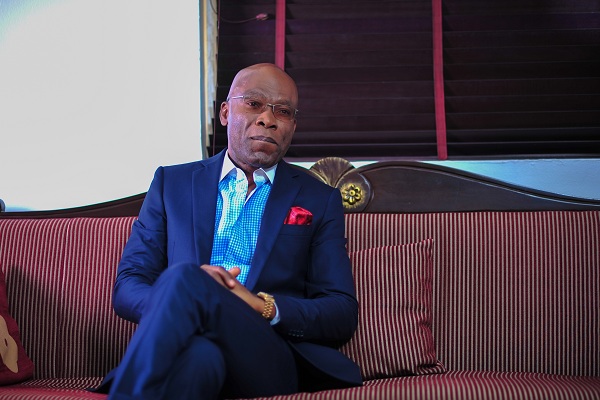
At an end-of-year inspirational talk delivered on 14th December, 2024 to his select mentees of young entrepreneurs in Nigeria monitored in Lagos, Dr. Leo Stan Ekeh advised them not to lose hope in the Nigerian economy, as he projects that the country shall start returning to a comfortable zone from the 3rd quarter of 2025, he also warned them to apply greater caution in transactions with persons and corporates of questionable character, stressing why due diligence and being local are both critical and an added advantage. Below are excerpts from the lecture.

The new fraud is corporate and Personal blackmail, which my companies and I have fallen victim to. I am sure you have read some in the newspapers where CEOs of responsible corporations in Nigeria are tagged fraudsters.
This is the work of blackmailers, and they partner with a few blogs, engage some innocent respected law firms for hyping and a few government officials to achieve their set objectives to destroy your corporate and personal reputations.
These negative online materials are then lifted by Google, Facebook, Instagram, and other social media platforms so that when people search your organisation or personal names, you are seen as a crook. This is with the intent to destroy your brand and affect your credit rating globally.
In some cases, they sue you in multiple courts in Nigeria for the noise and to have the content to continue to upload on various social media platforms. Having set this platform against you, your competitors would leverage them to blackmail you by paying them handsomely.

In some cases, they secure a Fiat from the office of the Attorney General of the Federation to give an impression that the Federal Government is suing you for fraud, which allegations they cannot prove in courts. This is to make more money from your competitors and extort you if you want such negative news taken down from social media pages.
I am a private person, but for the first time in the history of my entrepreneurship, I will tell you a bit about the Group I founded over 38 years ago. In Nigeria, humility is seen as stupidity. You are free to reconcile and appreciate the noise a certain Benjamin Joseph and Femi Falana chambers are making as an insult to themselves and the nation.
My integrated technology group is the largest on the continent, and we have the second-highest credit rating in the tech sector as far as I have been told in the whole of Africa. What this means is that if you award us a contract of over $5 billion, we don’t need to borrow to execute because we are trusted.
In 38 years of tech entrepreneurship, we have had a global turnover of over $23.7 billion, and we have not borrowed a kobo from any financial institution in the world, neither do we owe any. We have delivered the biggest tech projects across Africa and most of them you are aware of. I set out from day one as an orphan and an only child even though my parents were alive and I have five other siblings. So, I am my own adviser.
We built the Group as corporate collateral, we are trusted by all our over 35 global partners and most of them are listed in Fortune 100. We do our best to promote a trust economy.
A few weeks ago, I paid one of the leading multinationals over $31m for a debt one of the companies in the Group incurred due to Naira devaluation challenges, and this is one out of 31 multinationals. So, I am like someone on steroids 24 hours a day and manage to sleep 3 hours a day to maintain this global reputation.
Last week, I inspected our companies’ books, and the group exposure on credit extension to companies in Nigeria was over $89m. We have worked very hard to build knowledge, infrastructure, and spiritual capacities for our survival, and the Group is not focused on money but on our passion. Please research all these before our final meeting in the first quarter of 2025. I shall tell my full story one day.
Using what my companies TD Africa Distributions, Zinox Technologies, my colleagues in both companies, my wife, and I have suffered in the last 11 years in the hands of Benjamin Joseph of Citadel Oracle Concepts Ltd, an Enugu indigene based in Ibadan, and an alleged serial blackmailer and fraudster as a case study, you shall appreciate it.
I have never met Benjamin Joseph in my life, and neither has he directly or indirectly enquired or transacted any business with Zinox Technologies Ltd in the history of our existence.
Citadel Oracle Concepts Ltd was amongst 13 companies awarded HP PC contract by Federal Inland Revenue Services (FIRS) in 2012, with instruction from the FIRS that the laptops must be sourced genuinely from HP Authorized Distributor in Nigeria, and TD Africa is the biggest HP Partner in Nigeria.
This is because the FIRS wanted to guard against grey or fake products and the challenges of after-sales support. Citadel, through its authorised partner, Princess Kama (with a letter of Authority signed by Benjamin Joseph as the MD of Citadel Oracle Concepts Ltd), approached TD Africa to supply Citadel the laptops on credit as the company did not have enough funds to pay TD Africa.
The agreed condition was that FIRS should pay into a Citadel Account, where two staff members of TD shall be signatories to protect our pre-agreed invoice value, plus an additional guarantee from a responsible Nigerian.
Citadel raised a Board resolution to include two TD staff, Chris Eze Ozims and Shade Oyebode, as the signatories in an account Citadel opened with Access Bank. TD Africa then supplied the systems to FIRS with serial number of each system captured.
This was the same process for the other companies awarded similar contracts by the FIRS who didn’t have enough funds to pay for the laptops. FIRS, as a responsible FGN agency, paid all on time, and other companies immediately remitted the pre-agreed amount from the dedicated account to TD Africa Account. But Benjamin Joseph, the CEO of Citadel, as I was told by his partner, Princess Kama, wanted to divert the fund and possibly pay us at his own time or never.
However, Princess Kama, because her Uncle Chief Igbokwe (a long-time partner of TD Africa) was an additional guarantor for the credit extended to Citadel, disagreed with the plans of Benjamin Joseph.
She approached TD Africa signatories/representatives to debit the dedicated bank account for the pre-agreed amount, as Benjamin Joseph insisted on diverting the funds. TD representatives actioned immediately. This is where the problem started.
One year after this transaction was closed and forgotten, we did not know both partners had been fighting over the profit-sharing ratio. Benjamin Joseph engaged Afe Babalola Chambers and claimed that his company was used to defraud FGN, that no laptops were supplied, and that he was not aware of both the contract and Citadel Account opened with Access Bank Plc.
According to Princess Kama, Chief Afe Babalola SAN, a distinguished lawyer of Afe Babalola Chambers, invited her to Ibadan and she obliged. When he raised the claims by Benjamin Joseph, she presented documentary evidence which was confirmed by FIRS management that Benjamin Joseph was aware of the contract, and indeed submitted a copy of his International Passport, a Letter of Acceptance of the FIRS Contract, and the appointment of Princess Kama as the duly authorised representative of Citadel on the FIRS contract.
In fact, her position was vindicated by the FIRS in a letter dated 11th February 2014 and signed by FIRS Head of Legal, Idrissa Kogo, addressed to the same Afe Babalola and Co. confirming that Mr. Benjamin Joseph was aware of the contract and even gave FIRS a letter dated 13th December, 2012 to deal with Princess Kama in relation to the contract.
In the same letter, FIRS confirmed that Citadel instructed them to pay the proceed of the laptop into the Citadel Account with Access Bank. These matters would later be corroborated in the Witness Statement on Oath by Benjamin Joseph in a civil case he filed at the Lagos State High Court, accepting he was aware of the contract and gave those documents to Princess Kama. According to Princess Kama, Chief Afe Babalola advised her to increase Benjamin Joseph’s share by an additional N2m from the N10million she had initially offered. However, Mr. Joseph insisted on taking all the profit from the transaction, and she refused.
It was after one year that Benjamin Joseph started writing all sorts of petitions to different police stations and EFCC offices both in Lagos and Abuja and publishing interviews against me and Zinox with his hired media agents. I checked with Zinox and they never transacted any business with his company.
When my staff started receiving invitations from the Police and EFCC, I had to independently investigate the transaction, and it was in order. I had no idea who both Benjamin Joseph and his partner Princess Kama were, and because a lady was involved, I had to investigate both and, particularly Princess Kama to establish their partnership, in case she was a member of a fraud syndicate and their true relationship. I hired foreign-certified detectives who worked with local ones to establish their long-term relationships.
They once belonged in the same church, nearly got married, and were partners for years. They even had previous contract bids which Princess Kama did for Citadel Oracle Concept Ltd in many offices, including the Presidency. This cost me then $241,000. It was after I received a comprehensive report from the detectives that I asked my office to invite her to see me and she came and confirmed everything.
Mr. Joseph, who was properly investigated and documented, including his financial status, became more aggressive in publishing false claims and probably expected me to call him to negotiate as he was told I am a very rich man.
At one point, an AIG of Police invited us to meet in his office at SFU Milverton, Ikoyi, to find a solution because he was shocked that someone was writing a petition against my companies, my staff, and myself for less than N170m. But at the last minute, I apologised to the AIG that I would not attend as Mr. Benjamin Joseph, who came from Ibadan for the meeting, was already blackmailing me in blogs and newspapers. He could use that meeting to a negative advantage.
Sometime in November 2013, the law firm of Afe Babalola, acting for Mr. Benjamin Joseph and his company, Citadel, wrote the first petition to the Special Fraud Unit (SFU) of the Nigerian Police at Milverton Ikoyi, that his signature was forged on the Board resolution and other documents. The SFU investigated his petitions and wrote a report that his claim of the forged signature by his partner Princess Kama and his claim that no computers were supplied to FIRS were false. He, again, petitioned the DIG of Police, then Dr. Solomon Arase, who finally became Inspector General of Police. Dr. Arase, according to what I was told, sent his crack team to visit FIRS office and investigated other claims and found out that Mr. Benjamin Joseph lied absolutely.
Consequently, the IG of Police charged him to court in Charge No. CR/216/16 before Honourable Justice Peter Kekemeke of the FCT High Court, for false information. Even though the Prosecution proved and closed its case in 2018, Mr. Benjamin Joseph could not defend or substantiate his allegations after being required many times by the court to open his defence.
He would change lawyers and absent himself from court, giving medical reasons. Rather than opening his defence, Mr. Joseph was spending time in the Office of the Attorney General of the Federation begging for the AGF to take over the case and discontinue the charges against him.
However, the then Attorney General, after reviewing the case file on each of those three occasions, wrote to the Police to continue with his prosecution to a logical conclusion. These directives were contained in three separate letters dated 10th February 2017, 7th May 2018, and 6th June 2022.
While the above case was on, Benjamin wrote the same lies to the then Vice President, Prof. Yemi Osinbajo, claiming that his company was used to defraud the FGN. The VP rightly instructed the Chairman of EFCC to investigate and report back.
The EFCC, in their report, stated that the allegation was false and absolved TD and its staff of any wrongdoing because they are entitled to payment for the laptops they supplied on credit and did not forge any documents; in fact, they had no reasons to forge documents.
However, the EFCC charged Princess Kama and her uncle, Chief Igbokwe, to court before Honourable Justice Senchi of the FCT High Court on the instigation of Mr. Benjamin Joseph. But, again, Mr. Benjamin Joseph, was unable to prove his allegations against them, and in a judgment delivered in February 2021, Honourable Justice Danlami Senchi in Charge No. FCT/HC/CR/244/2018, discharged and acquitted both Princess Kama and Chief Igbokwe, and imposed a damage of N20 million against Mr. Benjamin Joseph for false petitioning and to serve as a deterrence against others who engage in false petitions that waste tax payers’ money.
More importantly, the judgment of Honourable Justice Senchi unequivocally stated that Technology Distributions and its staff were not liable for any fraud and that they were entitled to receive the proceeds of the laptops supplied on credit to Citadel Oracle Concept Limited, which were delivered to FIRS, and confirmed by them. This judgment is still subsisting and Mr. Joseph has yet to pay the damage of N20 million imposed on him.
Before this point, Mr. Joseph and his media partners became desperate in blackmailing my wife, myself, and Zinox Technologies in cheap blogs, as no responsible media ever published any of their press releases except Sahara Reporters, who were coopted and refused to hear our side of the story.
All these years, none of my staff, companies or myself was invited or included in all these court processes except the EFCC court case where TD was only invited as a witness because Citadel transacted with them. But his media blackmail was on me and Zinox and he smartly avoided his partner Princess Kama.
What Benjamin Joseph and his syndicate set up is a platform to work with my competitors who are willing to sponsor them to diminish my reputation by escalating in the media same case he could not defend and begged that it should be withdrawn.
This is the cause of the Nigeria digital census project delay till date and equipment worth over N300b are wasting in warehouses because my competitors and their sponsors at the highest level used them and engaged Femi Falana SAN to secure a Fiat against my name, my wife, my companies to tag us as frauds. By their action, Zinox almost lost a digital census contract of over $250m of which it was the most qualified. However, then Attorney General of Federation, Mr. Malami SAN, when he found out that he was deceived by Femi Falana (SAN) in granting the Fiat, wrote him a letter dated 28th October 2022, withdrawing the Fiat and discontinuing the case against me and my company which they had filed, unknown to us.
This is because Femi Falana SAN did not disclose fully to the Attorney General the fact that there is a subsisting judgment given by Honourable Justice Senchi that has dismissed all the allegations of Mr. Joseph and asked him to pay N20 million damages. He also did not disclose the fact that his client, Mr. Joseph, was still facing a criminal trial brought by the IG of Police against him. So, a few days after, President Muhammadu Buhari, based on submissions at the Federal Executive Council meeting, approved that the contract be awarded to Zinox Technologies Ltd based on competence, capacity and experience. And it was awarded to Zinox Technologies after months of blackmail to eliminate us from the deal. We delivered the project on time per our terms of engagement, but it was too late for the previous administration to conduct the Digital Census. What it means is that these blackmailers with support of people like Femi Falana caused the lack of credible data to move the country forward as all the equipment procured for the census are lying waste in warehouses nationwide. That’s shameless Nigerians for you and they walk the street as free men till date.
The arrival of the new Attorney General, Lateef Fagbemi SAN, changed everything. As a lawyer who had worked with Afe Babalola chambers (former lawyers to Benjamin Joseph), one of his early actions in office was to discontinue the Police case (CR/216/16) against Benjamin Joseph following the petition lodged by the chambers of Afe Babalola SAN at the SFU, Milvertion Road, Ikoyi, Lagos, on behalf of Mr. Benjamin Jospeh, that was found to be false. As a distinguished lawyer that I respect, I expected him to request for source documents of the cases including one already decided against Joseph by Honourable Justice Senchi of the FCT High Court that had already found Mr. Benjamin Joseph of lying in his petition with a damage of N20 million imposed on him.
As the number one judicial officer of the nation, even if he wanted to save Mr. Joseph from going to jail, I expected the Honourable Attorney General to act dispassionately in the light of a subsisting case/order directed against him to refrain from discontinuing the Police Charge pending the determination of that case, and also in the light of the valid and subsisting judgment of Honourable Justice Senchi.
Instead, he, against all the glaring SFU and EFFC reports and the decided case, withdrew the Police case against Mr. Joseph on reasons best known to him, thereby setting Mr. Joseph free, and he has been celebrating the withdrawal of a case he reported and could not prove/defend for years. To date, Benjamin Joseph acts as a blackmail platform for my competitors whenever we are competing on a bid, using nefarious publications in social media directed at me, my wife, and my company, Zinox.
Please, as stakeholders and future Nigerian trillionaires, learn from my experience. However, you must not dine with blackmailers, as technology will soon delete them from the tech ecosystem.


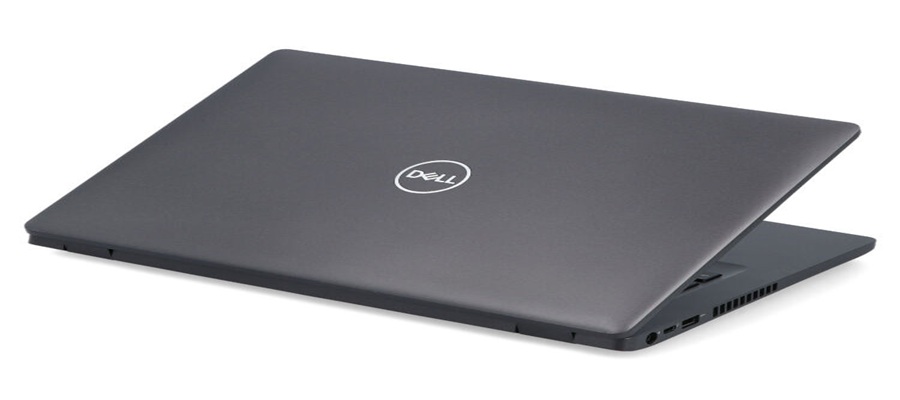
MENXTT TECH NG, a Lagos-based technology company, has launched an initiative to make quality Dell laptops more affordable for Nigerians through flexible payment plans and extended warranty support.

The company said the initiative was aimed at helping students, entrepreneurs, professionals and small businesses acquire reliable computing devices despite rising technology costs.
According to the company, customers can now purchase premium pre-owned Dell Latitude, Dell Precision and Dell Inspiron laptops at competitive prices, with selected models available under staggered payment arrangements.
The laptops, it said, are designed to meet the needs of users ranging from students and office workers to architects, engineers, software developers, graphic designers and video editors.
Speaking on the initiative, the Co-Founder of MENXTT TECH NG, Mr Anthony Emeka Nwosu, said access to quality technology should not be limited by financial constraints.
“A laptop is no longer a luxury; it is an essential tool for education, business and career development.
“Unfortunately, many people are forced to settle for unreliable devices because of the high cost of new laptops.
“At MENXTT TECH NG, we want to bridge that gap by providing durable Dell business laptops at affordable prices, backed by a full one-year warranty and flexible payment plans.
“We want every student, entrepreneur, freelancer and business owner to have access to technology that helps them succeed,” he said.
Nwosu explained that every laptop undergoes comprehensive testing before delivery and comes with a one-year warranty, an original charger, a complimentary laptop bag, Windows 11 operating system and Microsoft Office Suite pre-installed.
He added that the company, an authorised Bitdefender Antivirus reseller in Nigeria, also installs genuine Bitdefender security software on every system to protect customers against cyber threats.
According to him, customers requiring additional productivity tools can also have licensed Foxit PDF software installed on their devices.
Nwosu said the flexible payment option was introduced in response to prevailing economic realities, enabling customers to spread payments over an agreed period.
He noted that the arrangement would make it easier for students, startups and growing businesses to acquire quality computers without placing excessive pressure on their finances.
Beyond laptop sales, the company provides information technology consultancy, computer repairs, software licensing, cybersecurity solutions and digital transformation services to organisations across Nigeria.
He reaffirmed the company’s commitment to supporting Nigeria’s digital economy by making dependable computing devices and enterprise technology solutions more accessible to individuals and businesses.
According to him, the initiative reflects MENXTT TECH NG’s vision of combining affordability, quality products and professional after-sales support to help more Nigerians participate in the country’s expanding digital ecosystem. (NAN)
National Information Technology Development Agency (NITDA) has called for stronger collaboration among government, industry, academia and technology professionals to accelerate digital innovation and drive inclusive economic growth in Nigeria.

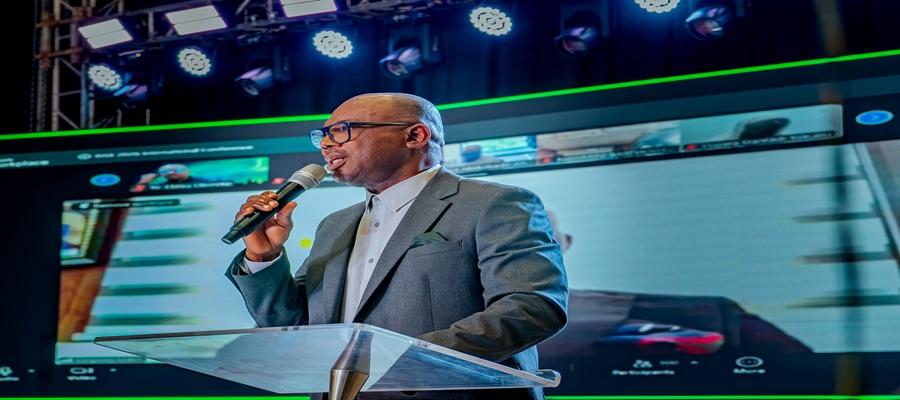
Dr. Aristotle Onumo, Director, Stakeholder Management and Partnerships, representing the Director General of NITDA, delivers a goodwill message at the 20th International Conference on Technology and Computing (RISE 2026) in Jos, reaffirming the Agency’s commitment to fostering digital innovation, strategic collaboration, and a technology-driven future for Nigeria.
The agency made the call at the 20th Nigeria Computer Society (NCS) International Conference 2026, held in Jos, Plateau State, where stakeholders examined strategies for leveraging emerging technologies to strengthen national development.
Speaking on behalf of the Director-General of NITDA, Mr Kashifu Inuwa, the agency’s Director of Stakeholders Management and Partnerships, Dr Aristotle Onumo, said Nigeria’s digital transformation would depend on sustained investment in innovation, digital skills, research and strategic partnerships.
According to him, collaboration across the public and private sectors is essential to translate emerging technologies into practical solutions capable of improving governance, creating jobs and enhancing the country’s global competitiveness.
Onumo said NITDA remained committed to implementing its Strategic Roadmap and Action Plan through initiatives that promote digital literacy, research and development, innovation ecosystems, cyber sovereignty and emerging technologies.
He added that the agency was expanding opportunities for innovators, entrepreneurs and startups through platforms designed to encourage collaboration, investment and technology-driven enterprise.
“We are transforming Digital Nigeria into the nation’s foremost innovation platform where policymakers, investors, startups, researchers and technology companies can collaborate to accelerate economic growth and digital transformation,” he said.
He urged innovators, startup founders and technology professionals to participate actively in the forthcoming Builders Summit by showcasing indigenous solutions capable of addressing Nigeria’s development challenges.
Declaring the conference open, the Governor of Plateau State, Mr Caleb Mutfwang, described digital technology as a critical driver of governance and economic development.
Mutfwang said his administration had adopted digital solutions to improve public service delivery, modernise government operations and enhance internally generated revenue.
He also identified technology as a key enabler for agricultural transformation, increased productivity and improved food security, urging participants to ensure that deliberations at the conference translate into practical outcomes for national development.
Earlier, the President of the Nigeria Computer Society (NCS), Prof. Muhammad Sirajo, said the conference was organised to strengthen collaboration among policymakers, researchers, regulators, technology professionals and industry leaders.
Sirajo said the conference, with the theme “Harnessing Digital Innovation and Emerging Technologies for Inclusive Growth and Economic Renaissance (RISE 2026),” focused on exploring how innovation could accelerate Nigeria’s socio-economic development.
He identified artificial intelligence, blockchain, cloud computing, cybersecurity and robotics as among the technologies shaping the future of economies across the world.
According to him, Nigeria’s youthful population and expanding digital ecosystem provide a strong foundation for building a globally competitive economy through sustained investment in digital infrastructure, innovation and skills development.
The conference attracted government officials, regulators, academics, development partners, technology professionals and private-sector stakeholders to deliberate on policies and innovations aimed at accelerating Nigeria’s digital transformation and inclusive economic renaissance.
Telecom
Hon. Minister Dr. Kingsley T. Udeh and ASUS To Unveil First of a Kind Flagship Store in West Africa
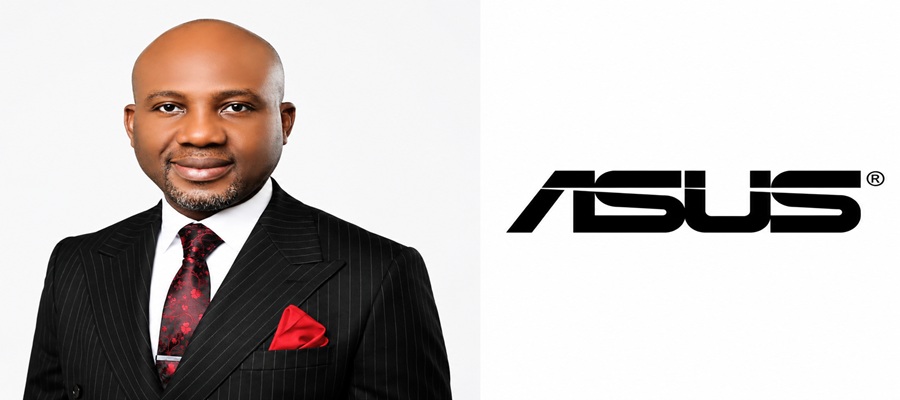
In a landmark moment for Nigeria’s technology retail sector, the Honourable Minister of Innovation, Science and Technology, Dr Kingsley Tochukwu Udeh SAN, will on Monday, August 3rd, commission a landmark ASUS Flagship Store in partnership with Nigeria’s leading e-commerce group Konga. The state-of-the-art facility is widely regarded as the first initiative of its kind in West Africa.

The commissioning will witness the visit of senior executives from the world-renowned technology brand to Nigeria, including EMEA General Manager, Mr. Aaron Tsai, alongside other. One of the purposes of their visit is to reinforce the strategic partnership with Konga and solidify the collaboration between both organisations, further demonstrating ASUS’ commitment to the Nigerian market.
The event is expected to also bring together key stakeholders from government, the technology industry, business community, and the media for what promises to be a defining moment in the evolution of technology retail in the region.
The development comes as Konga continues to accelerate its strategic partnerships with some of the world’s leading technology brands.
For years, Nigerian consumers have demanded more than just access to genuine technology products. They have increasingly sought immersive experiences, expert guidance, after-sales support, and greater confidence when making technology investments. The next chapter in this journey appears to address many of these expectations in a bold and innovative way.
The forthcoming announcement is expected to bring together global innovation in a manner that reflects the changing realities of today’s technology consumer. It also reinforces the growing confidence that leading international technology companies continue to place in Nigeria as one of Africa’s most strategic digital markets.
Industry analysts note that partnerships of this nature are becoming increasingly important as consumers place greater emphasis on authenticity, hands-on product experiences, technical support, and trusted purchase channels. Beyond selling devices, the future of technology retail lies in building complete customer experiences.
As anticipation builds for Monday, one thing is certain: the ASUS-Konga partnership promises to set new standards for tech retail in West Africa, elevating customer experience and reinforcing Nigeria’s digital transformation narrative.

EFCC Arraigns 4 over Alleged $5.3m Fraud Scheme

CBN Orders N19Bn Refunds to Customers as Complaints Rise

Access Bank Debunks Shutdown Report, Vows Action against Perpetrators

Oye, AERE Raises Alarm as 8m MSMEs Collapse in 18 Months

Kaspersky Uncovers Cyber Threats Defining the First Half of 2026 in Nigeria, Others

NRC, Ponzi Scheme Collapses Resulting Loss of Billions of Naira

EFCC Busts NIS Visa Overstay Racket, Uncovers N700m in an Account

From Scarcity to Scale: What Africa Can Learn from India’s Agricultural Transformation

Tokenization, Blockchain Technology will Transform Financial Institutions – IMF

BON Establishes Six Ad Hoc Committees to Modernize Broadcasting




 Telecom2 days ago
Fact-Check: Elon Musk’s “Tesla Pi Phone” is Internet Rumor

 E-Financial2 days ago
Malpass, Ex World Bank Chief Raises Alarm over Nigeria’s Secretive Debt Structures

 Telecom2 days ago
How and Why Apps Deplete Data – ALTON

 News2 days ago
CIBN, ACAMB Push for Financial Inclusion, Women Empowerment

 E-Financial2 days ago
S&P Global Acquires Agusto & Co. to Strengthen Credit Ratings Across Africa

 Telecom2 days ago
Galaxy Backbone Soft Launches Government Service Portal to Simplify Access to Public Services

 E-Business2 days ago
NDPC Directs DCPMIs to Register with Agency or Face Legal Consequences

 Broadcasting2 days ago
Africa Prudential Posts N1.59bn Profit in H1 2026, Reaffirms Digital Growth Strategy