

General News
Visa, Moniepoint Join Forces to Accelerate Financial Inclusion in Africa

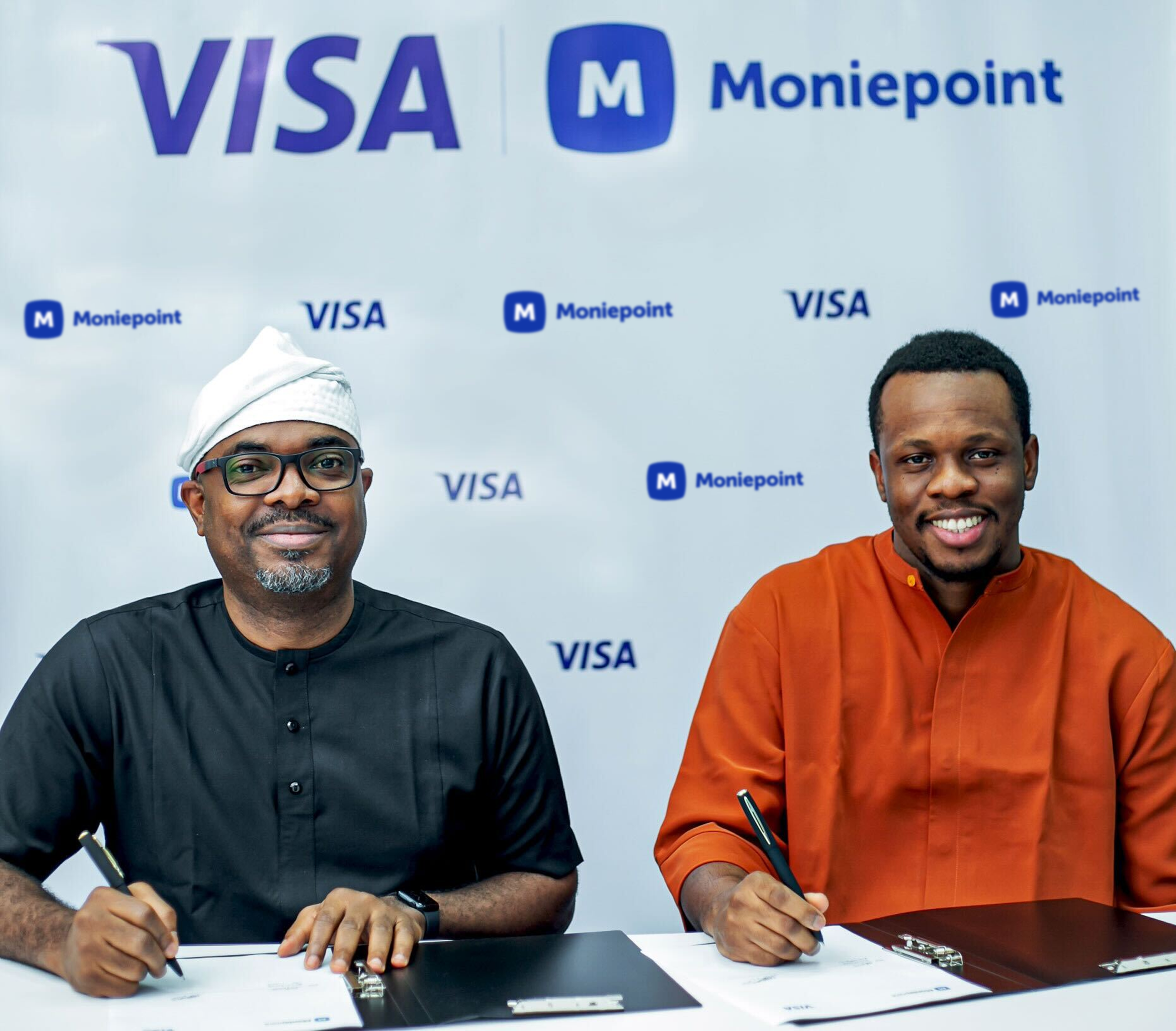
Moniepoint Inc, one of Nigeria’s leading business payments and banking services platforms, has secured an investment from Visa, a global leader in digital payments.

The investment marks an important milestone in Visa’s commitment to advancing financial inclusion and shaping the future of digital payments while fostering SME growth across Africa.
Founded in 2015 by Tosin Eniolorunda and Felix Ike, Moniepoint (formerly known as TeamApt) has established itself as a leading financial platform for Nigeria’s vast network of small and medium-sized businesses (SMEs), offering an integrated suite of services, including digital payments, bank accounts, credit, foreign exchange (FX), and management tools.
The platform processes over 1 billion transactions monthly, with total payments volume exceeding $22 billion, enabling businesses to digitize their operations and thrive in Africa’s rapidly evolving economy.
With this investment, Visa supports Moniepoint’s mission to empower African businesses, further accelerating its growth and expansion across the continent. Moniepoint’s profitable and scalable business model, alongside its strong operational and financial track record, has positioned it as a transformative force in the African fintech ecosystem.
As Africa’s Fintech landscape continues to evolve rapidly, driven by a dynamic ecosystem and a focus on bridging the financial inclusion gap, Visa has been at the forefront of this transformation, putting its expertise and resources to work in support of the growth of African Fintech startups.
Tosin Eniolorunda, Founder and Group CEO of Moniepoint Inc., said: “We are thrilled to announce Visa’s investment in Moniepoint. Visa’s backing is a strong endorsement of our vision to digitize and support African businesses at scale.
“Together, we aim to deepen financial inclusion, enabling SMEs to access the tools and resources they need to thrive in an increasingly digital economy. Given that about 83% of employment across Africa is in the informal economy, we are very keen to widen access and participation in the formal financial system and drive economic growth across Africa.”
He continued, “Visa’s expertise in global payments and Moniepoint’s proven ability to serve African businesses make this partnership an exciting opportunity in shaping the continent’s economic future even as we pave the way for a more inclusive and dynamic financial ecosystem.
“We are delighted in joining forces with Visa to enhance the digital payment infrastructure, expanding financial services, and fostering innovation in Africa.”
Andrew Torre, Regional President, Central and Eastern Europe, Middle East and Africa at Visa, added: “Moniepoint has built an impressive platform that directly addresses the needs of Africa’s SMEs, a critical segment in enabling economic development.
“By making financial services and digital payments more accessible and efficient, Moniepoint is helping transform how businesses operate in Nigeria and beyond. We are excited to support their next phase of growth and innovation.”
“Visa’s investment in Moniepoint is the latest example of our long-standing commitment to advancing digital economies in Africa. We will enable even the smallest businesses to thrive through innovative payment and software solutions that allow SMEs to scale and open new revenue opportunities, while streamlining their operations.”
Moniepoint has experienced exponential growth since its founding in 2015, with revenues increasing by over 150% CAGR in recent years. The company’s efforts to expand access to financial services align closely with Visa’s mission of enabling individuals and businesses to thrive in the global economy.
Congratulating both parties, the Nigerian Investment Promotion Commission (NIPC) celebrates this strategic investment in Moniepoint, highlighting it as proof of Nigeria’s attractiveness for investors due to its favorable business climate.
Furthermore, the NIPC praised Moniepoint as an exemplar of Nigerian excellence contributing significant value to the global financial ecosystem. The Commission emphasized its commitment to supporting investors and fostering economic cooperation in finance and technology to help Nigeria reach its full economic potential.
This partnership combines Moniepoint’s local expertise and innovative business model with Visa’s global resources and capabilities. Together, Moniepoint and Visa aim to accelerate the digital transformation of African SMEs, driving financial inclusion and long-term economic prosperity.
Visa joins other notable investors including Development Partners International, Google’s Africa Investment Fund, Verod Capital, Lightrock, QED Investors, Novastar Ventures, British International Investment (BII), FMO (the Dutch entrepreneurial development bank), Global Ventures and Endeavor Catalyst in advancing Moniepoint’s mission to create a society where everyone experiences financial happiness.



Every June 19th, the world pauses to recognize something that, for millions of families, never pauses at all. World Sickle Cell Day is observed across the globe to bring sickle cell disease out of the shadows; to name it, to understand it, and to stand with the people who live with it every single day.

This year, the world marks the day under the theme “Closing the Survival Gap: Equity in Sickle Cell Disease.” It’s a phrase that asks a hard, necessary question: why should where you’re born, or what your family can afford, decide whether you live well, or live at all?
For us at Indwelt, that question isn’t abstract. It has names and faces we know.
Why this day means something to us;
Here in Nigeria, sickle cell isn’t a distant statistic. Our country carries the heaviest burden of the disease anywhere in the world; roughly 150,000 babies are born with it here each year, and millions of Nigerians live with it into adulthood. Behind those numbers are real people: managing pain that often goes unseen, navigating crises that arrive without warning, and carrying on with a quiet courage that most of us will never fully understand.
Some of those people are our colleagues.
Since our inception, we’ve had and still have team members who live with sickle cell. They show up, they create, they pour themselves into the work we’re proud to put our name on; and they do it while carrying something most of us never have to think about.
Our team member with sickle cell, put it to us simply:
“People see the work I deliver, but they don’t see the days I show up after a night I didn’t think I’d get through. Sickle cell is part of my story, but it isn’t the whole of me; and being a part of an organization that understands that, supports me and let’s me do work I’m proud of continues to make a difference for me. I don’t want sympathy. I want a world that takes this seriously enough to change the odds for the next person.”
Supporting them, through medical interventions and through simply being a workplace that sees them fully, has never felt like a policy or a perk. It’s felt like family looking after family.
That’s where our commitment began. Not in a boardroom, but in the everyday reality of caring for our own.
If you’ve ever asked; this is the reason we’ve chosen to anchor our Corporate Social responsibility around sickle cell, supporting initiatives that improve care, and backing the research working toward a future where this disease no longer steals so many years from so many lives.
We believe the survival gap can close. We’ve seen what changes when someone living with sickle cell is met with the right care, the right understanding, and the right support; they don’t just survive, they thrive. They build, they lead, they make beautiful things. We know this because we work alongside them.
So, our promise is simple: to put our resources, our voice, and our craft behind the people and the science fighting for better outcomes. To keep learning. To keep listening to those who live this reality. And to use whatever reach we have to make sure that, in this country with the world’s heaviest burden, no one feels they’re carrying it alone.
For someone living with sickle cell, care that comes to you and care you can actually afford aren’t luxuries; they’re often the difference between a crisis managed and a crisis survived. We’re proud to walk alongside teams doing that quiet, necessary work.
To anyone living with sickle cell, today and every day; we see your strength; including the kind that doesn’t look like strength, the kind that’s just getting through a hard day and showing up for the next one. You are not your diagnosis. You are not a burden. You are someone we’re honoured to stand beside.
And to everyone reading: you don’t need a CSR budget to make a difference today. Learn what sickle cell really is. Know your genotype. Have the conversation. Give blood if you can. Be gentle with the people around you who may be carrying more than they let on.
Awareness is where compassion begins; and compassion, multiplied, is how survival gaps close.
This World Sickle Cell Day, we’re thinking of our own. And we’re committed to doing our part, not just today, but in all the days that follow.
To our clients, we owe a particular thank you. Every brief you trust us with, every project we build together, every time you choose Indwelt; you are doing more than growing your business. You are helping fund the care, the awareness, and the research behind this cause. The work we do for you is quietly working for someone living with sickle cell, too. That partnership means more to us than you may realise, and we’re deeply grateful for it.
Awareness is where compassion begins; and compassion, multiplied, is how survival gaps close. This World Sickle Cell Day, we’re thinking of our own. And we’re committed to doing our part, not just today, but in all the days that follow.


Nigeria Police Force National Cybercrime Centre (NPF-NCCC) has uncovered a major telecommunications fraud syndicate accused of compromising a telecom company’s billing infrastructure and fraudulently generating data valued at more than N7.7 billion.

The breakthrough led to the arrest of several suspects and the recovery of assets believed to be proceeds of the crime, including nearly N90 million in cash, two residential houses, a mini-plaza, and a Toyota RAV4 vehicle.
In a statement issued on Thursday, June 18, 2026, DSP Unwana Imah, Police Public Liaison Officer of the NPF-NCCC, disclosed that investigations revealed the involvement of both insider collaborators and external accomplices in the large-scale cyber fraud operation.
According to the statement, the investigation was launched following a petition by a leading telecommunications service provider, which reported the unauthorized use of staff login credentials and a breach of its network billing system.
Preliminary findings showed that between October 1 and November 28, 2024, the suspects unlawfully accessed the company’s billing infrastructure and generated fraudulent airtime.
The airtime was subsequently converted into data bundles and distributed through a network of vendors operating across the country.
The criminal operation reportedly caused losses running into billions of naira before it was detected by the telecom provider, which promptly alerted security agencies.
“The Nigeria Police Force through the Nigeria Police Force National Cybercrime Centre (NPF-NCCC) has recorded significant progress in the investigation of a case involving Computer Related Fraud, Unauthorized Access to Computer Systems, and Theft of Telecom Services,” the statement said.
During the course of the investigation, operatives arrested several suspects and recovered more than 400 laptops, 1,000 mobile phones, Point of Sale (POS) machines, cash exhibits, and other evidential materials.
The telecommunications company was also able to reverse approximately 2,931.79 terabytes of fraudulently obtained data, valued at about N3.8 billion.
Further investigations uncovered the participation of insiders working alongside external collaborators to execute the scheme.
In a second phase of operations carried out in May 2026, NPF-NCCC operatives acted on intelligence and conducted coordinated raids across Kano, Katsina, and Zamfara states, leading to the arrest of key suspects identified as Musa Muhammed Kwandi, Nura Sadauki, and Aminu Muhammed.
Other suspects arrested include IT specialist Musa Hassan Mohammed, Samson Alisigwe, and Yusuf Shehu, all of whom are believed to have benefited from the proceeds of the fraud.
Through extensive financial investigations and asset tracing efforts, police recovered almost N90 million and seized properties linked to the alleged criminal enterprise.
The NPF-NCCC said investigations are ongoing to identify additional accomplices, trace more proceeds of the crime, and ensure that all individuals found culpable are prosecuted.
Olatunji Rilwan Disu, Inspector-General of Police (IGP) reaffirmed the Nigeria Police Force’s commitment to safeguarding the nation’s critical digital infrastructure and intensifying efforts to combat cybercrime across the country.
The African Export-Import Bank (Afreximbank) has urged Nigeria and the rest of Africa to strengthen intra-African trade and resilience to protect against geopolitical shocks.

In a recently released Trade and Development Finance Brief, titled: ‘Africa’s Trade and Investment Landscape’, which examines the structural challenges shaping Africa’s trade performance and investment outlook in an increasingly uncertain global environment, it pointed out that Africa’s trade landscape remained heavily dominated by the export of raw materials, including agricultural products, oil, gas and minerals.
The report, however, regretted that imports continued to be heavily skewed towards manufactured goods and machinery.
The report noted that the existing export-import configuration leaves many African economies overly exposed to unfavourable terms of trade shock on account of external headwinds, including commodity price volatility, geopolitical tensions and associated global supply chain disruptions.
According to the report, the African Continental Free Trade Area (AfCFTA) remained central to efforts aimed at diversifying the continent’s trade base, strengthening regional value chains and increasing intra-African trade.
It further expressed that alongside the African Union’s Agenda 2063, the AfCFTA provides a practical framework for integrating fragmented markets, expanding industrial production and boosting productivity, with intra-African exports projected to increase by more than 20 per cent within a decade as implementation advances.
Also, the report further highlighted the importance of scaling investment in trade-enabling infrastructure, including energy, transport, communications networks, ports and logistics systems, to reduce the cost of doing business and improve cross-border trade flows.
It expressed that targeted infrastructure investment could support industrialisation, strengthen regional specialisation and improve Africa’s competitiveness as an investment destination.
It also pointed to a wider set of priorities for strengthening the continent’s trade and investment ecosystem, including regulatory coherence, institutional strengthening, economic diversification, improved access to finance for small and medium-sized enterprises and greater use of digital financial technologies.
Besides, the report stated that domestic and foreign investment were increasing across many African economies, notwithstanding the observed dominance of foreign investment.
It further mentioned that the direction of investment flows was uneven across sub-regions, with Eastern and Southern Africa receiving a larger share of foreign direct investment compared to Western and Central Africa.
Afreximbank said the findings reinforced the need for coordinated action to expand trade finance, improve trade-enabling infrastructure, deepen regional integration and accelerate value addition across the continent.
Managing Director, Research for AfreximBank, Dr Yemi Kale, said regional development finance institutions, including AfreximBank, were playing an increasing role in supporting intra-African trade through trade finance and related initiatives.

FG Bans Use of Gmail, Other Personal Emails for Civil Service Operations

Indwelt Studios Seeks Increased Awareness @ World Sickle Cell Day

Standard Bank Targets $15.4b SME Growth in Nigeria, Others with Trade Expansion Drive

Payaza Launches AI-powered Storefront Platform to Drive Cross-border Commerce

NAICOM’s 18 Months Management Spill @ African Alliance Ends

CBN Extends PoS Geo-Fencing Enforcement Deadline to August 2026

FG Targets Alleged N3tn Capital Flight, Opens Airtime Credit Market to Nigerian Fintechs

NCC Drafts New Rules for Virtual Mobile Operators

London Strengthens Global Investment Ties with Africa @ First Ever London-Africa Business Summit

Japan, UNESCO Boost Digital Learning in 15 CoEs with Donation of ICT Equipment




 E-Business2 days ago
NIPOST Plans Digital Postcodes for Every Building in Nigeria

 Broadcasting2 days ago
Nigeria Launches FreeTV Nationwide

 Telecom2 days ago
Enugu to Host The Gathering on 100 as MTN-Backed Youth Movement Expands Across Nigeria

 E-Financial1 day ago
FG Issues Transition Guidelines for Tax Acts 2025

 Telecom2 days ago
FG Debunks Claims of Plans to Introduce Telecoms, Fuel Taxes

 Telecom2 days ago
First Lady Expands Digital Inclusion Drive With New ICT Centre in Benue

 Telecom2 days ago
Prof. Dzidonu Urges Universities to Produce Deep Thinkers for AI Age

 Telecom1 day ago
Telecom Regulator, NCC, Digital Encode, AfriGoPay Support eBusinesslife Girls In ICT Campaign