

Telecom
New ways to help you drive performance with Demand Gen


In today’s complex digital landscape, consumers turn to visual-first content to get ideas and inspiration across platforms. To stay relevant, brands need to show up when and where it matters most to their audience.

YouTube, for instance, fosters deeper connections than traditional social media. In fact, Gen Z viewers rank YouTube #1 when it comes to feeling like they’re doing something quality with their time,1 and 61% of Gen Zs agree they feel closer to creators they watch on YouTube than on other platforms.2 This translates into strong results: a Nielsen analysis found that YouTube delivers 2.3x higher long-term ROAS than paid social.3
In 2023, we launched Demand Gen campaigns to help businesses build deeper engagements with potential customers and boost online sales and leads. Demand Gen helps you create and convert demand on YouTube and Google’s most visual, immersive surfaces when consumers aren’t searching for you. It offers AI-powered features with flexible controls to connect your business with the right customers wherever they are in their buying journeys.
Today, we’re introducing new ways to help you enhance your Demand Gen campaigns — including expanded controls to customize campaigns for specific channels, new creative enhancements, and richer product and in-store details in your ads. We’ll also share an update on the upgrade timeline to transition your Video Action Campaigns to Demand Gen.
Control where your ads appear
We’ve heard from many of you that flexible controls are crucial for AI-powered campaign optimization. Building on the success of creative preferences and an early experiment, we’re expanding channel controls to all available ad surfaces in Demand Gen globally starting in March. With channel controls rolling out as a beta to everyone, you’ll be able to precisely choose where your ads appear across YouTube, Discover and Gmail — including the ability to tailor your Demand Gen campaigns to serve specifically on YouTube Shorts.

Additionally, we’re adding Google Display inventory to Demand Gen to help you stay top-of-mind with more customers wherever they are browsing content — reaching over 90% of the global internet population across more than 3 million sites and apps.
You can precisely choose where your ads appear across YouTube and Google with channel controls in Demand Gen.
To maximize reach, we encourage all advertisers to take advantage of the full inventory in Demand Gen to fluidly optimize across channels. Learn more about the benefits of cross-channel optimization here.
Multiply your creative impact
Compelling creatives fuel successful campaigns. This requires a strong variety of assets that meet the specifications of different inventory and formats so you can show up when it matters — and that resonate with the diverse needs and interests of your customers. To help you craft stronger ad creatives, we’re introducing more ways to tailor your assets to different screens and formats:
- Demand Gen offers various video and image formats to help you craft unique brand stories on YouTube. Starting in late February you can also run 9:16 vertical image ads on Shorts to create a more immersive, full-screen experience.
- Last November, we launched video enhancements in Demand Gen, allowing you to flip your original video and create new videos in different aspect ratios. In the coming weeks, we’ll roll out a new feature to help you create shorter versions of your videos at scale.
Create shorter versions of your videos at scale with new video enhancements.
You’ll also find an improved ad creation flow in Demand Gen. You’ll now have the option to select the specific types of video enhancements that you’d like to apply to your ads to maximize the variety of your video assets. If needed, you can opt out and manually edit your videos directly in the flow. And you can now share ad previews with your creative stakeholders outside of Google Ads to make the feedback and approval process more efficient.
Drive sales with a more seamless purchase journey
Next, we have new features coming specifically for retailers to help you drive more sales throughout the purchase journey and create a smoother online-to-offline shopping experience:
- For advertisers with a Google Merchant Center account, we’re rolling out a new experience in Demand Gen with product feeds in a few weeks to unlock deeper product discovery. Customers can instantly access full product details directly from your ads, seamlessly transitioning from one product details page to another.
Get full product details directly from your ads with improved experiences in Demand Gen with product feeds.
- With local offers for Demand Gen with product feeds, you can show real-time local product availability, connecting online shoppers with your physical storefronts and driving them to nearby store locations. Then, maximize your omnichannel strategy by optimizing for both online sales and in-store visits with omnichannel bidding.
Contact your Google account team today to learn more about the beta for both features.
Show real-time local product availability in your ads with local offers.
Compare performance across platforms
Lastly, we’re introducing new reporting columns in Google Ads to help you better understand how Demand Gen campaigns perform compared to your paid social efforts and how they inform budget decisions. These columns, which have started to roll out to advertisers globally this month, will include view-through conversions to align with how social advertising platforms measure performance. They will also isolate the impact of Demand Gen from other Google campaigns to provide a more comparable view across channels.
Check out important upgrade milestones for Video Action Campaigns
Last year we announced the upgrade of Video Action Campaigns to help advertisers access the same and even more new features through Demand Gen. Many advertisers are already seeing better performance after transitioning to Demand Gen. Based on a Nielsen analysis, on average, Demand Gen delivers 58% higher ROAS than Video Action Campaigns.4 That’s why we’re taking the next steps to help simplify the process to upgrade.
If you currently use Video Action Campaigns, here are some key upgrade milestones and answers to important FAQs:
- Starting in April, following the launch of channel controls, you’ll no longer be able to create new Video Action Campaigns in Google Ads and Display & Video 360 platforms. We recommend that you start upgrading to Demand Gen yourself before the automatic upgrade goes into effect starting in July to maintain full control of your campaigns.
- Use the upgrade tool (available in March) to apply your historical settings and learnings from Video Action Campaigns to your new Demand Gen campaigns. This helps you upgrade while maintaining your existing strategy and driving consistent performance. Your new Demand Gen campaigns will continue to serve only on YouTube and Google video partners (if you’ve opted-in) until you adjust the settings. While channel controls in Demand Gen will be released as a beta in March, you will be able to continue serving only on YouTube just as you can do today in Video Action Campaigns.
- To instantly access new and expanded features in Demand Gen, such as a wide range of inventory and lookalike segments, we recommend creating new Demand Gen campaigns, or using the copy-and-paste tool to upgrade today. Check our FAQ page for more guidance.
- Starting in July, we will auto-upgrade any remaining Video Action Campaigns in Google Ads. This upgrade process may take a few months to complete and not all accounts will be upgraded at the same time.
- Your historical learnings in Video Action Campaigns will be applied to your new Demand Gen campaigns to help maintain consistent performance. Your inventory settings will be preserved, ensuring your ads continue to serve only on YouTube and Google video partners (if you’ve opted in) until you adjust the settings.
Marks and Spencer (M&S), a global clothing and homeware retailer, saw big success using Demand Gen to drive better results. Partnering with Incubeta, M&S tested Demand Gen and exceeded their forecasted ROAS by 186%, with a 66% lower CPA. The campaign also performed favorably compared to their paid social campaigns.
To learn more about how to upgrade Video Action Campaigns to Demand Gen, visit our FAQ page. To learn more about how you can drive performance with Demand Gen, check out our best practices guide.


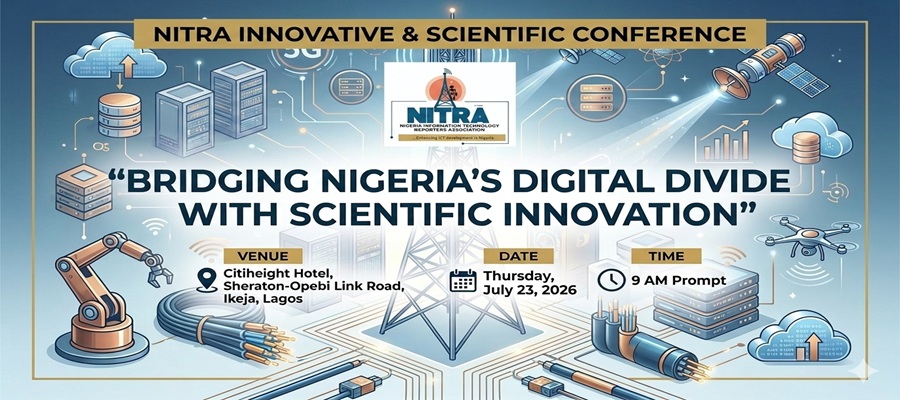
The need for Nigeria to think outside the box in its need to drive towards global relevance with innovations and scientific developments will be on the front burner at the NITRA Innovative & Scientific Conference scheduled to hold on Thursday July 23, 2026 in Ikeja, Lagos.

NITRA
The Nigerian Communications Commission (NCC) will lead other delegates to discuss and take far-reaching decisions at the event, which has its theme as “Bridging Nigeria’s Digital Divide With Scientific Innovation”.
Other companies that have indicated interest in partnering with NITRA include mobile communications company, Tecno; Africa’s premier end-to-end AI solutions company, Hyperspace; and telecommunications data infrastructure company, Digital Realty.
Speaking on the proposed event, the Chairman, Nigeria Information Technology Reporters Association (NITRA), Chike Onwuegbuchi noted that the event will seek to create a platform for government and private organisations to deliberate on policies around scientific innovations in Nigeria, challenges, place of indigenous and foreign collaboration, roles of each stakeholder, and grassroots development in that regard, among others.
According to him: “The Federal government, with series of programmes and partnerships, has established the urgent need to create an ecosystem that thrives on scientific innovation, breeding institutions and individuals with a target of placing the country at the fore-front of Next-Gen development.
It is a known fact that digital and scientific innovations are crucial, not only to the survivability of a nation, but also to the sustainability of its growth and development, with significant effect on economic strength, global image, defense and security, government capabilities to function, and public health and safety, communication and digital footprint, among others.
The federal government is actively driving scientific innovation to foster economic diversification and build a $1 trillion economy by 2030. Efforts are heavily focused on commercializing research, establishing massive research funds, and funding strategic infrastructure, particularly in technology, biotechnology, and healthcare. Core government initiatives and policies include the newly instituted National Research and Innovation Development Fund (NRIDF), which aims to mobilize about $500 million annually to support research and the commercialization of scientific outputs; and the Nigeria Genomic City, a multi-ministerial initiative aimed at transforming Nigeria into a leading hub for genomics, precision medicine, and biotechnology. It is designed to protect indigenous data, stimulate artificial intelligence in health, and develop a highly skilled scientific workforce.
According to the General Secretary of NITRA, Mr. Chidiebere Nwankwo, the forum will also be a vehicle to propagating the views of decision makers to the public, thereby furthering the cause of public awareness and information dissemination on the topic.
The focus, he said will be on how Nigeria can sustain digital innovative growth and scientific development in Nigeria

Concerns over network reliability and its impact on Nigeria’s growing creator economy took centre stage at MTN Nigeria’s Data on Trial event, where content creator and streamer, Jarvis, challenged telecommunications operators to improve connectivity for digital creators.

Speaking during the event, Jarvis asked whether there were locations in Nigeria where uninterrupted internet connectivity could support real-life (IRL) streaming without network disruptions.
“Are there places where there is no breakage when streaming IRL?” she asked.
Her question highlighted the challenges faced by content creators who depend on stable internet services for live streaming, content uploads and real-time engagement with audiences.
Responding, MTN Nigeria’s Chief Technical Officer, Mr Yahaya Ibrahim, said network performance depends on several factors, including location, network coverage, device capability and the number of users connected to a particular base station.
He noted that operators continue to invest in expanding network capacity to meet the growing demand for data services.
Earlier, MTN’s General Manager, Network Performance and Quality Assurance, Mr Michael Ndukwe, explained the evolution of mobile network technology in Nigeria, from first-generation (1G) services to the current fifth-generation (5G) technology.
According to him, each phase of technological advancement has significantly increased network capacity and enabled new digital services.
Ndukwe cited Nigerian Communications Commission (NCC) data showing that Nigerians consumed about 13.2 million terabytes of data in 2025.
He added that data usage reached approximately 4.06 million terabytes in the first quarter of 2026, reflecting the country’s increasing reliance on digital platforms and online services.
According to him, the growth is being driven by wider adoption of 4G and 5G networks, increased smartphone penetration, the proliferation of smart devices and expanding use of social media platforms.
Participants at the event noted that as more Nigerians build businesses and careers around digital content, access to reliable and high-speed internet has become critical to sustaining the country’s digital economy and creator ecosystem.

In an era where customer complaints about data consumption often play out on social media, MTN Nigeria took an unusual step. Rather than issue another statement, the company opened its doors and invited critics, customers, influencers and journalists to interrogate its operations at the Data On Trial in Lagos.

Dr Karl Toriola, MTN Nigeria
The session offered a rare glimpse into the realities behind Nigeria’s digital economy. MTN Nigeria CEO, Dr Karl Toriola, acknowledged public concerns and encouraged participants to ask difficult questions. “Give it to us as hard as you can. Ask us the most difficult questions, don’t hold back,” he said. The company used the platform to explain how factors such as automatic cloud backups, video streaming and app settings contribute significantly to data consumption, issues many users often overlook.
Beyond addressing consumer concerns, MTN shed light on the scale of investment required to keep Nigeria connected. Toriola disclosed that the company invested close to ₦1 trillion in network infrastructure last year and plans to exceed that figure this year. He explained that these investments support network expansion, improved capacity and service delivery for millions of Nigerians across the country.
The session also highlighted MTN’s commitment to accountability. Company executives explained that MTN’s billing systems are independently audited and reviewed by regulators to ensure accuracy and fairness. “What we are saying authoritatively is we will never deliberately shortchange you on the consumption of your data,” Toriola stated, reaffirming the company’s position on customer trust and transparency.
More than a defence of its network, Data On Trial reflected a company willing to engage openly with the people it serves. At a time when digital connectivity has become central to everyday life, MTN’s decision to answer tough questions in public signalled a broader commitment to transparency, customer education and continuous investment in Nigeria’s digital future.

Dangote Refinery’s Private Placement Reportedly Hits $2.5Bn

FG, UNODC Plan National Strategy against Organized Crime

EFCC Busts NIS Visa Overstay Racket, Uncovers N700m in an Account

CBN to Monitor Every Dollar with FXBT, Forex Tracker

NCC, NDLEA Partner to Fight Piracy and Drug Trafficking

NRC, Ponzi Scheme Collapses Resulting Loss of Billions of Naira

NASENI Moves to Digitize CCB’s 5m Assets Declaration and Operations

Lebara Nigeria Launches Lebara Play, Africa’s First Telecom-Owned Micro-Drama Platform

CANAL+ Partners Samsung to Pre-Load DStv Stream on New Samsung TVs In Nigeria, Other African Countries

Tokenization, Blockchain Technology will Transform Financial Institutions – IMF




 Telecom2 days ago
Helios Towers Secures $29m Facility to Expand Across Africa

 News2 days ago
ValueJet Expands Fleet with Boeing Aircraft, Targets Wider African Network

 Telecom2 days ago
NCC Begins Stakeholder Consultation on MVNO Business Rules

 E-Financial2 days ago
First Securities Brokers Empowers Nigerians to Trade in the Stock Market with the Launch of FirstInvest App

 Telecom2 days ago
Surge in Fibre Cuts Hobbles Service Provisioning

 Broadcasting2 days ago
NBC Scraps Annual Digital Access Fee on DSO

 E-Business2 days ago
Jumia Seeks for Payment Harmonisation, Stronger Policies to Boost Africa’s Digital Trade

 News2 days ago
Court Orders Final Forfeiture of 48 Properties Linked to Former AGF Abubakar Malami