

Telecom
Emerging Technologies, Cybersecurity, Others Form Key Focus of NCA 2003 Review

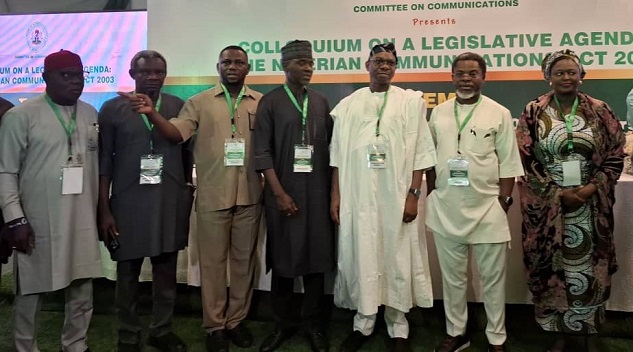
The House of Representatives Committee on Communications has commenced process to review the Nigerian Communications Act 2003, with Colloquium in Lagos, theme: ” The Nigerian Communications Act 2003, 22 Years After: Reassessing the Nigerian Communications Act, Challenges, Opportunities, and Future Directions for a Digital Nigeria”.

Dr. Aminu Maida, executive vice chairman, Nigerian Communications Commission (NCC) in his opening remarks, said that the Nigerian Communications Act of 2003 represents a cornerstone of Nigeria’s telecommunications momentous evolution, and today, we are tasked with evaluating its impact, confronting its challenges, and charting a bold path toward a digitally inclusive and globally competitive Nigeria.
According to him, “when the Nigerian Communications Act was enacted over two decades ago, it heralded a new era for our nation’s telecommunications sector. By dismantling monopolistic barriers and establishing a transparent, independent regulatory framework, the Act empowered the Commission to midwife a sector that has become a bedrock of Nigeria’s economic and social progress.
“The explosion in telecommunications services, its availability and enablement of transformational changes in the Sector, are fruits of this bold legislative initiative by the vibrant Nigerian legislature.
“The numbers speak for themselves: mobile subscriptions have grown from less than 300 thousand in 2001 to over 150 million today. Internet penetration has surged, connecting millions to the digital economy, while the telecommunications sector’s contribution to Nigeria’s Gross Domestic Product has risen to approximately 13.94% as of the 3rd quarter of 2024. Beyond statistics, the Act has enabled transformative innovations, mobile banking, e-commerce, digital communications and digital education—that have redefined how Nigerians live, work, and interact”.
Dr. Maida added that these milestones are a testament to the vision of the Act’s framers, the resilience of industry players, and the trust of Nigerian consumers.
“They reflect the power of collaboration between the legislature, regulator, operators, and stakeholders in building a sector that has become a global model for telecommunications liberalization in emerging markets.
“The global telecommunications industry is undergoing a seismic shift, driven by disruptive technologies such as 5G networks, artificial intelligence, quantum computing, the Internet of Things, and blockchain. These advancements promise unprecedented opportunities but also pose complex challenges.
“In Nigeria, while urban centres enjoy robust connectivity, rural and underservedcommunities still grapple with limited access, highlighting the persistent digital divide.
Infrastructure deficits, including inadequate power supply and the high cost of right-of way approvals, are hindering network expansion. Cybersecurity threats loom larger as our reliance on digital platforms grows, with Nigeria recording a significant uptick in cyber-attacks targeting critical sectors.
“Moreover, the economics of the telecommunications industry are under strain. Operators face rising operational costs, exacerbated by inflation, currency volatility, and the need for substantial capital investment to deploy next-generation technologies.
“Consumers, while demanding faster, cheaper, and more reliable services, often face affordability constraints, particularly in low-income communities. These challenges underscore a critical truth: while the Nigerian Communications Act of 2003 was visionary for its time, the realities of 2025 require us to re-examine its provisions to ensure they remain fit for purpose.
“This Colloquium, therefore, is both timely and strategic. It offers a rare opportunity to take stock of the Act’s strengths, address its gaps, and reimagine its role in powering Nigeria’s digital future”.
Also speaking at the occasion, HON. Peter Ohiozojeh Akpatason, chairman, House of Representatives Committee on Communications, said that the colloquium aims to among others; – Review the impact of the Nigerian Communication Act 2003 on our telecommunications sector.
– Identify challenges and opportunities arising from technological advancements and changing market dynamics.
– Discuss future directions for a Digital Nigeria, leveraging insights from industry experts and stakeholders.
He stated that it will explore key areas, such as: – Regulatory frameworks and their impact on competition and innovation.
– Emerging technologies and their potential applications in Nigeria.
– Digital inclusion and access to telecommunications services.
– Cybersecurity and data protection in the digital age.
“This event will provide a platform for stakeholders to share experiences, insights, and recommendations, with a view to: – Identifying areas for improvement in the Act.
– Develop strategies for promoting digital growth and innovation.
– Foster collaboration among industry stakeholders.
“As such, we must, consider strategies to bridge this divide, including infrastructure development and affordable access initiatives.
“Also, the sector faces increasing cybersecurity threats, which require robust measures to protect citizens and businesses.
“Therefore, we have to consider strengthening our cybersecurity frameworks, enhancing incident response capabilities, and promoting international cooperation to combat cyber threats.
“The Act’s regulatory framework has to be strengthened to promote innovation, competition, and investment. We therefore have to consider revising the Act to address emerging issues, such as 5G, artificial intelligence, and blockchain, and to ensure that our regulatory framework is flexible and adaptable to changing market conditions.
“We must consider strategies to promote digital entrepreneurship, innovation, and investment, including tax incentives, funding opportunities, and skills development programs. The new Act has to encourage measures for promoting innovation, including research and development initiatives, innovation hubs, and partnerships with international organizations,” he stated.



Association of Licensed Telecommunications Operators of Nigeria (ALTON) has declared support for the Nigerian Communications Commission (NCC’s) push to promote local smartphone manufacturing in the country.

Gbenga Adebayo, chairman, ALTON,
The News Agency of Nigeria reported that ALTON described the move as a practical measure capable of accelerating broadband adoption and expanding digital inclusion across the country.
Gbenga Adebayo, chairman, ALTON, made the remarks to newsmen on Saturday while reacting to comments by Idris Olorunnimbe, chairman, NCC Board, who had earlier called for local smartphone production and innovative financing models to address Nigeria’s digital inclusion gap.
Adebayo said Nigeria must intentionally transition from being predominantly a technology consumer to becoming an innovator, designer and manufacturer of digital technologies, pointing to the country’s large telecommunications market and youthful population as the scale and human capital needed to support world-class manufacturing.
He said Nigeria’s ambition in local manufacturing should extend well beyond simply assembling imported components into finished devices.
“Our ambition should extend beyond assembling devices. We must pursue genuine knowledge transfer, research and development, product engineering, software development, semiconductor capabilities and large-scale manufacturing,” he said, adding that the goal should be producing devices and digital technologies for Nigeria, Africa and the global market.
Adebayo explained that the emergence of artificial intelligence has further strengthened Nigeria’s opportunity to become a competitive technology manufacturing hub, noting that AI is transforming product design, manufacturing, quality assurance, supply chain management, customer experience and software innovation.
He said investing in AI-enabled manufacturing would improve productivity, create high-value jobs and strengthen Nigeria’s competitiveness across Africa.
On tackling counterfeit and non-type-approved devices, Adebayo described the grey market as a major challenge affecting consumers, original equipment manufacturers and the wider telecommunications ecosystem.
He said robust local manufacturing backed by strong quality standards would provide credible alternatives to grey-market imports.
“This will strengthen consumer protection, improve network performance, retain greater value within our economy, and stimulate industrial growth,” he said, while also endorsing innovative smartphone financing, stronger device management systems and identity-enabled credit frameworks to help more Nigerians afford quality smartphones.
Adebayo said telecom operators remain ready to partner with government, manufacturers, financiers, academia, investors and development partners to build sustainable local manufacturing capacity in Nigeria.

Ayotunde Coker, managing director, Open Access Data Centres has reiterated availability of abundant capacity and world-class infrastructure in key data centres in Nigeria.

This is coming against the backdrop of the Central Bank of Nigeria (CBN) directive to banks, fintechs, mobile money operators, and other payment service providers to host their payment transaction data generated within Nigeria on local servers from January 1st, 2027.
Mr. Coker made the assertion at a media interactive session on readiness of major data centres in the country such as Open Access Data centres to effectively host financial sector data.
“As far as readiness is concerned, we have the co-location base, the co-infrastructure basis, and interconnection capability. Indigenous cloud companies are building out, such companies like Unicloud Africa, Layer 3 within the data centres, adding cloud capability, and providing cloud solutions to local companies.
“The other key thing with the directive is that it sends a signal to the world that data sovereignty localization is key. And will also trigger the global providers to bring their own scale of cloud in here in time, which is good for building our digital infrastructure scale”.
The CBN directive signed by the Director of the Payments System Supervision Department, Rakiya Yusuf, also introduced new market structure rules, beneficial ownership disclosure requirements and systemic oversight measures for payment service operators.
According to the apex bank, the reforms became necessary following the rapid expansion of electronic payments and digital financial services across the country.
The CBN said it had observed “significant structural developments within the Nigerian Payments ecosystem, characterized by rapid growth in electronic payments, increasing adoption of digital financial services, and the emergence of operators with substantial market presence across key payment activities.”
It noted that while the growth had improved innovation, efficiency and financial inclusion, it had also created concerns around market concentration, operational dependence, ownership transparency and the storage of critical payments data.
To address these concerns, the regulator ordered all financial institutions facilitating payments in Nigeria to ensure that transaction data generated within the country are stored domestically.
The circular stated, “All Financial Institutions and participants facilitating payments within Nigeria shall ensure that payments transaction data generated within Nigeria are stored and managed in Nigeria in accordance with data protection laws and regulations applicable in Nigeria.”
It added that “all affected Financial Institutions shall fully comply with this requirement effective January 1, 2027.”
The move is expected to strengthen regulatory oversight, enhance data sovereignty and ensure that sensitive payment information remains within Nigeria’s jurisdiction.
It also aligns with broader efforts by regulators globally to localise critical financial data and reduce reliance on offshore infrastructure.


Association of Licensed Telecommunications Operators of Nigeria has thrown its weight behind the Nigerian Communications Commission’s push for local smartphone manufacturing, saying the initiative could significantly boost digital inclusion, create jobs and position Nigeria as a technology manufacturing hub.

ALTON Chairman, Gbenga Adebayo, gave the endorsement on Saturday while reacting to the call by the Chairman of the NCC Governing Board, Idris Olorunnimbe, for increased local smartphone production and innovative financing models to make devices more affordable.
Adebayo described the proposal as a practical response to one of the biggest barriers to digital inclusion in Nigeria, noting that smartphone affordability had overtaken network coverage and data costs as the major obstacle to broadband adoption.
He said Nigeria must deliberately shift from being a consumer of technology to becoming a producer, innovator and exporter of digital technologies.
“Our ambition should extend beyond assembling devices. We must pursue genuine knowledge transfer, research and development, product engineering, software development, semiconductor capabilities and large-scale manufacturing,” he said.
According to him, Nigeria possesses the population size, telecommunications market and youthful workforce needed to build a globally competitive technology manufacturing industry.
He said the country’s long-term objective should be to produce smartphones and other digital technologies not only for domestic consumption but also for export across Africa and the global market.
Adebayo said the emergence of Artificial Intelligence had further strengthened Nigeria’s opportunity to become a major technology manufacturing destination.
He explained that AI was already transforming manufacturing through improved product design, quality assurance, supply chain management and customer experience.
He noted that investments in AI-enabled production would improve productivity, create high-value jobs and strengthen Nigeria’s competitiveness.
The telecom operators’ chairman also backed the NCC’s proposal to tackle the proliferation of counterfeit and non-type-approved devices.
He described the grey market as a major challenge affecting consumers, original equipment manufacturers and the telecommunications ecosystem.
According to him, robust local manufacturing supported by strong quality standards and effective type approval would provide credible alternatives to substandard imported devices while boosting consumer confidence.
“This will strengthen consumer protection, improve network performance, retain greater value within our economy and stimulate industrial growth,” he said.
Adebayo further endorsed innovative smartphone financing models, improved device management systems and identity-enabled credit frameworks, saying they would enable more Nigerians to own quality smartphones through affordable payment plans.
He said telecom operators were ready to partner with the government, manufacturers, financiers, investors, academia and development partners to establish a sustainable local manufacturing ecosystem.
“The initiative represents a national economic transformation agenda capable of creating jobs and strengthening Nigeria’s position in the global digital economy,” he added.
Olorunnimbe had, during the Digital Africa Summit Roundtable in Shanghai, argued that Nigeria’s biggest digital inclusion challenge was no longer network coverage or data affordability but the high cost of smartphones.
He urged coordinated efforts involving local manufacturing, trusted devices, financing and policy reforms to accelerate broadband penetration and unlock the country’s digital economy.

FCCPC Dismisses Report Claiming Approval of 48 New Loan Apps

ALTON Backs NCC’s Local Smartphone Manufacturing Drive to Widen Digital Access

LASTMA Launches 3367 Toll-Free Hotline for Emergency Response, Traffic Management

PalmPay Calls for Trust, Infrastructure and Responsible AI to Drive Payment Ecosystem Innovation

OADC Reaffirms Abundant Capacity in Data Centres in Nigeria to Host Financial Data

CBN Extends PoS Geo-Fencing Enforcement Deadline to August 2026

London Strengthens Global Investment Ties with Africa @ First Ever London-Africa Business Summit

Mobile Internet Gender Gap Widest in Africa – GSMA

FG Targets Alleged N3tn Capital Flight, Opens Airtime Credit Market to Nigerian Fintechs

Japan, UNESCO Boost Digital Learning in 15 CoEs with Donation of ICT Equipment




 General News2 days ago
Tinubu appoints Adigwe to head National Health Technology, Data Analytics Office

 E-Financial2 days ago
NRS, CITN Deepen Partnership to Strengthen Tax Awareness

 E-Financial2 days ago
Paystack Unveils AI-powered Payments Tools

 E-Financial2 days ago
Fidelity Bank Wins DBN Award for Expanding First-Time Credit Access to MSMEs

 General News2 days ago
PalmPay Strengthens Data Protection Culture with Employee Privacy Workshop and Privacy Champions Programme

 E-Financial2 days ago
FCMB Turns Normal Banking into Rewards with New Mobile App Upgrade

 Telecom2 days ago
Meta, FG Unveil New Safety Measures to Protect Nigerian Teens Online

 E-Financial2 days ago
Despite Warnings, FG Draws Down $1.5Bn as First Tranche of FAB $5Bn Loan Deal