

Broadcasting
Navigating the Maze: Solutions for Nigeria’s Flourishing Foodtech Industry


By Diana Tenebe, Chief Operating Officer, Foodstuff Store
Nigeria’s foodtech sector holds immense promise to transform our nation’s food production, distribution, and consumption systems.

However, this burgeoning industry currently navigates a complex maze of challenges that could significantly hinder its progress. While innovation and entrepreneurial drive are abundant, a confluence of infrastructural deficits, economic headwinds, technological disparities, and logistical complexities casts a shadow on the sector’s long-term viability.
Understanding and addressing these multifaceted hurdles is paramount for foodtech companies aspiring to thrive and contribute meaningfully to Nigeria’s food security.
One of the most significant impediments to the foodtech sector’s advancement is Nigeria’s persistent infrastructural weaknesses.
The unreliable power supply, a well-known constraint for businesses nationwide, directly threatens food preservation, increasing spoilage risks and driving up operational costs for companies reliant on refrigeration and consistent processing.
Similarly, the often-deteriorated state of our road networks complicates logistics and transportation, hindering the efficient movement of goods from farms to consumers and across the supply chain.
Furthermore, limited access to clean water exacerbates operational challenges, particularly for maintaining food processing and hygiene standards. Collectively, these infrastructural shortcomings inflate operational expenses and introduce vulnerabilities throughout the food supply chain.
Economic constraints add another layer of intricacy. Fluctuations in currency exchange rates create instability in pricing and procurement, especially for businesses dealing with imported technologies or ingredients. Persistent inflation erodes consumer purchasing power and increases the cost of essential inputs, squeezing profit margins for startups.
Moreover, limited access to credit and investment capital makes it difficult for emerging foodtech companies to secure the necessary funding to invest in crucial technology, infrastructure, and expansion efforts.
This financial constraint can stifle innovation and prevent promising ventures from reaching their full potential.
The digital divide also poses a unique challenge for foodtech companies aiming to leverage online platforms and digital solutions. While mobile phone usage is widespread in Nigeria, disparities in digital literacy and access to reliable internet connectivity can restrict the widespread adoption of online food ordering and delivery services, particularly in rural and underserved communities.
This necessitates creative and inclusive strategies to bridge the digital gap and reach a broader consumer base.
Inefficiencies within the supply chain represent a critical bottleneck in the Nigerian food system. Fragmented agricultural supply chains, characterised by numerous intermediaries and a lack of transparency, contribute to alarmingly high post-harvest losses.
Inadequate storage facilities and inefficient transportation infrastructure further compound these issues, leading to significant waste and price volatility.
Addressing these systemic weaknesses is crucial for ensuring a stable and affordable food supply for all Nigerians.
Navigating Nigeria’s regulatory landscape can also be a daunting task for foodtech businesses. The presence of multiple regulatory agencies, coupled with often bureaucratic and time-consuming processes for obtaining licenses and permits, can create significant hurdles for startups. Clear, consistent, and streamlined processes within the regulatory framework are essential to foster a more enabling environment for innovation and growth.
Building consumer trust and acceptance for new food technologies requires overcoming inherent skepticism and unfamiliarity. Concerns regarding food safety, quality, and the security of online transactions can hinder the adoption of novel food products and digital platforms.
Transparent communication, robust quality control measures, and consistent consumer engagement are vital for building confidence and fostering widespread acceptance.
Finally, a notable talent gap exists within the Nigerian foodtech ecosystem.
A shortage of professionals possessing specialised skills in food science, technology, business management, and logistics can limit the growth and innovation capacity of companies in this sector. Addressing this skills deficit through targeted training and development initiatives is crucial for long-term success.
Despite these significant challenges, promising pathways forward can be forged through innovative and context-specific approaches. Investing in localised infrastructure solutions, such as independent power generation and efficient localised logistics networks, can mitigate the impact of broader infrastructural deficiencies.
Exploring diverse funding avenues beyond traditional banking, including angel investors, government grants, crowdfunding, and revenue-based financing, can alleviate financial constraints.
Adapting to the digital divide by leveraging basic mobile technology and employing offline strategies like local agent networks can expand reach and inclusivity.
Building resilient supply chains through direct farmer relationships, investing in aggregation centres, and utilising technology for farm management offer tangible solutions to logistical inefficiencies.
Proactive engagement with regulatory bodies and advocating for clearer, more supportive policies are crucial for navigating the regulatory landscape effectively. Building consumer trust necessitates transparent sourcing practices, clear communication about product benefits and safety, and active engagement with consumer feedback.
Finally, investing in talent development through collaborations with educational institutions and in-house training programs can bridge the critical skills gap.
Foodstuff Store is emerging as a business with a clear vision to directly confront several of these challenges. We are actively developing a decentralised network of businesses supported by strategically located distribution hubs across target states.
This approach will directly address the limitations imposed by poor road networks, ensuring more localised access to our food products.
Furthermore, the establishment of regional storage facilities, including a state-of-the-art solar-powered cold storage, directly tackles infrastructural deficiencies related to food preservation and ensuring a consistent supply.
Foodstuff Store’s ambition for end-to-end management of the food supply chain, encompassing in-house production, direct sourcing, advanced storage solutions, and efficient distribution, offers a powerful solution to existing supply chain inefficiencies.
This integrated approach promises enhanced quality control, significant reductions in post-harvest losses, and a more reliable supply of both perishable and non-perishable goods for our customers.
Our aspiration to become the “Amazon for Food Products” is a clear and ambitious goal underpinned by a technology-driven approach to all aspects of our operational management.
Foodstuff Store’s vision underscores a business model strategically designed to overcome significant hurdles within the Nigerian foodtech sector, offering a beacon of potential and a pathway to a more secure and efficient food system in a challenging yet remarkably promising landscape.


MTN Group has begun rolling out MTN One TV, a new entertainment proposition designed to make digital video content more accessible, relevant, and flexible for customers across African markets.

Introduced in line with MTN’s Ambition 2030 strategy, MTN One TV brings together local storytelling, live channels, international programming, and market-specific viewing options tailored to how customers across the continent access and pay for digital entertainment.
The proposition is designed to give customers greater choice in how they watch content, with viewing models that may vary by market and can include free-to-view content, advertising-funded experiences, pay-as-you-watch access, and subscription offerings.
Depending on local availability, customers may also be able to pay through airtime, Mobile Money, and other locally supported payment methods, helping to reduce common barriers to streaming access.
Beyond enhancing customer experiences, MTN One TV creates new opportunities for African creators, broadcasters, advertisers, and ecosystem partners by helping connect content to wider audiences through MTN’s scale across connectivity, payments, and digital services.
By bringing together a broad mix of content experiences under a single proposition, MTN aims to support greater content discovery, broader audience reach, and sustainable growth across Africa’s digital entertainment ecosystem.
Anchored in MTN’s strategic platforms of Connectivity, Fintech, and Digital Infrastructure, MTN One TV forms part of the Group’s broader ambition to build digital experiences that create value for customers while enabling participation and growth across Africa’s digital economy.
“Entertainment is increasingly becoming an important gateway to digital participation,” said Selorm Adadevoh, MTN group chief commercial, strategy and transformation officer.
“Through MTN One TV, we are leveraging the scale of our connectivity, fintech, and digital capabilities to make relevant content more accessible while creating new opportunities for Africa’s creative and digital economies. This is aligned with our ambition to deliver digital solutions for Africa’s progress.”
MTN One TV is being introduced progressively across MTN markets through a phased rollout approach that reflects local market needs, existing services, and partnership opportunities.
Over time, MTN will bring together a combination of video capabilities, content partnerships, and customer experiences under the MTN One TV brand to create a more consistent and scalable entertainment proposition across its footprint.
Through MTN One TV, MTN continues to extend its role beyond connectivity by combining entertainment, payments, and digital services to deliver experiences tailored to the needs of African consumers.
The rollout supports MTN’s Ambition 2030 vision of leading digital solutions for Africa’s progress while expanding access to digital entertainment across the continent.

International Air Transport Association (IATA) has identified Nigeria as one of the most expensive countries in the world for airline operations, citing high taxes, charges and operational costs that continue to weigh heavily on local carriers.

IATA’s Regional Vice President for Africa and the Middle East, Kamil Al-Awadhi, disclosed this during the association’s Annual General Meeting held in Rio de Janeiro.
Al-Awadhi said that although Nigeria’s Minister of Aviation and Aerospace Development, Festus Keyamo, had been pursuing reforms aimed at improving the aviation sector, airlines operating in the country still faced enormous cost pressures.
According to him, the high-cost operating environment has continued to affect the profitability and competitiveness of Nigerian airlines, making it difficult for the industry to realise its full potential.
He noted that excessive taxes, regulatory charges and other operating expenses remained major obstacles to airline growth across the region, with Nigeria ranking among the most challenging markets from a cost perspective.
Al-Awadhi urged member states of the Economic Community of West African States to adopt a proposed 25 per cent reduction in aviation taxes and charges to ease the burden on airlines and passengers.
According to him, lowering taxes and charges would reduce airfares, stimulate passenger traffic and strengthen the competitiveness of carriers operating within West Africa.
He stressed that a more supportive policy environment was critical to unlocking the economic benefits of aviation, including increased trade, tourism and regional integration.
Industry stakeholders have consistently advocated lower taxes and regulatory fees, arguing that the current cost structure makes air travel less affordable and limits the growth of the sector.
IATA’s latest remarks add to calls for governments in West Africa to implement policies that will promote a more sustainable and competitive aviation industry across the region.
Broadcasting
NASENI Trains 50 Women in Kano on Renewable Energy Technologies Under She-Powers Initiative
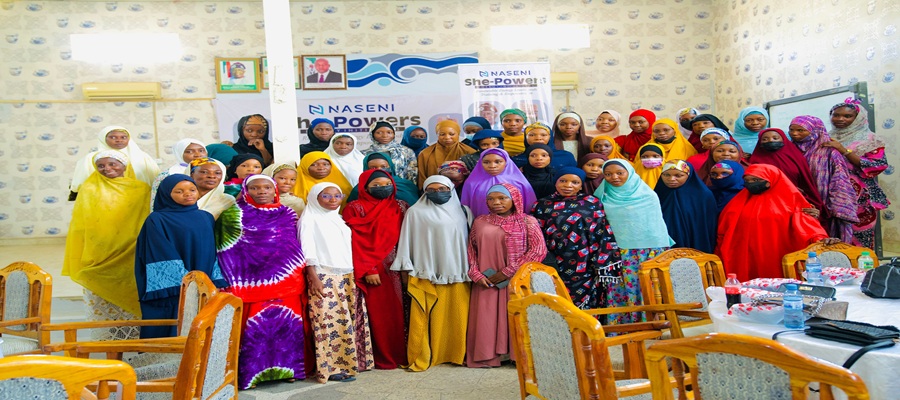
The National Agency for Science and Engineering Infrastructure (NASENI), under the leadership of its Executive Vice Chairman/CEO, Khalil Suleiman Halilu, has trained 50 women in Kano State on inverter and battery technologies through its She-Powers Energy Initiative.

The three-day programme, held at the Technology Incubation Centre, Farm Centre, Kano which ended yesterday, was designed to equip participants with practical renewable energy skills, promote women-led enterprises, and enhance sustainable livelihoods.
The initiative forms part of NASENI’s broader commitment to empowering women, creating economic opportunities, and expanding participation in Nigeria’s growing clean energy sector. It also aligns with the Renewed Hope Agenda of President Bola Ahmed Tinubu by supporting job creation, entrepreneurship, and inclusive economic development.
Through targeted interventions such as the She-Powers Energy Initiative, NASENI continues to demonstrate its commitment to leveraging technology and innovation to improve lives and drive sustainable development across the country.
Photos: Participants at the She-Powers Energy Initiative training organised by the National Agency for Science and Engineering Infrastructure (NASENI) held at the the Technology Incubation Centre, Farm Centre, Kano yesterday.

MTN Launches One TV with Free-to-View, Pay-as-You-Go

Telcos Compensate 75m Subscribers over Poor Network Quality – NCC

IMF Warns Nigeria of Risks in $5Bn Swap Deal with First Abu Dhabi Bank

Senate Moves to Regulate Crypto Sector, Seeks Investor Protection

Kaspersky Report Shows Early 2026 Witnessed an Increase in Cyberattacks on the Manufacturing Sector

CBN Extends PoS Geo-Fencing Enforcement Deadline to August 2026

FG to Launch Nationwide Free Digital TV Platform June 17

MTN, Airtel, Glo Under Pressure as FG Demands Better Service Delivery

Jumia Nigeria Records Strong Q1 2026 Growth as Technology-Led Strategy Drives Market Expansion

Metro Digital, Nigerian Firm Accuses Multichoice Of Refusal to Obey Court Judgements




 E-Financial3 days ago
BOI Wins Dual Honours @ EMEA Finance Awards for Sustainability and Social Impact Leadership

 E-Financial3 days ago
CBN Imposes N100m Penalty on Dealing Bank Inadequate Processing of Forex Documents

 Telecom3 days ago
Price of Data in Nigerian Mobile among Top Four Cheapest Globally – MTN CEO

 E-Business3 days ago
NITDA Okays NiRA’s Annual, Business Report

 Telecom3 days ago
NAIFF Returns for 2026, Expands Focus on AI-Powered Storytelling in Africa

 Telecom2 days ago
FCCPC Refutes Airtime Market Takeover Claims

 General News2 days ago
SSDC Warns Businesses against Cyber, Election-Related Risks

 E-Financial2 days ago
Reps Committee Recovers N521m Unremitted VAT from CBN