

General News
FG Threatens to Disconnect GenCos Over Grid Infractions

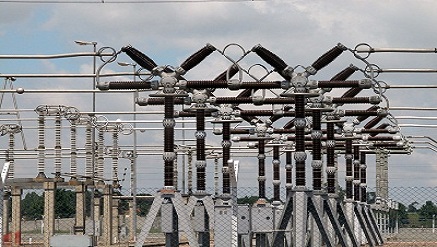
Federal Government has threatened to disconnect power-generating companies (GenCos) from the national grid if they fail to activate Free Governor Control (FGC) across all generating units, in a move aimed at curbing repeated system collapses and ensuring grid stability.

The Nigerian Electricity Regulatory Commission (NERC) issued the warning in Order NERC/2025/094, signed on August 26 by Vice-Chairman Musiliu Oseni and Commissioner for Legal, Licensing & Compliance, Dafe Akpeneye.
The directive, which takes effect on September 1, 2025, mandates GenCos to comply with FGC requirements or face sanctions.Nigerian fashion trends
FGC is a turbine governor control system that allows power plants to automatically adjust their output in response to changes in grid frequency. By stabilising the grid, the system ensures demand and supply remain balanced, preventing widespread outages.
Under the new rules, any GenCo that fails to implement FGC on its generating units by November 30, 2025, will be fined 10 per cent of the invoice associated with the defaulting unit for every day of non-compliance. A generating unit that remains in breach for 90 consecutive days will be disconnected from the grid until certified compliant by the Nigerian Independent System Operator (NISO).
NERC said the measures were introduced after the national grid suffered eight disturbances in 2024, including five full system collapses and three partial outages. Investigations by the Transmission Company of Nigeria linked the incidents to widespread non-compliance with FGC requirements among GenCos.
To enforce compliance, the regulator has directed all grid-connected power plants to install fast-acting governor systems and operate them in real time. GenCos are also required to procure Grade Level 5 IoT-enabled meters capable of monitoring active power, reactive power, voltage, frequency, and power factor. These must be installed by October 31, 2025, after which NISO will integrate them within 20 days.
NISO will track compliance using real-time data, compile hourly performance records, and submit monthly reports to NERC. Defaulting operators will have penalties applied directly through the market settlement process, with proceeds remitted into the Ancillary Service Account.
The commission stressed that its authority is rooted in the Electricity Act 2023, which empowers it to set and enforce operating codes that guarantee safety, security, and reliability in the electricity sector.
NERC also reminded GenCos that the Grid Code requires every generating unit to be fitted with fast-acting governors capable of primary control. “Where a generating unit becomes isolated from the system but is still available to supply demand, it must be able to provide primary control to maintain frequency and voltage,” the order stated.
The commission added that failure to enforce FGC compliance would continue to expose Nigeria’s fragile power sector to instability, with devastating consequences for consumers and the economy.



World Bank has restricted comments on its Instagram page after thousands of Nigerians flooded the platform begging them to stop lending money to Nigeria.

The protest erupted after reports that President Bola Ahmed Tinubu is seeking a fresh $1.25 billion dollar loan for approval on June 26.
Some Nigerians asked the World Bank to provide more details about the purpose of the loan and how the funds would be managed.
Others said the country should reduce dependence on foreign loans and focus on improving local revenue.
The federal government has continued to defend its borrowing plans.
Officials say the funds will support economic reforms, development projects and efforts to strengthen the economy.
Nigeria remains one of the major borrowers from the World Bank in Africa, with different administrations securing loans over the years for infrastructure, social programmes and economic support.
The Lagos State Government plans to establish a Cybersecurity Operations Centre to strengthen protection of government systems, digital services and citizen data amid rising cyber threats linked to the city’s expanding digital economy.

Tunbosun Alake, Lagos commissioner for innovation, science and technology, said the centre would help secure the infrastructure supporting online payments, e-government services, cloud platforms and technology-driven business operations across the state.
According to Alake, the facility will monitor, detect and respond to cyber threats targeting government networks, digital transactions and sensitive public data.
The move comes as Lagos accelerates its smart city agenda through investments in broadband infrastructure, digital identity systems and automated public services.
Alake said Lagos had already deployed 109 Data Protection Officers across Ministries, Departments and Agencies, which he described as the highest number among Nigerian states, to strengthen compliance with data protection regulations.
Alongside the proposed cybersecurity centre, the state also launched the Lagos Campus Network Upgrade project aimed at improving digital infrastructure within the public sector.
The upgrade is expected to improve network performance, automate internal government processes and enhance digital engagement with residents. The cybersecurity initiative follows the release of Lagos State’s cybersecurity guidelines in April.
The framework recommends measures including multi-factor authentication, vulnerability testing, encrypted backups and tighter endpoint security controls.
The guidelines align with Nigeria’s Cybercrime Act 2024, the Nigeria Data Protection Act 2023 and the National Cybersecurity Policy and Strategy 2021.
General News
LG Electronics Strengthens Household Energy Efficiency in Nigeria with Advanced Inverter Refrigerator Solutions


LG Electronics (LG) is reinforcing its commitment to smarter and more energy‑efficient living by spotlighting its range of inverter‑powered refrigerators designed to meet the evolving needs of Nigerian households.

As electricity costs continue to rise and inflationary pressures shape consumer spending, LG’s refrigerator portfolio is positioned as a practical solution that combines dependable performance with responsible energy consumption.
Refrigerators are among the most frequently used appliances in Nigerian homes, operating 24 hours a day and accounting for a significant share of household electricity usage. LG addresses this challenge through its proprietary Inverter Compressor technology, which intelligently adjusts cooling power based on actual usage conditions.
By reducing unnecessary energy draw, the system delivers stable temperature control while helping households lower energy consumption and manage monthly utility costs more effectively.
Beyond energy savings, LG refrigerators are designed to support food security and reduce waste, an increasingly important consideration for families navigating rising food prices. The inverter system enables faster cooling recovery after power interruptions and helps maintain consistent internal temperatures, preserving food freshness for longer periods. With fewer friction points in the compressor design, LG refrigerators also offer enhanced durability and long‑term reliability, minimizing maintenance costs over time.
LG’s energy‑saving refrigerator lineup includes Top Mount, Side‑by‑Side, and Door‑in‑Door models, each tailored to different household sizes, storage needs, and lifestyle preferences. The Top Mount refrigerators offer practical, space‑efficient designs ideal for everyday family use, delivering reliable cooling with optimized energy efficiency.
The LG GN-F452PFAQ model keeps food perfectly fresh with FRESH Converter+ that optimizes temperature as per food items and never runs out of ice with the Auto Ice Maker.
For households that require larger storage capacity and improved organization, Side‑by‑Side models provide generous interior space, improved visibility, and consistent cooling across compartments.
For more design‑conscious consumers, LG’s Door‑in‑Door refrigerators reduce cold air loss by allowing quick access to frequently used items, supporting both energy efficiency and long‑lasting freshness.
At the premium end, LG continues to innovate with advanced models such as the MoodUP™ refrigerator, which combines customizable aesthetics with functional energy‑saving features like the InstaView panel, allowing users to view contents without opening the door and reducing unnecessary cold air loss. This refrigerator comes with a washing machine as a bundle promotion.
According to LG, this range‑based approach reflects a deep understanding of how Nigerian households differ in size, consumption habits, and lifestyle needs.
“Nigerian consumers are becoming more intentional about how they use energy and manage household costs,” said Mr. Oktai Kim, General Manager, Home Appliance Solutions, LG Electronics Nigeria. “By offering a diverse range of inverter‑powered refrigerators, we are giving families the flexibility to choose solutions that suit their homes while delivering long‑term value through energy efficiency and dependable performance.”
Rather than focusing on technology alone, LG’s energy‑saving refrigerator portfolio emphasizes everyday benefits, efficient operation, reliable cooling, and designs that adapt to real living conditions. Available nationwide, LG refrigerators continue to support smarter living and economic resilience, reinforcing the company’s commitment to delivering durable, consumer‑focused home solutions for Nigerian households.

World Bank Blocks Social Media Comments from Nigerians over Loan Backlash

Nigerians Lose N12.5bBn to Telecom-Related Financial Crimes – PwC

Jumia Nigeria Records Strong Q1 2026 Growth as Technology-Led Strategy Drives Market Expansion

Lagos Plans New Cybersecurity Centre

LG Electronics Strengthens Household Energy Efficiency in Nigeria with Advanced Inverter Refrigerator Solutions

MTN, VDT, Zoracom, Digital Realty Back 2026 Girls in ICT Campaign

Vitel Wireless Partners Fintechs to Expand Access to Services

Kaspersky Discovers Vulnerability in Qualcomm Snapdragon Chips that can Lead to Data Loss & Device Compromise

MTN Suspends Data, Airtime Borrowing Service over New FCCPC Lending Rules

Bank Customers to Pay N1,500 for ATM Card Issuance, Replacement – CBN




 Telecom3 days ago
NCC Says Telecom Industry on Course to Improve Quality of Service

 News3 days ago
Kaspersky Challenges IT Leaders with Next-generation Cyber Protection Simulations

 General News3 days ago
FG to Balance Innovation with National Security with Stronger Drone Regulations

 Telecom3 days ago
Africa to get AI Data Centres Through Three-way Partnership

 News3 days ago
FG, World Bank Launch $65m SPESSE Funding for 24,000 Nigerians

 Telecom3 days ago
Distinguished Industry Veteran Dr. Olusola Teniola to Chair NDSF 2026

 Broadcasting3 days ago
FG to Launch Nationwide Free Digital TV Platform June 17

 News2 days ago
The Nigeria Prize for Science & Innovation Records New Height as 2026 Edition Attracts 237 Entries