

General News
FG Threatens to Disconnect GenCos Over Grid Infractions

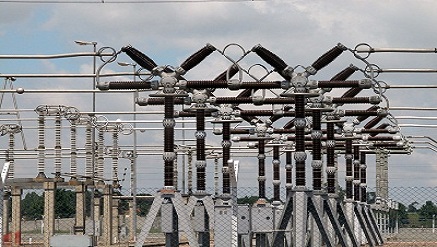
Federal Government has threatened to disconnect power-generating companies (GenCos) from the national grid if they fail to activate Free Governor Control (FGC) across all generating units, in a move aimed at curbing repeated system collapses and ensuring grid stability.

The Nigerian Electricity Regulatory Commission (NERC) issued the warning in Order NERC/2025/094, signed on August 26 by Vice-Chairman Musiliu Oseni and Commissioner for Legal, Licensing & Compliance, Dafe Akpeneye.
The directive, which takes effect on September 1, 2025, mandates GenCos to comply with FGC requirements or face sanctions.Nigerian fashion trends
FGC is a turbine governor control system that allows power plants to automatically adjust their output in response to changes in grid frequency. By stabilising the grid, the system ensures demand and supply remain balanced, preventing widespread outages.
Under the new rules, any GenCo that fails to implement FGC on its generating units by November 30, 2025, will be fined 10 per cent of the invoice associated with the defaulting unit for every day of non-compliance. A generating unit that remains in breach for 90 consecutive days will be disconnected from the grid until certified compliant by the Nigerian Independent System Operator (NISO).
NERC said the measures were introduced after the national grid suffered eight disturbances in 2024, including five full system collapses and three partial outages. Investigations by the Transmission Company of Nigeria linked the incidents to widespread non-compliance with FGC requirements among GenCos.
To enforce compliance, the regulator has directed all grid-connected power plants to install fast-acting governor systems and operate them in real time. GenCos are also required to procure Grade Level 5 IoT-enabled meters capable of monitoring active power, reactive power, voltage, frequency, and power factor. These must be installed by October 31, 2025, after which NISO will integrate them within 20 days.
NISO will track compliance using real-time data, compile hourly performance records, and submit monthly reports to NERC. Defaulting operators will have penalties applied directly through the market settlement process, with proceeds remitted into the Ancillary Service Account.
The commission stressed that its authority is rooted in the Electricity Act 2023, which empowers it to set and enforce operating codes that guarantee safety, security, and reliability in the electricity sector.
NERC also reminded GenCos that the Grid Code requires every generating unit to be fitted with fast-acting governors capable of primary control. “Where a generating unit becomes isolated from the system but is still available to supply demand, it must be able to provide primary control to maintain frequency and voltage,” the order stated.
The commission added that failure to enforce FGC compliance would continue to expose Nigeria’s fragile power sector to instability, with devastating consequences for consumers and the economy.



Ossai Ovie Success, special assistant on Media to the Governor of Delta State, has defended First Lady Senator Oluremi Tinubu over the backlash trailing her recent advice encouraging Nigerians to embrace small-scale businesses.

Ossai Ovie Success, special assistant on Media to the Governor of Delta State
The controversy followed a viral video in which the First Lady urged unemployed Nigerians, particularly women, to consider starting businesses such as frying akara, roasting corn and producing kuli-kuli, noting that such ventures require little start-up capital.
Her remarks sparked widespread criticism on social media, with many Nigerians arguing that government officials should focus on creating jobs rather than encouraging citizens to take up petty trading.
Reacting to the criticism in a post shared on his official Facebook page on Sunday, Ossai said he was surprised that many people looked down on the akara business, insisting it can generate more income than some white-collar jobs.
According to him, an akara seller operating in a strategic location can earn substantial profits with just a few hours of work daily.
“Akara business is better than a bank job sometimes. If you fry akara in a good location, after all costs, you make N20 per akara and sell 500 pieces every day,” he wrote.
Ossai estimated that such a business could generate about N10,000 daily, translating to approximately N60,000 weekly and N240,000 monthly, while noting that some operators earn well above N1 million every month.
“How much again is a bank job? Ask yourself,” he said.
The Delta governor’s aide also argued that the business is not as demanding as many people assume, saying it typically requires only a few hours of work each day.
“Before I forget, know that akara business is not a 6-to-6 job. It’s about three hours daily.
“I am disappointed in those looking down on akara business,” he added.
The remarks add to the growing debate sparked by the First Lady’s comments, with supporters describing entrepreneurship as a practical means of livelihood, while critics argue that the government should prioritise policies that create sustainable employment opportunities for Nigerians.
General News
EVC NCC, Aminu Maida, to Lead Speakers @ Business Journal Fintech & Financial Inclusion Roundtable 2026

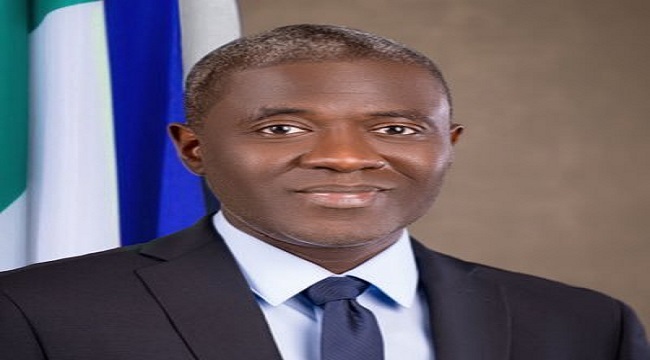
Dr. Aminu Maida, Executive Vice-Chairman/CEO, Nigerian Communications Commission (NCC) would be the Special Guest of Honour at the 3rd Business Journal Fintech & Financial Inclusion Roundtable 2026 scheduled for Friday, July 31, 2026 at Oriental Hotel, Lekki Road, Victoria Island, Lagos.

The theme of the Roundtable is: Fintech: Driving the Future of Digital Financial Ecosystem in Nigeria.
Dr. Aminu Maida was appointed the Executive Vice Chairman/Chief Executive Officer of the Nigerian Communications Commission (NCC) by President Bola Tinubu on Wednesday, October 11, 2023.
Maida holds an MEng in Information Systems Engineering from Imperial College, London in 2002 and in 2006, he bagged a PhD in Electrical & Electronic Engineering from the University of Bath, United Kingdom.
Between 2018 and 2019, Maida completed a Post Graduate Diploma in Entrepreneurship (FinTech Pathway) program at the Cambridge Judge Business School, University of Cambridge, United Kingdom.
Until his appointment by the President, Dr. Maida was the Executive Director, Technology and operations at Nigeria Inter-Bank Settlement System Plc (NIBSS), the country’s central switch company owned by the Central Bank of Nigeria (CBN) and all licensed Deposit Money Banks (DMBs) in Nigeria.
At NIBSS, Maida was responsible for holistically spearheading the technical and operational standardisation of all devices deployed in the financial system in Nigeria for interoperability.
Maida led a dynamic team that ensured that all terminals used in the e-payment industry and all devices deployed in Nigeria would accept all cards issued by banks and other licensed card schemes without discrimination.
Prior to his appointment at NIBSS, Maida was the Chief Technical Officer (CTO) at the Nigerian-based FinTech Arca Payments Network and Senior Manager at Cisco Systems, United Kingdom.
As a seasoned technical professional with over 15 years of multi-functional and international experience in FinTech & Telecoms & Enterprise Technology, Maida between 2010 and 2014, worked as a Network Design Consultant at EE, part of BT Group, and one of the largest mobile communications companies in the UK.
He was also at some point (2006-2010) a System Engineer at Ubiquisys, a leading company in intelligent 3G and LTE small cells, which is now part of Cisco.
Maida, a professional par excellence, combines a broad range of experiences, making him technically strong and commercially sound.
Reacting, the Publisher/Editor-in-Chief of Business Journal Media Group, Prince Cookey said:
“Dr. Aminu Maida came to the NCC at a time Nigeria needed strategic repositioning of the digital economy landscape and telecom regulation in the country. He has positioned NCC as a leading voice in the digital space and telecom regulation in Africa and around the world.
Accordingly, stakeholders attending the 3rd Business Journal Fintech & Financial Inclusion Roundtable 2026 would be looking forward to a robust conversation on the State of the digital economy, fintech market and the numbers on financial inclusion today and tomorrow.”
Cookey added that Mr. Olusegun Omosehin, Commissioner for Insurance/CEO, National Insurance Commission (NAICOM) will also be on board as Special Guest of Honour while Alhaji (Dr.) Umaru Kwairanga, Group Chairman, Nigerian Exchange Group (NGX) will Chair the event.
Mr. Emmanuel Ovaga, Managing Director/CEO, PufferPay Limited will deliver the keynote paper at the Roundtable while Mrs. Ekeoma Ezeibe, President/Chairman of Council of NCRIB is Guest of Honour.
Distinguished members of the Panel include:
- Dr. Muda Yusuf, CEO, Centre for the Promotion of Private Enterprise (CPPE)
- Mrs. Idu Okeahialam, Group Managing Director/CEO, Royal Exchange Plc
- Mr. Jide Orimolade, Managing Director/CEO, Stanbic IBTC Insurance Limited
- Dr. Obioha Oti, President, Association of Mobile Money and Bank Agents in Nigeria (AMMBAN)
- Mr. Sarafadeen Fasasi, President, Association of Financial Inclusion Agents of Nigeria (AFIAN)
The revolutionary success story of Moniepoint, Opay, PalmPay, Flutterwave and others in the digital payment system in Nigeria represents a positive expansion of the financial services sector in the country.
With millions of Nigerians and businesses lacking access to basic financial services, the importance of Fintechs remain sacrosanct in achieving substantial level of Financial Inclusion and expanding the frontiers of the industry.
According to AI Overview, Fintechs in Nigeria have revolutionised the financial landscape by dramatically increasing access to banking services, driving, for example, a 20% increase in financial inclusion and helping to bring the banked population to roughly 63%. These firms have introduced faster, affordable digital payments, lending, and investment services, forcing traditional banks to adopt digital transformation.
On investment, AI Overview stated: “Fintechs in Nigeria dominate the tech landscape, securing 35% of total tech funding ($2 billion total) in 2024, with over 430 companies attracting roughly 36% of all African fintech investment. Despite global challenges, the sector remains highly resilient, driven by high demand, with significant deals including Moniepoint’s $110 million series C.”
The 3rd Business Journal Fintech & Financial Inclusion Roundtable 2026 aims to underscore the positive contribution of Fintechs in deepening Financial Inclusion, expanding access to financial services and contributing to economic growth in the country.
Expected participants at the Roundtable include regulators, operators from key sectors of the economy, media and members of the public.
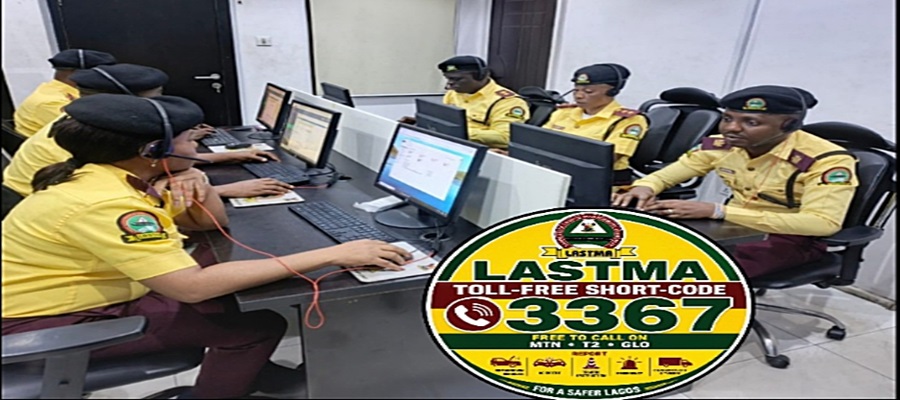
(LASTMA) has launched a new toll-free short-code hotline, 3367, to improve emergency response, enhance traffic managemestrengthen accountability across Lagos State.

The new platform replaces the agency’s previous long-service code and provides a simpler and more accessible channel for residents to report traffic-related incidents. The service is available at no cost to subscribers on MTN, Glo and Etisalat (T2) networks.
Motorists and other road users can use the hotline to report vehicle breakdowns, road crashes, disabled trucks, stranded tankers, traffic obstructions and other emergencies requiring immediate intervention.
The platform also allows members of the public to report the conduct and professionalism of LASTMA personnel, a move aimed at promoting transparency and accountability within the agency.
To ensure wider accessibility, callers can communicate with hotline operators in English, Yoruba or Pidgin English, helping to eliminate language barriers and encourage greater public participation.
Speaking on the initiative, Mr. Olalekan Bakare-Oki, general manager, LASTMA, described the launch as a major milestone in the agency’s efforts to build a safer, more efficient and technology-driven traffic management system.
He said the hotline reflects LASTMA’s commitment to leveraging digital solutions to tackle transportation challenges while strengthening collaboration with residents.
According to Bakare-Oki, the 3367 hotline provides Lagos residents with a direct, convenient and free channel to report incidents requiring urgent attention, noting that the growing complexity of Lagos as a major African megacity demands a proactive and technology-enabled approach to traffic management.
He assured residents that all reports received through the platform would be handled professionally and confidentially before being forwarded to the appropriate operational units for prompt action
Bakare-Oki urged the public to make effective use of the hotline to support road safety, improve accountability and contribute to a more efficient and sustainable transportation system across the state.

NDIC Says 281m Depositors Protected against Bank Failure

Wema Bank Suspends Telegram Operations over Scams

Akara Business Can Pay More than Bank Jobs – Governor Aide

OPay Unveils Emergency Lock, Safety PIN to Boost Customer Protection

FG Captures 32m Students DNEMIS ahead July 1 Rollout

London Strengthens Global Investment Ties with Africa @ First Ever London-Africa Business Summit

Mobile Internet Gender Gap Widest in Africa – GSMA

FG Targets Alleged N3tn Capital Flight, Opens Airtime Credit Market to Nigerian Fintechs

Japan, UNESCO Boost Digital Learning in 15 CoEs with Donation of ICT Equipment

Good News for DStv Users: Watch over 160 Channels Without Paying Extra




 E-Business1 day ago
LG Showcases AI-Powered Smart Living Innovations @ Africa Technology Expo 2026

 E-Financial1 day ago
UBA mobilises employees across Africa for environmental clean-up, wellness campaign

 Telecom1 day ago
OADC Reaffirms Abundant Capacity in Data Centres in Nigeria to Host Financial Data

 General News1 day ago
LASTMA Launches 3367 Toll-Free Hotline for Emergency Response, Traffic Management

 E-Financial1 day ago
PalmPay Calls for Trust, Infrastructure and Responsible AI to Drive Payment Ecosystem Innovation

 Telecom1 day ago
ALTON Backs NCC’s Local Smartphone Manufacturing Drive to Widen Digital Access

 E-Financial1 day ago
ngCERT Raises Alarm over Surge in Banks’ ATM Cyberattacks

 E-Business1 day ago
Want a Business Loan Without Interest? SMEDAN Launches N500m Fund