

Broadcasting
Deepfakes: The Next Human Vulnerability for Businesses?


By Ben Jacob, Tech Lead EMEA, Sophos Red Team at Sophos
Synthetic audio and video generation technologies, known as deepfakes, have reached a critical threshold. Once mostly limited to social media entertainment or occasional political manipulation, they are now fully integrated tools in cyberattack tactics. This shift represents more than a technological evolution; it marks a transformation where human perception itself has become an attack surface. Recognizing a familiar voice or face is no longer a guarantee of authenticity.

In this context, businesses face a threat that relies less on raw technical skill and more on subtle manipulation of human behavior. Fraud campaigns now exploit cloned voices and manipulated videos to simulate authentic communications, deceiving even the most vigilant employees. In February 2024, an employee at a Hong Kong multinational transferred €24 million after being duped by a deepfake. The scam succeeded because everything appeared authentic: accent, rhythm, tone… The widespread availability of these tools, thanks to their low cost and accessibility, accelerates the industrialization of such attacks.
A technological threat turned human
Attack simulations conducted with international organizations show that deepfakes are no longer a futuristic hypothesis but an established reality. A 2024 Anozr Way report projected deepfakes could increase from 500,000 in 2023 to 8 million in 2025. Deepfakes exploit a rarely anticipated cybersecurity vulnerability: our instinctive trust in human interactions. Cloned voices impersonate executives; videos generated from public content are embedded in credible scenarios to deceive experienced staff. Beyond technical sophistication, the industrialization of these practices is what should raise alarm.

Voice cloning now requires only a few seconds of publicly available audio, often available via public media such as YouTube or TikTok, allows artificial voices to be generated within minutes at low cost. These voices are then used in automated campaigns, including mass phone calls conducted by conversational agents simulating convincing human interaction. This paradigm shift moves the attack vector from IT systems to human behavior, exploiting trust, urgency, and voice recognition.
Identity: the new attack surface
Across recent breaches, including those impacting M&S and JLR, we are witnessing a clear shift in attacker behavior. Adversaries no longer “hack in”, they simply “log in”. They obtain valid credentials through phishing, vishing, and social engineering campaigns, then use them to operate under the radar of traditional defenses. Deepfakes now extend this pattern by enabling the theft and imitation of identity itself. A cloned voice or AI-generated face can bypass skepticism, convincing employees they are interacting with a trusted colleague or executive.
Identity has become the primary currency of access. As organizations strengthen their technical controls, attackers increasingly exploit human trust as the easiest route inside. This convergence of social engineering and AI-driven impersonation means the next wave of attacks won’t just target vulnerabilities in IT systems, they’ll target people.
Awareness, doubt, and verification: the new pillars of cybersecurity
Most companies have focused cybersecurity efforts on protecting systems and data. However, with deepfakes, humans become the entry point. These attacks exploit a major gap in current cybersecurity: the lack of verification reflexes in voice and video communications. While most organizations run phishing awareness campaigns via email, awareness of deepfakes remains minimal. Unlike phishing, now well understood, falsified calls or video conferences remain largely underestimated. The realism of deepfakes, especially under stress or urgency, obscures subtle cues that could raise alarms.
Detection depends on noticing small inconsistencies such as timing delays or slightly robotic speech, signs that are easy to miss during a busy day. Organizations need to establish verification practices that go beyond technical controls. This includes contextual questions that only legitimate colleagues would know, answers that change regularly (e.g., “When did we last meet?”), or confirmation through secondary channels. “Trust but verify” has long been a motto in cybersecurity, but identity-based attacks such as deepfakes make it more relevant than ever.
“Robocalls,” already widely used to target individuals with daily AI-driven calls, can also be exploited by adversaries for illegitimate purposes. Here too, slight timing delays and intonation are key indicators to identify.
Therefore, team awareness can no longer be limited to email. It must include these new scenarios, train employees to recognize manipulations, and foster a culture of systematic verification. Trust must no longer be implicit, even when it seems natural.
The threat of deepfakes can no longer be seen as a technological curiosity or niche risk. It fundamentally challenges how companies manage trust, decision traceability, and communication security. Organizations must integrate these concerns into governance: crisis simulations, verification protocols, redundant information channels, and continuous training. More than a technological response, this requires an organizational, cognitive, and cultural approach. Against a digital illusion that relies on familiarity, only active vigilance can prevent the next attack from coming… through the CEO’s voice.



Uchenna Mbunabo, Nigerian filmmaker, has raised concerns over the alleged unauthorised broadcast of Nollywood films by some Ghanaian television stations, calling on Ghana’s National Film Authority (NFA) to strengthen the enforcement of copyright laws.

Uchenna Mbunabo, Nigerian filmmaker
Mbunabo made the remarks during a conversation with James Gardiner, deputy CEO of the National Film Authority (NFA) of Ghana.
He questioned whether it was permissible for television stations in Ghana to download Nigerian movies from YouTube and air them without obtaining permission from the producers.
“I noticed that Ghanaian TV stations, the way they are stealing our films and showing them for free with impunity. Is it legalised in your country for TV stations to go on YouTube, download people’s sweat and show it for free?”
According to Mbunabo, some Ghanaian television stations have been downloading newly released Nollywood films from YouTube and broadcasting them without authorisation, depriving producers of revenue generated through the platform.
He also stated that he had not witnessed Nigerian television stations engaging in similar practices and questioned what measures Ghana was taking to protect filmmakers’ intellectual property.
Responding to the concerns, Gardiner acknowledged that the issue exists and said the National Film Authority had begun engaging relevant stakeholders to address it.
He disclosed that the NFA has held discussions with the Ministry of Communications, the National Communications Authority (NCA) and the National Media Commission (NMC) on improving copyright enforcement.
Gardiner explained that while Ghana has copyright laws, enforcement remains challenging because many television stations now operate digitally and may not have physical offices within the country.
“There are copyright laws, but they are not effective because a lot of the TV stations don’t have offices. Most of them are now digital, so they operate from anywhere. They can even have a Ghanaian TV station but be operating from Austria simply because it is digital.”
He added that authorities are considering a new licensing framework that would require broadcasters to undergo a fresh licensing process to improve monitoring and enforcement.
According to Gardiner, television stations found guilty of illegally broadcasting copyrighted content would be required to compensate affected producers through fines.
He added that repeat offenders could face suspension of their broadcasting licences, while a third violation could result in the revocation of their licences.
Although he did not provide a specific timeline, Gardiner said the reforms were already underway and expressed hope that significant progress would be seen next year.
Mbunabo welcomed the proposed measures but urged the National Film Authority to expedite the process, stating that unauthorised broadcasts continue to affect filmmakers’ ability to recover production costs through legitimate distribution channels such as YouTube.
He also stressed that his comments were not directed at Ghana’s film industry, noting that he has worked with several Ghanaian actors over the years and supports collaborations between Nollywood and Ghallywood.
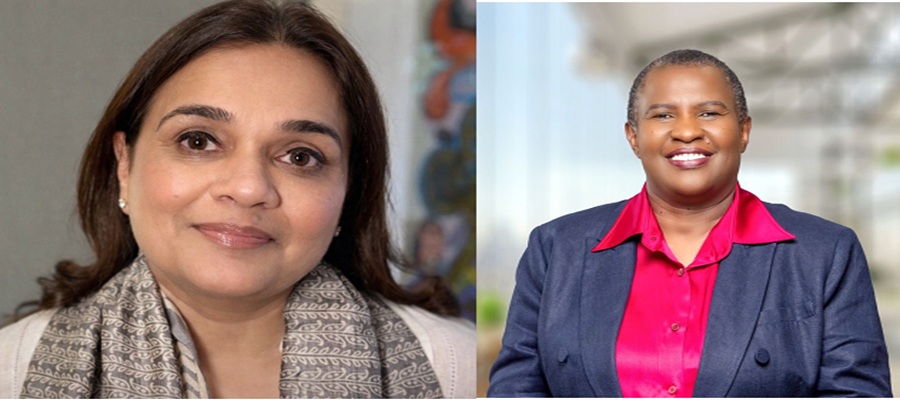

Broadcasting Organization of Nigeria (BON) has established six committees to help strengthen and modernize the country’s broadcasting industry.

The committees will focus on content creation, skills development, digital transformation, sustainability, policy and commercial opportunities
The initiative aims to support industry growth and improve collaboration between broadcasters, regulators and media experts
The official launch recently, was led by Tony Akiotu, president, BON and attended by media professionals, program directors, former journalists and heads of specialized media organizations.
The event brought together several prominent figures in Nigeria’s media industry, including veteran broadcaster and trainer Bimbo Oloyede, Tony Uyah of M4S TV, Kingsley Uranta of Channels Television, Ismael Sani of Platinum TV and Ibrahim Shehu of Trust TV.
Together, they are expected to help drive innovation and support the growth of Nigeria’s broadcasting sector.
According to Akiotu, the committees are intended both to help shape industry policy and to provide a forum for dialogue between BON and broadcasting experts.
Akiotu said the ad hoc committees were intended to strengthen BON’s work and ensure that the umbrella body for Nigeria’s broadcasters played a more direct and meaningful role in developing the country’s broadcasting sector.
The six committees reflect the sector’s main priorities. The first focuses on collaboration and innovation to promote content creation.
The second is dedicated to training and talent development, while the third focuses on industry sustainability by improving the sector’s long-term financial viability.
A fourth committee will focus on digital transformation and work with the National Broadcasting Commission (NBC) on regulatory issues.
The remaining two committees will oversee public policy advocacy and the development of sports and commercial rights to help broadcasters increase revenue and attract more investment. Together, the committees are expected to guide BON’s efforts to modernize and strengthen Nigeria’s broadcasting industry.
The committees, chaired by members of BON’s General Assembly and supported by the organization’s Secretariat, have an initial 12-month mandate that may be renewed if necessary.
They are required to submit a progress report within three months and implement approved recommendations within the following six months.
The arrangement is intended to ensure close oversight and the timely implementation of their work.
Akiotu also reminded committee members that Nigeria pioneered television broadcasting in Africa and urged them to carry out their work with greater effectiveness and efficiency.

Surge in Fibre Cuts Hobbles Service Provisioning

Why Bandits, Kidnappers are Hard to Trace despite NIN-SIM Linkage – FG

First Securities Brokers Empowers Nigerians to Trade in the Stock Market with the Launch of FirstInvest App

Quest Merchant Bank Hosts Great Place to Work® Nigeria Study Mission

ValueJet Expands Fleet with Boeing Aircraft, Targets Wider African Network

NRC, Ponzi Scheme Collapses Resulting Loss of Billions of Naira

Nigeria Launches FreeTV Nationwide

NASENI Moves to Digitize CCB’s 5m Assets Declaration and Operations

Lebara Nigeria Launches Lebara Play, Africa’s First Telecom-Owned Micro-Drama Platform

CANAL+ Partners Samsung to Pre-Load DStv Stream on New Samsung TVs In Nigeria, Other African Countries




 Telecom2 days ago
MTN Nigeria Slashes Cost of Broadband Internet Router, Unwraps New Data Bundles for Low-Budget Users

 E-Financial2 days ago
Nigerians Accumulate $59Bn in Cryptocurrency Assets —FDC

 General News2 days ago
Nearpays, Nigerian Fintech Becomes First African Startup to Win UN’s AI for Good Innovation Factory

 E-Financial2 days ago
Flutterwave Partners Xoom on Transfers into Nigeria

 Telecom2 days ago
Nokia’s 14 Years of Mobile-Phone Supremacy Ended in an Afternoon

 News2 days ago
DataPro Upgrades Dangote Cement’s Credit Rating to AA+

 General News2 days ago
LASG Signs PPP Concession Agreements to Advance Digital Services, Others

 General News2 days ago
Fintech Brands Should Communicate Right in a VUCA Economy