

E-Financial
Mastercard Champions Inclusive Growth Across the Continent @Africa Edge 2025

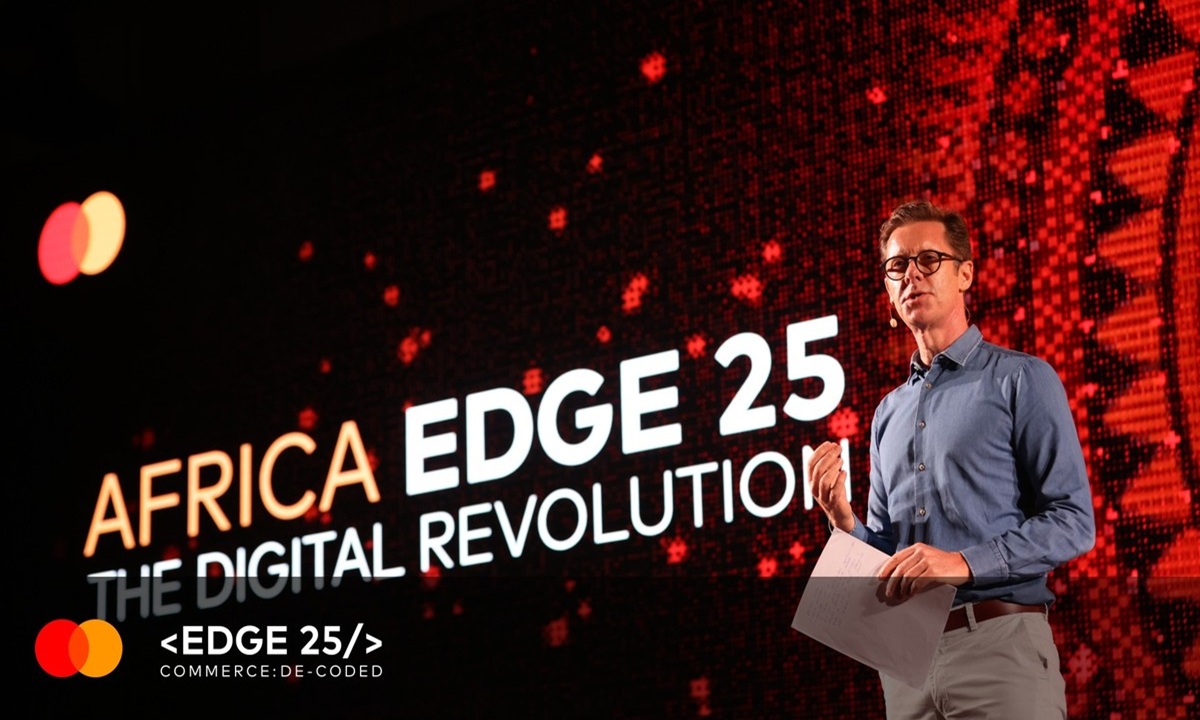
Mastercard held its inaugural Africa Edge summit, convening leaders from across Africa’s payments ecosystem to explore how collaboration and innovation can accelerate the continent’s digital growth.

Mark Elliott, division president, Africa, Mastercard at Africa Edge 2025.
The forum focused on building the infrastructure, trust and interoperability needed to support Africa’s fast-growing digital economy, projected to reach USD 1.5 trillion by 2030, and create new opportunities for consumers and small businesses.
Hosted by Mark Elliott, division president, Africa, Mastercard, the event brought together senior representatives from banks, fintech companies, telcos, regulators and technology partners.
Speakers and panelists discussed how to expand low-cost acceptance, improve interoperability and enhance security at scale to create a more inclusive and resilient economy.
With internet penetration in Africa projected to grow at 20 percent annually, participants agreed that seamless, secure and connected payment systems are essential to sustaining growth and unlocking new opportunities for trade and entrepreneurship.
During the event, Mastercard showcased two breakthrough innovations shaping the future of digital commerce. The first-ever Agent Pay transaction in EEMEA was executed live, marking a major step toward autonomous, secure and accessible payment experiences.

In addition, Mastercard launched the Merchant Cloud, a unified platform that brings together payments, AI and security to help merchants grow their businesses confidently in an omnichannel environment.
Both innovations underscore Mastercard’s commitment to building intelligent, inclusive and resilient payment ecosystems that power Africa’s digital transformation.
Mark Elliott, division president, Africa, Mastercard, said, “Africa Edge is a reflection of Mastercard’s long-term commitment to this continent.
“It is about collaboration and supporting partners across the ecosystem to deliver secure, seamless and accessible digital experiences that help people and businesses grow.
“Africa’s digital economy is scaling fast, and Mastercard is proud to be a trusted technology partner helping power that growth.”
Throughout the day, discussions highlighted the growing importance of payment immediacy and liquidity, with panelists noting how same-day settlement helps small businesses absorb shocks, reduce borrowing needs and reinvest faster.
South Africa’s real-time clearing system was cited as a model as Mastercard advances instant-payment capabilities across multiple African markets.
Ling Hai, president of APEMEA, Mastercard, further highlighted faster payments as critical to helping small businesses manage cash flow and grow.
He emphasized that Africa’s digital future depends on simple, safe and accessible payment solutions that work across markets and devices, calling for closer collaboration between the public and private sectors to ensure innovation benefits everyone.
Futurist John Sanei, the event’s keynote speaker, explored how human adaptability and emotional intelligence will define leadership success in an era of AI-driven change.
A spotlight session with Smile ID addressed the rising threat of synthetic identities and deepfakes, highlighting how Mastercard and Smile ID are combining AI-driven liveness checks and verification to strengthen digital onboarding and reduce fraud across African markets.
Folasade Femi-Lawal, country manager, West Africa, Mastercard, said: “West Africa is home to one of the world’s fastest-growing fintech sectors. Nigeria alone accounted for 28 percent of all African fintech companies in 2024, attracting nearly USD 400 million in investment.
“By combining global technology with local insight, we are helping banks, fintechs and innovators build open, trusted and scalable infrastructure.
“Our collaborations with governments, banks and fintech companies in the region are making digital payments simpler and safer for millions, proving that inclusion and innovation can move forward together.”
The event culminated in a celebratory awards ceremony and gala dinner, recognizing outstanding contributions from Mastercard’s partners and customers across Africa who are advancing innovation and inclusion in the digital economy.



Remita, a leading digital payment platform, has called for increased investment in digital infrastructure, cybersecurity and financial inclusion to ensure that more Nigerians benefit from the country’s growing digital economy.

The company said bridging the digital divide was critical to unlocking economic opportunities for millions of Nigerians who remain excluded due to limited connectivity, affordability challenges and inadequate access to digital services.
Lanre Idowu, Divisional Head, Financial Industry Partnerships at Remita, made the call during the Nigeria Information Technology Reporters Association (NITRA) Innovative and Scientific Conference held in Lagos.
Idowu said that although Nigeria’s digital economy was projected to reach $18.3 billion by the end of the year, the benefits would remain unevenly distributed unless barriers limiting digital access were addressed.
He described the country’s digital transformation as representing “two Nigerias” — one recognised globally for technological innovation and another still struggling with poor broadband infrastructure, high connectivity costs and unequal access to digital services.
According to him, Nigeria has developed one of Africa’s fastest-growing fintech ecosystems, with instant payments becoming increasingly popular among individuals, businesses and government institutions.
He noted that Nigerian technology startups had continued to gain international recognition, but warned that uneven broadband penetration and limited digital access in underserved communities were slowing inclusive growth.
“The country’s digital divide should be viewed as an opportunity divide because millions remain excluded from education, healthcare, financial services and economic opportunities,” Idowu said.
He stressed the need for digital solutions to be designed with diverse users in mind, including people with different languages, literacy levels, income capacities and device limitations.
Idowu identified connectivity, affordability, digital literacy, access to devices and trust as the five major factors affecting inclusive digital transformation in Nigeria.
The Remita executive said trust remained a major factor influencing the adoption of digital financial services, noting that failed transactions and weak dispute resolution systems often discourage users from embracing digital platforms.
He recalled that Nigeria’s banking sector had evolved significantly from an era when customers relied heavily on manual processes, paper documentation and long queues in banking halls.
He noted that financial services had been transformed through innovations such as Automated Teller Machines (ATMs), mobile banking, agency banking, USSD services and digital payment platforms.
Idowu said previous banking processes, including clearing outstation cheques that took between five and 15 working days, had gradually been replaced by faster digital alternatives.
“The future of Nigeria’s digital economy depends not only on innovation but also on inclusion. When technology becomes accessible to everyone, regardless of geography or income level, we truly begin to bridge the digital divide,” he said.
Idowu attributed the growth of Nigeria’s fintech ecosystem to collaboration among government agencies, regulators, banks, telecommunications operators, fintech companies, consumers and the media.
He said government institutions had provided policy direction, while regulators created frameworks that supported responsible innovation.
He added that banks pioneered digital financial services, telecom operators expanded connectivity, and fintech companies introduced solutions that improved access to financial services.
“No single institution built Nigeria’s fintech ecosystem alone. Government, regulators, banks, telecommunications operators, fintech innovators, consumers and the media all contributed to the progress we see today,” he said.
The Remita executive also highlighted the importance of USSD banking in extending financial services to Nigerians without smartphones or internet access.
However, he expressed concern that rising USSD transaction charges could discourage low-income users and undermine efforts to promote financial inclusion.
Idowu called for continued collaboration among stakeholders to build a digital economy that is secure, affordable, accessible and beneficial to all Nigerians.


When people and businesses gain genuine access to financial services, they gain the ability to transact securely, build savings, and access credit. That access creates the conditions for progress: more stable revenues, better business decisions, and the capacity to grow. Progress, sustained over time, is what produces financial happiness. This framework is how Moniepoint measures its impact.

According to Moniepoint 2025 Impact Report, titled creating financial happiness; “Financial happiness is the feeling of confidence and ease that comes with financial freedom and well-being. It is a condition that develops over time and requires a specific set of enablers to take hold.
For millions of people and businesses across Nigeria, those enablers, like tools and solutions to manage their finances, have historically been out of reach. Moniepoint was built to change that, and this change, for us, begins with inclusion”.
Across the world, access to digital tools is a key driver of financial inclusion. The World Bank’s Global Findex 2025 report finds that more than 60% of adults in low- and middle income economies now make or receive digital payments. In Nigeria, this figure is around 54%. Moniepoint has been a key driver in expanding this access with its POS terminals. “Our terminals also drive financial inclusion for individuals.
The report stated that, in 2025, Moniepoint enabled 100 million people to make payments via their POS terminals across the country. For customers in communities where bank branches are scarce or non-existent, a Moniepoint terminal at their local shop, market stall, or fuel station provides reliable access to digital financial services.
They can make purchases, withdraw cash, and manage their money without travelling long distances or depending solely on physical currency. Critically, customers without cards can complete transactions through direct bank transfers to the terminal’s account.
Beyond practical benefits, Moniepoint terminals have also introduced a new layer of trust to everyday commerce. “When network issues make it unclear if a payment went through, the Moniepoint terminal’s loud beep provides instant confirmation for everyone, building trust in digital payments with every transaction”.
Moniepoint POS terminals operate across all 774 local governments in Nigeria, ensuring that small sellers and large stores can accept payments reliably, regardless of location.
In 2025, millions of Nigerians, businesses and individuals alike, accessed Moniepoint services through its mobile app. Top among them are groups like women and low-income earners, who have historically been excluded from formal banking. Inclusion of women is particularly important, as they typically manage household spending and informal savings but are frequently left out of structured financial systems. “Through our app, they are gaining financial independence and greater control over their economic decisions,” the report added.
For millions of Nigerians, debit cards represent a move away from the limits of cash transactions. They enable safer, more reliable everyday payments, particularly as more local businesses begin to accept digital payments.
Moniepoint debit cards are designed to meet this need. In 2025, Moniepoint customers completed over 300 million card transactions at physical locations, largely driven by essential, food-related purchases. Most of this spending took place at neighbourhood provision shops where households buy everyday items such as rice, cooking oil, and soap.
“We’ve made access to our cards intentionally simple. Customers can get a Moniepoint debit card by requesting it within their mobile app or from neighbourhood agents, without lengthy paperwork or waiting periods. By lowering these barriers, more people are able to access financial tools and participate in the formal financial system.
“Our cards also safeguard our customers’ financial information. They don’t carry special markings or any identifiers that could expose our customers or put their financial security at risk. In the event of loss, this reduces the likelihood of targeted fraud or misuse.
“When people can pay with their debit cards at their neighbourhood stores, they can manage their spending, reduce cash handling, and transact more securely. Merchants also benefit, recording higher transaction volumes and more consistent customer activity.
“Moniepoint helps millions of businesses and individuals across Nigeria access seamless payments and banking, every day. The widespread adoption of our tools and services, as highlighted, demonstrates our critical role in expanding financial access, supporting everyday commerce, and enabling more Nigerians to participate safely and consistently in the digital economy,” the report noted.

ChatPay has launched Africa’s conversational banking platform, enabling individuals and businesses to access financial services through WhatsApp.

The Lagos-based fintech startup, is in controlled rollout, connecting WhatsApp to linked-bank management, airtime and supported electricity payments through simple conversations.
The company said the platform is designed to enable users to send money, pay bills, buy airtime and manage business transactions within WhatsApp conversations, subject to the completion of regulatory approvals and integration with licensed banking partners.
According to ChatPay, the platform is operated by CP Technology Limited and is currently undergoing a phased rollout ahead of its planned public launch.
The company said the initiative is intended to simplify access to financial services by leveraging WhatsApp, which it estimates is used by more than 50 million Nigerians monthly.
Speaking on the idea behind the platform, Adeoluwasubomi Odebunmi, product lead and co-founder, said the concept emerged while she was studying Software Engineering at Babcock University.
“I saw the gap while I was still in school—how much friction there was just to move money. I didn’t want to just study the problem. I wanted to help fix it,” she said.
Odebunmi said she had previously worked on software solutions spanning e-commerce, real estate management, school administration and artificial intelligence applications before co-founding ChatPay.
Aseoluwa Siyanbola, growth lead and co-founder, said his experience managing Nigerian bank accounts while studying abroad highlighted some of the challenges users face with digital banking services.
According to him, difficulties such as one-time password (OTP) failures and inconsistent banking applications inspired the team to explore conversational banking solutions.
“We each encountered similar challenges and came together to build a solution that simplifies everyday financial transactions,” he said.
cAbraham William, tech lead and co-founder, said the company is focused on improving access to financial services through a platform that many Nigerians already use daily.
“We want to make financial services easier to access by allowing people to carry out transactions through a familiar messaging platform,” he said.
William said he oversees the company’s engineering, technology strategy and system architecture.
ChatPay said its services will be introduced in phases as regulatory requirements are met and integrations with banking partners are completed.
The company added that its newly launched “Founding 2,500” programme will enable selected early users to test features, provide feedback and participate in product development before the platform’s wider rollout.
According to the company, interested users can register for the waitlist and the Founding 2,500 programme through its website.
Founded by Odebunmi, Siyanbola and William, ChatPay said its long-term goal is to expand conversational banking services beyond Nigeria into other African markets after its domestic rollout.

History as Lagos Becomes First Nigerian State to Launch Greenhouse Gas Registry

AMCON Puts ntel Up for Sale, Seeks Investors

Nigeria Atomic Energy Commission Seeks Collaboration on Power Plants

AI Investment Gap Threatens Africa’s Future Growth

UNN to Partner Firm on AI, Smart Mobility Innovation Centre

NRC, Ponzi Scheme Collapses Resulting Loss of Billions of Naira

EFCC Busts NIS Visa Overstay Racket, Uncovers N700m in an Account

Tokenization, Blockchain Technology will Transform Financial Institutions – IMF

From Scarcity to Scale: What Africa Can Learn from India’s Agricultural Transformation

BON Establishes Six Ad Hoc Committees to Modernize Broadcasting




 E-Business2 days ago
Report Says Cybercriminals Deploy Malware to Hijack Crypto Wallets, Monitor Browsers Telegram

 News2 days ago
See Verified 20 Countries Nigerian Passport Holders Can Travel Visa-Free

 Telecom2 days ago
Subscribers, Telcos Warn FCCPC over Airtime Lending Enforcement

 Telecom2 days ago
NCC, REA Partner to Cut Telecom Costs with Renewable Energy

 E-Business2 days ago
NPC Opens 131 Births, Deaths Registration Centres in Anambra

 General News2 days ago
AfDB, Nigeria Urge African Control of Mineral Resources

 General News2 days ago
Lagos Chamber Opposes 21 Percent Pension Contribution, Warns of Job Losses

 Telecom2 days ago
Nigeria Pushes for United African Front Ahead of Global Telecoms Elections