

E-Financial
Banks’ N1.96Trn Black Hole: Who Took the Loans, Who Defaulted, and Why the Real Economy Suffers

By Blaise Udunze
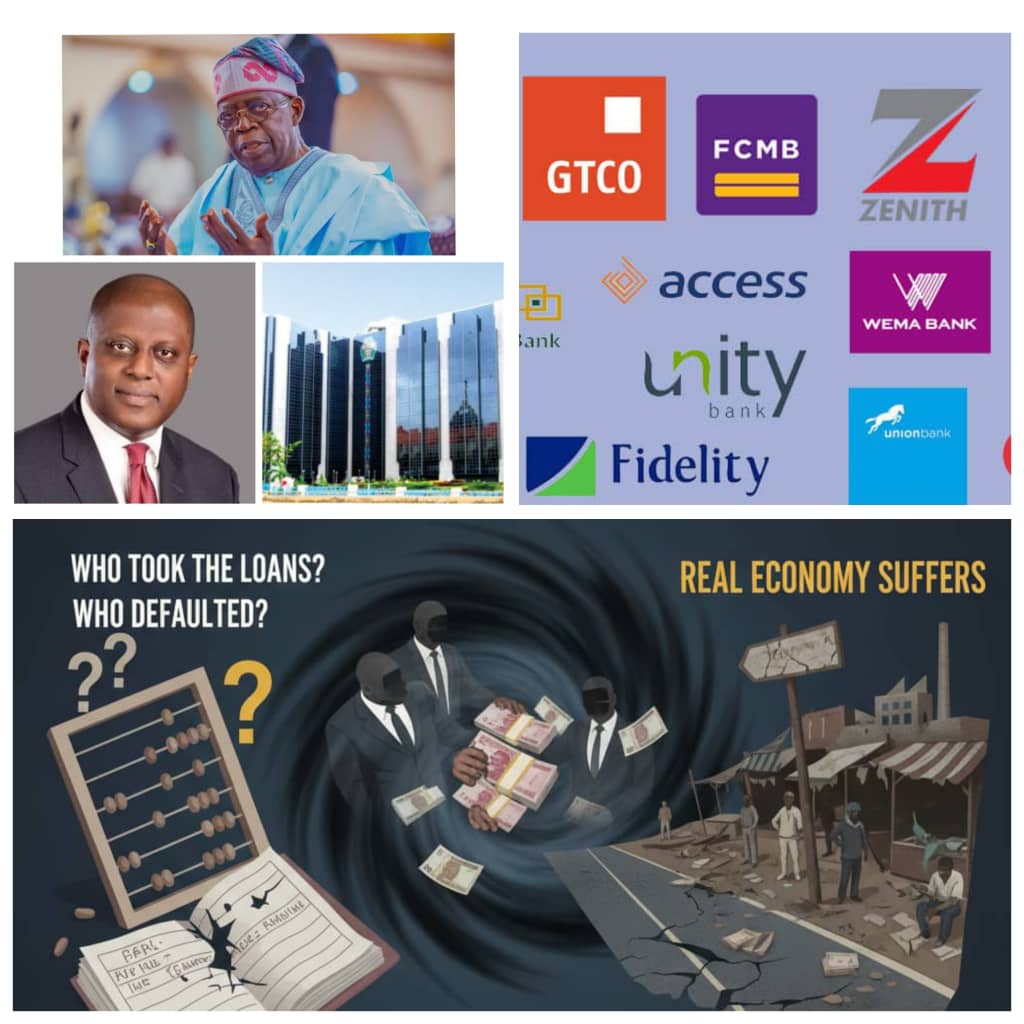
Nigeria’s banking sector has entered a season of reckoning. Eight of the nation’s biggest banks have collectively booked N1.96 trillion in impairment charges in just the first nine months of 2025 which represents a staggering 49 percent increase from the N1.32 trillion recorded in the same period of 2024.

Behind these figures lies a deeper question that speaks to the very soul of Nigerian finance on who received these loans that have now turned sour? Were they the small and medium enterprises (SMEs), entrepreneurs, and job creators that fuel real economic growth, or were they politically connected insiders and corporate giants whose failures are now being quietly written off at the expense of the public trust?
The Central Bank of Nigeria (CBN) is unwinding its pandemic-era forbearance regime, a policy that allowed banks to restructure non-performing loans and delay recognizing potential losses. It was a relief measure meant to protect the economy during the COVID-19 shock. But as the CBN begins to phase out this regulatory cushion, the hidden weaknesses in many banks’ balance sheets are now coming to light.
The apex bank has since placed several lenders under close supervisory engagement, restricting them from paying dividends, issuing executive bonuses, or expanding offshore operations until they meet prudential standards. Those that have satisfied the conditions are being gradually transitioned out ahead of the full forbearance unwind scheduled for March 2026. This shift, though painful, is forcing banks to confront the true state of their loan books and the picture emerging is anything but flattering.
A review of financial statements of Nigeria’s top listed banks reveals the distribution of impairment charges as of the third quarter of 2025.
– Zenith Bank Plc leads the pack with an eye-popping N781.5 billion in impairments, a 63.6 percent jump from N477.8 billion in 2024. Most of this amount to about N711 billion which occurred in the second quarter of 2025, driven by losses on foreign-currency loans and the end of regulatory forbearance. The bank’s gross loans declined by 9 percent to N10 trillion, and though its non-performing loan (NPL) ratio improved to 3 percent, that was largely due to massive write-offs.
– Ecobank Transnational Incorporated (ETI) followed closely, provisioning N393.7 billion, up 47 percent year-on-year. Inflation, exchange-rate volatility, and macroeconomic stress in Nigeria and Ghana all contributed to loan-quality deterioration. Its total loan book stands at N21.1 trillion, with a modestly improved NPL ratio of 5.3 percent.
– Access Holdings Plc posted impairments of N350 billion, representing a 141.5 percent surge year-on-year. About N255 billion of this came from loans to corporate entities and organizations, while the rest were loans to individuals. The bank cited changing macroeconomic conditions, inflationary pressures, and continued regulatory adjustments as the main culprits.
– First HoldCo reported N288.9 billion, up 68.6 percent from N171.4 billion a year earlier. The bank attributed the spike to revaluation losses and write-downs of legacy exposures in the energy and trade sectors. Notably, about N100 billions of this was incurred in the third quarter alone.
– United Bank for Africa (UBA) saw a dramatic improvement, cutting impairments from N123.5 billion to 56.9 billion, thanks to recoveries of N50.4 billion. The bank’s proactive loan-book management and collateral recoveries were credited for this performance.
– Guaranty Trust Holding Company (GTCO) posted N69.8 billion, up slightly from N63.6 billion last year. The group wrote off a key oil-and-gas exposure but maintained strong profitability, with pre-tax return on equity (ROAE) of 39.5 percent.
– Stanbic IBTC Holdings Plc recorded N11.6 billion, a sharp 80 percent decline year-on-year following recoveries of N16.3 billion on previously impaired loans.
– Wema Bank Plc, with N11 billion in impairments, reported one of the lowest provisioning levels in the industry, despite 30 percent loan growth.
Altogether, these eight banks have set aside almost N2trillion in provisions to cover potential losses, a sum roughly equivalent to Nigeria’s entire federal capital expenditure for 2025.
There have been recent claims of a modest level of loan growth that is not commensurate with the overall expansion of the banking system’s balance sheet. Data from MoneyCentral shows that the combined total loans of the nine banks stood at N65.37 trillion as of September 2025, representing a 7.42 percent increase from N60.86 trillion in 2024. This contrasts sharply with a 52.63 percent surge in combined loans recorded in the 2024 financial year and a 32.64 percent increase in 2023, according to data gathered by MoneyCentral.
The underlying question, therefore, is which sectors of the economy are actually benefiting from this reported loan growth?
The real puzzle behind these numbers is who actually received these loans that are now being impaired. While banks have long positioned themselves as engines of private-sector growth, evidence suggests that much of their lending goes to a narrow base of corporate borrowers, politically connected elites, and oil-and-gas companies. These sectors offer large-ticket deals and quick interest earnings but also carry enormous risk.
In contrast, the SME sector, which employs more than 80 percent of Nigeria’s workforce, continues to face credit starvation. Many small businesses are forced to rely on expensive informal loans or personal savings because banks deem them too risky. The pattern is clear that banks chase safety and short-term profits over inclusive growth. When their big corporate bets fail, they write them off through impairment charges, but the cumulative effect is that real economic activity suffers while the credit system grows more fragile.
Another dimension to the problem is the banking industry’s heavy investment in government securities. Over the past two years, Nigerian banks have channeled N20.4 trillion into treasury bills, bonds, and other fixed-income instruments, reaping risk-free returns rather than funding productive ventures. This “securities trap” is profitable for banks but disastrous for the economy. Instead of financing factories, farmers, or tech innovators, banks earn easy money by lending to government thereby crowding out private investment and weakening the transmission of credit to the real sector. When interest rates rise or currency values swing, the market value of these securities falls, forcing banks to record mark-to-market losses that translate into impairment charges. Thus, the same safety net that shields banks from loan risk ends up creating financial volatility of its own.
Beyond macroeconomic challenges, Nigeria’s banks are also grappling with homegrown problems like insider abuses, weak corporate governance, and ineffective risk management. Past crises in the banking sector, from the 2009 consolidation fallout to the 2016 oil-sector shock, reveal a consistent pattern: directors and senior executives often have outsized influence over loan approvals, sometimes extending credit to themselves or politically exposed entities without proper collateral or due diligence. These insider-related loans frequently turn toxic, hidden under layers of restructuring and accounting manoeuvres until a regulatory audit forces exposure.
The recent impairments may well reflect a new cycle of these historical sins as loans extended under pressure, influence, or misplaced optimism, now coming home to roost as the CBN tightens oversight. Corporate-governance codes exist, but enforcement remains uneven. Some banks continue to operate “relationship banking,” were loyalty trumps prudence. The lack of whistleblower protection, combined with weak internal-audit independence, further compounds the problem. Until boards and regulators impose real consequences for reckless lending, the system will continue rewarding the wrong behaviour and punishing taxpayers and shareholders in the long run.
At its heart, impairment is a measure of how well banks anticipate and manage risk. A rise in impairments signals that too many loans were made without properly assessing the borrower’s ability to repay, or that risk models failed to adjust to changing macroeconomic conditions. Several banks blamed their losses on exchange-rate volatility and inflation, but these are hardly new risks in Nigeria’s economic environment. The fact that impairments ballooned even as profits remained high suggests that risk-management frameworks were reactive rather than preventive which focused on compliance rather than foresight. In some cases, the sheer scale of provisioning, such as Zenith’s N781 billion or Access’s N350 billion, points to systemic underestimation of credit risk.
Every naira written off as an impairment represents not just a failed loan but a lost opportunity for the real economy. N1.96 trillion could have funded tens of thousands of new small businesses, millions of jobs, and critical infrastructure projects. Instead, these funds are trapped in the closed circuit of banking losses or vanish into opaque corporate failures. This has broader implications: as banks absorb losses, they tighten lending criteria, making it harder for genuine borrowers to access loans. High impairments signal instability, discouraging foreign investors and depositors, while credit flow dries up, productivity and job creation suffer. The result is a paradoxical economy where banks post impressive profits yet the productive sector languishes.
If there is a silver lining, it is that some banks, notably UBA, Stanbic IBTC, and Wema Bank are demonstrating improved loan-recovery strategies, more disciplined credit models, and a stronger focus on risk-weighted assets. Their experiences prove that impairment is not inevitable; it is the outcome of choices like governance, culture, and accountability. For others, the current round of provisioning should serve as a wake-up call to rethink their business models, diversify exposures, and strengthen compliance culture.
To its credit, the CBN’s forbearance unwind is a critical step toward transparency. By compelling banks to recognize their true loan losses and restricting dividend payouts until they meet prudential standards, the regulator is forcing a long-overdue cleansing of the system. However, reform must go deeper than technical compliance. The CBN must enforce public disclosure of insider-related loans, tighten penalties for concealment, and promote lending to productive sectors through targeted incentives. For instance, a tiered capital framework could reward banks that extend a higher proportion of credit to SMEs and manufacturing, while imposing stricter capital charges on speculative or insider-related lending.
Nigeria’s banking sector has shown resilience through crises, from the global financial meltdown to oil-price collapses. But resilience should not become an excuse for complacency. The N1.96 trillion impairment charges of 2025 are more than a balance-sheet adjustment; they are a mirror reflecting structural flaws in lending culture, governance, and the alignment between finance and development. To rebuild trust and relevance, banks must reorient lending toward real-sector growth, invest in credit analytics and risk intelligence that anticipate shocks, enforce transparency in board-level loan approvals and insider exposures, and collaborate with regulators to design sustainable credit frameworks for SMEs. Above all, there must be a moral recalibration of banking purpose from chasing short-term profits to fueling long-term national prosperity.
The spike in impairment charges does not mean Nigeria’s banks are collapsing. Rather, it signals an industry confronting its hidden fragilities. As the forbearance curtain lifts, the system has a chance to reset to clean up bad debts, rebuild credibility, and reconnect finance with development. But that opportunity will be wasted if the same patterns persist: insider lending, governance lapses, and a preference for easy returns over real investment. Until these issues are confronted head-on, the question will continue to echo through boardrooms and regulatory halls are Nigerian banks truly financing growth or merely recycling risk and protecting privilege? Only transparency, discipline, and a renewed sense of purpose can answer that question in the affirmative.
Blaise, a journalist and PR professional writes from Lagos, can be reached via: [email protected]



Central Bank of Nigeria (CBN) is outlining plans to process salaries, pensions, and social welfare benefits through the eNaira.

The proposal is outlined in the Nigeria Payments System Vision 2028 (PSV2028), a strategic roadmap aimed at transforming the eNaira from a pilot project into a core component of the country’s payment infrastructure.
Under the framework, the CBN plans to drive wider adoption by integrating the eNaira into government-to-person payments, payroll systems, offline transactions and financial services targeted at micro-enterprises.
Launched in October 2021 as Africa’s first Central Bank Digital Currency (CBDC), the eNaira was introduced to promote financial inclusion, reduce transaction costs, improve remittance flows and support Nigeria’s transition to a cashless economy. However, adoption has remained below expectations despite continued regulatory support.
According to the CBN, the digital currency framework will be reviewed and strengthened to better align with emerging market needs.
The roadmap identifies government disbursements as a key driver for increasing usage and integrating the eNaira into everyday transactions.
If implemented, public sector salaries, pension payments, conditional cash transfers and other welfare programmes could be distributed through the platform, potentially improving payment efficiency and expanding access to digital financial services.
The roadmap also highlights programmable-money capabilities that could set the eNaira apart from traditional payment systems. These features include time-restricted spending, purpose-specific payments, automated payment splitting and dedicated sub-wallets for different financial needs.
The CBN believes these functionalities could improve transparency, strengthen fund management and enhance the effectiveness of targeted government interventions.
Beyond consumer payments, the apex bank said the eNaira could support settlement systems, banking operations and tokenised financial assets such as bonds and securities, strengthening Nigeria’s broader financial market infrastructure.
Olayemi Cardoso, governor, CBN, said the Payments System Vision 2028 strategy is designed to strengthen Nigeria’s position as a leading digital payments market while improving efficiency, resilience and inclusiveness across the financial system.
Despite millions of eNaira wallets being created and transactions worth approximately N22 billion processed, the digital currency has yet to achieve widespread everyday use.
The CBN identified challenges including limited merchant acceptance, weak integration with banking and fintech applications, and the absence of cross-border CBDC payment corridors.
To address these issues, the bank plans to position the eNaira as a preferred platform for government payments, remittances and trade settlements while opening its APIs to fintech firms for broader integration and innovation.
The CBN also intends to explore bilateral CBDC corridor pilots with major trade and remittance partners to facilitate faster and more efficient cross-border transactions.
For MSMEs, wider eNaira adoption could reduce transaction costs, improve access to digital payments, streamline government support programmes and create new opportunities for participation in Nigeria’s growing digital economy.
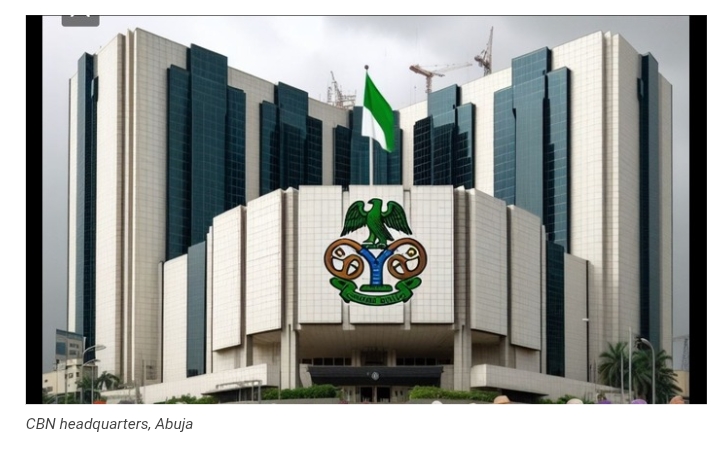
Central Bank of Nigeria (CBN) has proposed a sweeping overhaul of the regulatory framework for Financial Holding Companies (HoldCos), including measures to strengthen the operational independence of subsidiaries by prohibiting parent companies from participating in lending decisions and credit approval processes.

The move would also require the HoldCos to maintain a minimum 51 per cent ownership stake in their subsidiaries.
A bank holding company is a corporation that owns a controlling interest in one or more banks but does not itself offer banking services.
The proposed reforms, contained in the ‘Exposure Draft of the Revised Guidelines for Licencing and Regulation of Financial Holding Companies in Nigeria,’ posted on the apex bank’s website, were aimed at strengthening governance, enhancing accountability and ensuring clearer ownership structures within Nigeria’s increasingly diversified financial groups.
In prohibiting parent companies from participating in lending decisions, it stated that a HoldCo shall not: “Be involved in credit administration and approval processes of any of its subsidiaries.”
It added: “Loans by a banking subsidiary to its HoldCo would be regarded as a return of capital and deducted from the capital of the bank in computing the bank’s capital adequacy ratio.”
According to CBN, the review became necessary after years of implementing the existing framework introduced in 2014.
The draft signed by Dr. Rita Sike, director, Financial Policy and Regulation Department, stated: “Following several years of implementation, the CBN has identified areas within the extant Guidelines that require enhancement to strengthen the operational effectiveness and regulatory oversight of Financial Holding Companies.
“Accordingly, the Guidelines has been reviewed to address observed gaps and align with evolving regulatory and market developments.”
One of the most significant changes proposed by the regulator is the introduction of a mandatory majority ownership requirement for all subsidiaries under financial holding companies.
Highlighting the key amendments, the apex bank stated that the revised framework would introduce, “Ownership and Control Requirements: Requiring FHCs to hold a minimum of 51 per cent equity stake in each subsidiary and to be registered as a person with significant control by the appropriate corporate registration authority.”
The proposed requirement is expected to strengthen the ability of HoldCos to exercise effective oversight over subsidiaries while eliminating ambiguities around control and accountability within financial groups.
The CBN also moved to draw a clear line between the responsibilities of parent companies and those of subsidiaries by prohibiting HoldCos from interfering in operational and business decisions.
According to the draft guidelines, a HoldCo shall not “Arrogate to itself any of the powers or functions of the board or management of any of its subsidiaries or associates.”
The regulator further stated that: “Without prejudice to Section 18 of BOFIA 2020, the practice whereby members of the Board or Management of a subsidiary attend meetings of the Board of the HoldCo and vice versa is prohibited.”
In a particularly strong provision targeted at preserving the independence of subsidiary institutions, the apex bank stated that a HoldCo shall not: “Interfere in the day-to-day activities of the subsidiaries.”
The draft further provides that parent companies must not compel subsidiaries to take instructions from them in the conduct of business.
According to the CBN, a HoldCo shall not: “Require its subsidiaries (including any employee, staff, manager, officer or director thereof) to take directives or act on the instructions of the HoldCo in its decision-making process, or in relation to the conduct of its business in any way whatsoever.”
Beyond governance reforms, the proposed framework also introduces stricter capital requirements for financial holding companies.
The CBN stated: “A HoldCo shall have and maintain a minimum regulatory capital which shall exceed the sum of the minimum regulatory capital of its subsidiaries by at least 20 per cent.”
It added that only paid-in capital would be recognised when assessing compliance with the requirement.
The draft further clarified: “It is the capital of the HoldCo that is applied to the subsidiaries. Consequently, excess capital in one subsidiary shall not be used to make up a shortfall in another subsidiary.”
The revised framework equally tightens oversight of shared services arrangements among members of financial groups.
According to the apex bank, “The HoldCo shall not engage in any transaction or maintain any business relationship with any of its subsidiaries, except such transaction is conducted at arm’s length.”
The guidelines further state that: “Shared services shall be provided at arm’s length. Transactions in respect of such services shall require the consent of the boards of directors of the FHC and the relevant subsidiary.”
To ensure accountability, the CBN directed that: “A value for money audit in respect of shared services shall be conducted at least once every two years by an approved auditor and the report submitted to the Director, Banking Supervision Department, CBN not later than March 31 of the year following the year the audit relates.”
The regulator also tightened rules governing intra-group lending and insider-related transactions, declaring that: “There shall be no insider-related borrowings within a HoldCo.”

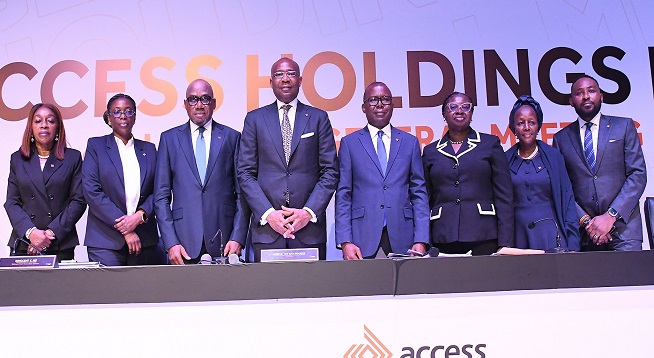
Access Holdings Plc has held its 4th Annual General Meeting (AGM), reaffirming its strategic transition towards long-term value creation, balance sheet resilience, and disciplined growth, even as it navigates a dynamic and evolving operating environment.

Speaking at the AGM, the Chairman, Aigboje Aig-Imoukhuede, CFR, emphasised that the defining test of a financial institution is not merely its capacity for growth, but its ability to grow profitably, sustainably, and with discipline over time.
He noted that Access Holdings’ performance in 2025 reflects a deliberate approach to strengthening the institution’s long-term fundamentals while maintaining strong financial performance.
The Group delivered Profit Before Tax of ₦1.007 trillion, underscoring the strength of its diversified platform and expanding earnings base across key markets. Total assets increased to ₦51.56 trillion, while customer deposits grew strongly, reflecting sustained franchise momentum and deepening customer trust.
The Chairman, however, stressed that these results must be viewed within the context of the Group’s prudent risk management actions during the year. Access Holdings accelerated provisions on legacy and regulatory forbearance credit exposures, resulting in elevated impairment charges.
He explained that the Group consciously prioritised balance sheet strength and long-term resilience over short-term earnings optimisation.
“Periods of economic uncertainty often reveal more about an institution than periods of uninterrupted growth. Our focus remains on building a business that is not only growing, but improving in the quality, resilience, and sustainability of its earnings,” he stated.
The AGM highlighted the Group’s continued evolution beyond traditional banking into a diversified financial services ecosystem, with growing contributions from investment management, insurance, pensions, consumer finance, and payments.
While banking remains the Group’s core earnings engine, emerging growth platforms, including Access ARM Pensions, Access Insurance Brokers, Oxygen X Finance, and Hydrogen Payments, are expanding its footprint across digital finance, consumer lending, retirement services, and payments, thereby strengthening the Group’s long-term earnings mix and scalability.
Looking ahead, the Chairman reiterated the strategic imperative underpinning the Group’s next phase of growth:
“Our strategy, From Scale to Value, reflects the natural evolution of our journey. Scale created opportunity; value creation is how we fully realise it.”
He noted that while the Group continues to generate strong returns, ensuring that earnings per share consistently exceed the cost of capital remains central to unlocking sustainable shareholder value. He also acknowledged the significant unrealised value embedded within the Group’s international subsidiaries and reiterated management’s focus on improving market recognition of that intrinsic value over time.
The Board also addressed shareholders’ concerns regarding dividend payments, clarifying that the temporary suspension of dividend distributions was a consequence of regulatory compliance requirements rather than any deterioration in the Group’s financial performance.
Aig-Imoukhuede reaffirmed that the Group’s earnings capacity remains strong and that the Board’s position reflects adherence to supervisory expectations and prudent capital management principles.
He assured shareholders of the Board’s commitment to resuming dividend payments as soon as the relevant regulatory conditions are satisfied.
“Our approach is clear: capital retained today must translate into greater value tomorrow and sustainable returns for our shareholders.”
Access Holdings further highlighted progress in strengthening governance and leadership continuity. During the year, Innocent C. Ike was appointed Group Managing Director/Chief Executive Officer, while the Board was reinforced through the appointment of Ibironke Adeyemi as an Independent Non-Executive Director.
Shareholders also expressed appreciation for the outstanding contributions of Bolaji Agbede, Executive Director, Business Development, who successfully led the management team as Acting Group Chief Executive Officer prior to the appointment of Mr. Ike.
The Chairman noted that the leadership transition was executed seamlessly, ensuring continuity of strategy, operational stability, and stakeholder confidence.
Despite continuing macroeconomic uncertainties across its operating markets, Access Holdings expressed confidence in its strategic positioning, underpinned by disciplined execution, a diversified business model, a strengthened capital base, and a clear focus on sustainable value creation.
Concluding his remarks, Aig-Imoukhuede reaffirmed the Group’s long-term commitment to shareholders: “Our responsibility is to justify the confidence of our shareholders by building an institution that endures, one defined by clarity of purpose, discipline of execution, and sustainable value creation over time.”

AI-Powered Cyber Threats Put Nigerian Banks on Alert

Guinea-Bissau Taps United Nigeria Airlines to Establish AIR BISSAU, National Carrier

IMF Urges FG to Introduce Fuel, Telecom Taxes

CBN to Expand eNaira for Salaries, Pensions and Welfare Payments

CSOs Raise Alarm over Nigeria’s Data Protection Crisis

CBN Extends PoS Geo-Fencing Enforcement Deadline to August 2026

NCC Drafts New Rules for Virtual Mobile Operators

TD Africa, HPE Drive Conversations on the Future of Intelligent Networking

Anthropic Raises $65 Bn to Expand AI Research, Innovation

Easybuy Partners WAWUAfrica to Upskill 10 Million Youths and Women, Boosting Nigeria’s Economic and Financial Inclusion




 News3 days ago
UK, Nigeria Launch £15m Growth Programme to Accelerate Economic Transformation

 General News3 days ago
Haleon Introduces New Corporate Identity in Nigeria

 General News3 days ago
Elon Musk Makes History as the World’s First Trillionaire

 Telecom3 days ago
NITDA Unveils Ambitious Strategy to Turn Southwest into Nigeria’s Next Innovation Powerhouse

 General News15 hours ago
₦5m up for Grabs as 10 Startups Clash at the Gathering on 100 Pitchathon Aba
 E-Business15 hours ago
CSOs Raise Alarm over Nigeria’s Data Protection Crisis
 E-Financial15 hours ago
CBN to Expand eNaira for Salaries, Pensions and Welfare Payments

 Telecom15 hours ago
NITDA Reveals Why AI Could Be Nigeria’s Biggest Wealth Creator, Not Oil