

Broadcasting
Is Nigeria Economically Broke? Challenges and Opportunities in Africa’s Largest Economy

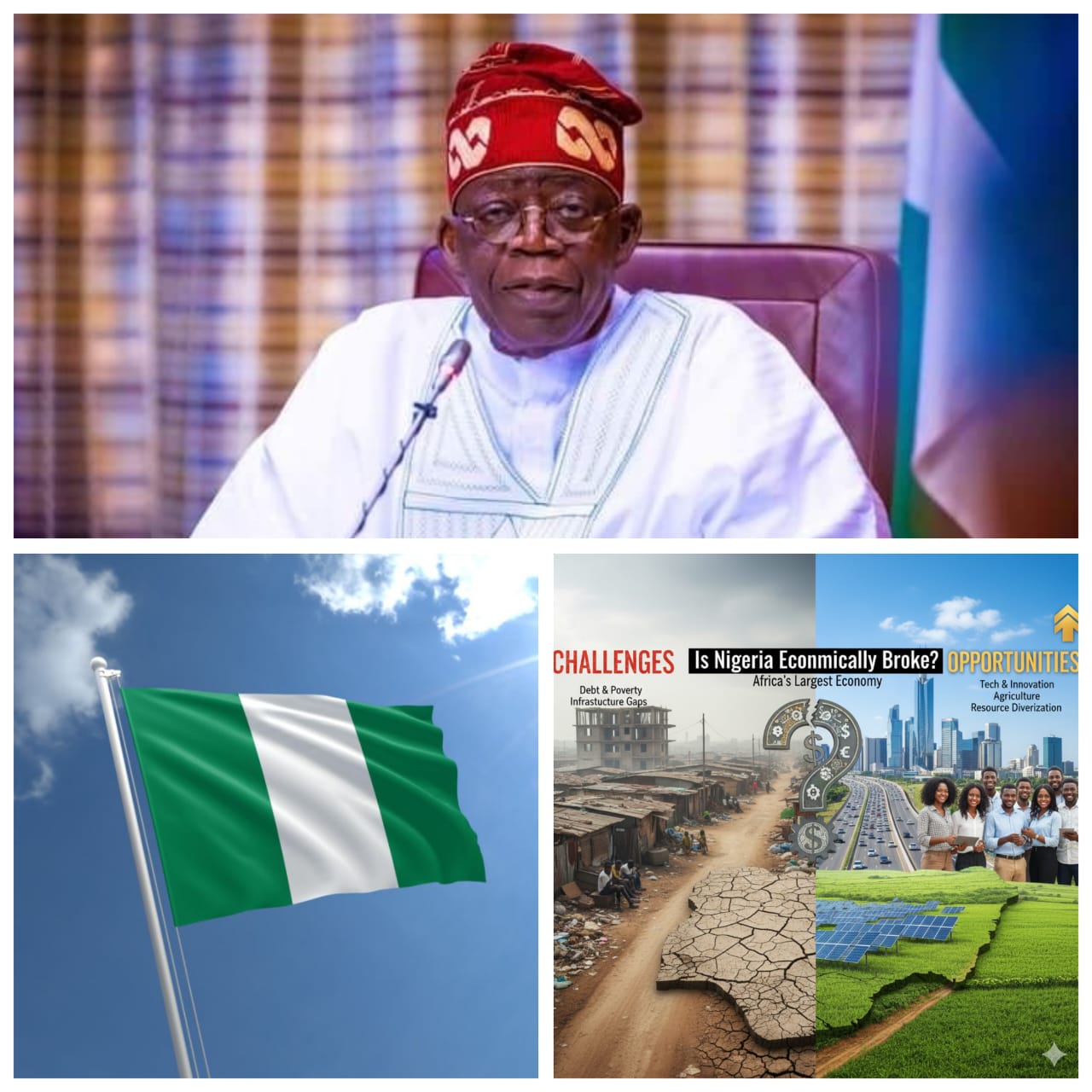
Is Nigeria, Africa’s largest economy, economically broke? It is a question no patriotic citizen wants to confront, yet one that confronts every Nigerian daily at the fuel pump, the market stall, the school gate, the hospital reception, and increasingly, in the national accounts. The country’s fiscal reality is no longer a debate in economic circles alone; it is a lived experience for millions and a gathering storm for future generations.

To understand the gravity of the nation’s situation, one must look beyond political speeches and interrogate Nigeria’s borrowing patterns, revenue profile/debt numbers, public spending, and the economic behavior of both federal and state governments under President Bola Ahmed Tinubu’s. administration. What emerges is a troubling picture as taxation is squeezing small businesses, borrowing is mortgaging the nation’s tomorrow, and shockingly, the trillions shared among federal, state, and local governments every month translate into little visible development. Nigeria’s books show figures, but her streets show a different reality.
Since President Bola Ahmed Tinubu assumed office in June 2023, Nigeria’s public debt has spiraled from N33.3 trillion to N152.4 trillion by mid-2025 which represents a staggering 348.6 percent increase in just two years. Economies do not collapse overnight; they weaken gradually, sending warning signs that only become obvious in hindsight. Nigeria is flashing all the red signals today. Between July and October 2025 alone, the government secured over $24.79 billion, €4 billion, ¥15 billion, N757 billion, and another $500 million in sukuk bonds. These figures, in a functional economy, should translate into expanded electricity capacity, world-class healthcare systems, vibrant industries, better roads, thriving SMEs, and export-oriented value chains. Instead, much of Nigeria’s real sector remains stagnant as energy is unstable, industrial output is weak, and infrastructure remains largely stuck in the realm of political promises.
Borrowing, in itself, is not the crime. Nations borrow to grow. Borrowing becomes a problem when the funds are not directed toward productive, self-liquidating projects capable of paying back the debt through increased economic activity. Nigeria borrows aggressively but produces too little. The loans are not translating into productivity or growth, which is why the debt-servicing burden continues to rise. Today, more than 90 percent of government revenue is spent on servicing old debts. In some quarters, debt servicing now consumes 25 percent of Nigeria’s entire annual revenue. This means that governance has been reduced to fiscal survival, with vital sectors such as education, healthcare, and industrialization competing for the crumbs left after creditors take their share.
Professor Uche Uwaleke of Nasarawa State University captured it aptly: “Nigeria’s debt service ratio is inimical to economic development… The opportunity cost for the country is high.” The tragedy is clear as the country has substituted borrowing for revenue and debt servicing for development. At the 2025 IMF and World Bank Meetings, global leaders lamented Africa’s growing debt, which has now exceeded $1.3 trillion. Sub-Saharan African governments spent over $89 billion servicing debts in 2025 alone. Yet Nigeria’s case stands out because of its size, population, weak industrial base, and persistent revenue leakages. Nigeria continues to borrow through Eurobonds, multilateral loans, bilateral facilities, and sukuk instruments, even without a corresponding rise in productivity. This raises a painful but necessary question: if these loans are development financing, where is the development?
Recently, the House of Representatives approved President Tinubu’s request to borrow $2.35 billion to finance part of the 2025 budget deficit. This is not borrowing to invest, it is borrowing to plug holes, pay salaries, and service existing debts. This is fiscal survivalism, not economic transformation. Countries that borrow to build infrastructure grow out of debt. Countries that borrow to fund recurrent expenditure sink deeper into it. Nigeria is drifting toward the latter.
The African Democratic Congress (ADC) bluntly accused the president of being “addicted to debts,” noting that if all requested loans for 2025 are approved, Nigeria’s debt stock could reach N193 trillion. The Debt Management Office confirmed the possibility. In the ADC’s words: “You cannot claim your house is in order while taking new loans to stop the roof from collapsing.” The loan in question was the N1.15 trillion request by President Tinubu to fund the 2025 budget deficit, which the Senate and House of Representatives gave their approval during last Wednesday’s plenary.
Despite government assurances that inflation is easing by recording 18.02 percent headline inflation and 16.87 percent food inflation, Nigerians feel no relief. Prices remain high, purchasing power continues to collapse, and businesses are shutting down. There is no statistical comfort in an empty dinner plate.
While federal borrowing continues to dominate conversations, an equally critical yet often ignored dimension lies at the state level. Since the fuel subsidy removal in June 2023, state governments have become quiet but major beneficiaries of the enlarged FAAC allocations as a feeding bottle.
NEITI and OAGF/NBS records show that between June 2023 and June 2025, FAAC distributed N25.65 trillion yet few Nigerians can point to commensurate development in their states. Roads remain terrible. State industries are dead. Capital projects are abandoned. Health and education sectors are underfunded. Internally generated revenue remains weak.
Many states have weaponized FAAC allocations into a system of dependence. They line up monthly for their share but fail to harness the natural resources, agricultural potential, tourism corridors, or industrial hubs available within their territories.
Nigeria’s fiscal health is not a function of what federal government collects alone, it is a function of what the states produce. Development is a chain; a weak link breaks the entire system. Many states have become consumption centers instead of production hubs, contributing significantly to the national productivity crisis. Until FAAC allocations are tied to measurable development outcomes, Nigeria will continue to share poverty, not prosperity.
All these realities force Nigerians to ask again if Nigeria is economically broke?
A country is economically broke:
· when it borrows to survive rather than to grow;
· when it spends the bulk of its income servicing old debts;
· when its states depend on allocations instead of productivity;
· when taxation cripples rather than empowers businesses; and
· when development is measured by political speeches, not real outcomes.
By these metrics, Nigeria is edging dangerously close to fiscal insolvency, living on borrowed money and borrowed time.
Yet despite this troubling landscape, Nigeria’s economic prospects are not irredeemable. The country possesses immense opportunities that, if harnessed, could transform its economic future to becoming one of the most vibrant in the world.
1. Diversification: Agriculture, Technology, and Services –
Nigeria’s over-reliance on oil remains its most dangerous economic vulnerability. Oil accounts for more than 90 percent of export earnings and over half of government revenue. A single fluctuation in global oil prices can destabilize the entire economy. Diversification is not optional; it is a national emergency.
Agriculture, however, offers a powerful alternative. With vast arable land, abundant labor, and high domestic demand, agriculture can drive food security, export expansion, and industrial value chains.
Technology stands as another frontier of opportunity. Nigeria’s youthful population, fast-rising digital economy, and growing tech hubs offer pathways for innovation, employment, and global competitiveness.
The services sector which consists of telecommunications, finance, logistics, entertainment, and tourism also holds massive potential to absorb millions of jobs and stimulate economic growth and reduce reliance on oil revenue.
2. Job Creation and Youth Productivity:
Nigeria’s unemployment and underemployment rates remain dangerously high, particularly among young people. A productive youth population is an economic asset; an idle youth population is a socio-economic risk. Entrepreneurship support, industrial hubs, vocational training, and SME financing can unlock millions of new jobs.
3. Infrastructure Development:
However, none of these sectors can thrive without addressing Nigeria’s infrastructural deficit. Poor power supply, crumbling roads, inefficient transport systems, and inconsistent regulatory policies continue to choke businesses. Infrastructure is the backbone of any modern economy; without it, productivity remains low regardless of potential.
4. Governance, Transparency, and Anti-Corruption:
Governance and transparency play an equally critical role. Nigeria cannot build a productive economy on the foundation of corruption, mismanagement, and opaque financial practices. Strengthening institutions, enforcing accountability, digitizing public services, and ensuring full transparency in FAAC disbursements, budget execution, and loan utilization are essential steps toward restoring public trust and investor confidence. Transparency must become the norm not the exception.
The path to a resilient Nigerian economy requires a national reset in fiscal discipline. The following steps are critical:
– Borrowing must be tied strictly to revenue-generating, self-liquidating projects.
– Recurrent expenditure borrowing must stop.
– Debt ceilings should be legally enforced.
– States must be compelled to boost local productivity and mobilize internal revenue.
– FAAC allocations should be linked to measurable development benchmarks.
– Public finance transparency must be non-negotiable
– Economic diversification must be pursued with urgency, not rhetoric.
Currently, Nigeria stands at an intercession. One path leads to deeper debt, economic stagnation, and a future where the next generation inherits nothing but liabilities. The other path leads to reform, productivity, innovation, and the emergence of a strong, resilient economy capable of withstanding global uncertainties.
So, is Nigeria economically broke? The uncomfortable truth is that Nigeria is not yet bankrupt but it is dangerously close. A nation cannot continue borrowing to survive, consuming more than it produces, or neglecting the engines of real growth. The time for action is now. Nigeria’s challenges are vast, but so are her opportunities. With discipline, transparency, and visionary leadership, Africa’s largest economy can still reclaim its promise and chart a sustainable path toward shared prosperity.
Blaise, a journalist and PR professional writes from Lagos, can be reached via: [email protected]


Nigerian Education Loan Fund (NELFUND) says it is investigating about 34 tertiary institutions over allegations that they failed to refund students whose tuition fees were paid twice under the Federal Government’s student loan scheme.

The Managing Director of NELFUND, Mr Akintunde Sawyerr, disclosed this during an interview on Arise Television.
Sawyerr said the agency had deployed a five-member investigative team, including operatives of the Economic and Financial Crimes Commission (EFCC) and internal auditors, to examine the allegations.
According to him, the investigation was prompted by numerous complaints received from affected students.
“As of right now, there are 34 institutions that we are looking at closely with respect to this issue,” he said.
Sawyerr explained that the double payment issue arose because President Bola Tinubu directed that the student loan scheme commence in the middle of an academic session instead of at the beginning.
He said the decision compelled many students to pay their tuition fees to meet registration deadlines while awaiting approval of their loan applications.
“What happened is that a lot of schools got double payment; some from the students and some from us,” he said.
“The refund process is entirely out of our hands. It is the recipient of the double payments that is obliged to make refunds to the students.”
The NELFUND boss noted that many students had borrowed money from family members, friends and other sources to pay their tuition with the expectation of receiving refunds once the loans were disbursed.
He said while some institutions had promptly refunded affected students, others had failed to do so.
“Some have been very good at this. Others haven’t been so good at it,” Sawyerr said.
“I reserve judgement on the intentionality around it because, for some of them, they just didn’t have the process to make refunds.”
Sawyerr disclosed that NELFUND was exploring a tokenised payment system that would enable students to authorise tuition payments directly to their institutions, thereby reducing the likelihood of duplicate payments.
He said the agency deliberately chose not to disburse tuition loans directly to students to minimise the risk of fund diversion.
“Paying the funds to the students could really lead to the temptation for them to divert and do other things,” he said.
The managing director, however, acknowledged that NELFUND lacked the statutory powers to compel institutions to refund students or prosecute officials found culpable.
He added that many frustrated students had submitted complaints not only to NELFUND but also to anti-corruption agencies, including the EFCC and the Independent Corrupt Practices and Other Related Offences Commission (ICPC).
Sawyerr also expressed concern over increases in tuition fees by some institutions following the introduction of the student loan scheme.
He said NELFUND had declined to pay institutions that increased their tuition fees beyond acceptable levels.
“Some schools, because they get paid easily, started to put up their fees. We refused, point blank, to pay institutions who had hiked their fees beyond a certain level,” he said.
He reaffirmed the agency’s commitment to investigating every reported irregularity and strengthening the implementation of the student loan programme through continuous monitoring and internal reviews.
Broadcasting
Obi, NDC Presidential Candidate Faces N50Bn Defamation Claim over Alleged Podcast Remark

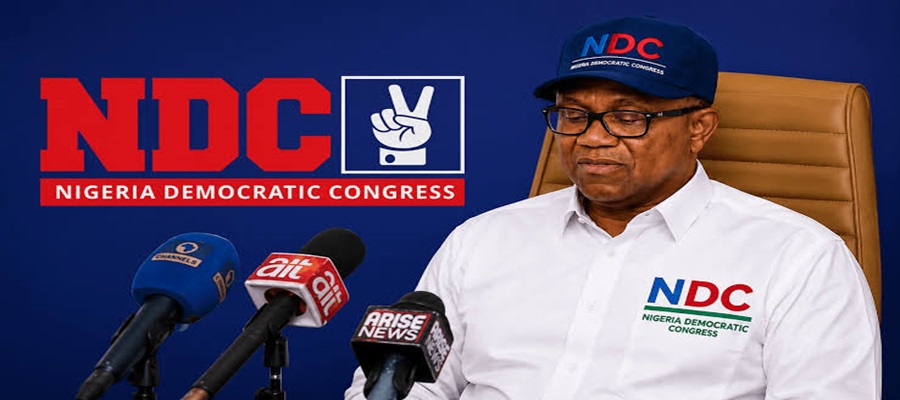
Abayomi Arabambi, national vice chairman (South-West) of the Labour Party, has demanded a public apology, a retraction, and N50 billion in damages from Peter Obi, presidential candidate of the Nigeria Democratic Congress (NDC), over an alleged defamatory statement made during a podcast interview.

The demand was contained in a letter issued by the law firm Neplus Ultra Attorneys and signed by Anderson U. Asemota, Peter O. Asimegbe, and Stanley C. Eziefulle on behalf of Arabambi.
According to the letter, the legal dispute arose from comments allegedly made by Obi during the interview, where he reportedly stated that Arabambi “does not have an address.”
Arabambi’s legal team described the statement as false, malicious, and defamatory, arguing that it portrayed their client as a faceless individual without legitimacy, credibility, or standing in public life.
The lawyers further claimed that the interview was widely circulated on television stations and digital platforms, exposing Arabambi to public ridicule and damaging his reputation.
“Our client has had a known residential and business address, maintains professional and political affiliations within Nigeria, and has never been a person whose whereabouts or identity were unknown,” the letter stated.
The legal team maintained that the alleged publication caused embarrassment and harmed Arabambi’s public image and political standing.
As part of their demands, the lawyers called for an unreserved public apology to be aired on national television, published on Obi’s verified social media platforms, and carried as full-page apologies in national newspapers.
They also demanded the payment of N50 billion as compensation for the alleged injury to Arabambi’s reputation, dignity, political standing, and public image.
Broadcasting
Why We’re Partnering With NIHOTOUR To Bring Nigerians In South Africa Home – Steve Babaeko

When Nigerians began arriving back home on emergency flights following an ultimatum from anti-migrant groups in South Africa, Steve Babaeko, alongside The Nigerian Institute of Hospitality and Tourism (NIHOTOUR), saw an opportunity to step up for his fellow citizens.

Steve Babaeko
The CEO of X3M Ideas explains that he saw a deep obligation, one that had nothing to do with advertising and everything to do with hospitality. For Babaeko, it was a reminder that an agency owes a duty of care to the community it exists within.
That conviction shaped the creative agency’s partnership with the Nigerian Institute of Hospitality and Tourism (NIHOTOUR) for the newly launched ‘Welcome Home’ pilot programme at Murtala Muhammed International Airport (MMIA) in Lagos. Rather than simply crafting a messaging campaign around the crisis, X3M Ideas helped design a tangible, physical system.
“This wasn’t built as a campaign about a crisis,” Babaeko said. “It was a hospitality agency deciding what it owes its own citizens the moment they land.”
For Babaeko, what X3M has built is infrastructure, something returnees can physically walk through, use, and benefit from the instant they clear the arrival gate.
With the MMIA pilot now officially running, NIHOTOUR directs returnees to immediate support services and issues them a Returnee Card. This card grants individuals a free first night at partner hotels, immediate transport assistance from the airport, and fast-tracked business registration support.
Furthermore, the initiative features a dedicated Restart Desk to assist returnee entrepreneurs and tradespeople with job placement referrals and business registration. This operates alongside a public Homecoming counter that tracks the cumulative number of returnees welcomed, businesses restarted, and jobs facilitated.

DSS Spyware Acquisition Enables Illegal Wiretaps, Detentions – The ICIR

Microsoft to Lay Off 4,800 Workers

Access Bank, Fifth Chukker and UNICEF Renew Commitment to Expanding Educational Opportunities for Nigeria’s Most Vulnerable Children

IHS Nigeria, FCT-HSES Concludes Clean Cooking Energy Campaign “Project Breathe Clean Air” in Abuja

Kaspersky Transforms Threat Intelligence Reporting into an Interactive Content Hub

Mobile Internet Gender Gap Widest in Africa – GSMA

Nigeria Launches FreeTV Nationwide

NASENI Moves to Digitize CCB’s 5m Assets Declaration and Operations

CANAL+ Partners Samsung to Pre-Load DStv Stream on New Samsung TVs In Nigeria, Other African Countries

UK, Nigeria Launch £15m Growth Programme to Accelerate Economic Transformation




 E-Financial1 day ago
Tokenization, Blockchain Technology will Transform Financial Institutions – IMF

 General News1 day ago
NIS Deploys Advanced Surveillance Masts, other Critical Infrastructure to Boost Border Security

 Broadcasting1 day ago
Obi, NDC Presidential Candidate Faces N50Bn Defamation Claim over Alleged Podcast Remark

 E-Business1 day ago
Weebly Websites to Shut Down for Nigeria, 66 Other Countries from September

 Telecom1 day ago
No Plans for Fresh Tariff Hike – MTN

 E-Financial1 day ago
FG Denies N8 Trillion ‘Shadow Budget’, Says IMF Quoted out of Context

 General News1 day ago
PufferPay CEO to Keynote Business Journal Fintech & Financial Inclusion Roundtable 2026

 Telecom1 day ago
Airtel Africa Foundation Equips 200 Young Women with Digital Skills to Drive Nigeria’s Tech Economy