

Broadcasting
A dangerous Concentration of Power: Is CBN’s Fixed Income Securities Takeover a Ticking Bomb for Nigeria’s Economy?


By Blaise Udunze
The Central Bank of Nigeria’s decision to take full control of government securities issuance has been described by some as a bold move toward transparency and market efficiency. Yet, beneath the surface of this reform lies a web of structural dangers that could tighten credit even further, push interest rates higher, escalate exchange-rate instability, trigger regulatory turf wars, and strangulate the private sector, especially small and medium enterprises (SMEs) that already struggle to survive in Nigeria’s high-cost economy.

The policy shift became more pronounced with the rollout of a new Treasury Bills (T-Bills) auction regime, mandating that all bids be submitted through the CBN’s S4 digital interface. This transition officially bypasses the longstanding Primary Dealer Market Maker (PDMM) framework and represents the clearest sign yet that the apex bank is asserting complete control over how government securities are issued, priced, and distributed. In fact, the first major test of this system will occur with the federal government’s planned N700 billion T-Bills issuance scheduled for November 20, 2025 which is an unprecedented rollout that effectively transfers auction power from market intermediaries directly to the CBN.
Analysts say this shift is not merely operational; it is structural. The S4 interface, which has existed since 2014 but never fully deployed as the primary submission platform, now becomes the exclusive gateway for government securities issuance. All bids, whether retail or institutional must be lodged through S4 between 8:00 a.m. and 11:00 a.m., with the CBN maintaining full discretion to adjust the offer amount or reject bids it considers inconsistent with market conditions. Settlement will occur within 24 hours.
According to market expert Tajudeen Olayinka, CEO of Wyoming Capital Partners, the policy “is consistent with the CBN’s signal that it would take charge of the primary segment of the fixed-income market where government securities are issued.” Another veteran dealer put it more bluntly: “With S4, no dealer can see what rate others are quoting. All bids now meet at the same window. This dismantles the old advantage PDMMs enjoyed.”

Although transparency is improved by removing dealers’ visibility over competing bids, concerns have intensified over the broader consequences of the CBN monopolizing the government securities market. The danger is that this reform which is unaccompanied by strong institutional coordination between the CBN, the DMO, and the Ministry of Finance could trigger deeper systemic imbalances.
One of the most pressing fears is the crowding-out effect. If the CBN aggressively issues more government securities as part of its liquidity-management operations, banks, already heavily invested in government debt, will divert even more of their portfolios toward these risk-free instruments rather than lending to the real economy.
Nigeria’s top five banks known as the FUGAZ group (First HoldCo, UBA, GTCO, Access Corp, and Zenith Bank) provide compelling evidence of this shift. Their financial statements show a combined N49.152 trillion investment in securities and Treasury Bills as of September 2025, a sharp rise from N42.204 trillion at the end of 2024. In just nine months, they added nearly N7 trillion to these holdings.
Interest income from these investments surged by 33 percent, hitting N4.8 trillion in the first nine months of 2025 compared to N3.6 trillion in the same period of 2024.
– Access Corporation led the pack with N15.25 trillion in securities holdings,
– followed by UBA with N13.59 trillion,
– Zenith at N9.05 trillion,
– First HoldCo with N6.35 trillion, and
– GTCO at N4.91 trillion.
These investments generated robust returns: Access earned N1.3 trillion; Zenith N1.14 trillion; UBA N1.03 trillion; FBN HoldCo N720 billion; and GTCO N570 billion.
For analysts, these numbers expose a structural vulnerability as Nigerian banks are quickly transforming into large-scale government lenders rather than engines of private-sector credit. As Dr. Muktar Mohammed of Lagos Business School explains, “Banks have found refuge in government instruments because they are safe, liquid, and yield high returns in a volatile economy, but this behaviour constrains credit growth to the real sector.”
Lending data confirms this.
– Zenith Bank’s loan-to-deposit ratio slipped from 43 to 40 percent;
– Access Corporation maintained a flat 41.2 percent despite rising deposits;
– UBA’s ratio dropped to 28.2 percent;
– GTCO’s remained stagnant; and only
– First HoldCo showed notable improvement.
This trend is dangerous. Nigeria’s private sector, especially SMEs is already starved of credit. Lending rates hover between 28 percent and 35 percent, making capital unaffordable for most small businesses.
With the CBN taking full control of securities issuance, the likelihood is high that more liquidity will be absorbed through T-Bills and OMO bills, pushing interest rates further upward. The more attractive government securities become, the less incentive banks will have to lend to SMEs. This is how economies slide into cycles of low productivity, high unemployment, and weak domestic investment.
The implications do not end there. Excessive issuance of government securities could also destabilize the exchange rate. When interest rates remain artificially high to attract foreign portfolio investors into T-Bills, Nigeria becomes dependent on “hot money” which turns out to be short-term foreign inflows that exit the economy at the slightest shock. This pattern has historically triggered sharp naira depreciation, panic in the FX markets, and severe liquidity shortages in the banking sector. If the CBN uses this securities-controlled regime to sustain high yields, Nigeria risks attracting unstable capital inflows that will exit rapidly, putting pressure on the naira.
Beyond monetary and credit risks, there is a troubling regulatory dimension. The CBN’s move to migrate fixed-income trading and settlement from the FMDQ Securities Exchange, which is under SEC oversight to its own Real-Time Gross Settlement (RTGS) and S4 platforms has ignited a full-blown turf war between the CBN and the Securities and Exchange Commission.
Under the Investments and Securities Act (ISA) 2025, the SEC holds exclusive authority over trading venues. Critics warn that the CBN’s attempt to operate exchange-like infrastructure violates statutory boundaries and risks destabilizing the market.
Dr. Akin Olaniyan, CEO of Charterhouse Limited, described the move as “a potential recipe for dual regulation and confusion,” arguing that it may undermine investor confidence. Similarly, Dr. Walker Ogogo, pioneer Registrar of the Institute of Capital Market Registrars, noted that since the CBN already owns 16 percent of FMDQ, operating parallel infrastructure creates conflicts of interest that send negative signals to foreign investors.
MoneyCentral reports that the migration could trigger a 67 percent drop in FMDQ’s trading volume, weakening a system that has long supported Nigeria’s fixed-income ecosystem.
Veteran banker Victor Ogiemwonyi stated, “the CBN is not an exchange; it should not be involved in issuing, dealing, and settling securities. Conflating these roles creates unnecessary risk.” His concerns are grounded in the principle that market operators must be independent from regulators to prevent conflicts of interest. The CBN’s dual role as both regulator and operator blurs these lines and may set a dangerous precedent.
The real casualties of these structural conflicts will be SMEs and the broader private sector. These enterprises rely on bank credit to fund inventory, acquire machinery, expand operations, and withstand economic shocks. When banks prefer government securities over lending,
– SMEs face higher rates,
– stricter collateral requirements,
– fewer loan products, and shorter tenors.
– Many will be forced to downsize, lay off workers, or close altogether.
In an economy where SMEs account for over 90% of jobs, this contraction would be disastrous.
Another major overarching risk is that:
– The CBN’s consolidation of securities issuance power without corresponding checks from the DMO and Ministry of Finance creates an unbalanced financial architecture where monetary priorities overshadow fiscal realities and private-sector growth.
– Policies crafted in silos rarely produce macroeconomic stability. They produce distortions, uncertainty, and systemic fragility.
Nigeria stands at a critical junction. Securities issuance can be made transparent without centralizing all power in the CBN. Fixed-income markets can be cleaned up without dismantling the institutional balance that preserves confidence. What the country needs is coordination, not consolidation; collaboration, not domination.
If the CBN continues its takeover without robust guardrails, the result may be a financial system where banks stop lending, SMEs continue to collapse, interest rates remain high, the naira stays volatile, and regulatory conflicts scare away both local and foreign investors.
To avoid the dangerous risks ahead, Nigeria must:
1. Strengthen collaboration between CBN, DMO, and Ministry of Finance. Debt issuance must reflect both monetary and fiscal realities not just liquidity needs.
2. Prioritize long-term bonds over short-term T-Bills. This reduces rollover risk and provides stable funding at lower long-term cost.
3. Implement SME-focused credit interventions through private banks, not direct CBN lending. Monetary policy should not attempt to replace commercial banking.
4. Reduce government’s domestic borrowing needs. This requires fiscal reforms, spending discipline, and revenue expansion not more debt.
5. Protect private-sector credit allocation. Regulators should discourage excessive bank investment in government securities.
Without these safeguards, the economy risks tilting dangerously toward monetary domination and private-sector suffocation.
The gains of transparency cannot come at the cost of institutional imbalance. Nigeria’s economic recovery depends on a thriving private sector, not an expanding government debt market. The central bank must not become the single most powerful issuer, dealer, regulator, and judge in its own market. That path leads not to stability but to systemic risk, risk that Nigeria’s fragile economy can ill afford.
Meanwhile, it is important for CBN to provide clarity on the economic rationale behind this centralisation of power. The CBN must come forward to justify how this shift will tangibly benefit the economy, particularly in the areas most sensitive to credit availability, financial stability and stability for Nigeria’s broader economy.
Blaise, a journalist and PR professional writes from Lagos, can be reached via: [email protected]


Broadcasting
NBC Files Fresh Appeal against Judgment Barring it from Imposing Fines on Broadcast Stations

National Broadcasting Commission (NBC) has filed an application seeking the permission of the court of appeal to file a fresh appeal against the judgement of the federal high court in Abuja barring it from imposing fines on erring broadcast stations.

In the application filed at the court of appeal in Abuja by Dapo Akinosun, counsel to the NBC, the commission argued sanity in Nigeria’s broadcasting sector is under threat and that the public interest would be better served if the court grants the application.
On January 17, 2024, Rita Ofili-Ajumogobia, a judge at the federal high court in Abuja, restrained the NBC from imposing a N5 million fine on broadcast stations sanctioned in 2022 over allegations of “undermining Nigeria’s national security by broadcasting documentaries on banditry in Nigeria”.
The affected broadcast stations were Multichoice Nigeria Limited, owners of DSTV; TelCom Satellite Limited (TSTV); Trust-TV Network Limited; and NTA StarTimes Limited.
The suit was filed by Media Rights Agenda (MRA).
Dissatisfied with the ruling, the NBC appealed the judgement filed an appeal at the court of appeal in Abuja.
In June, the court of appeal dismissed the commission’s appeal, holding that it was “fundamentally defective” and incompetent.
Jane Inyang, lead judge of the panel, held that the parties before the lower court were identified as “Incorporated Trustees of Media Rights Agenda (as applicant) and National Broadcasting Commission (as respondent)” but in the notice of appeal the purported appellant was described as the “Nigerian Broadcasting Commission”,
The judge held that the discrepancy was significant and that the court lacked jurisdiction to entertain the commission’s appeal.
In the application, the NBC urged the court to grant it leave to raise and argue a fresh issue on appeal relating to the legal capacity of MRA to institute and maintain the original suit before the lower court.
The commission argued that the defect in the earlier notice of appeal, which resulted in the dismissal of its appeal, arose “solely from an inadvertent misdescription” of its name by its lawyer.
The NBC told the court that the subsisting judgement raises questions on the commission’s statutory powers to regulate broadcasting and enforce compliance with broadcasting standards in Nigeria.
The commission argued that the subsisting judgment is capable of creating uncertainty regarding its regulatory powers if it is allowed to stand.
The NBC also argued that without the pronouncement by the appellate court on the issues raised in the appeal, its regulatory framework would be weakened.
“A weakened regulatory framework may embolden non-compliance with established broadcasting standards, thereby increasing the dissemination of false, misleading and unverified information capable of causing unnecessary public anxiety, panic and social unrest,” the NBC said.
“Absence of effective regulatory oversight may further encourage irresponsible broadcasting practices and the misuse of broadcast and digital media platforms by persons who deliberately publish sensational, inaccurate or inflammatory content to intimidate, harass or unduly influence individuals, institutions and public discourse.”

David Adedeji Adeleke, known professionally as Davido, has shared his past suicidal thoughts as he dropped Oriadé, his sixth studio album yesterday.

Davido
Davido said he chose the date on purpose as it marks exactly 15 years since he began his professional music career.
Oriadé is a Yoruba word combining “Ori,” meaning destiny, and “Adé,” meaning crown.
It translates to “the crowned head.” The album has 13 tracks and features Black Sherif, Aya Nakamura, Leon Thomas, Mayorkun, and Llona.
It follows his 2025 project, 5ive, which reached number two on the Billboard World Albums chart.
Davido also announced an international tour to support the new record.
In the days leading up to the release, Davido gave interviews that revealed personal details about his past and his current life.
Speaking to Vibe Magazine on Thursday, he described a 2014 incident in Ghana that left him feeling suicidal.
He said he invited a woman back to his hotel room after a show, and she later posted a photo of him sleeping online.
He said the fallout overwhelmed him.
“My daddy was calling me. My sisters were calling me. If I saw the balcony that day, I would have jumped,” he said.
He said he was young at the time and did not fully understand the consequences of his actions.
He described the experience as a turning point that changed how he thinks about privacy and fame.
In the same interview, he explained why he often dresses down in public despite his wealth.
He recalled a trip to the South of France where he went out in shorts and slippers without his watch.
“I’ve been on jets, I’ve been flying, I’ve been in all these places since I was a baby. I’ve been seeing money since I was a baby. So all these things don’t really excite me,” he said.
He added that he sometimes prefers to drive a Toyota to the supermarket in Atlanta instead of one of his luxury cars.
In a separate livestream with Davrel, Davido spoke about how his life has changed since marrying his wife, Chioma, and becoming a father.
He said his home no longer holds the large crowds it once did.
“I can no longer have 100 people in my house like before,” he said.
He said he speaks to Chioma every day regardless of his schedule.
He also disclosed that he spends between $200,000 and $300,000 a month on himself, not including costs for his wife, children, jewelry and cars.
He said the amount is lower when he is in the United States, where he described his lifestyle as quieter.
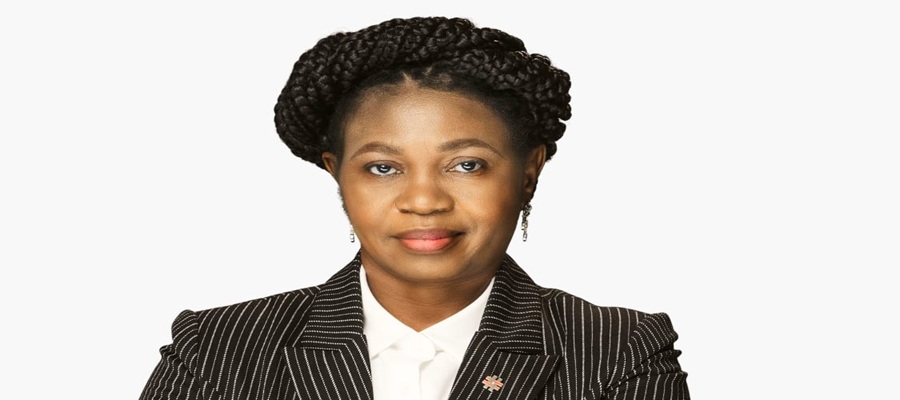
Africa Prudential Plc has reaffirmed its commitment to digital transformation, revenue diversification and sustainable growth after reporting a strong financial performance for the first half of 2026.

Dr Catherine Nwosu
The company made this known during its H1 2026 Investor Call, which brought together institutional investors, shareholders, investment analysts, regulators and other stakeholders to review its financial performance and strategic outlook.
Dr Catherine Nwosu, managing director and Chief Executive Officer of Africa Prudential, said the company’s performance reflected the resilience of its business model and the effectiveness of its long-term growth strategy despite prevailing macroeconomic challenges.
According to the company’s financial results, gross earnings rose by 27 per cent year-on-year to N4.28 billion, from N3.34 billion recorded in the corresponding period of 2025.
Profit before tax increased by 22 per cent to N2.41 billion, while profit after tax grew by 18 per cent to N1.59 billion.
The company also reported a 27 per cent rise in net operating income to N4.21 billion, while total assets increased by 13 per cent to N46.53 billion.
Shareholders’ funds equally rose by 13 per cent to N12.52 billion, reflecting continued financial strength.
Management attributed the performance to sustained growth in its core registrar business, increased corporate action activities in the Nigerian capital market, improved treasury earnings and rising adoption of its technology-driven solutions.
The company said it was steadily transforming from a traditional share registrar into a broader technology and business solutions provider serving Nigeria’s capital market ecosystem.
During the interactive session, investors sought clarification on the sustainability of earnings, particularly as interest rates are expected to moderate.
Responding, Nwosu said the company was deliberately expanding its recurring fee-based revenue streams to reduce dependence on treasury income.
“Interest rates influence our treasury income positively, but that is why we are deliberately diversifying our revenue streams.
“Our strategy is to grow recurring fee-based business lines such as our digital solutions, Know Your Customer (KYC) services, Annual General Meeting (AGM) technology, probate services and the SabiVest mobile app.
“Over time, this will reduce our reliance on interest income and create a more balanced and resilient earnings mix,” she said.
Nwosu noted that increasing capital market activities had created stronger demand for seamless digital investor experiences, improved operational efficiency and enhanced compliance solutions.
She said the company would continue investing in technology-enabled products capable of delivering long-term value to shareholders while strengthening its competitive position.
According to her, Africa Prudential has identified five strategic priorities for the second half of 2026.
The priorities include driving sustainable growth across its core registrar and emerging business lines, accelerating technology-led product innovation, strengthening brand leadership, investing in talent development and deepening corporate governance.
She said the investor engagement demonstrated the company’s commitment to transparency, accountability and regular engagement with shareholders and the investment community.
Africa Prudential reaffirmed its commitment to leveraging innovation, operational excellence and sound financial management to sustain growth and strengthen its leadership position in Nigeria’s capital market.

World Bank Debars United Aviation Services, Owner over Fraudulent Activities

NITDA Introduces Cloud Certification Boost Data Localisation Compliance

Enugu State Approves Land for ITF’s Digital Fabrication Centre

BOI Opens N250Bn Bond Offer to Fund Businesses

Guinness Rewards Consumers with ₦17 Million in First Week of ‘Open for More’ Promo Draw

From Scarcity to Scale: What Africa Can Learn from India’s Agricultural Transformation

EFCC Busts NIS Visa Overstay Racket, Uncovers N700m in an Account

Fact-Check: Elon Musk’s “Tesla Pi Phone” is Internet Rumor

NBC Tasks Broadcasting Stations over 2028 DSO Global Deadline

Police Busts Syndicate Who Allegedly Stole N3Bn from Financial Institution



 General News2 days ago
Guinness Rewards Consumers with ₦17 Million in First Week of ‘Open for More’ Promo Draw

 News2 days ago
Glovo Pioneers AI Quick-Commerce

 News3 days ago
Fleeing Southeast Asia Scam Syndicates Find New Homes in Nigeria, Kenya- Report

 Telecom3 days ago
MTN Paid 600Bn in Taxes in H1 2026 – Kadri, MTN CFO

 Telecom3 days ago
NCC Asks Telcos to Make Budgetary Provisions for Cybersecurity

 News3 days ago
DSS Arraigns Eze for Allegedly Hacking, Stealing N800m from SunTrust Bank
 News2 days ago
World Bank Debars United Aviation Services, Owner over Fraudulent Activities

 Telecom2 days ago
NCC, Enugu Sign Deal to Operate Digital Industrial Park, Learning Centre