

Broadcasting
CBN’s N75 Trillion Credit Milestone to Private Sector Falls Flat as Productivity Crisis Deepens

By Blaise Udunze
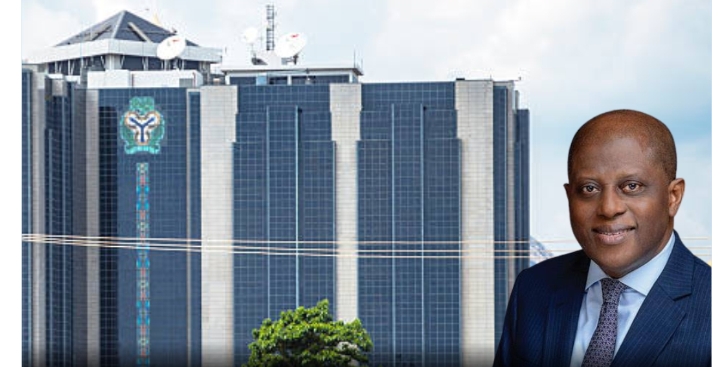
Nigeria’s financial system is flashing red, and not because of a scarcity of money. Ironically, the Central Bank of Nigeria (CBN) and the nation’s banking proudly tout a historic rise in private-sector credit, announcing figures hovering around N75 trillion throughout 2024-2025. On paper, this looks like a funding boom, a sign that businesses are borrowing, investing, expanding, and building. But on the ground, the country’s real sector tells a very different story.

Manufacturers that are the backbone of industrial output have withdrawn en masse from bank loans, their loan books collapsing by an alarming 20.3 percent within a single year. SMEs, which constitute over 90 percent of Nigeria’s businesses and nearly half of the national GDP, remain shut out of formal credit. Banks themselves are quietly battling rising non-performing loans (NPLs), with several institutions breaching the CBN’s 5 percent regulatory threshold. Meanwhile, the official “N75 trillion” credit figure hangs in the air like an illusion that appeared to be big, impressive, but dangerously misleading. This feature unpacks the contradiction. If credit is indeed booming, where did the money go? And why is the real economy shrinking away from bank financing at a time when it should be expanding?
The financial statements of Nigeria’s top manufacturers for the first nine months of 2025 show a coordinated withdrawal from bank credit. Their aggregate bank borrowings plunged from N2.526 trillion in 2024 to N2.014 trillion in 2025, a dramatic 20.3 percent drop. The details are striking:
– BUA Foods fell from N1.559 trillion to N1.105 trillion;
– Nestlé Nigeria from N653.7 billion to N521.01 billion;
– Nigerian Breweries from N204.17 billion to N162.17 billion.
– NASCON’s borrowings dropped 98percent, from N3.3 billion to N67 million.
– Others: Dangote Cement, Dangote Sugar, Guinness, and International Breweries took no new loans.
These are not marginal firms but some of the most capital-intensive, employment-generating entities in the country. Their exodus from bank borrowing is a referendum on Nigeria’s brutal credit environment, where the Monetary Policy Rate of 27-27.5 percent has pushed effective lending rates well above 30 percent, making loans unaffordable even for working capital.
The retreat has slashed their financing costs by 52.8 percent, from N1.4 trillion to N662 billion. This is not because interest rates fell; they didn’t. Businesses simply stopped borrowing.
Finance expert David Adonri describes it bluntly: “Borrowers shun bank credit… lending rates have not come down materially. Banks’ income may fall below expectations.”
But the bigger concern is not banks’ income, it is the economy’s ability to invest and grow.
This is the question that unsettles economists, industry players, and SMEs alike.
If manufacturers pull back, SMEs remain excluded, and retail borrowing is suppressed; who receives the N75 trillion? What did it finance?
The answer reveals that Nigeria’s credit allocation remains opaque; however, historical patterns and recent financial data point in three directions. Even more concerning are recent claims that the modest loan growth recorded in 2024-2025 is not commensurate with the explosive expansion of banks’ balance sheets.
This suggests that the system is growing with deposits rising, assets swelling, FX revaluation inflating balance sheets, but actual lending to the productive economy is barely moving.
The credit growth being celebrated is therefore not only concentrated but also superficial and disconnected from balance sheet realities.
1. Lending concentration in big corporate and government entities
For decades, banks have preferred lending to large corporations and government-linked entities like:
– Oil & Gas
– Conglomerates and trading groups
– Government contractors
– Financial market operators
– Large borrowers with FX exposure
Even CBN’s earlier research shows that only 5-6 percent of total bank credit historically reaches SMEs.
Given the lack of detailed public data, it is reasonable to infer that the bulk of the N75 trillion still flows to:
– Large corporations
– Treasury operations
– Prime customers
– Big-ticket borrowers with government-linked contracts.
Experts warn that this reflects a financial system drifting away from the real economy, a trend Muda Yusuf describes as “worrisome and dangerous.”
2. Banks are also parking funds in government securities.
Commercial banks prioritized lending to the government by investing in T-bills, FGN Bonds, and OMO instruments, where returns are high and risk-free. Over the past two years, Nigerian banks have channeled N20.4 trillion into treasury bills, bonds, and other fixed-income instruments, reaping risk-free returns rather than funding productive ventures. This “securities trap” is profitable for banks but disastrous for the economy.
A government-backed 19–22 percent yield is more attractive than lending to an SME at 27-35 percent with a high probability of default.
3. FX revaluation effects and rollovers
Portions of the N75 trillion may not be new lending in the real sense but the result of regulatory reclassifications, rollovers, FX revaluation on foreign-currency loans, and large concentrated credit exposures. This creates the illusion of expanded credit without tangible productivity gains.
However, SMEs, which contribute 46.3 percent of GDP and employ millions, remain locked out of the credit system due to punitive interest rates, high collateral demands, lack of financial documentation, bureaucratic processes, and weak credit-scoring systems. Despite accounting for 97 percent of businesses and nearly 90 percent of informal jobs, SMEs receive only 5 percent of commercial bank lending. This is a structural failure. SMEs remain almost entirely disconnected from Nigeria’s celebrated “N75 trillion credit boom.”
Manufacturers’ 2025 results show turnover up 37.9 percent and profit swinging from a N116 billion loss to N2.5 trillion gain. But experts like Muda Yusuf and Clifford Egbomeade warn that these improvements are driven primarily by:
– Inflationary pricing adjustments, not increased production.
– Gains are also supported by exchange-rate stability.
– Reduced debt burden, not operational efficiency.
Nigeria risks mistaking nominal growth for real productivity.
Meanwhile, rising non-performing loans fueled by high interest rates, inflation, weakened consumer demand, and FX volatility have pushed some banks above the CBN’s 5 percent NPL ceiling, further restricting their willingness to lend, especially to SMEs.
Even the private-sector credit trend contradicts the headline figure. Throughout 2025, credit levels have shown repeated declines:
– February’s N77.3 trillion dropped to N76.3 trillion,
– N75.9 trillion in March,
– Followed by a temporary rebound to N78.1 trillion in April,
– May-August declined to N75.8 trillion.
These repeated drops reflect weakened appetite for borrowing, tighter bank lending, liquidity pressures, and borrower distress. A true credit boom does not move in this direction.
The Human Cost of an Economy without Productivity
The consequences of weak productivity are not abstract. They show up in hunger, jobs, poverty, life expectancy, and living standards. Below is where Nigeria’s crisis becomes undeniable.
– It is Not Just Rising, it is deepening
– According to the World Bank, 139 million Nigerians now live in poverty. That is six in ten Nigerians. No country with this scale of poverty can claim real economic progress.
SBM Intelligence, in a scathing review of the government’s economic reforms, noted that this administration of government has failed to lift Nigerians’ living standards, despite the loud claims of macroeconomic stability.
Life Expectancy in Nigeria Is Now the Lowest in the World
The UN’s 2025 Global Health Report ranked Nigeria’s life expectancy at 54.9 years, the worst globally, far below the world average of 73.7 years. This decline is attributed to:
– Insecurity
– Poor healthcare access
– Rising poverty
– Nutritional deficiencies
– Weak social welfare
A productive economy increases life expectancy; a collapsing one shortens it.
Hunger Is the Real Inflation Index
While official inflation reports show “stabilisation,” the lived reality says otherwise.
In the kitchens of Lagos, in the cries of hungry children, and in the struggles of market women, a harsher truth is spoken daily: Empty pots do not lie, and hunger, not percentages, is Nigeria’s real inflation index.
Debt Explosion Is Eroding Nigeria’s Future
Since President Bola Ahmed Tinubu took office in 2023:
– Nigeria’s public debt surged from N33.3 trillion-N152.4 trillion. A staggering 348.6 percent increase in less than two years
Economies don’t collapse overnight; they deteriorate gradually. Nigeria is flashing every warning signal.
Unemployment Appears “Stable,” But Youth Joblessness Is Rising
The International Labour Organisation (ILO) reports that while Nigeria’s headline unemployment rate has fallen to 4.3 percent, youth unemployment has risen to 6.5 percent. A youthful population with no jobs is a time bomb for the economy.
Financial System Delinking from the Real Economy
Nigeria’s financial system appears to be delinking from the real economy. High interest rates make loans too expensive, manufacturers cut borrowing, SMEs are excluded, banks channel funds into T-bills, NPLs rise, banks tighten further, and private-sector growth slows. This feedback loop is dangerous.
Monetary authorities have prioritised stabilization, achieving a firmer naira, temporary FX calm, and reduced speculative pressure, but at the cost of choking credit, suppressing investment, weakening job creation, and widening the disconnect between banks and the productive economy. The recovery, as Egbomeade notes, is “fragile and easily reversible.”
To reverse the trend, Nigeria must rebuild the credit pipeline. To break the cycle, three urgent reforms are needed:
1. The CBN should publish transparent, disaggregated credit data.
This must show credit allocation by firm size, region, sector, and performance.
2. Expand targeted credit guarantees for SMEs and manufacturers.
Deposit money banks and the government must strengthen SME and manufacturing credit channels through expanded guarantees.
3. Reduced collateral barriers and adopted alternative credit scoring, stronger BOI pipelines.
4. Incentives for real-sector lending through tax breaks and prudential relief.
5. Most importantly, interest rates must gradually fall to levels that support investment and production while maintaining FX stability. Credit cannot revive with 30-35 lending rates.
Nigeria’s N75 trillion private-sector credit figures may look impressive, but manufacturers have withdrawn, SMEs have little access, banks are risk-averse, NPLs are rising, the real sector is struggling, debt is exploding, Life expectancy is collapsing, hunger is spreading, productivity remains weak, and credit levels are trending downward. The real question is no longer how large the number is but who actually received it, what it financed, and what it produced. Until credit flows to production, industry, SMEs, and innovation, Nigeria will continue celebrating large numbers while the real economy gasps for oxygen. It is time to stop counting the trillions and start counting the impact.
Blaise, a journalist and PR professional, writes from Lagos, can be reached via: [email protected]



Nigeria has launched FreeTV, a broadcasting platform, designed to provide households across the country with free access to digital broadcasting, improved picture quality, and a wide range of local and international content without subscription fees.

The announcement was made in a post on the official X handle of the Presidency, describing the initiative as part of President Bola Ahmed Tinubu’s Renewed Hope Agenda, which prioritises inclusion, expanded access to opportunities, job creation, support for local enterprise and the use of technology to improve daily life for citizens.
According to the statement, FreeTV forms part of Nigeria’s Digital Switch-Over (DSO) programme and is intended to ensure that no Nigerian is excluded as the country transitions fully from analogue to digital broadcasting.
The platform will offer access to more than 100 national, regional and state-owned channels, covering news, sports, films, music, children’s programming, educational content, as well as dedicated Yoruba, Hausa and Igbo language channels.
The Presidency noted that the service will be accessible through satellite, terrestrial transmission and a dedicated FreeTV mobile application, enabling coverage for users in urban centres, rural communities and previously underserved areas that were not fully captured in earlier DSO pilot phases.
It also clarified that Nigerians will not need to purchase new television sets to access the service. Existing televisions can work with compatible DVB-T2 or DVB-S2 decoders, while users with already compatible free-to-air devices may not require additional equipment.
Speaking ahead of the launch, Charles Ebuebu, director-general, National Broadcasting Commission (NBC), said the initiative reflects the administration’s broader digital inclusion strategy.
“FreeTV speaks directly to President Bola Ahmed Tinubu’s vision of Renewed Hope towards expanding access, creating opportunity and ensuring that every Nigerian, regardless of location or income, can benefit from the digital economy. With FreeTV, families across Nigeria can enjoy quality digital television without a monthly subscription, while our local content producers, technicians and young creatives gain new platforms and new jobs,” he said.
The statement added that the platform will also strengthen Nigeria’s creative and broadcast industry through regional production hubs in Lagos, Abuja, Port Harcourt, Enugu, Kano and Benin, creating employment opportunities for content creators, editors, camera operators, sound engineers and other media professionals.
The Presidency further disclosed that the final analogue switch-off remains scheduled for December 31, 2028, urging Nigerians to begin preparations by confirming decoder compatibility and downloading the FreeTV mobile application ahead of rollout.

Stakeholders in Nigeria’s broadcasting industry have endorsed a hybrid digital broadcasting model that combines Digital Terrestrial Television (DTT), Direct-to-Home (DTH) satellite services, and digital application-based platforms for the country’s Digital Switch Over (DSO) programme,

The resolution was reached at a high-level stakeholder meeting convened by the National Broadcasting Commission (NBC) under the supervision of the Federal Ministry of Information and National Orientation at NICON Luxury Hotel, Abuja.
The meeting, chaired by Alhaji Mohammed Idris, minister of Information and National Orientation, brought together regulators, broadcasters, signal distributors, set-top box manufacturers, content producers, satellite operators, and industry associations to chart a sustainable path for Nigeria’s long-delayed digital migration project.
Addressing stakeholders during the closed-door engagement session, the minister described the meeting as a collaborative effort aimed at finding practical solutions to challenges facing the DSO project.
“This engagement is a family discussion aimed at finding practical solutions to ensure the success of the Digital Switch Over project. Government has no hidden agenda, and all decisions will be guided by national interest, stakeholder inclusion, and the long-term sustainability of the broadcasting industry,” he said.
The minister acknowledged concerns raised by industry players regarding stakeholder consultation and participation in previous phases of the project, noting that while broader engagement should ideally have commenced earlier, there remained an opportunity to build consensus and move forward together.
“While there may be differing views on implementation approaches, there is broad agreement that Nigeria must complete its digital migration journey. We must work collectively to achieve this national objective,” he stated.
Mr Charles Ebuebu, director general, NBC, described the stakeholder meeting as “iconic”, noting that it marked a turning point in Nigeria’s efforts to complete the digital migration.
He said the country had spent over a decade on the DSO journey, missing several deadlines, but expressed optimism that a clear implementation plan was now being developed.
Ebuebu said the commission, in collaboration with stakeholders, is working toward a sustainable model that ensures return on investment for industry players while delivering value to the nation.
He said that the outcome of the consultation process would produce a unified framework for implementation and communication going forward.
Mrs Jane Nkechi Egerton-Idehen, managing director, Nigerian Communications Satellite (NIGCOMSAT), said the DSO initiative forms part of broader federal interventions aimed at building a sustainable broadcasting ecosystem.
She explained that government investments had supported satellite coverage, national call centres, and regional production studios across the country.
According to her, the objective is to address gaps in content distribution and ensure that Nigerian broadcasting reflects the country’s linguistic and cultural diversity.
“We are not departing from the original plan. We are innovating on how it is implemented,” she said.
She also highlighted efforts to expand access to production facilities across geopolitical zones to support content creators and reduce dependence on major urban centres.
The meeting attracted 128 participants, including the Director-General of the NBC; Permanent Secretary of the Federal Ministry of Information and National Orientation, Dr. BRM Ukire; Director-General of the Nigerian Television Authority (NTA), Abdulhamid Dambos; Director-General of the Advertising Regulatory Council of Nigeria (ARCON), Dr Olalekan Fadolapo; Chairman of the Broadcasting Organisations of Nigeria (BON), Chief Tony Akiotu; Managing Director of NIGCOMSAT Ltd, Mrs Jane Nkechi Egerton-Idehen; and representatives of licensed broadcasters and other industry stakeholders.
During deliberations, stakeholders agreed that the DSO project remains both necessary and desirable for Nigeria, emphasising that the transition should prioritise national interest, industry sustainability, local content development, local manufacturing, and job creation.
Among the key resolutions reached was the affirmation that Digital Terrestrial Television (DTT) remains a critical component of the DSO framework and should not be discontinued. Participants also agreed on the need to reconstitute the DigiTeam implementation platform to provide a structured mechanism for consultation, collaboration, and industry participation.
Stakeholders further called for stronger engagement between regulators and industry players, with an agreement that stakeholder meetings would be held at least quarterly to ensure continuous alignment on implementation strategies.
The meeting also welcomed ongoing efforts by the NBC and ARCON to develop a sustainable business model aimed at improving audience measurement systems, strengthening advertising revenue generation, and enhancing the long-term viability of broadcasting organisations.
In addition, stakeholders were assured by NIGCOMSAT of the reliability of satellite infrastructure supporting the DSO platform.
The company disclosed that backup arrangements with alternative satellite operators were already in place to guarantee uninterrupted service and eliminate the need for subscriber dish realignment.
As part of the agreed next steps, the Federal Government, through the Ministry of Information and National Orientation, will reconstitute the DigiTeam stakeholder platform, while the NBC will continue consultations with set-top box manufacturers and other industry stakeholders to address concerns relating to existing investments and future participation in the digital broadcasting ecosystem.
The stakeholders expressed confidence that the renewed collaborative approach would accelerate Nigeria’s digital migration, improve broadcasting services, expand audience reach, attract investment, create jobs, and deliver greater value to Nigerian consumers.

MTN Group has begun rolling out MTN One TV, a new entertainment proposition designed to make digital video content more accessible, relevant, and flexible for customers across African markets.

Introduced in line with MTN’s Ambition 2030 strategy, MTN One TV brings together local storytelling, live channels, international programming, and market-specific viewing options tailored to how customers across the continent access and pay for digital entertainment.
The proposition is designed to give customers greater choice in how they watch content, with viewing models that may vary by market and can include free-to-view content, advertising-funded experiences, pay-as-you-watch access, and subscription offerings.
Depending on local availability, customers may also be able to pay through airtime, Mobile Money, and other locally supported payment methods, helping to reduce common barriers to streaming access.
Beyond enhancing customer experiences, MTN One TV creates new opportunities for African creators, broadcasters, advertisers, and ecosystem partners by helping connect content to wider audiences through MTN’s scale across connectivity, payments, and digital services.
By bringing together a broad mix of content experiences under a single proposition, MTN aims to support greater content discovery, broader audience reach, and sustainable growth across Africa’s digital entertainment ecosystem.
Anchored in MTN’s strategic platforms of Connectivity, Fintech, and Digital Infrastructure, MTN One TV forms part of the Group’s broader ambition to build digital experiences that create value for customers while enabling participation and growth across Africa’s digital economy.
“Entertainment is increasingly becoming an important gateway to digital participation,” said Selorm Adadevoh, MTN group chief commercial, strategy and transformation officer.
“Through MTN One TV, we are leveraging the scale of our connectivity, fintech, and digital capabilities to make relevant content more accessible while creating new opportunities for Africa’s creative and digital economies. This is aligned with our ambition to deliver digital solutions for Africa’s progress.”
MTN One TV is being introduced progressively across MTN markets through a phased rollout approach that reflects local market needs, existing services, and partnership opportunities.
Over time, MTN will bring together a combination of video capabilities, content partnerships, and customer experiences under the MTN One TV brand to create a more consistent and scalable entertainment proposition across its footprint.
Through MTN One TV, MTN continues to extend its role beyond connectivity by combining entertainment, payments, and digital services to deliver experiences tailored to the needs of African consumers.
The rollout supports MTN’s Ambition 2030 vision of leading digital solutions for Africa’s progress while expanding access to digital entertainment across the continent.

Nigeria Launches FreeTV Nationwide

NIPOST Plans Digital Postcodes for Every Building in Nigeria

Enugu to Host The Gathering on 100 as MTN-Backed Youth Movement Expands Across Nigeria

Prof. Dzidonu Urges Universities to Produce Deep Thinkers for AI Age

FG Debunks Claims of Plans to Introduce Telecoms, Fuel Taxes

CBN Extends PoS Geo-Fencing Enforcement Deadline to August 2026

NCC Drafts New Rules for Virtual Mobile Operators

London Strengthens Global Investment Ties with Africa @ First Ever London-Africa Business Summit

FG Targets Alleged N3tn Capital Flight, Opens Airtime Credit Market to Nigerian Fintechs

Easybuy Partners WAWUAfrica to Upskill 10 Million Youths and Women, Boosting Nigeria’s Economic and Financial Inclusion




 E-Financial3 days ago
CBN Orders Banks, Fintechs to Host Payment Data Locally

 E-Business3 days ago
Galaxy Backbone @ 20, Pledges Nationwide Connectivity, Data Sovereignty

 Telecom1 day ago
MTN Foundation Commits N32Bn in Projects across Nigeria

 E-Financial3 days ago
Analysts Warn of Growing “Crowded Trade” in Foreign Exchange Markets

 Telecom3 days ago
Nigeria Innovation Summit 2026 Set to Convene West Africa’s Brightest Minds to Shape the Future of Innovation

 News3 days ago
PalmPay Joins Industry Leaders @ Digital Pay Expo 2026

 E-Financial3 days ago
ACAMB Kicks-off 30th Anniversary Celebration With Tree Planting Initiative

 Telecom3 days ago
UK Bans TikTok, Instagram, Facebook for Under-16s in Landmark Crackdown