

Broadcasting
How Insecurity is Bleeding Nigeria about $15bn Annually and Destroying Its Economic Future

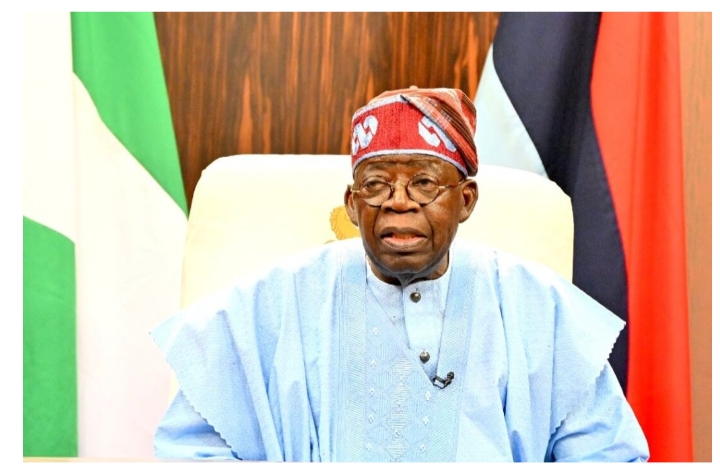
By Blaise Udunze
Nigeria is undergoing one of the stormiest periods in the history of its post-independence. This is not because of global oil shock, recession, or political instability; it is because of a far prevalent and devastating threat of the incessant insecurity. These once emanated as isolated insurgent attacks have now evolved into a nationwide web of terrorism, banditry, mass abductions, militancy, separatist violence, and organized crime. The repeated attacks across the North-East, North-West, North-Central, and increasingly the South have created an environment where fear, uncertainty, and instability have become the daily reality for millions of Nigerians.

But beyond the tragic loss of lives and communities torn apart, insecurity is quietly becoming Nigeria’s most devastating economic burden. It is the silent dagger cutting into the country’s gross domestic product (GDP), sabotaging investments, crippling agriculture, eroding human capital, and dragging millions deeper into poverty.
Recent events illustrate the depth of the crisis. In one of the most alarming incidents in Nigeria’s history, 315 students and staff were abducted from St. Mary’s Catholic School in Papiri, Niger State and a figure surpassing the infamous 2014 Chibok kidnapping. The Christian Association of Nigeria confirmed that 303 students and 12 teachers were taken after a verification exercise, making it one of the worst mass abductions the country has ever witnessed.
Parents wept openly on camera. A distressed woman told the BBC that her nieces, aged six and 13, were among the abducted: “I just want them to come home.” All schools in Niger State were ordered to close afterward as a move that, while necessary for safety, further chokes already strained educational access.

This tragedy was not isolated. It was the third mass abduction in a single week. In Kebbi State, over 20 schoolgirls were kidnapped days earlier. A church attack in Kwara State left two dead and 38 abducted. The rapid succession of attacks forced President Bola Tinubu to cancel foreign trips, underscoring the gravity of the situation. These incidents reveal a terrifying truth that insecurity has become a pervasive national emergency, one that carries enormous economic, financial, human, and socio-economic costs.
Agriculture, which accounts for more than 25 percent of Nigeria’s GDP and employs over 60 percent of the workforce, is one of the worst-hit sectors. Across the North-West and North-Central, Nigeria’s food-producing zones, its farmers live in fear. Bandits ambush farmlands, burn crops, extort communities, and abduct farmers for ransom. Recent estimates suggest that over 200,000 farmers and rural inhabitants have been displaced, abandoning vast hectares of arable land. The Northern Governors Forum admits that up to 60 percent of farmlands in key agricultural states have either been abandoned or severely underutilized due to unrelenting attacks.
The consequences are severe, resulting in reduced food production, escalating food prices, declining rural income, worsened inflation, and deepening threats to national food security. Nigeria now faces the possibility of a major food crisis by 2026, as farmers in Niger, Nasarawa, Kaduna, and Kogi warn that high insecurity, rising input costs, and massive post-harvest losses are driving them away from agriculture entirely. The United Nations Food and Agriculture Organization (FAO) warned that about 34.7 million Nigerians could face severe food insecurity during the next lean season (June to August 2026) if timely and coordinated interventions are not implemented.
A Niger State rice farmer, Ibrahim Abdullahi, lamented: “The cost of fertiliser, pesticides, and fuel has tripled. Most of us are running into debt. If this continues, many will leave farming completely.” If farmers retreat en masse, hunger will deepen and Nigeria’s dependence on food imports will worsen.
Kidnapping for ransom has also evolved into one of Nigeria’s most lucrative criminal enterprises. SBM Intelligence reports that kidnapping has grown into a self-sustaining industry, no longer merely a symptom of weak security but a thriving criminal ecosystem. In the first half of 2021 alone, 2,371 people were kidnapped, an average of 13 per day. By 2024, the numbers had surged, with hundreds of kidnappings recorded within months. Ransoms worth billions of naira change hands monthly. These payouts drain household savings, wipe out small business capital, push families into debt, and funnel enormous sums into criminal networks that reinvest the proceeds in more sophisticated weaponry.
The wider economic effect is crippling. Families sell properties and liquidate businesses to rescue loved ones. Schooling, commerce, and inter-state travel are disrupted. Regional trade routes deteriorate. Investors, both local and foreign, flee high-risk zones. Entire communities slip deeper into poverty. Insecurity has dismantled the confidence required for investment, expansion, and long-term planning.
Business confidence in Nigeria has fallen sharply as insecurity spreads. Large corporations, manufacturing firms, logistics companies, agribusinesses, and multinationals now operate in fear. Many are either scaling down or completely exiting Nigeria. Factories operate on skeletal staff; supply chains are strained; transportation costs skyrocket; and insurance premiums become prohibitive.
Foreign Direct Investment has steadily declined over the past decade, while Nigerian investors increasingly relocate capital abroad. No investor thrives in fear, and no economy thrives without investment.
The human cost is even more devastating. Millions have been displaced, forcing entire communities to flee their homes, farms, and businesses. Displaced populations lose their homes, farms, schools, livelihoods, and community networks. Their absence from productive work reduces national output, shrinks tax revenue, and overwhelms urban centres already battling unemployment, rising crime, and overstressed public services. The theoretical perspective by Stewart (2004), which argues that insecurity destroys productive capacity by killing workers, damaging infrastructure, and displacing populations, finds painful validation in Nigeria’s current reality.
Nigeria’s insecurity is multidimensional and regionally distinct. In the North-East, Boko Haram and ISWAP continue to operate, exploiting porous borders and challenging state authority. In the North-West and North-Central, banditry and mass kidnapping have become entrenched. In the South-East, separatist-linked violence and illegal sit-at-home orders shut down economic activity weekly. In the South-South, oil theft, pipeline vandalism, and militancy drain billions in oil revenue. In the South-West, urban crime, ritual killings, and gang violence create pockets of insecurity that hinder business operations. Each zone suffers differently, but collectively, the threats cost Nigeria billions of dollars annually, hinder trade, restrict mobility, and erode state authority.
The financial implications of insecurity are staggering, far greater than many realize. Conservative estimates from security trackers, development agencies, and fiscal analysts indicate that Nigeria loses approximately $15 billion (N20 trillion) annually due to insecurity-induced disruptions in agriculture, trade, manufacturing, transportation, and extractive industries. These losses weaken GDP growth and deepen the country’s fiscal strain.
Meanwhile, Nigeria’s security spending has ballooned. Defence and security now consume between 20 and 25 percent of the federal budget annually. More than N4 trillion has been spent on security in the past three years alone, excluding off-budget defence allocations, special interventions, and state-level spending. The opportunity cost is devastating: every naira spent fighting endless waves of violence is a naira not spent on education, healthcare, infrastructure, power, water systems, or technological advancement. Insecurity is not just costing Nigeria money; it is robbing the nation of future development.
This prevalent violence deepens poverty and inequality. Businesses shut down, schools close, markets collapse, food becomes scarce, jobs disappear, and vulnerable groups, especially women and children, bear disproportionate hardship. Healthcare deteriorates, rural communities empty out, and social cohesion breaks down.
Transportation and logistics, which happen to be the backbone of commerce, are particularly affected. Nigeria’s highways are now labelled among the most dangerous in West Africa. Haulage firms require armed escorts. Farmers cannot safely transport produce to major markets. Supply chains are broken, pushing prices even higher. When transportation collapses, commerce collapses, and so does the economy.
Food insecurity is escalating rapidly. Banditry is blocking farms, fuel prices are rising, fertiliser costs have tripled, farmlands are abandoned, and post-harvest losses are mounting. A nation that cannot feed itself cannot grow its economy.
Nigeria cannot achieve sustainable economic growth without restoring order. The solutions must be comprehensive: modernizing security infrastructure with drones, satellite imaging, and digital surveillance; building a unified national intelligence framework; empowering local and community policing systems; addressing youth unemployment; strengthening judicial processes; securing borders; and rebuilding public trust through transparency and accountability.
Nigeria’s insecurity crisis is not merely a security challenge; it is an economic emergency. It drains national resources, scares away investors, cripple’s agriculture, destroys human capital, and sabotages the nation’s pursuit of sustainable development. Until Nigeria defeats insecurity decisively, all economic reforms will remain fragile.
No investor thrives in fear.
No farmer plants on a battlefield.
No child learns in captivity.
No economy grows in chaos.
Security is the foundation of development. Nigeria must rebuild that foundation now or risk watching its economic future slip further away.
Blaise, a journalist and PR professional, writes from Lagos, can be reached via: [email protected]


By Blaise Udunze
From a general observation, comparisons are powerful political tools. They simplify complex realities, inspire supporters and shape public perception. Another side of this is that they can also become misleading when symbolism replaces substance.

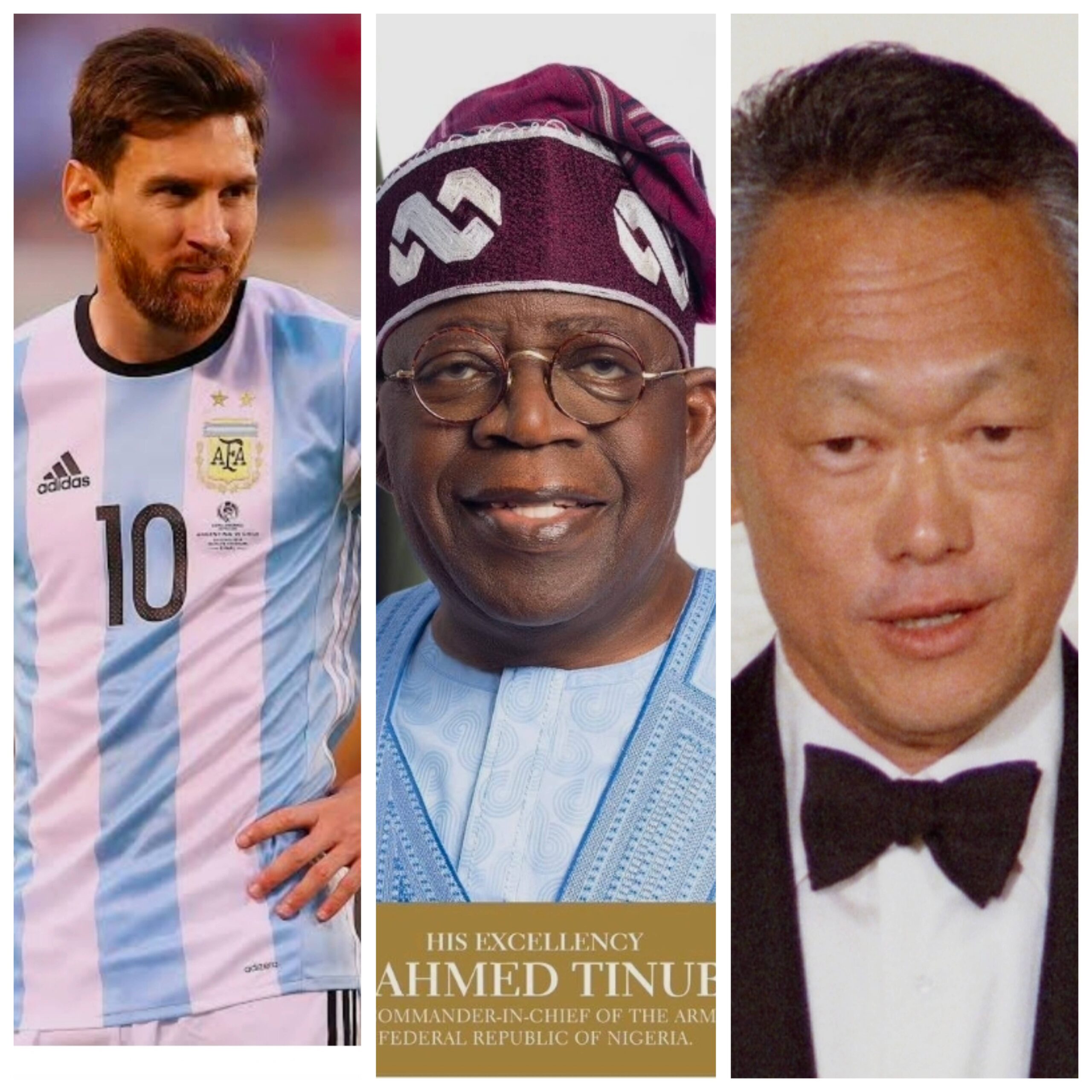
The latter appears to be the objective behind two recent interventions in defense of his excellency, President Bola Ahmed Tinubu. Respectfully, it was observed that veteran journalist Martin Oloja likened Tinubu’s political journey to that of football icon Lionel Messi. He portrayed him as a resilient strategist whose patience and tactical brilliance eventually produced victory. As this now appears to be a trend, Imo State Governor Hope Uzodimma further elevated the narrative, comparing Tinubu to Singapore’s founding Prime Minister, Lee Kuan Yew. He didn’t stop at that; rather further argued that today’s painful reforms would eventually transform Nigeria just as Lee transformed Singapore. They are compelling analogies.
Unfortunately, it was observed that both began to unravel once governance, not politics, was used as the standard of measurement.
It is a known fact to the world that Lionel Messi is celebrated not because he endured criticism or finally lifted the World Cup after years of disappointment. He is celebrated because his greatness is measurable. His goals are counted. His assists are recorded. His trophies are displayed and not just that, his records speak louder than the opinions of his admirers, which may have taken a different turn now after the outcome of the 2026 FIFA World Cup.
The same is also true of Lee Kuan Yew. History has shown that he is not revered because he introduced difficult reforms or enjoyed the support of loyal political allies. Governor Hope should be reminded that Lee is remembered because he fundamentally transformed Singapore. Amongst his achievements were transforming a poor trading port into one of the world’s richest, cleanest, safest and most efficiently governed nations.
Lee’s records speak for him because under his leadership, Singapore built world-class infrastructure, an incorruptible public service, globally competitive education, affordable housing, investor confidence and one of the highest standards of living anywhere in the world.
Neither Messi nor Lee Kuan Yew became legends through carefully crafted narratives. Yes, they became legends because the evidence became impossible to dispute. That is precisely where comparisons with President Tinubu become difficult.
It is an error to assume that winning elections is the same as winning governance and at the same time, political brilliance may secure power, but only effective leadership secures history’s approval.
For millions of Nigerians, governance is not measured by campaign strategy or political resilience. It is measured by the realities they confront every morning.
Can they afford food? Can they pay transport fares? Can they pay rent with the current landlords’ economy? Can they keep their businesses open? Can they sleep or travel freely without fear of kidnapping? Can they find jobs after graduation? Can they access reliable electricity and healthcare? These are the scoreboards by which governments are judged.
Supporters of the Tinubu administration frequently point to encouraging macroeconomic indicators. Foreign reserves have improved. Government revenues have risen. States now receive significantly larger allocations through the Federation Account Allocation Committee (FAAC). Well, these ‘achievements’ will be reviewed soon through the lens of news narratives. International financial institutions have welcomed several policy reforms. The removal of fuel subsidy and exchange-rate liberalisation are presented as courageous decisions that previous administrations avoided.
These developments deserve acknowledgement. Yet macroeconomic improvements are not the same as improvements in citizens’ welfare.
In reality, an economy cannot be declared successful merely because government revenues have increased while household purchasing power continues to deteriorate, as this would be a complete aberration.
Again, it is considered an anomaly that Nigeria reports stronger fiscal numbers, but millions of families continue to struggle with soaring food prices, rising transport costs, expensive housing, high electricity tariffs and shrinking disposable incomes.
Statistics may comfort policymakers. They rarely comfort hungry citizens. Messi never celebrated possession statistics after losing a match; rather, he cried and cried over losing the opportunity of winning the trophy at the concluded 2026 FIFA World Cup. To him, results mattered.
The reality is that governments should be judged by the same principle. This is open to dispute, but of a truth, Governor Uzodimma’s comparison to Lee Kuan Yew deserves even closer scrutiny because it raises an important question, though it may appear hard to answer.
If Tinubu is Nigeria’s Lee Kuan Yew, where is Nigeria’s Singapore? What exactly made Lee Kuan Yew exceptional? Was it simply his willingness to implement painful reforms? Certainly not.
Many leaders across the developing world have introduced painful reforms. Very few transformed their countries.
One thing stands out here: Lee’s legacy rests on outcomes, not intentions. Judging from all indications, it is obvious that his reforms dramatically reduced corruption, attracted investment, strengthened institutions, expanded industrialisation, improved education, guaranteed affordable public housing and steadily raised incomes across generations. Unlike Nigeria’s ongoing experience, Singapore’s rise was not a promise repeatedly postponed to the future. Citizens experienced tangible improvements in their daily lives. That is why history celebrates Lee Kuan Yew. Nigeria’s present reality tells a different story.
It is glaring and ironic that despite improved fiscal revenues, many Nigerians continue to grapple with rising inflation, worsening poverty, declining purchasing power, youth unemployment, struggling businesses and persistent insecurity. If they must know, these are not merely economic statistics; they are the lived realities by which citizens judge any government.
The Lee Kuan Yew comparison also overlooks perhaps the most important ingredient behind Singapore’s success, which is primarily the institutions.
It is obvious and practically doubtful if Governor Uzodinma’s kind of Singapore is the same as the one on which its transformation was built upon an efficient bureaucracy, disciplined public institutions, predictable regulation, meritocracy, uncompromising anti-corruption enforcement and consistent long-term planning as championed by Lee Kuan Yew. An honest question here is, can the same be said of Nigeria today?
The truth is not far-fetched; Nigeria is nothing close to it because the realities and lived experiences of Nigerians are that the country continues to grapple with weak institutions, policy inconsistency, bureaucratic inefficiency, corruption concerns and widespread insecurity.
His impeccable achievements are built on the institutions; hence, without institutional transformation, every effort to invoke Lee Kuan Yew risks confusing aspiration with achievement.
One common trend witnessed lately is that the supporters of the administration often argue that Nigerians must be patient because meaningful reforms require time. That argument deserves consideration.
Let it also be made known that patience should never become an endless substitute for accountability. Citizens are also entitled to ask whether the sacrifices demanded today are producing measurable improvements tomorrow.
History remembers leaders not because they prescribed hardship, but because that hardship ultimately produced prosperity for those alive and not for the dead.
Another weakness in both comparisons is the tendency to confuse political mastery with administrative excellence. These are totally two different things, because when it comes to winning elections, it requires coalition building, negotiation and political calculation. Whilst, running a nation demands competent institutions, sound economic management, transparency, public trust and measurable improvements in living standards.
Again, the two are not the same, and for this reason, many exceptional politicians have governed poorly. Many successful administrators never became political giants. Democracy ultimately rewards governance, not political mythology.
This is not to suggest that President Tinubu’s administration has achieved nothing. Tax reforms, infrastructure investments, fiscal restructuring and efforts to stabilise public finances represent important policy initiatives whose long-term impact remains to be seen. Well, acknowledging those initiatives is consistent with honest public discourse.
Equally important, however, is recognising that millions of Nigerians continue to judge the administration through the realities and their lived experiences rather than the promises they hear.
Football supporters judged Lionel Messi by the trophies in the cabinet. In like manner, history judges Lee Kuan Yew by the Singapore he built. The same measure should be applied in this nation, as Nigerians will judge President Tinubu by the Nigeria he leaves behind.
The key metric here is that if inflation falls sustainably, poverty declines significantly, insecurity is substantially reduced, electricity becomes more reliable, industries expand, jobs multiply and citizens regain confidence in the future, history will acknowledge those achievements without requiring comparisons to Messi or Lee Kuan Yew.
Neither Messi nor Lee Kuan Yew needed political allies to persuade the world of their greatness and that distinguishes both as the greatest of all time (GOAT).
Their records spoke for themselves. Political endorsements may dominate today’s headlines. History, however, listens only to evidence. Even Messi needed trophies. Lee Kuan Yew needed results. Nigerian leaders should be judged by no lesser standard.
Blaise, a journalist and PR professional, writes from Lagos and can be reached via: [email protected]

National Broadcasting Commission (NBC) and the Independent National Electoral Commission (INEC) are set to introduce a joint broadcast monitoring framework ahead of the 2027 general elections as part of efforts to curb unethical broadcasting and promote responsible election coverage.

Charles Ebuebu, director-general, NBC, who disclosed the plan recently, said the collaboration would strengthen election monitoring through the deployment of advanced technology and closer coordination between regulatory agencies.
According to him, the increasing influence of digital and online platforms has made it imperative for regulators to work together rather than operate independently.
“We have written to INEC, and we are going to have a joint monitoring outlook over the elections. Gone are the days when agencies work in silos. When we coordinate, we’re able to monitor more effectively,” Ebuebu said.
He explained that the partnership would enable both agencies to jointly identify and address violations of broadcasting regulations during the election period instead of handling such issues separately.
Beyond INEC, Ebuebu said the NBC is also partnering with other key regulators to strengthen oversight of election-related content across digital platforms.
According to him, the commission is finalising agreements with the Nigerian Communications Commission (NCC) and the National Information Technology Development Agency (NITDA) ahead of the polls to reinforce its monitoring capabilities.
“We are calling in other stakeholders to reinforce the election monitoring. We are signing agreements with the Nigerian Communications Commission and the National Information Technology Development Agency before the elections,” he said.
Ebuebu also revealed that the NBC is upgrading its monitoring infrastructure with artificial intelligence (AI)-powered tools to keep pace with the rapidly expanding media landscape.
He noted that the proliferation of online platforms has made traditional monitoring methods inadequate.
“With online platforms, there are thousands of them. You need more than staff; you need AI monitoring facilities,” he said.
The NBC chief added that the commission has significantly improved its monitoring capacity and can currently track nearly 50 broadcast channels from its monitoring centre in Abuja.
He said additional monitoring facilities would be established across the country in line with evolving broadcasting technologies.As part of preparations for the 2027 elections, Ebuebu announced plans for a sensitisation workshop in Ibadan that will bring together broadcasters, INEC officials, security agencies and other stakeholders.
He said the engagement had become necessary as political discussions surrounding elections continue to grow more heated, including on television, stressing the need for broadcasters to adhere to professional standards.
Ebuebu noted that the commission has had to issue several warnings to broadcast stations for violating the broadcasting code during election periods.
“We have had to write several of them because they simply forget what the code says,” he said

Mrs. Clementine Wamba, head, Digital Switch Over (DSO) at the National Broadcasting Commission (NBC), has stressed the need for broadcasting stations and practitioners nationwide to work towards meeting the 2028 global deadline for the switch over.

She made the call in her presentation titled, “DSO Big Picture: Free TV Audience Measurement and the Evolving Media Landscape”, at the 2026 NBC South West Summit held in Ibadan.
Wamba harped on the need for practitioners to adopt DSO in the transmission of news and other programmes in order to meet future challenges, stating that any country that fail to align with the DSO by 2028 will be shut out of practice.
This development, according to her, may result in job losses and other consequences that could hinder the growth of the industry in Nigeria, noting that Free TV is tailored towards the DSO, with provision for many channels in contrast to the age-long analogue system.
According to her, “The Digital Switch Over is a technological improvement on the age-long analogue style of broadcasting in the country. With the adoption of the DSO, practitioners will be in tune with global practice of broadcast journalism.
“Also, its benefits include efficient use of spectrum, changing of industry landscape, more access to national development programmes and better viewing experience.”

Senate Moves to Compel Social Media Companies to Open Offices in Nigeria

Nigeria Leads Africa in Online Gambling Regulation – GCI

CBN Has Not Published Annual Financial Statements Since 2022 despite Legal Requirement

ChatPay Unveils Public Waitlist for WhatsApp-Based Banking Platform

GSMA Says High Smartphone Costs Threatens Africa’s AI Future

NRC, Ponzi Scheme Collapses Resulting Loss of Billions of Naira

NASENI Moves to Digitize CCB’s 5m Assets Declaration and Operations

Tokenization, Blockchain Technology will Transform Financial Institutions – IMF

EFCC Busts NIS Visa Overstay Racket, Uncovers N700m in an Account

From Scarcity to Scale: What Africa Can Learn from India’s Agricultural Transformation




 General News3 days ago
FG Launches C.L.I.C.K.D., Consumer Credit Scheme for Tech Devices

 Telecom3 days ago
Airtel Nigeria Expands Retail Footprint to Strengthen Customer Access Nationwide

 Telecom3 days ago
MTN Nigeria Opens Applications for Next Afrobeats Star Season 2 with Bigger Prizes

 News3 days ago
NPC Opens Nationwide Digital Birth, Death Registration Platform

 Telecom3 days ago
Kaspersky Survey Highlights the Need for Smartphone Security

 E-Business3 days ago
Ovaloop Technologies Unveils Digital Tools to Formalize SMEs Operations Across Africa

 E-Financial3 days ago
CBN Retains Interest Rate at 26.5% as Cardoso Cites Global Uncertainty Despite Inflation Drop

 Telecom2 days ago
Court Dismisses Pan African Towers’ Bid to Halt Ex-CEO’s Suit, Awards ₦500,000 Costs