

Broadcasting
Healthcare Under Attack: Why Cybersecurity is Now Critical Care


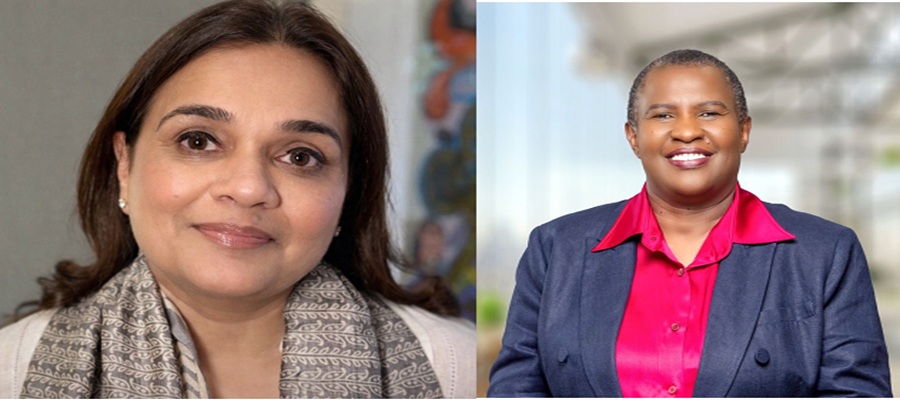
By: Kerissa Varma, Microsoft Chief Security Advisor, Africa
Africa’s healthcare sector is facing a silent emergency. Many healthcare operators, facilities and doctors across Africa already grapple with the challenges of under-resourced environments, an uneven distribution of resources and massive demand for services.

Kerissa Varma, Microsoft Chief Security Advisor, Africa
Now healthcare administrators must turn their attention to a relatively new and extremely urgent concern. While doctors fight to save lives, cybercriminals are infiltrating hospitals, laboratories, and clinics, turning life-saving environments into digital battlegrounds.
A growing epidemic
World Health Organisation director-general Tedros Adhanom Ghebreyesus noted that the digital transformation of healthcare, combined with the high value of health data, has made the sector a prime target for cybercriminals, commenting that “At best, these attacks cause disruption and financial loss. At worst, they undermine trust in the health systems on which people depend, and even cause patient harm and death.”
Recent attacks have exposed the fragility of Africa’s medical infrastructure. In May 2025, Mediclinic Southern Africa was hit by a cyber extortion attack, compromising sensitive HR data. Later in 2025, Lancet Laboratories faced a regulatory penalty for failing to notify patients about data breaches under South Africa’s POPIA law, while a ransomware strike on the National Health Laboratory Service disrupted blood test processing nationwide, delaying critical care for millions.

M-Tiba, a Kenyan digital health platform managed by CarePay and backed by Safaricom, suffered a significant cyberattack and data breach in late 2025, while earlier this year Pharmacie.ma, a Moroccan pharmaceutical platform, was reportedly the target of an alleged data leak incident that allegedly involved the unauthorised export of a customer database. And recent research indicates that Nigeria’s private healthcare sector is now one of the most targeted on the African continent, with attacks increasing at an alarming rate.
Many incidents also go unreported, as hospitals and healthcare facilities rarely disclose them publicly, yet these incidents are not isolated, with ransomware dominating the threat landscape. Africa’s healthcare sector is heavily targeted by cybercriminals, with healthcare organisations facing an average of 3,575 weekly attacks in 2025, a 38% surge from the previous year, with encryption of patient data, temporary loss of access to hospital systems and the risk of data appearing on the dark web cited as potential impacts.
Why healthcare is a prime target
The healthcare industry in Africa, particularly in the public sector, is working with legacy systems, fragmented infrastructure, and underfunded IT teams, all of which combine to make the sector an easy target for unscrupulous bad actors.
Many medical institutions are adopting open-source AI tools for diagnostics and patient management. While cost-effective, these platforms often lack enterprise-grade security, leaving sensitive data exposed. Combined with fragmented storage of paper and electronic patient records – often unencrypted and scattered across multiple systems – the risk of breaches multiplies.
Hospitals and healthcare facilities cannot afford downtime. Every minute offline risks lives, making them more likely to pay ransoms in an attempt to regain control of their systems. Cyber insurers indicate that in 2 of 5 cases of a ransom being paid, data and operations still cannot be recovered. Additionally, in instances where some or all of the seized data is recovered after paying a ransom, the attacker goes on to request further payments.
Medical records are also a premium target for cybercriminals. In the USA, researchers found that patient records, insurance details, and research data fetch premium prices on the dark web – up to 10 times higher than financial data, according to cybersecurity analysts. A single stolen medical record can sell for $260–$310, compared to $30–$50 for a credit card, because unlike credit cards, medical records never expire and medical information cannot be easily changed, making it useful for years. Medical records frequently include personal identifiers, insurance details, and sometimes biometric data, enabling identity theft and fraud, while criminals use medical data for fake insurance claims, prescription fraud, and targeted scams. Microsoft believes cybersecurity needs to be embedded into every technology implementation. This should be a key priority, especially with sensitive medical data and operations.
How healthcare can use modern technology safely
As Africa’s healthcare systems digitise and embrace AI, protecting the digital lifeline must become as critical as protecting the physical one. Key steps can secure healthcare organisations and facilities like laboratories and diagnostic services’ systems.
Include cybersecurity in your resilience planning
Medical professionals and healthcare facilities often prioritise the resilience of physical capabilities. Power backups, multiple devices should equipment fail, and a standby roster in the event of a practitioner being unavailable are all practices that save lives. Equally cybersecurity and safeguarding online systems needs to be built into the overall resilience planning of medical facilities and services.
Investing in cybersecurity technology that can quickly identify and contain attacker activity before it leads to system downtime or data theft can save lives. Having a response plan that is practiced and maintained in the event of a cyber breach and ensuring strong data backups could mean the difference between a total failure of health services or a minor incident. Ensuring incident response plans are aligned with local compliance laws such as South Africa’s POPIA, and Kenya and Nigeria’s Data Protection Acts is critical for healthcare providers to meet both their resilience and compliance objectives.
Prepare for AI-driven attacks that are going to increase attacker speed and success
Threat actors are increasingly exploiting the interconnectedness of modern software ecosystems and operational structures to conduct malicious activity, so regular auditing of third-party integrations, especially those involving AI or cloud services, is critical.
Adversaries are using AI to scale and tailor operations, with AI-driven phishing being 4.5x more effective than traditional phishing. However, in equal measure, AI is transforming cyber defence – it automates response and containment, detects threats faster and more accurately, and identifies detection gaps and adapts to attacker behaviour. Healthcare organisations should invest in AI-driven threat detection for faster response and anomaly detection and must also take steps to secure AI models and data pipelines by implementing robust access controls, vulnerability scanning, and regular patching for open-source tools.
Remote and wider access to patient records requires strong identity practices
As both patients and medical professionals start accessing patient records digitally, strong means of identification, verification and authentication are critical. The Microsoft Digital Defense Report 2025 notes that the abuse of valid accounts is a frequent occurrence, with malicious actors gaining access to user credentials (usernames and passwords) and using them to infiltrate systems without triggering traditional security alerts. Therefore, organisations must deploy phishing-resistant multifactor authentication (MFA) and conditional access to strengthen user defences.
Invest in people and skills
People are at the heart of robust cybersecurity measures, so it is vital to train staff against common tactics such as phishing, which is the most common entry point for attackers, and apply role-based access controls for both clinical and research data to prevent privilege misuse.
Cybersecurity is no longer an IT issue – it’s a patient safety issue. Healthcare services and providers must treat digital resilience with the same urgency as infection control. By investing in comprehensive cybersecurity strategies and leveraging AI-powered defences, Africa’s healthcare sector can position itself as a crucial front line against emerging threats and help build stronger, more resilient digital ecosystems.



National Broadcasting Commission (NBC) has said that Nigerians will no longer pay annual Digital Access Fees under the renewed Digital Switch Over (DSO) project.

Charles Ebuebu, director-general, NBC, disclosed this in an exclusive interview with the News Agency of Nigeria (NAN) on Wednesday in Abuja,
Ebuebu said viewers only need to purchase an approved decoder and satellite dish which cost below N20,000 to enjoy free television permanently.
“Previously, users paid an annual digital access fee of about N1,500, described as an administrative charge.
“The new system removes that annual fee. It provides free access to free-to-air television channels without any payment.
“Premium channels will be introduced later. Viewers who want those additional channels will be able to access them through paid services.
“Nigerian content on free-to-air channels remains free to watch. Unlike Pay TV, this platform does not require monthly subscriptions for its basic service,” he said
Ebuebu said approved decoders for the FreeTV will cost less than N20,000 and authorised sales outlets will soon be announced.
He urged Nigerians to wait for official information on approved dealers for the DSO decoders, warning that unauthorised sellers are exploiting growing public demand.
He reiterated that people only need a free-to-air decoder, along with a satellite dish instead of the old antenna system to receive the DSO signal.
“Once the equipment is installed, viewers can access all available channels across the country without paying any subscription fees,” he stressed
The DG dismissed claims by some retailers that there are different categories of decoders sold at varying prices, stressing that such sellers are not authorised by the commission.
According to him, the NBC will soon publish the list of approved dealers, official prices, and locations where genuine decoder boxes and accessories can be purchased.
The NBC boss said the DSO project is designed not only to improve television broadcasting but also to stimulate economic growth by creating jobs, attracting investment, and opening up opportunities for businesses that support the broadcasting industry.
Ebuebu noted that content producers and broadcasters stand to benefit significantly from the nationwide reach of the DSO platform.
Unlike the previous system, where many stations had limited regional audiences, he said the new platform will make their channels available to viewers across Nigeria.
He added that the introduction of audience measurement technology will provide scientific and reliable data on television viewership.
Ebuebu added that audience measurement technology will give advertisers greater confidence in placing adverts and enable broadcasters to demonstrate the true size and reach of their audiences nationwide.

Uchenna Mbunabo, Nigerian filmmaker, has raised concerns over the alleged unauthorised broadcast of Nollywood films by some Ghanaian television stations, calling on Ghana’s National Film Authority (NFA) to strengthen the enforcement of copyright laws.

Uchenna Mbunabo, Nigerian filmmaker
Mbunabo made the remarks during a conversation with James Gardiner, deputy CEO of the National Film Authority (NFA) of Ghana.
He questioned whether it was permissible for television stations in Ghana to download Nigerian movies from YouTube and air them without obtaining permission from the producers.
“I noticed that Ghanaian TV stations, the way they are stealing our films and showing them for free with impunity. Is it legalised in your country for TV stations to go on YouTube, download people’s sweat and show it for free?”
According to Mbunabo, some Ghanaian television stations have been downloading newly released Nollywood films from YouTube and broadcasting them without authorisation, depriving producers of revenue generated through the platform.
He also stated that he had not witnessed Nigerian television stations engaging in similar practices and questioned what measures Ghana was taking to protect filmmakers’ intellectual property.
Responding to the concerns, Gardiner acknowledged that the issue exists and said the National Film Authority had begun engaging relevant stakeholders to address it.
He disclosed that the NFA has held discussions with the Ministry of Communications, the National Communications Authority (NCA) and the National Media Commission (NMC) on improving copyright enforcement.
Gardiner explained that while Ghana has copyright laws, enforcement remains challenging because many television stations now operate digitally and may not have physical offices within the country.
“There are copyright laws, but they are not effective because a lot of the TV stations don’t have offices. Most of them are now digital, so they operate from anywhere. They can even have a Ghanaian TV station but be operating from Austria simply because it is digital.”
He added that authorities are considering a new licensing framework that would require broadcasters to undergo a fresh licensing process to improve monitoring and enforcement.
According to Gardiner, television stations found guilty of illegally broadcasting copyrighted content would be required to compensate affected producers through fines.
He added that repeat offenders could face suspension of their broadcasting licences, while a third violation could result in the revocation of their licences.
Although he did not provide a specific timeline, Gardiner said the reforms were already underway and expressed hope that significant progress would be seen next year.
Mbunabo welcomed the proposed measures but urged the National Film Authority to expedite the process, stating that unauthorised broadcasts continue to affect filmmakers’ ability to recover production costs through legitimate distribution channels such as YouTube.
He also stressed that his comments were not directed at Ghana’s film industry, noting that he has worked with several Ghanaian actors over the years and supports collaborations between Nollywood and Ghallywood.


FAAN to Replace Physical ID Check with V-Pass Biometric Verification

World Bank Says 79 Percent of Nigerians Still Trapped in Poverty despite Reforms

SEC Begins Drive to Recover Unclaimed Dividends

ntel Plays Down Calls and Data Services, Moves to BET Agenda

Nigeria Facing Rising Cybercrime Losses – Report

NRC, Ponzi Scheme Collapses Resulting Loss of Billions of Naira

Nigeria Launches FreeTV Nationwide

NASENI Moves to Digitize CCB’s 5m Assets Declaration and Operations

Lebara Nigeria Launches Lebara Play, Africa’s First Telecom-Owned Micro-Drama Platform

CANAL+ Partners Samsung to Pre-Load DStv Stream on New Samsung TVs In Nigeria, Other African Countries




 E-Business3 days ago
TD Africa Sponsors Check Point Secure 360 Summit to Boost Cybersecurity in Nigeria

 Telecom3 days ago
MTN Foundation, MUSON Celebrate Emerging Music Talents at 2026 Graduation Ceremony

 News3 days ago
Guinness Rolls Out Nationwide Consumer Rewards Promotion

 Telecom3 days ago
NITDA Calls for Digital Infrastructure Expansion to Drive Nigeria’s Industrialisation

 E-Financial3 days ago
Next Currency Crisis May Turn $300Bn in Stablecoins into National Currencies

 E-Financial3 days ago
Gigbanc Nigerian Fintech Startup Closes Shop after 3 Years

 General News3 days ago
First Trustees Advocates Estate Planning as an Essential Tool in Every Wealth Creation Strategy

 Broadcasting3 days ago
Mbunabo, Nigerian Filmmaker Accuses Ghana TV Stations of Pirating Nollywood Films