

Telecom
Education Priorities to Help Young People Shape Africa’s Future


By: Juan Visser, Regional Director, Sub-Saharan Africa, International Education,
Today’s young people are navigating a world that is changing fast. From advances in artificial intelligence (AI) and technology to the impacts of climate change and global politics, they’re preparing not just to face uncertainty, but to shape what comes next.

Juan Visser, Regional Director, Sub-Saharan Africa, International Education
How effectively they do this will depend in part on their education, which has a crucial role in equipping students with the skills, knowledge and behaviours to thrive in the future.
Education is always evolving, but at this time of profound global change, we must keep asking ourselves if it is keeping pace. That’s what prompted the International Education group at Cambridge University Press & Assessment to undertake a large-scale research study with over 3,000 teachers and almost 4,000 students across 150 countries, including in Africa, to find out how they are experiencing education today.
Several priorities emerged in the Preparing Learners to Thrive in a Changing World study, highlighting a high degree of common thinking among students and teachers globally about where more action is needed in education to help students be ‘future-ready’.
1. Subject knowledge should be valued more in the AI era – not less
In an age where AI can deliver information within seconds, attitudes to the importance of subject knowledge are shifting.
When presented with a list of skills categories, knowledge and values, both teachers (81%) and students (73%) considered subject knowledge to be critical for students’ next step in education, but subject knowledge was the least selected option by both teachers and students when considering what is important for life beyond education.
This suggests that subject knowledge is often seen as a short-term asset for passing exams or progressing to higher education, rather than a lifelong asset. However, AI is not a shortcut to knowledge – and a solid foundation of subject knowledge is critical in helping students spot misinformation and use AI effectively.
To thrive, students need future-ready competencies such as adaptability and critical thinking – and here, subject knowledge and skills go hand in hand. We need to help students see that subject knowledge is something concrete they will draw on in the future, enabling them to assess information critically and make informed decisions.
2. Help students develop stronger self-management skills
Developing self-management skills – such as the ability to focus, prioritise tasks and regulate behaviour – emerged as a critical factor in helping students prepare for the future and adapt to changes in how we live and work. These skills can also solve some of the challenges created by digital technology, helping students to set boundaries for device use. While technology is embraced as a benefit to both teaching and learning, 70% of teachers said digital distraction and reduced attention span are challenges that technology creates in preparing students for the future. Students also voiced concerns about how their use of technology might affect them, with 66% worrying that they get distracted easily and 59% worrying about excessive screen time.
In Africa, the situation is complicated by inconsistent digital access. Many students are limited in opportunities to use technology to support learning, while those who have access, particularly via personal mobile devices, face the same struggle with distraction, such as access to social media, that students across the world are grappling with.
It’s clear that students would benefit from having more opportunities to practise self-management in school, not only to strengthen their focus but also to build resilience and help them deal with stress and anxiety. If students feel better able to manage themselves today, we are empowering them to manage new situations in the future.
3. Create safe and structured places to practise communication skills
Technology has transformed how we communicate with each other, yet the need to communicate effectively in person is not diminished. The research found that both teachers and students view communication skills, including social skills and empathy, as critical for future success.
However, the research also showed that concerns about getting communication wrong – which can be amplified in online spaces – are holding students back, with 61% of teachers saying fear of judgement is a challenge in helping students develop their interpersonal skills. Interviews with students also revealed that they may avoid disagreement due to fear of social repercussions, such as being the ‘lone voice’ or facing social judgement.
Schools can help students overcome these fears by creating a safe environment where they can develop their communication skills and build meaningful relationships.
Africa’s multilingual and diverse cultural contexts offer unique opportunities for developing communication skills.
Many African educational traditions emphasise oral communication, storytelling, and collective knowledge sharing, which support the development of communication skills in a context that students can relate to.
The tradition of active participation in African oral storytelling engages the audience, inviting them to ask questions, interact, and share their thoughts.
By incorporating African oral storytelling traditions into the curriculum, educators can create more inclusive, engaging and culturally relevant learning environments and help students develop key skills in listening, critical thinking and empathy.
4. Help students recognise when and how they are developing vital skills
With so much change in the world, it is perhaps not surprising that the research revealed students feel underprepared for the future. Only 48% of students feel prepared for their next step in education, and 45% for their future beyond it.
We also asked teachers to reflect on how well prepared they feel their students are for their futures. 67% feel students are well prepared for their next step in education, and 59% say students are well prepared for life after education.
These findings have profound implications for workforce development across Africa, where youth unemployment remains high despite growing economies.
If students don’t recognise their own readiness, they may not pursue opportunities they’re actually qualified for.
The underestimation may arise because students do not always see the skills they are developing alongside subject knowledge, nor do they understand how their school experiences can translate into future success.
To counter this, educators need to signpost students through their learning so they recognise the skills they are developing and understand how these skills may serve them in the future.
This will give them a stronger belief that they are prepared for the future and empower them to shape it.
Measuring impact: focusing on outcomes
With just under five years remaining to realise the 2030 education targets set by the United Nations, it is crucial that investments in education directly impact the UN Sustainable Development Goal 4.
Learning quality remains a major concern, and most countries are off track to meet education targets for access, completion and learning outcomes. In sub-Saharan Africa, upper-secondary school completion rates are hovering at 28,9%, far from the targets identified in 2015.
Many African education systems face resource constraints, making every investment count. The move from measuring inputs to focusing on outcomes is key to accelerating progress.
Initiatives like the HP Cambridge Partnership for Education EdTech Fellowship also provide a space for policymakers to strengthen the skills, knowledge and network needed to drive digital transformation in education systems.
The future of African education depends on embracing both the challenges and the unique opportunities presented by technology, evolving skill sets, and the continent’s rich cultural diversity.
Accelerating digital education is vital in Africa, but at the same time, educators must help students develop the skills and knowledge to use technology wisely.
By prioritising subject knowledge as well as skills development, strengthening self-management and communication skills, and helping young people to recognise all the ways in which they are prepared, educators can help empower them to thrive in a rapidly changing world.



WhatsApp has announced the commencement of global reservations for usernames, a new privacy-focused feature designed to allow users connect without sharing their phone numbers.

The Meta-owned messaging platform said the rollout of username reservations began on Monday, June 29, enabling users to reserve their preferred usernames ahead of the feature’s full in-app launch later this year.
According to the company, users will receive notifications within the app once the reservation option becomes available to them.
WhatsApp said the new feature is intended to strengthen user privacy by giving people an alternative way to communicate without revealing their phone numbers, particularly when interacting with new contacts or participating in group conversations.
It explained that unlike social media platforms, WhatsApp usernames are not designed for public discovery, noting that there will be no searchable directory or username suggestions.
The company said users would need to know a person’s exact username before they can initiate contact for the first time.
“Sometimes you just want to chat without handing over your digits,” WhatsApp said, adding that the feature would be useful in situations such as joining community or school groups where users may not wish to immediately disclose their phone numbers.
To enhance security, the platform is also introducing an optional username key, which will require anyone contacting a user for the first time through their username to enter an additional unique key.
WhatsApp said the extra verification layer is designed to provide greater control over who can initiate conversations.
The company noted that with more than three billion users worldwide, it decided to open username reservations ahead of the full rollout to give users an opportunity to secure their preferred usernames before the feature becomes widely available.
To assist users who may have difficulty selecting unique usernames, WhatsApp said it has developed a username generator capable of suggesting available options.
The company also disclosed that creators, small businesses and organisations would have the option of claiming the same usernames they already use on Instagram or Facebook, helping them maintain a consistent online identity across Meta platforms.
According to WhatsApp, once the feature becomes fully available, users who choose to enable usernames will no longer have their phone numbers displayed when they initiate conversations with people or businesses for the first time.
The company said reserving a username will take only a few seconds through the latest version of the application by navigating to Settings, then Account, and Username.
WhatsApp said the feature would be rolled out gradually across countries over the coming months, with users receiving notifications when it becomes available in their respective regions.

Nigerian Communications Commission (NCC) has been ranked among the top three best-performing Ministries, Departments, and Agencies (MDAs) of the Federal Government in the 2026 Public Service Reforms Performance Assessment conducted by the Bureau of Public Service Reforms (BPSR).

L-R: Engr. Abraham Oshadami, Executive Commissioner, Technical Services, Nigerian Communications Commission (NCC); Dr. Abubakar Ibrahim Kana, Permanent Secretary, General Services Office, Office of the Secretary General to the Government of the Federation during the Nigerian Public Service Award and Gala Night where NCC recieved the award for 3rd Best Performing MDA at Nicon Luxury Hotel, Abuja on the 23rd June, 2026.
In the latest Public Service Reforms Performance Assessment, the Commission was ranked third overall, following a comprehensive evaluation across key reform indicators, including the Self-Assessment Tool (SAT), Freedom of Information (FOI) Compliance Score, Fiscal Transparency and Integrity Index, and official website performance metrics.
In the ranking, the Nigerian Investment Promotion Commission (NIPC) and Nigerian Export Promotion Council (NEPC) came first and second, respectively.
The institutional ranking, conducted across all MDAs of the Federal Government, recognises MDAs that have distinguished themselves in advancing public service reforms and delivering excellence in service.
Aside from the institutional awards, 20 individuals across federal, state and local levels received various distinguished public service excellence and leadership awards, for their sterling performance in public service, including the Head of Civil Service of the Federation, Mrs. Didi Walson-Jack; Senior Special Assistant to the President on Sustainable Development Goals, Mrs. Adejoke Adefulire, among others.
Representing the Executive Vice Chairman/Chief Executive Officer of the NCC, Dr. Aminu Maida, at the award ceremony on Tuesday in Abuja, the Executive Commissioner, Technical Services, Engr. Abraham Oshadami, spoke on behalf of the NCC and other awardees present, expressing appreciation to the Bureau for sustaining the annual assessment framework.
“First; on behalf of all awardees, and second, on behalf of the Board, Management, and staff of the Nigerian Communications Commission, we thank the Bureau for these recognitions. For us at NCC, this recognition acknowledges our ongoing reform efforts and underscores the need to sustain them,” he stated.
He stated that the BPSR recognition served as a motivation for MDAs to strengthen their commitment to service delivery, noting that, for the NCC, the award also served as an affirmation that its reforms aimed at improving transparency and accountability in the sector were yielding greater public acceptance and positive recognition.
“For our telecommunications consumers, this recognition reflects ongoing efforts to strengthen service quality, transparency, and responsiveness across the sector.
“The assessment outcome also reinforces the importance of maintaining standards that support improved customer experience and greater confidence in telecom services nationwide,” he said.
Oshadami restated the Commission’s commitment to applying regulatory tools and innovative approaches towards supporting measurable improvements in service quality and consumer protection across Nigeria’s telecommunications sector.
The Commission has, over the past two years, introduced far-reaching reforms to promote transparency and accountability in the telecommunications sector.
These include the introduction of the National Coverage Map, which provides near real-time information on the performance and availability of operators’ networks across the country, as well as the publication of Quarterly Network Performance Reports, which provide detailed assessments of network performance nationwide.
Mobile Network Operators (MNOs) have also been directed to simplify the communication of their tariffs in a manner that is clear and easy for consumers to understand.
In addition, operators are required to comply with the updated Corporate Governance Guidelines, which emphasise stronger corporate accountability and improved operational performance.
The Commission has also placed significant emphasis on the proactive publication of clear, comprehensive, and timely data on industry activities to keep the public well informed and enhance accountability across the telecommunications sector.
In his remarks, the Director-General of BPSR, Mr. Dasuki Arabi, commended all participating MDAs – particularly the top performers for 2026 broader assessment- for their efforts toward transparency, accountability, and open governance. He noted that these values reflect consistency with established public service standards.
“This annual event, which begins with a public lecture and concludes with an award ceremony, marks the commemoration of the United Nations Public Service Day.
“It also highlights the role of the Nigeria Public Service Lecture Series and Awards as a platform for recognising MDAs that have demonstrated strong performance in reform implementation and service delivery,” he said.
The NCC was ranked the second-best-performing Federal Government agency in the 2025 website performance assessment by the BPSR.
This year’s evaluation was an expanded one, touching not only on official website performance metrics, but also on other parameters such as SAT, FOI Compliance Score, Fiscal Transparency and Integrity Index.
Telecom
Womenovate, MTN Foundation Lead Charge for Inclusive Tech at Women in Technology and Engineering Summit
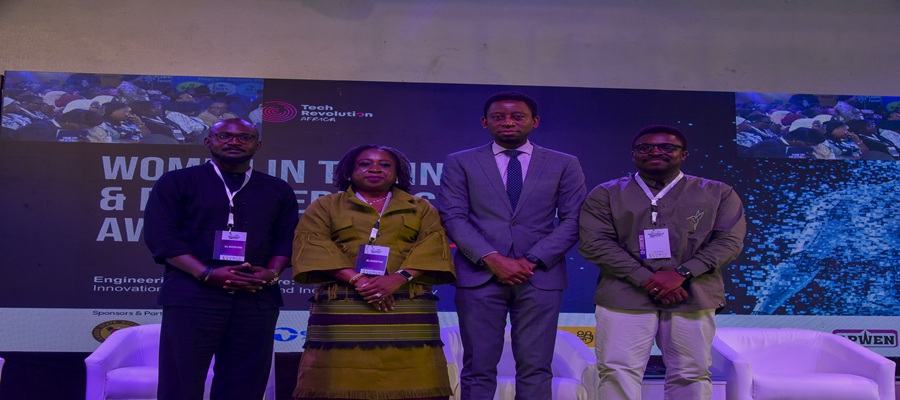
MTN Foundation, in a strategic partnership with Womenovate, officially kicked off the fifth edition of the Women in Technology and Engineering Summit (WITESA) at the MUSON Centre, Lagos, on June 23, 2026.

The summit, themed, “Engineering Africa’s future: Innovation, Infrastructure, and inclusive technology”, was designed to dismantle barriers for women in Science, Technology, Engineering, Agriculture, and Mathematics (STEAM) fields.
The summit serves as a call to action for corporate stakeholders, policymakers, and industry leaders to cultivate a more equitable digital ecosystem for female-led innovations. As a key sponsor, the MTN Foundation reinforced its commitment to nurturing future talent by integrating female students into the summit where they engaged directly with industry experts and gained exposure to emerging technologies.
The Lagos State Government, recognising the importance of initiatives like WITESA, highlighted the need for inclusive policy frameworks. Representing the Executive Governor of Lagos State, His Excellency Babajide Olusola Sanwo-Olu, the Honourable Commissioner for Innovation, Science, and Technology, Olatunbosun Alake, noted that the summit aligns perfectly with the state’s vision for growth. “Innovation and infrastructure alone are not enough; they must be inclusive,” Hon. Alake remarked.
“Initiatives such as WITESA are important. They provide the visibility, mentorship, and recognition that inspire young women to pursue careers in engineering, technology, artificial intelligence, data science, renewable energy, advanced manufacturing and other emerging sectors.”
Speaking on the company’s commitment to gender equity, the General Manager of Enterprise Marketing at MTN Nigeria, Njideka Jack, highlighted the telecom giant’s data-driven approach to social impact. “MTN is intentional in closing the digital gender gap. With a 41.4% female workforce and 46.4% female representation in executive positions, alongside our matching fund and the empowerment of 5,754 Y’ellopreneurs, we are proud of our journey in empowering women,” she stated.
Jack emphasised that MTN’s focus remains firm, adding, “We are represented at the intersection of innovation, infrastructure, and inclusive technology, and our presence here today reflects our dedication to creating sustainable pathways for women in tech.”
The event concluded on June 24 with an award ceremony celebrating trailblazers who have made significant contributions to scientific and technological advancement in Nigeria.
The ceremony honoured distinguished leaders, including Bukola Ajayi, Chief Information Officer of MTN Nigeria; Aigboje Aig-Imoukhuede, Chairman of Access Holdings Plc and Coronation Group; Nkemdilim Uwaje Begho, CEO of Future Software Resources Limited; and Ude Enebeli, Acting Chief Information Officer of MTN Cameroon, among other industry luminaries.
Motunrayo Opayinka, CEO of Womenovate and the convener of the summit, expressed that these awards are critical to normalising women’s contributions in high-impact technical fields. “This award is a celebration of those whose vision and dedication are rewriting the narrative of African technology,” Opayinka said.
“By recognising these leaders, we are inspiring a new generation to see themselves as the architects of Africa’s future.”
The summit marked a significant step forward in the conversation around digital inclusion, translating high-level dialogue into a concrete roadmap for policy and practice. By leveraging the combined strengths of its sponsors and adopting a community-driven approach, Womenovate established a new benchmark for corporate responsibility within Nigeria’s tech ecosystem.
The event concluded with an award ceremony celebrating industry leaders and trailblazers, reinforcing a shared vision where innovation, infrastructure, and inclusivity serve as key drivers of Africa’s technological future.

NDIC Says 281m Depositors Protected against Bank Failure

Wema Bank Suspends Telegram Operations over Scams

Akara Business Can Pay More than Bank Jobs – Governor Aide

OPay Unveils Emergency Lock, Safety PIN to Boost Customer Protection

FG Captures 32m Students DNEMIS ahead July 1 Rollout

London Strengthens Global Investment Ties with Africa @ First Ever London-Africa Business Summit

Mobile Internet Gender Gap Widest in Africa – GSMA

FG Targets Alleged N3tn Capital Flight, Opens Airtime Credit Market to Nigerian Fintechs

Japan, UNESCO Boost Digital Learning in 15 CoEs with Donation of ICT Equipment

Good News for DStv Users: Watch over 160 Channels Without Paying Extra




 E-Business1 day ago
LG Showcases AI-Powered Smart Living Innovations @ Africa Technology Expo 2026

 E-Financial1 day ago
UBA mobilises employees across Africa for environmental clean-up, wellness campaign

 Telecom1 day ago
OADC Reaffirms Abundant Capacity in Data Centres in Nigeria to Host Financial Data

 General News1 day ago
LASTMA Launches 3367 Toll-Free Hotline for Emergency Response, Traffic Management

 E-Financial1 day ago
PalmPay Calls for Trust, Infrastructure and Responsible AI to Drive Payment Ecosystem Innovation

 Telecom1 day ago
ALTON Backs NCC’s Local Smartphone Manufacturing Drive to Widen Digital Access

 E-Financial1 day ago
ngCERT Raises Alarm over Surge in Banks’ ATM Cyberattacks

 E-Business1 day ago
Want a Business Loan Without Interest? SMEDAN Launches N500m Fund