

General News
Nigeria’s Children Under Siege as Politics Trumps over Governance

By Blaise Udunze
Chapter Two, Section 14 (b) of the 1999 Constitution of Nigeria (as amended) is explicit when it states that the security and welfare of the people shall be the primary purpose of government. Hence, by every standard, welfare of Nigerians should be the first priority of the government. What would be said if the same government has failed on this path? Judging by this rhetorical question and series of unfolding events, indications have shown that Nigeria is drifting into a dangerous territory where politics increasingly overshadows governance, and the amazing part of it is that insecurity, poverty and social despair continue to consume the very foundations of the state.

Surprisingly, this is eventually playing out when millions of Nigerians expect leadership, empathy and decisive action, the political class appears preoccupied with permutations for 2027, coalition-building, defections, endorsements and electoral calculations. Meanwhile, criminals are expanding their territory.
The horrendous tragic kidnapping of pupils, teachers and school workers in Oriire Local Government Area of Oyo State has become one of the most painful symbols of Nigeria’s deepening security crisis. Shamefully, it would be recalled that recently armed terrorists invaded three schools in Ahoro-Esinle and Yawota communities. Yes, this might not be the first time of abducting school pupils, but one thing that is more troubling in this case is that dozens of schoolchildren and teachers were abducted, as this includes toddlers barely old enough to understand what was happening around them.
Intently looking at the incident, one vicious act is that among those abducted were two-year-old Christianah Akanbi and three-year-old Sikiru Salami who also are not exempted from the daily torture.

The horror became even more devastating when a video emerged confirming the gruesome murder of Michael Oyedokun. He was a Mathematics teacher who had simply gone to work on a Friday morning to educate Nigerian children. He never returned home. The life of a teacher, a father and a mentor was cut short when beheaded in captivity by terrorists in Nigeria in May 2026.
His death is not merely a tragedy for his family. But the harrowing and painful experience is that it is an indictment of a nation that appears increasingly unable to guarantee the safety of its citizens.
Let us consider the recent attack in Oyo State, this is not an isolated incident. It is part of a growing pattern that demonstrates the alarming deterioration of security across the country. And this is one harrowing and traumatic situation that might continue to heighten fear in the southwest is that barely days after the Oyo school abductions, gunmen invaded Yashikira in Baruten Local Government Area of Kwara State, attacked the Emir’s palace, set parts of it ablaze and abducted ten residents. Also, of great concern is that just days earlier, worshippers had been killed and others abducted from a prayer ground in the same state.
Worst still, these nightmares have been the lived realities confronting Nigerians across Benue, Plateau, Katsina, Zamfara, Borno, Niger and other states, stories of killings, kidnappings and displacement have become routine headlines.
The frightening reality is that Nigeria is gradually normalising the abnormal. Schools are becoming targets. Highways have become theatres of terror. Farms have become killing fields. Communities are becoming refugee camps. And citizens increasingly feel abandoned.
What makes the situation even more troubling is the growing perception that governance has been subordinated to politics.
This is to say that it has become glaring that while communities mourn their dead and families desperately search for abducted loved ones, and the “sorry” situation is that public attention at the highest levels of government often appears focused on political calculations ahead of the 2027 elections.
This perception gained further traction following the Oyo school abductions. Nigerians watched grieving parents cry on television. Videos emerged showing abducted teachers pleading for help from captivity. This has triggered a negative notion as many citizens felt there was insufficient urgency from the federal authorities in responding to one of the most horrifying school attacks in recent years.
Leadership is not measured only by policies and speeches. It is measured by empathy, responsiveness and the ability to assure citizens that their pain matters.
Section 14(2)(b) of Nigeria’s Constitution leaves no room for ambiguity. It states clearly that the security and welfare of the people shall be the primary purpose of government. Not politics. Not elections. Not defections. Not coalition building. Security and welfare.
Unfortunately, many Nigerians increasingly believe that the priorities of government no longer reflect this constitutional obligation. The consequences extend far beyond security. The educational sector is becoming one of the biggest casualties of the country’s security collapse.
The vicious incidents have brought the society to a standpoint whereby parents who once worried about examination results now worry whether their children will return home alive from school. Meanwhile, teachers who has continued to work tirelessly and still should be focused on learning outcomes are increasingly forced to think about survival.
One glaring adverse impact from all these abnormalities is that school enrolment in vulnerable communities is likely to decline as parents choose safety over education.
The long-term implications are frightening because the fact is that every child denied education today becomes a future economic liability. Every school abandoned due to insecurity creates another generation vulnerable to poverty, extremism and social exclusion. Every teacher lost to violence weakens Nigeria’s human capital.
Another aspect that is more of concern is that the abduction of children from schools represents more than a security challenge but this is a thorough attack on Nigeria’s future. Perhaps the most heartbreaking and horrendous aspect of these attacks is the psychological damage inflicted on children. It must be established beforehand that when rescued, many victims may never fully recover from the trauma. This could be link to, especially to the screams, the gunshots, the confusion, the separation from parents and the terror of captivity.
With the recent and past occurrences, without any iota of doubt, such experiences often leave invisible wounds that endure for years. Considering that the children who should be learning multiplication tables and nursery rhymes are instead learning fear.
The real question is, can a nation that cannot protect its children confidently speak about its future? Never! Emphatically, it should be understood that beyond education, insecurity is fueling a broader socio-economic epidemic.
Nigeria is already grappling with one of the worst affordability crises in its history, which also depicts the continued governance complacency. Talking of the removal of fuel subsidy and exchange rate liberalisation, inflation has eroded purchasing power, while food prices, transportation costs, rents and utility bills continue to soar and worse-off is the skyrocketing price of cooking gas.
Yet insecurity is making the crisis even worse. Farmers cannot access their farmlands. Harvests are disrupted. The country has witnessed the rural economies collapsing heavily. The resultant effect is that food production has continued to decline and supply chains are increasingly vulnerable. The result is predictable because the simple arithmetic is that higher food prices, worsening hunger and deeper poverty.
The level of security collapse has shown that many northern farming communities, bandits now function as parallel authorities, imposing levies and determining who can farm and who cannot. This directly impacts food availability in urban centres hundreds of kilometres away.
Thus, insecurity is no longer merely a security problem but the truth is that it has become an economic problem, which is developmental, educational, humanitarian problem. And ultimately, a governance problem.
The inability to effectively confront insecurity also raises difficult questions about institutional capacity.
As public affairs commentator Leonard Umunna recently observed, weak institutions produce weak outcomes. Corruption, poor accountability and ineffective governance structures have collectively undermined the state’s ability to deliver security and development.
Some of the terrifying truth Nigerians must take into cognizance is that when institutions become compromised, citizens lose confidence. Also, when accountability disappears, impunity flourishes, as same applies to when governance fails, criminality fills the vacuum. One truth that cannot be argued is that the vacuum is becoming increasingly visible across Nigeria.
The irony being experience today in Nigeria is that while political actors are preparing intensely for 2027, the very foundations required for democratic stability are being eroded.
The terror and anxiety are definitely obvious and the fact is that democracy cannot thrive in an environment of widespread fear.
Citizens who cannot travel safely, farm safely, worship safely or send their children to school safely are unlikely to have confidence in democratic institutions.
Perhaps, some ought to translate these messages to those at the political actors at helm of affairs in Nigeria that security is the foundation upon which every other national aspiration rests. And, without security, economic reforms become ineffective. Without security, educational investments become vulnerable. Without security, foreign investment declines. Without security, national unity weakens. Also, another underlying fact is that without security, democracy itself becomes fragile.
The well-known truth which is quite unfortunate today is that Nigeria’s challenges are not insurmountable because the country possesses the manpower, resources and institutional structures necessary to reverse the tide.
What appears lacking is the political will, urgency and strategic focus required to confront the crisis comprehensively.
This moment demands more than condolences after attacks. It demands intelligence-driven operations. It demands stronger coordination among security agencies. It demands improved local intelligence networks. It demands accountability. It demands institutional reforms. Most importantly, it demands leadership that places governance above politics.
As Nigeria inches toward another election cycle, political leaders must recognise a simple truth and that truth is that there may be little value in winning elections in a nation increasingly overwhelmed by insecurity, poverty and social fragmentation.
The pursuit of political power cannot become more important than the survival of the republic itself. The death of Michael Oyedokun should haunt the conscience of the nation. So should the tears of Christianah Akanbi. So should the fears of every parent afraid to send a child to school. So should the pain of every community living under the shadow of terror. Nigeria is at an intersection; it has reached a tough moment where important and critical decisions must be made.
One path leads to deeper insecurity, educational decline, economic hardship and national instability. The other requires courage, responsibility and a renewed commitment to governance. The choice should not be difficult.
For if politics continues to take precedence over governance, the greatest casualty may not be any political party or administration. It may be Nigeria itself. The country is redeemable and there is still hope for a better Nigeria.
Blaise, a journalist and PR professional, writes from Lagos and can be reached via: [email protected]


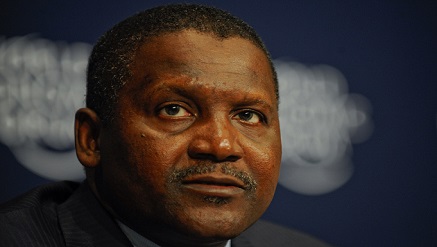
Aliko Dangote, Africa’s richest man, plans to dedicate one-third of his wealth to charity as part of his succession plan, Halima Dangote, his daughter, has revealed.

Aliko Dangote
Halima, a trustee of the Aliko Dangote Foundation, disclosed this in an interview with Bloomberg published on Tuesday, saying the billionaire had secured the support of his family to commit 33 per cent of his estate to philanthropy.
According to the Bloomberg Billionaires Index, Dangote’s net worth is estimated at $35.1 billion, meaning one-third of his current wealth would be worth about $11.7 billion if his fortune remains at that level.
Halima explained that her father views philanthropy as a key part of his legacy and has incorporated it into the family’s long-term succession plans.
She said Dangote had structured his estate to ensure that charitable giving continues across generations, particularly in areas such as healthcare and education.
“He sort of put all the structure in place whereby we focus a lot on health and education. He actually donated 25 per cent to the foundation. If you look at it, it is what we call in Sharia Code in Islam; it means he has donated 33 per cent of his whole inheritance to his foundation,” she said.
Halima added that Dangote believes giving back is central to the success of his businesses and the family’s values.
She said the billionaire asked her, her two sisters, and his mother to sign the agreement allowing 33 per cent of his inheritance to be dedicated to humanitarian causes.
The planned donation builds on Dangote’s longstanding philanthropic activities through the Aliko Dangote Foundation, which was established in 1994.
According to Halima, the foundation received an endowment of $1.25 billion about a decade ago and has since received an additional $700 million in funding.
She said about 70 per cent of the foundation’s spending goes to programmes in Nigeria, while 20 per cent supports projects across Africa, with the remaining funds directed to initiatives in other parts of the world.
The foundation’s interventions focus on healthcare, education, nutrition, and humanitarian support, including partnerships that contributed to the eradication of wild poliovirus in Africa.
Dangote’s planned charitable commitment adds to increasing global attention on billionaire philanthropy.
Although the proposed 33 per cent allocation is below the 50 per cent commitment associated with the Giving Pledge, it would rank among the largest philanthropic commitments announced by an African billionaire.
Earlier this year, Dangote was named among the world’s most influential philanthropists by TIME magazine’s inaugural TIME100 Philanthropy list, recognising the impact of the Aliko Dangote Foundation, which reportedly spends more than ₦50 billion annually on programmes across Africa.

Nigeria Atomic Energy Commission (NAEC), has said that there are plans for Nigeria to begin to generate electricity from nuclear sources.

Mr Anthony Godwin Ekedegwa, chief executive, NAEC stated this when he recently visited Mr Umar Yusuf Girei, acting managing director, National Inland Waterways Authority (NIWA),in Abuja.
He was at NIWA’s office to solicit the support of NIWA in achieving the numerous advantages of using nuclear energy technology in the country.
According to him, the partnership of critical stakeholders in Nigeria will position the country well in developing and maintaining its nuclear power plant.
The NAEC chief said Nigeria intends to begin the generation of electricity from nuclear sources instead of fossil-based power plants and hydro-based power plants, stressing that for Nigeria to develop, there is a need for the country to diversify its energy needs.
In his remarks, Mr Girei assured NAEC of his agency’s readiness to collaborate on the advancement of a nuclear power plant in Nigeria.
He promised the full support of NAEC for the success of a nuclear power plant in the country, saying that as the organisation saddled with the responsibility of regulating and developing Nigeria Inland Waterways, his entity is strategically positioned to play a critical role in the federal government’s quest for sustainable energy through the new technology.
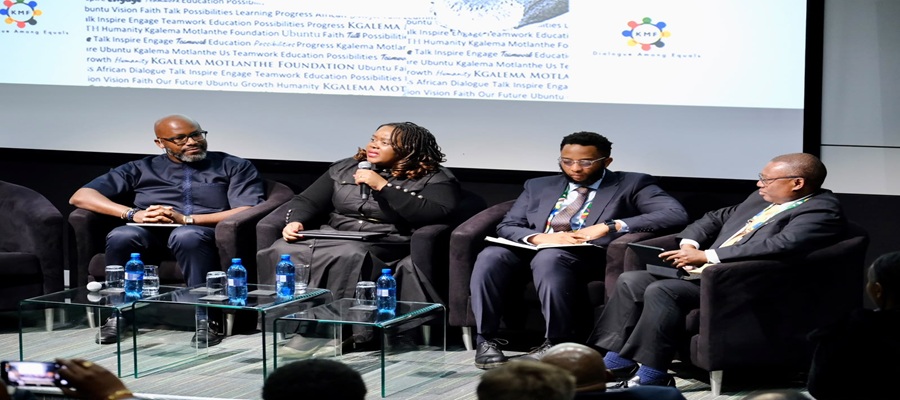
In a powerful call for continental solidarity, Ralph Mupita, Group CEO of MTN, has asserted that the future of the African continent depends on the dismantling of xenophobic barriers.

Speaking at the Kgalema Motlanthe Foundation (KMF) Winter Seminar, Mupita framed migration as a fundamental characteristic of the African identity, urging South Africa and other nations to embrace integration over exclusion.
He emphasised that the survival of African enterprises depends on a borderless approach to trade and talent. “The digital economy we’re fast moving to knows no borders.” Mupita declared, noting that the mindset of exclusion is an outdated relic that hinders the continent’s ability to compete globally.
He argued that for Africa to leverage the African Continental Free Trade Area (AfCFTA), the psychological barriers of xenophobia must be eradicated.
Providing a stark financial justification for this stance, Mupita highlighted MTN’s own operational reality as a blueprint for Pan-African success. “We earn about 80 to 82% of our earnings from outside South Africa,” he revealed, illustrating that the prosperity of South African-born entities is inextricably linked to their success across the rest of the continent. This figure underscores the interdependence of African economies and the danger of isolationist policies.
Mupita’s stance was strong advocating for unity: “The future of Africa will not be determined by the borders that separate us, but by the economic opportunities that connect us. Governments must set predictable policy and regulations.
Businesses will follow and allocate resources and capital. Together, we can build a continent where opportunity is more evenly shared and prosperity is more widely created.”
Analysts observing the seminar noted that Mupita’s remarks come at a critical juncture where economic volatility often fuels nationalist rhetoric. By tying the fight against xenophobia to the balance sheet, MTN is positioning Pan-Africanism beyond the moral imperative to its function as a business necessity. The CEO stressed that “Migration is part of who we are,” suggesting that the movement of people is the primary engine for the movement of capital and innovation.

Fact-Check: Elon Musk’s “Tesla Pi Phone” is Internet Rumor

Dangote Plans to Donate One-Third of Wealth to Charity as Legacy

NDPC Directs DCPMIs to Register with Agency or Face Legal Consequences

Malpass, Ex World Bank Chief Raises Alarm over Nigeria’s Secretive Debt Structures

How and Why Apps Deplete Data – ALTON

NRC, Ponzi Scheme Collapses Resulting Loss of Billions of Naira

EFCC Busts NIS Visa Overstay Racket, Uncovers N700m in an Account

Tokenization, Blockchain Technology will Transform Financial Institutions – IMF

From Scarcity to Scale: What Africa Can Learn from India’s Agricultural Transformation

BON Establishes Six Ad Hoc Committees to Modernize Broadcasting




 News3 days ago
See Verified 20 Countries Nigerian Passport Holders Can Travel Visa-Free

 E-Business3 days ago
Report Says Cybercriminals Deploy Malware to Hijack Crypto Wallets, Monitor Browsers Telegram

 Telecom3 days ago
NCC, REA Partner to Cut Telecom Costs with Renewable Energy

 Telecom3 days ago
Subscribers, Telcos Warn FCCPC over Airtime Lending Enforcement

 E-Business3 days ago
NPC Opens 131 Births, Deaths Registration Centres in Anambra

 General News3 days ago
AfDB, Nigeria Urge African Control of Mineral Resources

 News2 days ago
History as Lagos Becomes First Nigerian State to Launch Greenhouse Gas Registry

 E-Business2 days ago
UNN to Partner Firm on AI, Smart Mobility Innovation Centre