

General News
N20:The Most Mutilated Nigerian Currency Note

In February 2007, the Central Bank of Nigeria (CBN) released for public use new designs of the Nigerian currency. The redesigned denominations were the N5, the N10 naira, the N20, N50 and newly introduced N2 coins.
It was neither the new coin or the new design that was spectacular to Nigerians, and no one expects it to be, but the eye catching thing was the twenty naira note which did not come in the traditional paper note format but came in a polymer format.
This, according to the International Polymer Currency Association, made Nigeria the 24th country to issue Guardian® polymer notes and the 2nd country in Africa. The twenty naira note is also the first polymer note to be printed in Africa (it was printed by the Nigerian Security Printing & Minting Plc).
Aside the CBN’s main purpose of cost reduction in currency production, there seemed to be a consensus on the reason the twenty naira note came in polymer form. The belief is that the twenty naira note is the most used of the Nigerian currency notes causing it to be the most mutilated. Even in the CBN adverts of new currency notes, the N20 was used to depict the process by which currency notes are ruined by Nigerians. In polymer form therefore, it is expected to be able to withstand the pressure of commerce much longer as it is exchanged from hand to hand.
Now, two years after the new notes were released for public use, the twenty naira note, now polymer, seems to retain its position as the most abused and mutilated Nigerian currency note.
The twenty naira note, without relying on any empirical data, is the most held and exchanged currency note. Amongst a predominantly poor and low class society, this cannot be farther from realism.
The IPCA also records that the twenty naira is the highest volume bank note in circulation in Nigeria.
The twenty naira by observation is also the most used by public transport operators in giving change (fare balance on excess) to their passengers. Market women and traders also appear to exchange more twenty naira notes in their daily transactions than any other currency denomination.
The money changers, who help split larger denominations into lower ones at a fee at bus stops and vehicle parks have more twenty naira notes in stock and in more demand from their customer base concentrated around commercial transport operators.
The polymer has seriously exposed the twenty naira as about the most roughly handled.
Some straighten it with hot electric iron, others hold it together with ‘evostic’ gum while some one torn it in two. Some twenty naira notes are so faded it looked like it had been bleached. Worse still, some use it as toothpick, some use it as cotton bud to clean their ears while others use it as funnel to fuel their vehicles.
The polymer note may not have fulfilled its purpose to withstand the pressure of commerce for much longer, but it has obviously exposed the unwholesome way Nigerians handle her legal tender. All the currency notes are handled with such impunity by Nigerians. Many people have complained about the state of the Nigerian currency notes and in the usual Nigerian style put the blame on the Central Bank for the lack of enough public enlightenment on handling currency notes.
The CBN realizing the need for currency handling re-education followed the release of the new currency notes with series of media campaigns in an attempt to ensure that these new notes do not go the way of the phased out ones.
Now it is clear that the problem of currency mutilation is the fault of Nigerians who use the notes and handle them recklessly, especially among public transport operators, market men, women and other petty traders. The lack of education or just sheer negligence among this class can be blamed for the state of our currency notes. For this class of people mere media campaigns do little in trying to change their mentality. The solution to maintaining good currency notes lies with Nigerians themselves.
We must begin to reject mutilated notes to discourage those in the habit of handling notes carelessly, because some of these notes are actually abused on purpose. The market woman will be careful the way she handles her notes when she knows that customers will reject it if it is dirty. Banks must also start rejecting mutilated and dirty notes so that petrol stations where most of these notes would usually find ready acceptance would also join the trend in saying no to these notes.


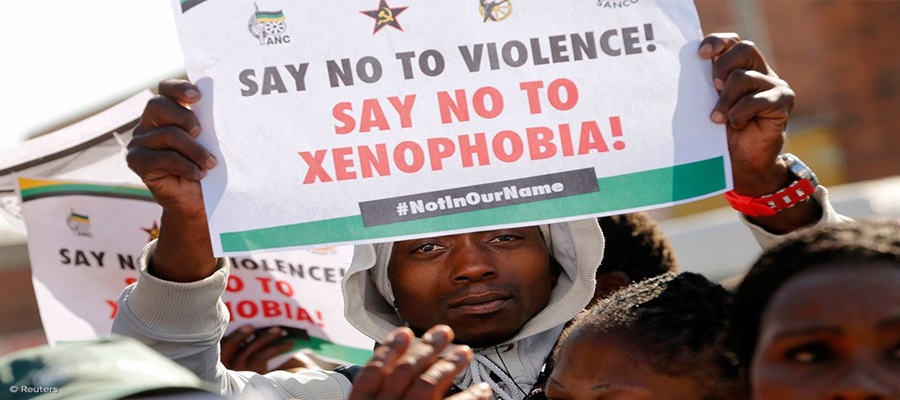
Anonymous Nigeria, hacktivism, known for launching coordinated cyberattacks and protests in support of socio-political movements, has threatened to leak stolen South African government data unless its demands were met.

The group, called for the department to stop xenophobic attacks on Nigerians in South Africa, or it will expose the data.
“They call themselves correctional services, but they can’t correct the citizens. What a shame,” the group said in its Telegram channel, MyBroadband reported.
“They killed a lot of Nigerians while the so-called correctional services watched and the ministry of justice.”
It is immediately know if Anonymous Nigeria is affiliated to Nullsec Nigeria.
But in a post on a hacker forum, Nullsec Nigeria included a link showcasing an example of data stolen from the department.
It included two bid invitation notices, bid results, a copy of the bids received, and a notice of a bid awarded in various formats.
“We’ll expose all your evil deeds for the world to see, unless this attack stops. But if not, we’ll leak everything they got,” Nullsec Nigeria said.
“Unless the government of South Africa ends these xenophobic attacks on Nigeria, we’ll expose everything about you, your evil deeds will be exposed, and the world shall know.”
MyBroadband asked the Department of Correctional Services about the claimed breach and Nullsec Nigeria’s demands, but it did not immediately respond to our questions.
Nullsec Nigeria also claimed responsibility for breaching several other entities in South Africa, while responding to an X post about its OpSouthAfrica campaign in its Telegram channel.
“I wanna express something here. I saw a report on the #OpSouthAfrica hack by Nullsec Nigeria, but it was stolen by another person,” it said. “Tag the real breachers next time.”
In a separate thread on the hacker forum, Nullsec Nigeria also claimed responsibility for breaching the Ephraim Mogale Local Municipality’s systems.
It claimed to have hacked the local government’s website and threatened to expose “everything you got for others to see how heartless you are. You killed mothers, brothers, students.”
Nullsec Nigeria said the breach and the threats were in response to the xenophobic attacks on and killing of Nigerians and the South African government’s supposed silence on the issue.
“These attacks are still going on in the dark, and we’ll expose them all. If the South African government doesn’t act first, the whole of South Africa will suffer,” it said.
“This is just a wave. These documents are about 11GB, but we decided to pull just this one.”
Its post included two images: one for a public hearing and another, a handwritten tender document for the appointment of an insurance service provider.
It also included a link to several other documents, including an old annual report, council resolutions, financial statements, and various other notices.
The Nigerian Government recently announced plans to bring citizens back to the country from South Africa after violent protests over foreign nationals in the country erupted earlier in May.
President Cyril Ramaphosa condemned the protests and criminal acts directed at foreign nationals in his From the Desk of The President weekly newsletter on 11 May 2026.
He emphasised the recent demonstrations and attacks did not represent the views of the South African people, nor the government’s policy.
“These are the acts of opportunists who are exploiting the legitimate grievances, particularly those of the poor, under the false guise of ‘community activism’,” The President said.
“Some of these people are assuming functions that only state officials are permitted to perform, including stopping people to check identification and conducting searches of private property.”
He added that such lawlessness would not be tolerated, regardless of who the perpetrators or victims were.
World Bank has restricted comments on its Instagram page after thousands of Nigerians flooded the platform begging them to stop lending money to Nigeria.

The protest erupted after reports that President Bola Ahmed Tinubu is seeking a fresh $1.25 billion dollar loan for approval on June 26.
Some Nigerians asked the World Bank to provide more details about the purpose of the loan and how the funds would be managed.
Others said the country should reduce dependence on foreign loans and focus on improving local revenue.
The federal government has continued to defend its borrowing plans.
Officials say the funds will support economic reforms, development projects and efforts to strengthen the economy.
Nigeria remains one of the major borrowers from the World Bank in Africa, with different administrations securing loans over the years for infrastructure, social programmes and economic support.


The Lagos State Government plans to establish a Cybersecurity Operations Centre to strengthen protection of government systems, digital services and citizen data amid rising cyber threats linked to the city’s expanding digital economy.

Tunbosun Alake, Lagos commissioner for innovation, science and technology, said the centre would help secure the infrastructure supporting online payments, e-government services, cloud platforms and technology-driven business operations across the state.
According to Alake, the facility will monitor, detect and respond to cyber threats targeting government networks, digital transactions and sensitive public data.
The move comes as Lagos accelerates its smart city agenda through investments in broadband infrastructure, digital identity systems and automated public services.
Alake said Lagos had already deployed 109 Data Protection Officers across Ministries, Departments and Agencies, which he described as the highest number among Nigerian states, to strengthen compliance with data protection regulations.
Alongside the proposed cybersecurity centre, the state also launched the Lagos Campus Network Upgrade project aimed at improving digital infrastructure within the public sector.
The upgrade is expected to improve network performance, automate internal government processes and enhance digital engagement with residents. The cybersecurity initiative follows the release of Lagos State’s cybersecurity guidelines in April.
The framework recommends measures including multi-factor authentication, vulnerability testing, encrypted backups and tighter endpoint security controls.
The guidelines align with Nigeria’s Cybercrime Act 2024, the Nigeria Data Protection Act 2023 and the National Cybersecurity Policy and Strategy 2021.

Xenophobic Attacks: Anonymous Nigeria Threatens to Leak South African Stolen Data

WHO Says Ebola Outbreak Worse than Reported

Chapel Hill Denham Says Banks Lose N2.5 Trillion Annually to High CRR in New Report

Lagos Sanctions 15 Money Lending Firms for Operational Violations

FirstBank, Visa Launch Multicurrency Signature, Naira Debit Cards

MTN, VDT, Zoracom, Digital Realty Back 2026 Girls in ICT Campaign

Vitel Wireless Partners Fintechs to Expand Access to Services

Kaspersky Discovers Vulnerability in Qualcomm Snapdragon Chips that can Lead to Data Loss & Device Compromise

Bank Customers to Pay N1,500 for ATM Card Issuance, Replacement – CBN

FCCPC Licenses 5 Firms for Airtime, Data Lending as Telcos Step Aside




 General News3 days ago
World Bank Blocks Social Media Comments from Nigerians over Loan Backlash

 Telecom3 days ago
NITDA, FMCIDE Deepen Collaboration on Nigeria’s Digital Transformation

 Telecom3 days ago
Nigerians Lose N12.5bBn to Telecom-Related Financial Crimes – PwC

 E-Business3 days ago
Jumia Nigeria Records Strong Q1 2026 Growth as Technology-Led Strategy Drives Market Expansion

 General News3 days ago
LG Electronics Strengthens Household Energy Efficiency in Nigeria with Advanced Inverter Refrigerator Solutions

 Telecom3 days ago
NITDA Showcases Nigeria’s Startup Framework as Model for Angola

 News3 days ago
Only 1 in 3 Families Fully Secure their Devices, Kaspersky Study Reveals

 Telecom3 days ago
Upperlink, ICANN, Others Rally Global Participation for UA Day 2026