

E-Business
Ericsson Boosts Small Cell Sites With First Indoor Picocell

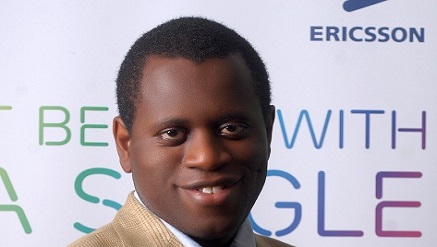
Smaller buildings and venues have the same mobile broadband coverage and capacity requirements as their larger counterparts.
But, in these smaller locations, this must be achieved at lower cost, both in terms of total installed capex and ongoing opex. With hundreds of thousands of small cells and carrier Wi-Fi access points already shipped to leading operators around the world, Ericsson is now launching the RBS 6402, the first indoor picocell to deliver 300 Mbps LTE speeds with carrier aggregation, that addresses the performance requirements and economic imperatives of smaller sites on a future-proof platform with a compact, tablet-sized footprint.
Patrick Weibel, responsible for Mobile Data Networks, Swisscom, said: “In our efforts to meet the increasing demand for access to mobile data within buildings, brought about by new mobile enterprises and M2M opportunities, our focus is on cost-effective offerings for smaller buildings. With the all-in-one small cell RBS 6402 from Ericsson we can reduce our costs without compromising performance and remain competitive.”
In today’s mobile workplace the tenfold growth of mobile data traffic by 2019, increasing enterprise adoption of Network-as-a-Service models, and new device-to-device and M2M applications, present both opportunities and challenges for mobile operators.
To satisfy their consumer and business customers, grow in mobile enterprise and expand into new industries, mobile operators must deliver consistently high performance indoor app coverage deep into buildings of all sizes and then back out onto the street again.
Daryl Schoolar, Principal Analyst of Wireless Infrastructure, Ovum, also said, “The indoor area, especially serving enterprise users, has started to heat up when it comes to small cells. It is the area where Ovum has seen the highest level of activity for small cell solutions. Unfortunately, many of those solutions create another network silo for the mobile operator as they aren’t fully integrated or coordinated with the rest of the network.
“By deploying small cells as an almost separate network the mobile operator cannot fully leverage the overall network performance. Ericsson has addressed this with its new small cell that offers feature parity and tight coordination with the macro cell. At the same time the RBS6402 is a very strong small cell product on its own, with a combined feature set I don’t see any other small cell offering at this time.”
As the first picocell to support LTE speeds of up to 300 Mbps with carrier aggregation, the RBS 6402 delivers twice the capacity and speed.
Flexible and future proof, it’s the only multi-carrier, concurrent multi-standard (LTE, WCDMA and Wi-Fi), and mixed-mode small cell to support 10 different bands, with two 3GPP standards (LTE and WCDMA) plus 802.11ac Wi-Fi operating simultaneously to deliver higher peak rates and capacity.
It integrates LTE and 3G radio access with Wi-Fi using Ericsson’s industry-first Real-Time Traffic Steering to dynamically and seamlessly shift the mobile device connection between networks, delivering the best user experience and optimizing network resources.
It also leverages LTE-Advanced and supports VoLTE. Remote software activation of frequencies, bands and features eliminates the need for site visits in conjunction with refarming or acquiring new spectrum.
Plug-and-play installation using existing ethernet for power and connectivity and fast remote commissioning means the cells fully install and are network-live within 10 minutes.
Cloud-based aggregation and gateway functionality reduce onsite equipment requirements and associated capex, while enabling consistent management across both indoor and outdoor network.
Ericsson’s comprehensive range of small cell and carrier Wi-Fi solutions – including the new RBS 6402 — ensures that mobile operators can address any mobile broadband coverage and capacity requirement today and in the future.
Optimized for indoor environments up to 5,000 square meters (roughly 54,000 square feet), the RBS 6402 packages four 250 milliwatt radios in a sleek 2.8 liter form factor that installs and auto-integrates in minutes.
Johan Wibergh, Head of Segment Networks, Ericsson, said, “With the Radio Dot System, we redefined the small cell architecture to address a wide range of underserved buildings, but we knew we still had to crack the price-performance barrier for smaller venues. Now the RBS 6402 cost-effectively serves the needs of smaller sites, which we estimate account for approximately 10 million buildings worldwide.
“With the Ericsson small cell and carrier Wi-Fi portfolio, mobile operators can now address their consumer and enterprise customers and new industrial opportunities in any indoor and outdoor environment.”
Coordinating small cells with the macro network, Ericsson delivers reliable connectivity and mobility through heterogeneous networks that employ common traffic management across technologies, frequencies and locations.
This holistic approach enables continuous monitoring of user performance across radio technologies, whether 2G, 3G, LTE or Wi-Fi, and between indoors and outdoors and coordinates decisions based on network load or service prioritization.
By eliminating the need to send traffic to the core network when moving between cells, techniques such as soft handover between base stations reduce both latency and dropped connections.
Radio coordination between the macro and small cells can also reduce the number of small cells required by up to 70 percent.
Ericsson supports all of its small cell products with network design, roll out, support and optimization services.
Ericsson Global Services also brings along the end-to-end capabilities needed to ensure seamless operation between small cell additions and existing network assets.


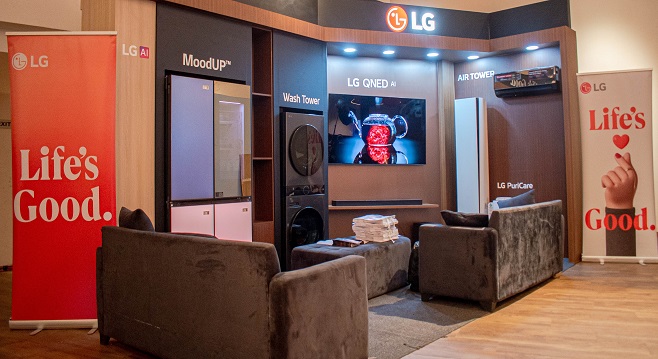
LG Electronics has reaffirmed its commitment to advancing innovation and smart living across Africa by participating as a supporting sponsor at the Africa Technology Expo (ATE) 2026, where the company is showcasing its latest portfolio of premium consumer electronics and home appliance innovations.

The two-day expo, themed around strengthening Africa’s enterprise technology ecosystem through collaboration and innovation, has brought together industry leaders, technology innovators, multinational companies, policymakers, and entrepreneurs to explore opportunities for cross-border partnerships and digital transformation across the continent.
As one of the supporting sponsors of this year’s event, LG’s interactive exhibition booth has become a major attraction, offering visitors firsthand experience of the company’s latest AI-powered technologies designed to enhance everyday life while delivering greater comfort, convenience, energy efficiency, and connectivity.
Among the innovations on display are the latest LG QNED TV, delivering exceptional picture quality and immersive entertainment; the iconic MoodUP™️ Refrigerator, which combines intelligent cooling with customizable LED door panels; the innovative LG WashTower™️, an all-in-one premium laundry solution that maximizes space and efficiency; the energy-efficient LG ARTCOOL Air Conditioner and LG Air Tower, designed to provide smarter climate control; alongside LG’s advanced Dehumidifier and other intelligent home solutions.
Speaking on LG’s participation, Mr. H.S. ji, Managing Director, LG Electronics West Africa, said: “Africa Technology Expo provides an excellent platform to engage with innovators, businesses, and consumers who are shaping the future of technology across the continent. At LG, innovation goes beyond creating advanced products, it is about developing meaningful solutions that improve everyday life.
“Our participation reflects our commitment to supporting Africa’s digital transformation while introducing intelligent technologies that make homes and workplaces smarter, healthier, and more energy-efficient.”
The Africa Technology Expo was established to foster stronger collaboration among African businesses, emerging enterprises, and multinational organisations. During the opening ceremony, the organisers emphasized the need for deeper continental collaboration to unlock Africa’s innovation and economic potential, noting that previous editions of the expo have facilitated approximately $192 million in business deals among participating companies.
LG’s presence at the event aligns with this vision by demonstrating how cutting-edge consumer technology can support economic growth, digital inclusion, and sustainable development across Africa.
Visitors to the LG booth are participating in live product demonstrations, interactive experiences, and expert consultations, gaining valuable insights into how LG’s AI-powered ecosystem seamlessly connects home appliances and entertainment products to deliver a smarter lifestyle.
As technology continues to reshape industries and everyday living, LG remains committed to driving innovation that empowers consumers, supports enterprise growth, and contributes to Africa’s evolving digital economy.

Nigeria’s weak data protection guardrails may undermine the recent directive by Central Bank of Nigeria (CBN) to banks, fintech firms, and other payment service providers to store payment transaction data generated within the country local servers.

CBN said that the new rule will start from January 1, 2027, as part of new measures to strengthen oversight of the fast-growing digital payments ecosystem.
This will also provide the country greater control over critical data infrastructure, allowing authorities to easily access records, conduct audits, enforce compliance, and investigate, especially in cases where criminal offenses are involved, reducing delays often caused by intermediation between local and foreign entities.
Apart from data sovereignty, the CBN added that moving transaction records from foreign servers will help drive investments in local data centers and cloud storage capacity.
Though reliable estimates are hard to come by, it is believed that Nigeria loses over N60 billion in hosting data in foreign servers.
But a coalition of civil society organizations (CSOs), has raised concerns over safety measures in place to protect data of Nigerians, despite having data protection laws in place.
The coalition, comprising Media Rights Agenda, Paradigm Initiative, Digital Rights Lawyers Initiative, and Accountability Lab Nigeria, among others, released the “Protected From the State, Not By It: Nigeria’s Data Protection Crisis Is a Crisis of Implementation,” where they criticized regulators’ failure to effectively enforce data protection laws, which led to rising cases of digital fraud and rampant illegal sale of sensitive information.
There have been leaks of sensitive voter, financial, and personal records.
For instance, there was alleged unauthorized access to the Continuous Voter Registration (CVR) database of the Independent National Electoral Commission (INEC) during a nationwide CVR exercise.
INEC earlier released the preliminary findings of its investigation into the matter, saying that it found no external breach of its systems and that the personal information of over 90 million registered voters was not compromised.
Despite this, CSOs argued that the incident underscored the lack of oversight, adding that it showed that while data privacy laws are in place, sensitive information can be easily moved from a secure government database and into the hands of private political entities.
The coalition also pointed out regulators’ failure to conduct human rights impact assessments on public surveillance systems before related programs were deployed, urging the government to act on these issues by subjecting public institutions to the same compliance requirements as private organizations.
“This is the asymmetry at the heart of the crisis: citizens are under-protected from data abuse and over-exposed to state monitoring and punishment,” the CSOs stated.
Additional report by coingeek

Visa, a multinational firm into payment card services says Artificial intelligence enabled scams have emerged as the fastest-growing source of consumer payment fraud globally as cybercriminals increasingly target people.

Visa stated this in its Mid-year 2026 Biannual Threats Report released on Wednesday in Lagos.
The report said scammers were increasingly using AI tools and social engineering tactics to manipulate consumers into authorising fraudulent payments themselves.Premier League Fixtures
It indicated that from July to December 2025, Visa identified nearly one billion dollars in scam-related activity, making scams the largest category of consumer payment fraud.
According to the report, fraudsters now impersonate trusted brands and institutions, create a sense of urgency and deceive victims into completing seemingly legitimate transactions.
The report said stronger network-level security had reduced opportunities for direct system compromises, forcing criminals to shift their focus to exploiting human trust.
It revealed that fraud involving device tokens declined by 9.6 per cent between July and December 2025, compared with the same period in 2024.
The report identified accelerating scams, growing use of AI in fraud, migration of attacks from technology to people, and evolving ransomware trends as key developments shaping payment security.
It stated that global ransomware activity rose by 26 per cent during the review period compared with the corresponding period in 2024.
However, only 23 per cent of ransomware victims paid ransoms, the lowest level on record, reflecting improved resilience and recovery capabilities, according to the report.
Commenting, Mr Paul Fabara, chief Risk and Client Services officer, Visa, said that payments at network level continued to get safer, but threats were evolving faster than ever
Fabara said criminals were increasingly using deception, urgency and AI-enabled tools to exploit trust, requiring stronger collaboration across the payments ecosystem.
Also, Andrew Uaboi, vice president and Cluster head, Visa West Africa, said AI had significantly lowered the barriers to entry for fraudsters.
“What once required deep technical skill can now be executed with a prompt,” Uaboi said.
He said intelligence-driven defence and coordinated action across the ecosystem were becoming increasingly critical to protecting consumers from emerging threats.

FCCPC Dismisses Report Claiming Approval of 48 New Loan Apps

ALTON Backs NCC’s Local Smartphone Manufacturing Drive to Widen Digital Access

LASTMA Launches 3367 Toll-Free Hotline for Emergency Response, Traffic Management

PalmPay Calls for Trust, Infrastructure and Responsible AI to Drive Payment Ecosystem Innovation

OADC Reaffirms Abundant Capacity in Data Centres in Nigeria to Host Financial Data

CBN Extends PoS Geo-Fencing Enforcement Deadline to August 2026

London Strengthens Global Investment Ties with Africa @ First Ever London-Africa Business Summit

FG Targets Alleged N3tn Capital Flight, Opens Airtime Credit Market to Nigerian Fintechs

Mobile Internet Gender Gap Widest in Africa – GSMA

Japan, UNESCO Boost Digital Learning in 15 CoEs with Donation of ICT Equipment




 General News2 days ago
Tinubu appoints Adigwe to head National Health Technology, Data Analytics Office

 E-Financial2 days ago
NRS, CITN Deepen Partnership to Strengthen Tax Awareness

 E-Financial2 days ago
Paystack Unveils AI-powered Payments Tools

 E-Financial2 days ago
Fidelity Bank Wins DBN Award for Expanding First-Time Credit Access to MSMEs

 General News2 days ago
PalmPay Strengthens Data Protection Culture with Employee Privacy Workshop and Privacy Champions Programme

 E-Financial2 days ago
FCMB Turns Normal Banking into Rewards with New Mobile App Upgrade

 Telecom2 days ago
Meta, FG Unveil New Safety Measures to Protect Nigerian Teens Online

 E-Financial2 days ago
Despite Warnings, FG Draws Down $1.5Bn as First Tranche of FAB $5Bn Loan Deal