

Telecom
Wiko Unveils Stylish Rainbow for ‘Wiko Generation’

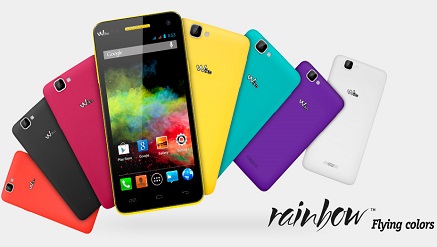
In line with its lower-end predecessors, Bloom, Lenny, Sunset, Fizz and Goa, Wiko’s relatively new offering, ‘Rainbow’ is just as colourful and packs a bit more punch.
This is the classic device offered to its target audience identified as Wiko Generation.
Rainbow is available in seven fun colours (just like a rainbow) and is sure to appeal to all personalities. Its 5” hi-resolution display means that movies and videos are a pleasurable experience.
Packaging:
The box itself is just as colourful as the device. It also makes telling whether the seal is broken very easy.
What’s in the Box?
Once you break the seal, inside the box, you’ll find, A Wiko Rainbow device, Earphones, Charge cord and Plug Adapter, One Li-Po battery, A Warranty booklet, A Manual, Three SIM card adapters and Two extra colourful phone cases.
Great for colour matching and blocking; fashionable ladies would love this as there’s a colour for every outfit.
I love that you get so much with the entire package; it just makes it so much more exciting to unbox.
It is also cool that the company was thoughtful enouh to include three SIM card adapters – two big ones and a smaller one (for Nano-SIMs) – even though the phone has just two SIM slots.
Many phone companies underestimate the importance of making such items an integral part of the ‘follow-come’ accessories.
Hardware:
The actual phone as it comes in the box, is black in the front with a brownish-grey back casing, which easily pops out to accommodate the extras.
Apart from the turquoise and neon yellow colours that come as extras with the device, the interchangeable cases also come in the colours, Black, White, Coral, Fuschia and Violet, which can be purchased separately.
The phone’s screen measures 5” with a 720x1280p IPS display.
Software/Performance:
From display to look-and-feel to actual processor power, the Wiko Rainbow is a valid competitor with other devices in its range.
Browsing and multimedia experience are pleasurable. Complete with cool gesture-based features, vibrating keys and a 4.4.2 Android Operating System, typing and generally operating the device is truly an enjoyable experience.
The Camera:
The camera on the Rainbow is really not bad at all (That’s a sentence you never thought you’d ever hear, isn’t it?).
With a secondary camera of 8 Megapixels and a Primary (Selfie) camera of 2MP, picturequality is smooth, relatively clear and easy on the eyes.
It also comes with extra shooting modes and features like Face Detection, ISO adjustment and Smile Shot (this automatically takes a photo when a smile is detected), to enhance your picture/video shooting experience.
The Wiko Rainbow is a pretty good buy if you’re in the market for a budget device with cool features and ample accessories. Look out, Tecno, it’s looking like Wiko will be one to contend with.
Below Are The Tech Specs For The Device:
Network: H+/WCDMA 900/1900/2100 MHz 2G GSM/GPRS/EDGE/ 850/900/1800/1900 MHz
Data Segment: HSPA + 21 Mbit/s; Operating Segment: AndroidTM 4.2.2 (Jelly Bean); Processor: Quad Core 1.3 GHz, Cortex-A7; Design: Touch Screen; SIM Card: 2 Mini SIM
Available Colours: Black, White, Coral, Turquoise, Fuchsia, Violet, Yellow Neon; Size: 146*74*9.3 mm; Weight: 167g (with battery) and Battery: 2000 mAh Li-Po.
Others are, Standby Time: Up to 260h; Talk Time: Up to 16h (2G); 10.48h (3G); ROM: 4GB; RAM: 1GB
External Memory: Micro SD up to 32GB;
Accelerometer: Yes
Magnetic Sensor: Yes
Proximity Sensor: Yes
According to Marcos Van De Pas, director, International Business at Wiko Mobile, the company’s target audience is known as the Wiko Generation.
Van De Pas identified the generation as possessing such qualities, as “They know what they want. They are not fooled easily. They want value for their money. They have spirit of independence and a capacity to take control and What matters most to them is living life to the fullest.
Wiko, number two smartphone vendor in France, according to statistics by Gfk Institute, is distinguished by its range of high-tech, high performance and attractively designed products.
In just three years, Wiko has become a leader in the mobile phone market through strong partnerships with retailers and consumer enthusiasm.
Two million users later, Wiko’s popularity continues to rise in Europe and it exports its expertise to other continents.
The RAINBOW confirms the phenomenal success of the brand.
In France, this 5” smartphone launched in May 2014, became the No.1 phone sold online in June 2014.


Telecom
Aba to Host MTN’s “The Gathering” with Pitchathon Offering ₦5 Million Prize Pool for Emerging Startup Founders


MTN’s Youth cultural and lifestyle event “The Gathering” will hold in Aba at the Prime Event Centre from June 14 to 15, 2026, with a high-stakes Pitchathon designed to spotlight and reward the most promising early-stage founders in the city, offering a total prize pool of ₦5 million.

The competition will award ₦2.5 million to the winning startup, ₦1.5 million to the first runner-up, and ₦1 million to third place, giving young entrepreneurs not just funding, but a direct platform to validate their ideas in front of investors, consumers, and industry stakeholders.
The Aba Pitchathon follows a highly successful Lagos edition of The Gathering on 100, which took place at the National Stadium, Surulere, from April 22 to 26, where eight startups collectively received ₦45 million in seed funding after pitching solutions across fintech, healthtech, agritech, edtech, and creative technology.
At the Lagos edition, Hurpham Africa emerged as the overall winner with ₦15 million in funding support, followed by Coconoto Ltd with ₦10 million and Rava Send with ₦5 million. Five other startups – URI Social, Dulces Jams, Kindly Book, Africa Medical Marketplace, and MyFund – each received ₦3 million, alongside visibility and MTN business ecosystem support.
Organisers say the goal is to deepen access to opportunity across Nigeria by taking The Gathering on 100 beyond Lagos into high-potential commercial hubs like Aba, where entrepreneurship continues to thrive.
Registration is now open via The Gathering’s official website. Entrepreneurs, builders, and early-stage founders in Aba and surrounding cities are encouraged to apply for a chance to pitch live at the event.
Meta has unveiled a new artificial intelligence-powered tool, Meta Business Agent, designed to help businesses automate customer interactions, boost sales and improve operational efficiency across its messaging platforms.

Meta
The announcement was made at the Conversations 2026 event in London, where the technology company introduced the platform as part of its efforts to expand AI-driven business solutions.
According to Meta, the Business Agent will enable businesses to provide round-the-clock customer support on WhatsApp, Messenger and Instagram, helping them respond to inquiries, recommend products, book appointments and manage sales conversations.
The company said more than one million businesses are already using AI-powered business agents on WhatsApp and Messenger to engage customers.
Meta noted that with over one billion people connecting with businesses daily across its platforms, the new tool would help organisations deliver more personalised and relevant customer experiences.
The company explained that businesses could set up the Business Agent within minutes or integrate it into existing enterprise systems.
Features of the AI assistant include answering business-specific questions, making product recommendations from company catalogues, qualifying sales leads, booking appointments and facilitating transactions.
The platform also allows businesses to determine when human agents should take over conversations requiring additional support.
Meta disclosed that the Business Agent would now be expanded globally to businesses of all sizes and integrated into Instagram, where many companies also engage with customers.
The company said access to the tool would initially be free, while paid subscription plans tailored to different business categories would be introduced in the coming months.
In addition to customer engagement functions, Meta said the Business Agent could serve as an operational assistant by providing business owners with daily briefings, summaries of customer interactions and insights from conversations conducted overnight.
The technology firm added that future updates would enable the platform to perform more advanced functions, including market research, product insight generation, calendar management and competitive intelligence analysis.
Meta also announced the launch of the Meta Business Agent Platform, a new infrastructure designed to help businesses build, customise and deploy AI agents at scale.
The platform supports integration with hundreds of business systems, including e-commerce and customer service tools, allowing AI agents to perform tasks on behalf of organisations.
According to Meta, the platform offers enterprise-grade controls, governance mechanisms and measurement tools to ensure businesses can manage customer interactions securely and effectively.
The company said the initiative reflects its commitment to helping businesses leverage artificial intelligence to improve customer service, increase productivity and drive growth in an increasingly digital economy.

Digital Encode Limited, a leading information security and governance, risk, and compliance (GRC) advisory firm, has issued an urgent cybersecurity advisory following a surge in security breaches affecting financial institutions, government agencies, fintechs, and other organizations across Nigeria.

Digital Encode
Cyber threat actors have recently exposed data purportedly from both private and public institutions in Nigeria, underscoring the growing need for stronger cybersecurity frameworks, proactive threat monitoring, and coordinated incident response measures.
But Digital Encode’s advisory highlights a troubling pattern: most recent cyber incidents are not driven by sophisticated zero-day exploits, but by preventable weaknesses in basic security configurations, credential management, and operational controls.
According to the advisory signed by Professor Obadare Adewale Peter, Chief Visionary Officer of Digital Encode Limited, attackers are increasingly exploiting misconfigured systems and publicly exposed assets, such as unsecured databases, open cloud storage buckets, leaked API keys, and critical servers exposed to the internet, many of which are easily discoverable through open repositories, cloud indexing tools, and even dark web marketplaces.
The advisory outlines critical areas of concern, including publicly accessible cloud storage exposing sensitive customer and operational data; hardcoded secrets in web and mobile applications, including API keys and tokens; leaked credentials in repositories and deployment artifacts; weak internal access controls and over-reliance on single authentication layers; exposure of administrative endpoints, API documentation, and development environments in production; uncontrolled use of Third-Party Hosting platforms such as Vercel, Netlify, and Render; poor token lifecycle management and weak authentication, inadequate vendor risk management and monitoring controls
Digital Encode noted that these vulnerabilities are widespread across organizations, particularly in financial institutions, payment service providers, Fintech companies and public sector platforms, where similar exposure patterns continue to recur.
Not a Technology Problem, But an Execution Gap
“Organizations affected in recent breaches were not compromised due to highly advanced attacks, but due to lapses in enforcing existing security controls, like, ensuring that no cloud resources linked to organizations whether AWS S3, Azure Blob, Google Cloud Storage, or Firebase allow anonymous access, Verify that no cloud credentials or API tokens are exposed in public or private repositories, container registries or deployed applications, and all external and internal APIs must enforce authentication and authorization controls at all times” Prof. Obadare stated.
The advisory stresses that most of these risks can be mitigated with readily available tools and best practices, underscoring a critical gap between security policy and implementation.
Urgent Actions Recommended
Digital Encode has called on organizations to act immediately by conducting a comprehensive audit of all internet-facing assets, including third-party systems; revoking and rotating all exposed or potentially compromised credentials including passwords, API keys, and access tokens; reviewing historical logs to assess the extent of any prior exploitation; engaging vendors to address third-party security exposures; fixing identified misconfigurations and validating remediation efforts; strengthening monitoring, logging, and threat detection systems; and documenting remediation steps and residual risks for governance and compliance.
The firm also emphasized the need for improved visibility into shadow IT and unauthorized deployments tied to employees’ accounts, which increasingly serve as entry points for attackers.
Call for Proactive Security Posture
Digital Encode reiterated its commitment to supporting organizations through enterprise-wide security assessments and independent validation of implemented controls.
“We strongly advise that this advisory be actioned without delay,” Prof Obadare warned, adding that proactive security hygiene, not reactive response, will determine resilience in Nigeria’s evolving threat landscape.

PalmPay Young Star Awardee Hopes to Become a Governor

Japan, UNESCO Boost Digital Learning in 15 CoEs with Donation of ICT Equipment

Kaspersky Reveals Credential Abuse Techniques Rank as Attackers’ Most Effective Tactic

Aba to Host MTN’s “The Gathering” with Pitchathon Offering ₦5 Million Prize Pool for Emerging Startup Founders

DisCos Generate N597.6bn Revenue in Q1 2026 Amid Ongoing Power Supply Challenges

MTN, VDT, Zoracom, Digital Realty Back 2026 Girls in ICT Campaign

Vitel Wireless Partners Fintechs to Expand Access to Services

CPN Begins Crackdown on Quack IT Professionals, Vows Tougher Action against Cybercrime

Nigeria Hit by 24.1m Data Breaches – Surfshark

FG to Launch Nationwide Free Digital TV Platform June 17




 E-Business2 days ago
AI and IoT Hold the Key to Nigeria’s Economic Future – NCC

 Broadcasting2 days ago
Good News for DStv Users: Watch over 160 Channels Without Paying Extra

 E-Business2 days ago
Kaspersky Reports on the Aspects of SOC Effectiveness to Consider for Blind Spot

 News2 days ago
Easybuy Partners WAWUAfrica to Upskill 10 Million Youths and Women, Boosting Nigeria’s Economic and Financial Inclusion

 Telecom2 days ago
Flutterwave Announces Massive Staff Shake-Up, Promotes Over 100 Employees

 News2 days ago
Quest Merchant Bank Reports Strong FY2025 Performance @ 11TH AGM

 Telecom1 day ago
Legend Internet Reports Losses despite N505m Revenue

 E-Financial2 days ago
Fidelity Bank Sees Technology as a Strategic Enabler of Efficiency, Growth