

Telecom
Darwish, Nigerian Billionaire Tycoon Raises $2.6Bn for Telecom Towers

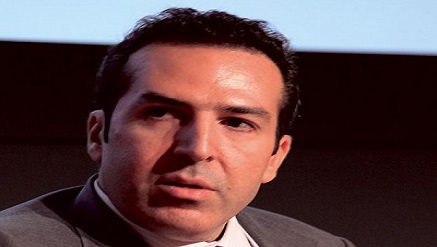
IHS Towers, a Nigerian phone tower company founded by Issam Darwish, Lebanese-Nigerian businessman has raised $2 billion in equity and $600 million in debt in one of the largest equity fundraising exercises by an African company in recent times.
IHS, the continent’s largest tower company, will use the money to finance infrastructure spending and recently agreed acquisitions, according to a company statement on Monday.
It said the equity funding was from new and existing shareholders, but did not provide further details.
The loan facility is split into two parts: a seven-year tranche of $500 million denominated in U.S. dollars and an eight-year tranche of $100 million in Nigerian naira.
Ecobank, Standard Chartered, Standard Bank, Investec and the World Bank’s International Finance Corporation (IFC) participated in the loan, Darwish told Reuters.
“This is the largest equity raising by a private entity for the past 7-8 years in Africa — you’ve had mining, banks and now telecom infrastructure as a standalone sector is commanding this much interest from the international markets,” said Darwish.
“This sends the right signal, it’s saying the international investor community believes in Africa and they’re putting a substantial amount of money behind that.”
Building and maintaining mobile communications towers in Africa is typically more expensive than in other regions because of security costs and electricity shortages, while revenue per user is often lower.
That has prompted many mobile operators to sell or lease towers to specialist companies such as IHS, which can reduce building and maintenance costs by hosting multiple tenants — mobile operators and Internet providers — on the same towers.
In September, South Africa’s MTN agreed to sell 9,151 mobile towers in Nigeria to a new joint venture with IHS in a deal MTN said would cut its costs and boost its call and data capacity in Africa’s most populous country.
That was MTN’s fifth tie-up with IHS following deals in Ivory Coast, Cameroon, Rwanda and Zambia.
IHS in August agreed to buy and lease back 2,136 towers from Etisalat Nigeria, a unit of Abu Dhabi’s Etisalat.
Darwish said a “substantial part” of the money IHS has raised would go towards paying for its recent acquisitions, with the remainder spent on boosting its infrastructure in the five countries it operates in.
He said IHS would complete the two acquisitions soon, with one set to be concluded in a few weeks and the other shortly after that, although he declined to provide more details.
Darwish predicted demand for broadband would drive growth in Africa’s telecoms sector.
“The size of the middle class in Africa is now roughly one-third (of the population) -– 15-20 years ago it was 10 percent or less,” said Darwish.
“Broadband penetration is extremely low, less than 10 percent, so the potential is massive and you need towers to service that.”
He predicted Africa could need 200,000-300,000 mobile towers over the next 10 years to meet future broadband demand, including up to 40,000 in Nigeria alone.
IHS may raise further debt before the end of 2015.
“Things keep growing and evolving for us so we may come back to the market very soon,” added Darwish.



The MTN Foundation has disclosed that it has committed more than N32 billion to social intervention programmes across Nigeria.

It said over 32 million people benefited from the scheme since its establishment in 2004.
The interventions, it noted, have reached thousands of communities nationwide through initiatives focused on education, healthcare, youth development and economic empowerment.
Speaking at the Anti-Substance Abuse Programme (ASAP) stakeholders’ conference in Ilorin, Joseph Akpata, Kwara State Manager, Development Portfolio, said the organisation has sustained its commitment to improving lives through impactful and measurable investments.
According to him, the foundation was created as the corporate social investment vehicle of MTN Nigeria and has continued to implement programmes designed to address critical social and developmental challenges.
“Since we started in 2004, we have invested over N32 billion in impactful projects across the country, and we have been keeping our records,” Akpata said.
He stated that the foundation’s interventions have so far impacted more than 32 million people in over 30,000 communities and scores of local government areas across the federation.
Akpata noted that the fight against substance abuse among young people remains a major priority for the organisation, prompting the launch of the Anti-Substance Abuse Programme in 2019.
He explained that the initiative was designed to reduce the number of first-time drug users through sustained advocacy, awareness campaigns and educational interventions targeted at young Nigerians.
“Our goal for the Anti-Substance Abuse Programme is to contribute to reducing the number of first-time users of drugs and other substances through advocacy, education and empowerment programmes,” he said.
The MTN Foundation official revealed that the programme has already reached more than 50,400 students across Nigeria, while over 1,500 teachers have received specialised training to support the campaign.
Mrs Mosun Belo-Olusoga, chairperson of the MTN Foundation, said the organisation remains committed to safeguarding the future of young Nigerians by equipping them with the knowledge and support needed to make informed choices.
Represented by Valentina Obayemi, she said the foundation’s belief in the potential of Nigeria’s youth inspired the launch of the anti-substance abuse initiative and continues to shape its interventions.
“This year, we are taking our message directly to 50 public secondary schools across 10 states and the Federal Capital Territory, reaching more than 20,000 students at a critical stage in their lives where the right information can shape their future,” she said.
Belo-Olusoga added that the foundation plans to train 250 additional teachers to identify, support and guide students participating in drug education and quiz competition programmes.
She said the intervention is also being extended beyond secondary schools through increased engagement with tertiary institutions and grassroots advocacy platforms.
According to her, the foundation is strengthening its partnership with the National Youth Service Corps to widen awareness campaigns while continuing support for the National Drug Law Enforcement Agency’s 24-hour toll-free psychosocial support helpline.
She noted that the collaboration is aimed at ensuring individuals battling substance abuse can access professional assistance and counselling whenever needed.

Nigerian Communications Commission (NCC) has commenced a comprehensive review of Mobile Termination Rates (MTR) eight years after the current rates were introduced, citing changing economic realities, technological advancements and shifts in telecommunications traffic patterns.

Mobile Termination Rates are regulated fees paid by one operator to another to complete calls across networks.
They influence competition, investment, and retail pricing.
The exercise, kicked off in Lagos at a mobile termination rate stakeholder forum on Tuesday, brought regulators, operators and industry participants into a structured process to reassess wholesale pricing rules that govern payments between networks for completing voice calls.
Speaking at a stakeholders’ engagement in Lagos, Mrs Omotayo Mohammed, head of Competition and Tariff at the NCC, said the review had become necessary because the existing rates no longer reflect prevailing operational and economic conditions in the telecommunications sector.
According to her, the current MTR stands at N3.90 per minute for generic operators and N4.70 per minute for new entrants, rates that have remained unchanged since 2018.
Mohammed noted that the telecommunications landscape has undergone significant changes over the years, driven by naira depreciation, rising inflation, escalating energy costs and evolving consumer behaviour.
“The foundation of wholesale interconnection affects every stakeholder in this room. Misaligned termination rates can enable dominant operators to foreclose smaller competitors, deter infrastructure investment and ultimately burden consumers through inflated retail prices,” she said.
She explained that the deployment of 5G networks, artificial intelligence (AI)-driven services and Internet of Things (IoT) applications has altered network usage patterns beyond what was envisaged in the 2018 cost model.
Mohammed further observed that over-the-top (OTT) platforms such as WhatsApp and Telegram now account for a significant share of voice and messaging traffic, reducing dependence on traditional interconnection services.
To drive the review process, the NCC has engaged KPMG as consultant for the study and stakeholder engagement exercise, which is expected to last four months.
The exercise will also examine issues relating to Unstructured Supplementary Service Data (USSD) services and application-to-person (A2P) short message service (SMS), both of which have become increasingly critical to Nigeria’s digital economy.
Mohammed stated that the review is being conducted in line with Sections 4, 96, 97 and 108 of the Nigerian Communications Act 2003, which empower the commission to promote investment, protect consumers and ensure fair competition.
She said the study would establish a cost-reflective MTR framework across different technology generations, operator categories and clearing house arrangements.
The review will also cover international termination rates (ITR) to tackle grey-route traffic concerns, develop a pricing framework for mobile virtual network operators (MVNOs) and assess the current asymmetric rate structure between established operators and new entrants.
“The consultancy adopts an evidence-based and consultative approach. Stakeholders will have opportunities to submit their views and validate assumptions before any determination is made,” Mohammed assured.
She added that the review is expected to enhance retail affordability, improve access to digital financial services and enable operators to recover costs in line with prevailing capital and operational expenditure realities.
According to her, transparent and cost-reflective rates will encourage infrastructure investment and boost investor confidence in Nigeria’s digital economy.
Mohammed also assured stakeholders that the NCC would make its methodology, key assumptions and cost model parameters available throughout the process to ensure transparency and accountability.
In her remarks, Mrs Nnenna Ukoha, director of Public Affairs at the NCC, noted that mobile termination rates remain central to pricing structures, competition, service quality and overall consumer experience.
“We are particularly encouraged by the rapt attention, intellectual rigour and keen interest demonstrated by participants throughout today’s session.
“This active engagement reflects not only the relevance of the issues discussed but also a shared commitment to the sustainable growth and development of Nigeria’s telecommunications sector,” Ukoha said.
She stressed that discussions at the forum highlighted both the challenges and opportunities associated with the MTR determination process and underscored the need for sustained stakeholder engagement.
Ukoha reiterated that the consultation window remains open and encouraged industry stakeholders to submit additional inputs, data and perspectives to support a balanced, forward-looking and sustainable outcome for the sector.
She reaffirmed the NCC’s commitment to collaboration and inclusive regulation aimed at building a resilient, competitive and future-ready telecommunications industry.
Telecom
Airtel Africa Foundation Completes Year One Scholarship Disbursement for 100 Tech Scholars in Nigeria

The Airtel Africa Foundation, through Airtel Nigeria, has completed the disbursement of first year funding to the first cohort of 100 beneficiaries under its flagship Airtel Africa Tech Fellowship Programme.

The initiative, which was launched to support high-performing but financially disadvantaged 100-level students studying technology-related courses in public universities, covers tuition, accommodation, stipends, and other essential materials such as laptop computers.
Each of the beneficiaries received an average of ₦500,000, making a total of ₦50 million disbursed as of May 29, 2026. Funding will continue, the Foundation has said, through the duration of the students’ four-to-five-year academic programmes.
The 100 recipients, referred to as Airtel fellows, were selected through an independent process from accredited public universities across Nigeria and are enrolled in courses including Computer Science, Information Technology, Data Science, Software Engineering, Cybersecurity, Artificial Intelligence, among others.
Participating institutions in the first batch of the scholarship scheme are the University of Lagos (UNILAG), the University of Nigeria, Nsukka (UNN), Ahmadu Bello University (ABU), the University of Benin (UNIBEN), Obafemi Awolowo University (OAU), the University of Ilorin (UNILORIN) and Tai Solarin University of Education (TASUED).
Commenting on the milestone, Chairman of Airtel Africa Foundation, Dr. Segun Ogunsanya, said, “We are not just funding education; we are building a pipeline of skilled innovators who will contribute meaningfully to Africa’s digital economy. The transparency of this process and the full delivery of our commitment to these 100 scholars are matters of great pride for the Foundation.”
Also speaking on the progress, the Chief Executive Officer of Airtel Nigeria, Dinesh Balsingh, noted that the initiative reflects Airtel’s long-standing commitment to empowering the youth through education and digital inclusion.
“At Airtel Nigeria, we believe that the future of our country lies in the hands of our youth. This ₦50 million disbursement is proof that when we say we are committed to empowering young Nigerians, we mean it fully and transparently. I congratulate every scholar and encourage you to make the most of this opportunity. Your success is our success,” he said.
The Airtel Fellowship Tech Fellowship forms part of the Foundation’s efforts to equip African youth with advanced digital and technical skills, within its broader F.E.E.D agenda which focuses on Financial Inclusion, Education, Environmental protection and Digital Inclusion.
Beyond financial support, the initiative is designed to equip beneficiaries with the skills, mentorship, and exposure required to thrive in an increasingly digital world.

IMF Warns of New Risks for Monetary Policy over $59Bn Crypto Inflows into Nigeria

AI-Powered Loan Recovery Pilot Rakes in N69m for VeendHQ

MTN Foundation Commits N32Bn in Projects across Nigeria

NCC Begins Review Telecom Termination Rates after 8 Years

Stakeholders Endorse Hybrid Model for Nigeria’s Digital Switch

CBN Extends PoS Geo-Fencing Enforcement Deadline to August 2026

NCC Drafts New Rules for Virtual Mobile Operators

TD Africa, HPE Drive Conversations on the Future of Intelligent Networking

London Strengthens Global Investment Ties with Africa @ First Ever London-Africa Business Summit

Easybuy Partners WAWUAfrica to Upskill 10 Million Youths and Women, Boosting Nigeria’s Economic and Financial Inclusion




 E-Business2 days ago
AI-Powered Cyber Threats Put Nigerian Banks on Alert

 E-Business3 days ago
CSOs Raise Alarm over Nigeria’s Data Protection Crisis

 General News3 days ago
₦5m up for Grabs as 10 Startups Clash at the Gathering on 100 Pitchathon Aba

 E-Financial3 days ago
CBN to Expand eNaira for Salaries, Pensions and Welfare Payments

 General News3 days ago
CBN Moves to Stop Banks From Using Customers’ Money for Fintech Subsidiaries

 E-Financial3 days ago
CBN to Bar HoldCos from Influencing Banks’ Lending Decisions

 Telecom3 days ago
NITDA Reveals Why AI Could Be Nigeria’s Biggest Wealth Creator, Not Oil

 Telecom3 days ago
NASENI Unveils Ambitious Plan to Produce 600 Million Diagnostic Kits Annually