

General News
MTN, AfDB Others Raise $34m to Fight Ebola


Consortiums of businesses in the country including the Africa Development Bank (AfDB) and MTN, have donated $34 million to help the fight against the Ebola Virus Disease.
According to Dr. Dlamini Zuma Chairperson of the AU, who disclosed the donations at the inauguration of the Africa Against Ebola Fund in Lagos on yesterday, the AfDB and telecommunications giant, MTN donated $10 million each to the fund.
Zuma said the donationswas a pointer to the fact that Nigeria is ready to assist its neigbouring countries in the war against Ebola in West Africa.
She also called on other governments in Africa to emulate the gesture and pledged the AU’s determination to rid the continent of the virus in the next six months.
Zuma said, “This is a very special mission because the AU is known for deploying soldiers to fight war in countries. But this time, the AU is not deploying soldiers to conflict zones, but it is deploying health workers to go and work and help their brothers and sisters, especially in Liberia, Sierra Leone and Guinea.
“As we all know, the Ebola outbreak in these three countries in particular is unprecedented in terms of its location, its duration, the number of infections and deaths. But, more importantly, it has caused such panic and fears in the world.
“It also has caused pains on the families, health workers on women who are on the frontline of the disease and children; and has affected economic activities in these countries.
“Having been to these three countries and seen the courage of the people in those countries and the efforts that the governments are making and those of the health workers who are striving to get this condition under control, I came back with hope, not only with hope, but determination and conviction that indeed together, we can really stop Ebola.
“Most importantly, as a result of strains that the disease has brought to these countries, we realize that there is severe dearth of health workers. Even though the AU has sent a modest amount of volunteers to these countries, it became very clear that we need to send a lot more doctors, technicians, epidemiologists, lab scientists, nurses, and other volunteers that can help and bring this epidemic under control.”
Also , the President, Dr. Goodluck Jonathan, who was represented by Mr. Linus Awute, permanent secretary in the Ministry of Health, charged the volunteers on professionalism. He cautioned them not to see themselves as heroes, but professionals who would render their skills to combat the disease.


Coscharis Technologies Limited, a leading Information Technology distribution company in the Sub-Saharan African market, in collaboration with Huawei, has officially launched the innovative Huawei IdeaHub S3 interactive board into the Nigerian market.

The unveiling ceremony, which attracted top industry stakeholders, partners, and technology enthusiasts, was held at the prestigious Federal Palace Hotel, Lagos, in the heart of Nigeria’s commercial hub.
Speaking at the event, the Managing Director of Coscharis Technologies Limited, Dr. Sunday Mukoro, appreciated guests for attending and reaffirmed the company’s commitment to introducing cutting-edge technologies into the Nigerian market to accelerate the country’s technological advancement.
Dr. Mukoro described the Huawei IdeaHub S3 as a next-generation smart collaboration device equipped with advanced features designed to enhance productivity, communication, and digital collaboration across businesses, educational institutions, and organizations.
To further excite participants at the launch, he announced a special one-off 20 percent discount for early bird orders placed during the event.
Representing Huawei, Charles Chen, Huawei Nigeria eKit Manager, reiterated Huawei’s dedication to delivering world-class technology solutions tailored to modern workplace and learning environments. He emphasized that the IdeaHub S3 reflects Huawei’s continuous innovation in smart office and collaborative technologies.
The Huawei IdeaHub S3 is available in 65-inch, 75-inch, and 86-inch variants and comes loaded with several advanced features, including ergonomic design, ultra-low latency performance, 4K dual-lens camera with 5x zoom capability, and superior image quality with zero colour cast technology.
Other notable features include a 24-microphone array with up to 15-meter sound pickup range, high-fidelity stereo sound system, 4K soft light screen, intelligent tracking with auto-crop view, Acoustic Baffle 2.0 technology, ultrasonic projection, app multiplier functionality, and enhanced BYOM/BYOD collaboration capabilities.
The event climaxed with the formal unveiling of the Huawei IdeaHub S3, led by Dr. Sunday Mukoro alongside executives from Huawei and the Coscharis Huawei team, marking another milestone in the advancement of smart collaborative technology solutions in Nigeria

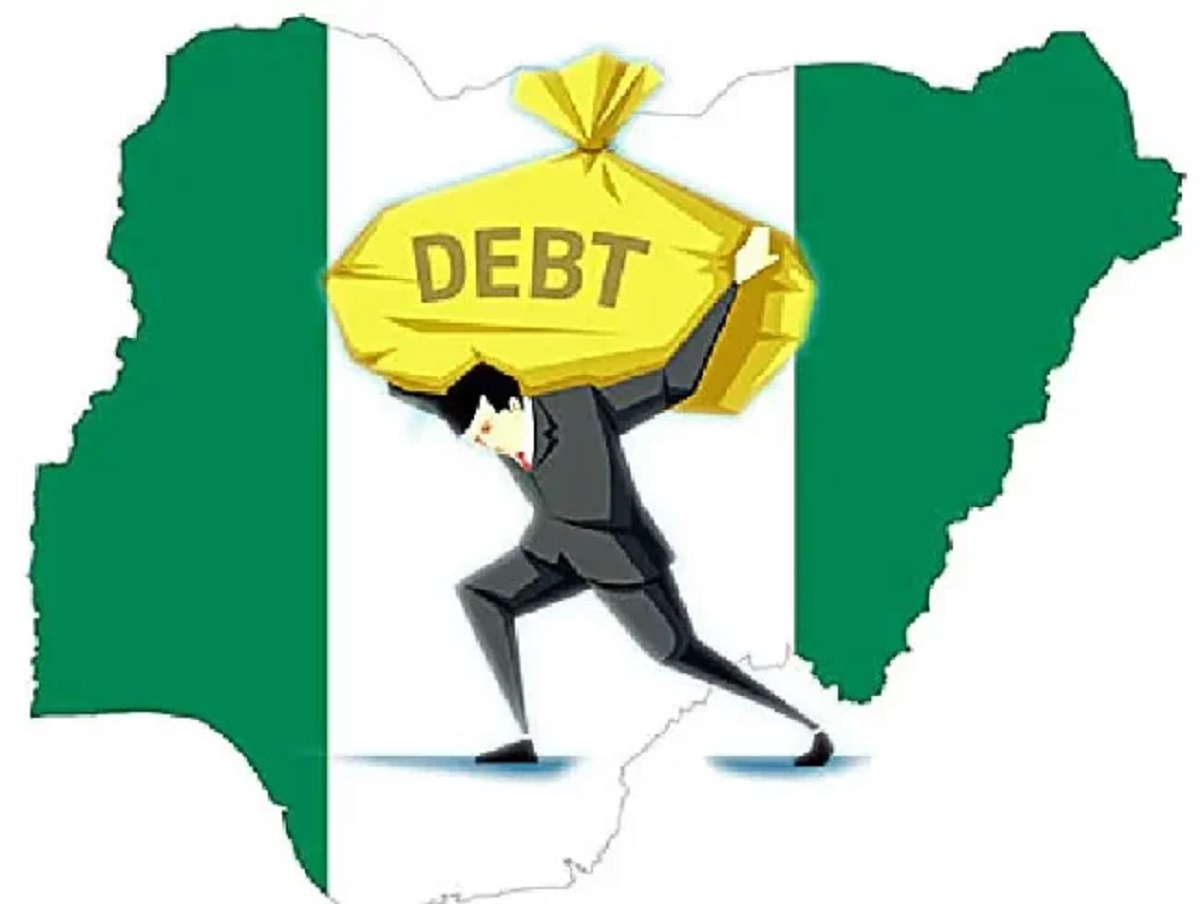
Nigeria has retained its position as the third-largest borrower from the International Development Association (IDA), the concessional lending arm of the World Bank, despite a slight decline in its debt exposure in the first quarter of 2026.

According to the IDA’s March 2026 financial statements, Nigeria’s exposure stood at $18.5 billion as of March 31, 2026, down marginally from $18.7 billion recorded at the end of December 2025.
The $200 million decline represents a 1.1 per cent reduction over the three-month period.
However, on a year-on-year basis, Nigeria’s debt exposure increased significantly by $1.2 billion, or 6.9 per cent, from $17.3 billion recorded in March 2025.
The latest ranking places Nigeria behind Bangladesh and Pakistan among the World Bank’s largest IDA borrowers.
Data from the report showed that Bangladesh remained the largest borrower with an exposure of $22.7 billion, followed by Pakistan with $19.2 billion, while Nigeria ranked third with $18.5 billion.
Other major African borrowers include Ethiopia with $14.4 billion, Tanzania with $14.3 billion, and Kenya with $13.2 billion in outstanding exposure.
The report also revealed that the IDA’s total loans outstanding stood at $230.8 billion as of March 31, 2026, slightly below the $231.1 billion recorded at the end of December 2025, reflecting a mild moderation in the institution’s lending portfolio.
According to the IDA, loans classified under non-accrual status represented only 0.4 per cent of the total portfolio, while provisions for potential loan losses amounted to $6.3 billion, equivalent to about 2.0 per cent of underlying exposures.
Nigeria’s exposure accounted for roughly eight per cent of the IDA’s total loan portfolio and approximately 13.3 per cent of the combined exposure represented by the institution’s ten largest borrowing countries.
The IDA noted that its ten largest country exposures collectively accounted for about 60 per cent of total portfolio exposure as of March 2026, highlighting the concentration of concessional lending among a relatively small number of developing economies.
Despite the slight quarter-on-quarter decline, Nigeria’s debt profile with the World Bank continues to trend upward over the longer term.
The report showed that Nigeria’s exposure rose from $17.3 billion in March 2025 to $18.5 billion in March 2026, underscoring the country’s increasing reliance on concessional financing to support development priorities and economic reforms.
Similarly, Ethiopia’s exposure increased from $13.2 billion to $14.4 billion over the same period, while Tanzania’s exposure rose from $12.6 billion to $14.3 billion.
Bangladesh’s debt exposure climbed from $21.2 billion to $22.7 billion, while Pakistan’s increased from $18.3 billion to $19.2 billion.
Ghana also recorded an increase from $7.1 billion to $7.4 billion.
Nigeria’s position among the top borrowers reflects the scale of its infrastructure, social investment, and reform financing needs under the World Bank’s concessional lending framework.
The Federal Government is also currently engaging the World Bank for additional financing support.


Nigeria Civil Aviation Authority has suspended plans to enforce its proposed “no pay, no service” policy against domestic airlines owing statutory charges, following consultations with operators and concerns over rising operational costs in the aviation sector.

Director-General of Civil Aviation, Chris Najomo, said the decision followed a review of prevailing challenges facing airlines, particularly the rising cost of Jet A1 aviation fuel.
The NCAA had earlier issued a memo on May 22 placing at least 11 domestic carriers on a “no pay, no service” list over outstanding debts owed to aviation agencies.
Affected airlines reportedly included Air Peace, Ibom Air, Overland Airways, Arik Air, United Nigeria Airlines, Max Air and Caverton Helicopters.
Industry sources said airlines immediately began discussions with the regulator after the directive was announced, leading to the temporary suspension of enforcement.
The NCAA clarified that the suspension did not amount to a cancellation or waiver of the debts, adding that all affected airlines remained responsible for settling their statutory obligations.
According to the authority, engagements with operators would continue to ensure compliance while avoiding disruptions to flight operations and passenger services.
The regulator also referenced earlier intervention measures approved by President Bola Tinubu, including a 30 per cent discount on outstanding charges owed by domestic airlines to aviation agencies.
The measure, it said, was introduced to cushion the impact of high aviation fuel costs and stabilise the sector.
The NCAA defended the five per cent Ticket and Cargo Sales Charge imposed on airlines, describing it as a statutory levy established under Nigeria’s Civil Aviation Act.
“The charge is not part of airline revenue or operating profit and should not be treated as such,” the authority stated.
It added that the agency operates largely on a cost-recovery basis and depends on remittances from operators to sustain regulatory oversight and aviation safety functions.
According to the NCAA, suspending the enforcement action was intended to balance regulatory compliance with the need to maintain operational stability in the aviation industry.
The authority reaffirmed its commitment to recovering all outstanding debts while supporting the long-term sustainability of domestic airline operations.

Kaspersky Reveals NFC Relay Attacks on Smartphones Surged by 188% in 2026

Coscharis Technologies, Huawei Unveil IdeaHub S3 Interactive Board in Nigeria

Pope Calls for ‘Disarming’ of AI, Warns of “New Forms of Slavery”

NITDA Raises Alarm over Fake ‘CPM’ Platform Extorting Victims Using Agency’s Name

NBC Sets 2028 Deadline for Full Digital Switch-Over

MTN, VDT, Zoracom, Digital Realty Back 2026 Girls in ICT Campaign

Vitel Wireless Partners Fintechs to Expand Access to Services

FG Okays 112 as Toll-Free National Emergency Response Number

Opay Plans IPO in US, Targets $4Bn in Valuation

Elon Musk Launches XChat with Video Calling to Take on WhatsApp, Messenger




 Telecom2 days ago
NITDA Inaugurates Regulatory Sandbox Team to Drive Digital Innovation

 E-Financial1 day ago
Transfers Fail as Banks Suffer USSD Glitches

 Telecom2 days ago
Meet the 25 Media Professionals Chosen for MTN’s Elite Innovation Programme

 General News1 day ago
FG Classifies Ebola Importation into Nigeria as High Risk

 General News1 day ago
Court Orders FG to Reveal Identity of Local Contractors in $460m Abuja CCTV Project

 General News1 day ago
NCAA Suspends Services to Air Peace, Others over Debts

 News16 hours ago
Moniepoint Group Commits to Boost Hands-on, Entrepreneurship in Three Nigerian Universities with ₦3B Innovation Hubs

 News1 day ago
Legend Internet Repays N10Bn Commercial Paper