

Telecom
Huawei 2014 Smartphone Sales Rise by a Third


Huawei Technology smartphone sales rose by almost a third to $11.8 billion in 2014, according to an internal memo seen by Reuters, showing the Chinese telecoms firm’s continued ascent in the global handset wars.
The division shipped about 75 million smartphones in 2014, according to the year-end memo to employees sent by Richard Yu, the head of Huawei’s consumer business. Although that represented a more than 40 percent year-on-year increase, the figure lagged behind Huawei’s previously stated sales target of 80 million units.
Huawei spokeswoman Maggie Qi said the company does not comment on internal memos.
The results, which are due to be publicly announced in the coming weeks, reaffirm Huawei’s place among a small coterie of rising smartphone makers, including Xiaomi Inc [XTC.UL] and LG Electronics, whose growth rates are eclipsing those of industry leaders.
Pressured by low-cost vendors, top ranked Samsung Electronics Co is likely to see its shipments nearly unchanged this year, while second-ranked Apple Inc may have posted around 20 percent growth after launching the iPhone 6, analysts estimate.
Those growth rates, however, pale in comparison to the expansion of Xiaomi, which sold 26 million handsets during the first half of 2014.
If it reaches its sales target of 60 million for the year, Xiaomi will have more than tripled its 2013 sales of 18.7 million. Private investors believe it will continue to soar: the Beijing-based company announced this week a new round of equity financing at $45 billion valuation, making Xiaomi the most highly valued private technology company in the world.
Meanwhile, close rival LG Electronics Inc may have seen its smartphone shipments rise around 26 percent this year, according to analysts.
Trendforce analyst Alan Chen said in a research note this month that Huawei, Xiaomi and Lenovo Group Ltd, which recently purchased Motorola from Google in a $2.91 billion deal, will battle to be the top Chinese smartphone vendor in 2015.
“How Lenovo’s Motorola acquisition plays out and whether Xiaomi can replicate its home market success overseas will be key factors in determining who becomes the top Chinese brand in 2015,” Chen said.


Association of Licensed Telecommunications Operators of Nigeria (ALTON), has defended the N6.98 Unstructured Supplementary Service Data (USSD), fee charged on banking transactions, insisting that the cost reflects the service provided by network operators, regardless of whether the transaction is completed.

Gbenga Adebayo, chairman, ALTON, made the clarification during a radio programme, where he addressed growing consumer complaints over what many Nigerians have described as “unfair billing” and the alleged “scam” of data expiration.
Adebayo likened the role of telecommunications companies in USSD transactions to that of a transport service provider facilitating access to banks’ digital platforms.
He said: “The phone company is like a taxi taking you to the bank’s digital office. Even if the bank’s system is down when you get there, you still have to pay the taxi man.
“Every USSD request initiated by a subscriber utilises network resources, irrespective of the outcome of the transaction on the bank’s end.
“When customers make repeated attempts due to failed transactions, telecom operators still provide connectivity for each attempt, thereby incurring operational costs,” he explained.
On the lingering dispute between telecom operators and banks over failed USSD transactions, Adebayo disclosed, “that regulators, including the Nigerian Communications Commission (NCC), and the Central Bank of Nigeria (CBN), are currently reviewing data to determine responsibility for transaction failures.
“Each time you dial a USSD code, the telco provides the access. If the bank does not complete the transaction, it does not negate the fact that the network has already been used,” he added.
The ALTON Chairman also addressed widespread dissatisfaction over data expiration, clarifying that data bundles are sold within defined validity periods and are not designed for indefinite use.
“You can’t carry it in perpetuity, but you have the benefit of extending it without losing unused portions by just resubscribing,” he said.
He explained that subscribers can retain unused data through rollover options, provided they renew their subscriptions before the expiration of the current bundle.
Adebayo further shed light on the concept of toll-free lines, noting that such services are not entirely free but are funded by the receiving organisation.
“There is nothing like free service. These are reverse charge lines where the business or government pays for the calls,” he explained, adding that economic realities have made many organisations reluctant to sustain such costs.
He noted that this has contributed to the limited availability of toll-free services in Nigeria.
While acknowledging consumer frustrations, Adebayo stressed the need for greater public understanding of how telecom services operate, particularly the cost implications of maintaining network infrastructure.

European Union (EU) has warned that Meta may be failing to effectively prevent children under the age of 13 from accessing its social media platforms, including Facebook and Instagram.

Meta
The warning followed an investigation conducted under the Digital Services Act (DSA), which found that the company’s age-verification safeguards may be inadequate.
EU regulators said preliminary findings showed that children could easily bypass age restrictions by providing false birth dates during registration.
They also noted that tools for reporting underage users were difficult to locate and use, raising concerns about children’s exposure to inappropriate content and online risks.
EU Executive Vice-President for Tech Sovereignty, Security and Democracy, Henna Virkkunen, said platform rules should go beyond written policies.
“Terms and conditions should not be mere written statements, but rather the basis for concrete action to protect users, including children,” Virkkunen said.
Under Meta’s policies, users must be at least 13 years old to create accounts on its platforms.
However, EU officials said the company’s enforcement mechanisms appeared insufficient and did not adequately address the risks posed to younger users.
If the findings are upheld, Meta could face penalties of up to six per cent of its global annual turnover under the Digital Services Act.
The company, however, rejected the allegations, saying it already operates systems designed to detect and remove underage accounts.
Meta added that it would continue to cooperate with EU regulators on the matter.
The investigation, launched in May 2024, forms part of the EU’s wider push to strengthen oversight of major technology firms and improve online safety for children.
Regulators are also reviewing broader platform design concerns, including features they describe as potentially addictive and harmful to users’ wellbeing.
The EU is considering additional measures, including the possibility of introducing a bloc-wide minimum age restriction for social media use, amid growing pressure for tighter child safety regulations online.
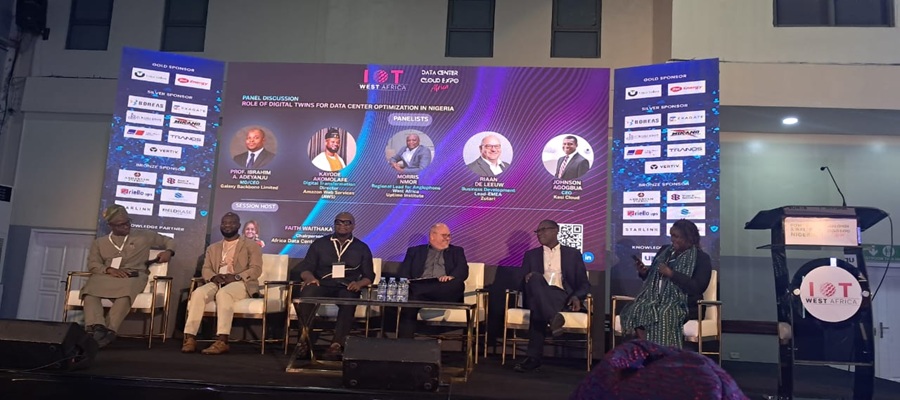
Industry experts have identified cybersecurity, reliable power supply, data infrastructure expansion, and interconnectivity as critical factors for unlocking Africa’s digital economy potential.

The experts spoke at the IoT West Africa 2026 Conference and Data Centre Cloud Expo held in Lagos.
In his keynote address, the National Commissioner and Chief Executive Officer of the Nigeria Data Protection Commission (NDPC), Dr Vincent Olatunji, said Africa’s rapid digital transformation was being accompanied by growing cybersecurity threats.
Olatunji said cyberattacks now occur globally every 39 seconds, with annual cybercrime losses estimated at 10.5 trillion dollars.
According to him, Nigeria records over 4,000 cyberattacks weekly, accounting for about 45 per cent of incidents across Africa.
He added that financial losses linked to cybercrime in Nigeria exceeded ₦12 billion in 2024.
Olatunji said global data generation had reached approximately 402.89 million terabytes daily and was projected to increase from 181 zettabytes to 221 zettabytes.
“Data is now the new oil, driving everything from IoT to cloud services and digital platforms,” he said.
He noted that Nigeria’s digital economy was currently valued at 18.3 billion dollars and could double within the next five years.
During a fireside chat on “Role of Colocation in Enabling Africa’s Data Centre Transformation: Opportunities and Challenges,” stakeholders highlighted energy supply, affordability, and global-standard infrastructure as essential to sector growth.
Chief Executive Officer of Nxtra by Airtel, Yashnath Issur, said Africa’s data centre market must compete at international standards.
“This market is no longer local; it is a global business requiring global quality, scale and expertise,” he said.
Chief Executive Officer of Rack Centre, Lars Johannisson, described energy as the sector’s biggest growth challenge.
“Data centres are about power, cooling and people. Energy is the machine that will power our growth, and without fixing it, scaling will remain constrained,” he said.
Managing Director of Equinix West Africa, Wole Abu, stressed the importance of interconnectivity within digital infrastructure ecosystems.
“A data centre without interconnection is like a ship, but an interconnected one is a port that enables trade and economic growth,” he said.
Representing African Infrastructure Investment Managers, Akinsehinwa Akin-Taylor said capital remained available, but investors were now placing greater emphasis on bankability, quality assets, and strong operational records.
Also speaking, Ifeanyi Otudoh of MTN called for broader digital inclusion and stronger local capacity building.
“We must put digital capability in the hands of African innovators and ensure secondary cities are not left behind,” he said.
Gary Chomse of Vertiv noted that unstable electricity supply continues to influence data centre infrastructure design across Africa.
At a panel session on digital twins and data centre optimisation, experts said adopting digital twin technology could improve operational efficiency, predictive maintenance, and risk management.
Chief Executive Officer of Kasi Cloud, Johnson Agogbua, said digital twins could improve power optimisation and help operators detect issues before they escalate.
“The biggest headache in Nigeria is power. Digital twins help you understand how power behaves and visualise problems before they occur,” he said.
Morris Nmor of Uptime Institute said the technology could significantly reduce system failures and operational risks.
Experts also noted that digital twins could improve cooling systems, reduce operational costs, strengthen cybersecurity, and enhance energy efficiency.
They agreed that integrating stronger cybersecurity systems, data infrastructure, and emerging technologies would be essential to building Africa’s digital future.

Telcos Defend N6.98 USSD Charge despite Failed Transactions

Fidelity Bank “Basking in Approval” under Onyeali-Ikpe, CEO

FRSC, BSG Renew Pact to Tackle Drink-Driving

GSMA, Pleias Seek to Close African Language Gap in AI

Firm Reveals a 37% Increase in Malicious Packages Compromising Software Supply Chains

FG to Gift Nigerians over 100 Free TV Channels from May 15

Microsoft Revamps Copilot in Workplace AI Push

UBA Beefs Up Mobile App Security to Stop Fraudulent Debits, Withdrawals

What Adekunle Gold’s Support Means for ‘The Gathering on 100

NRS Takes Over Mineral Royalties Collection Under New Tax Laws




 News3 days ago
Buhari, SSG’s Signatures Forged to Defraud Nigeria of $6.2m in CBN – EFCC

 General News3 days ago
Reliable Payment Rails Key to Financial Inclusion – TeamApt

 News3 days ago
CSCS Targets Market Leadership Through Technology, Diversified Revenue

 General News3 days ago
MTN Powers the Ultimate Youth Link-Up with the Launch of Live It 100 Youth Campaign

 General News3 days ago
EFCC Declares Tejuosho, City Boys Movement’s Women Leader Wanted over “419”

 E-Business3 days ago
Angst as FG Drops $32.8m Fine on Meta for Data Breach

 General News3 days ago
Afreximbank to Fund 3 New Refineries in Nigeria

 Telecom2 days ago
ALTON Urges Urgent Resolution of Regulatory Dispute over Airtime Loans