

General News
Cyber Crime Fight Must Be Fought with Technology –Kola


Kola Olugbodi is the managing director of Background Check International, the arrowhead of the background screening industry in Nigeria and also one of the foremost African members of the National Association of Professional Background Screeners firms in Africa. He is a seasoned researcher and statistician with over 20 years experience. He spoke to chike onwuegbuchi on cyber crime and cyber security in the country.
Cyber Crime and Cyber Security
This is a major area in what we do at BCI. We have the flair for always looking for what is missing in our society and then trying to proffer solutions to them. Yes, it was true that we started the first full service background screening company in Nigeria. We also started another first private cyber crime service in Nigeria. Of course, the world over, one of the problems had always been the issue of cyber crime. Problems such as “Yahoo Yahoo” and things like that.
The way debit cards, credit cards, and other ATM cards Pin numbers are hijacked through fake websites of banks, and card switching companies is a clear demonstration of cybercrime in our society. I have received over 4,000 e-mails that Interswitch is upgrading its system and I needed to upgrade my record so I should disclose my pin number and other information which is fraudulent. Unfortunately, many Nigerians fall prey to it, thinking it is authentic and which many are still falling for because these guys have succeeded in cloning the website of companies like Interswitch, MTN and a lot of them keep coming up. This is why when you visit website of any of the banks in Nigeria you see scam disclaimers and scam alerts. This is the reason why BCI started off a cyber crime unit of our business which checks the background of the information you download from the internet and the way you access some things. Many of our people are so naïve including corporate organizations. What BCI cyber crime unit does is to assist organizations in securing their networks. Yes, we know that organizations have their internal network arrangement but technology keeps developing on daily basis. We have a lot of software being generated on daily basis. That is why we are presently proposing to corporate organizations to make sure they embrace our services, which entails helping them check any infiltration from external approach to their websites. Everybody is now talking about e-business and e-commerce and most organizations carry out almost all their transactions online. They need to be sure their network is secured. They need to be sure their network is not vulnerable to hackers who can cause lot of havoc to their businesses. We do more of cyber fencing, cyber policing, helping organizations find out if they are prone to hackers, how vulnerable are they even to their networks being hacked. How vulnerable are they to having their website totally hijacked and getting people tampering with some of the vital things that are involved in their key businesses.
Record of Losses
The truth is that people are losing millions on daily basis, in fact let me say billions of dollars on the internet. Cyber crime is a new wave of crime and it is a very subtle one. It is unlike somebody coming with guns and matchets and you know that oh! a robber is coming or a criminal is coming. It is something that happens like a thief at night that steals without your knowledge. They hack into your system or your network and before you know it almost everything you have laboured for is gone. It is on record that a bank in Brazil had its network hacked into and the bank went from zenith to zero and actually closed up due to the activities of hackers. It is more of an organized crime that goes on in the cyber space. It is also on record that 10 countries have been recognized to always perpetrate these acts. Nigeria falls among the key scammers. More especially in Africa, Nigeria leads the league. It is time people got more IT security conscious.
Fighting cyber crime in Nigeria

In Nigeria, we have come to the reality that cyber crime is a cankerworm eating into the economy of the country. The truth of the matter is that we have few people who can fight this menace. It is eating deeply into the fabric of the economy and I tell you it is affecting banks and individuals. A lot of people have been duped of their hard earned money from the so called “You have won a million Naira,” go check the internet and those sites look like the real sites of MTN, Glo and the rest of them. But the truth of the matter is that they are not. These are people who milk people of their hard earned money. We have a few people who can fight or actually detect, track, trace or curb this menace. The key thing is that we have discovered this, and we are still working just as we were able to entrench the culture of due diligence through the background screening of our system in Nigeria, and it is working. The same way is how we will handle the issue of cyber crime. We are going to create a lot of awareness by educating the populace on some of the pranks played by most of the scammers. Cyber crime is not an individual’s battle; it is a battle for the whole nation to fight. It is a fight that would be fought on all fronts through trainings and through collaborative effort with government agencies. It is an all encompassing thing that BCI is introducing to our society. When we talk about rebranding, one of the key things that have battered our image is 419. It has moved from 419, scam letters and all those surface mails, it has gone technological. That is why even outside the country, people understand what is called “Yahoo Yahoo” because it started from Nigeria and many are still falling to this trick. The image of this country is bastardized outside because of things like this and it must stop. That is why BCI is here to let organizations know that we are ready to assist them. Let us swallow our prides by asking for help where we need them because we have the expertise, we have professionals in-house who can assist with these things. We have a road map into seeing how we can contribute our quota into making sure there is cyber security in Nigeria.
Law Backing Cyber Security
As at this point, we are aware that there is a
bill to that effect. I know there are men and women of wisdom who know that this is fast becoming a negative “lucrative business” so I know they will act on this. We know the criminals are not waiting for the laws to be enacted, they keep performing their atrocities. What organizations and individuals can do in the interim is to know how to counter some of these attacks. Those are the things BCI has to offer. We want to strengthen their IT networks; we want to strengthen their network security through the things we have been privileged to know. Everybody needs to start policing and ensuring the safety and security of their network. We know there is no legislation yet but of course the “Yahoo Yahoo” guys are being caught on daily basis with the police prosecuting them based on advanced free fraud or whatever. There is always another way for a law to be used in handling it. 419 guys are being arrested world over even as at present. We will not fold our hands until that time, let everybody put due diligence in place in the form of what happens to their network, what happens to their computer, who accessed it and those are the things we know can happen before there is a legislation.
Phishing of Fake Websites
BCI has all it takes to phish all the computers and servers used in perpetrating this heinous crime at the cyber space within two hours. Already, BCI is phishing most of these established fake websites on behalf of some of the organizations that have approached us. There are many myths as to what can be done. For every virus, there are anti viruses. For every fake website, there are anti fake website measures that can be applied and that we are applying. The only challenge is that people are not just aware, that is why we talk more and not just putting scam alerts, it alerts the scammers as well. Let us move beyond scam alert, let’s move to the point of addressing some of these attacks. In other countries like in USA where they have a lot of problem with cyber crime, the menace has gradually reduced by the day because they have been able to counter some of these attacks. Those are the things we are bringing into Nigeria so they can be countered.
Governmental Intervention
The very cardinal one that is paramount is let there be legislation against cyber crime in Nigeria. We are aware of the fact that the government is also doing what it can in combating this menace that is why we have some government security agencies now venturing into things like that. The government needs to put things in the right perspective and to be aware that cyber crime can wreck the economy of a nation faster than any other thing. One of the things BCI is offering is to go into collaborative relationships with government agencies that are already working along this line to see how we can come up with best procedures and processes in combating cybercrime. There is going to a lot of training, workshops and development along that line between BCI and some agencies. We have always been told not to think of what the government of our country can do for us, we should always think of what we can do for our country. This is one of the things we can do for our country. We are willing to go into in-depth developmental training even with our colleagues.
About Background Check International
Background Check International was given birth to out of the sincerity to ensure that we have full understanding of either the people we relate with, do business with or even those that we employ. Of course, talking about the genesis of BCI like we call it, it came out of the discovery that recruitment either done by recruitment agencies or done directly by organizations is not complete without a way of confirming the claims made by the people during interview or on their Curriculum Vitea. We have discovered that the more the unemployment in our society kept increasing, the more people got wiser to make sure they survive so that they can actually get all available opportunities.
What BCI does is to take care of such claims. We go into claims verification, the certificates that are submitted by applicants, their professional certifications, their National Youth Service Corps (NYSC) and even going into the area of places where people have worked in the past. We help our clients in confirming one or two things from past employers of applicants or new intakes in companies.
We want to help find out why that person left where he or she was working before taking on this new job. We want to help them find out if he left in the proper way. We want to help them find out more about his personality, his conduct, his character and issues of integrity before crossing over to where he is now. Basically, those are the background screening we do.
We work for quite a number of banks in the areas of them knowing more about their staff, which we call know your employees (KYE) and even more in the areas of know your customers (KYC). We believe all these go a long way in taking care of all aspects of risk management and non- performing loans and not even being able to locate the customer completely. It is all about due diligence, making sure we have facts before we start talking about figures, relating with people and trusting blindly. We need to be sure of who we are relating with.


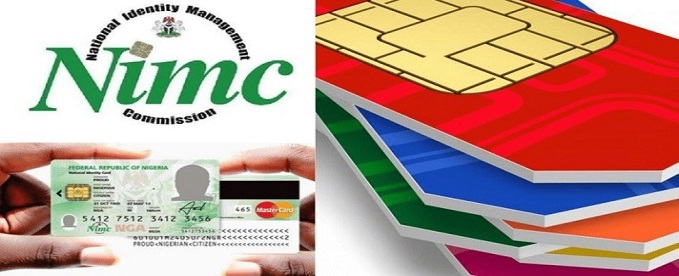
National Identity Management Commission (NIMC), has explained why kidnappers and terrorists are not always traceable despite the country’s expanding digital identity infrastructure.

NIMC explanation pointed to a simple but significant gap in the system.
Abisoye Coker-Odusote, director-general of the agency said that: “A lot of the time, you find out the kidnappers use the phones of the people they have abducted, which means how do you trace them because they are not using their own phones?” she said.
Coker-Odusote spoke during an appearance on Channels Television, where she was asked to explain why criminals remain difficult to trace despite the mandatory NIN-SIM linkage policy.
She said criminals frequently frustrate investigations by using mobile phones belonging to their victims, instead of their own registered lines.
“We already know the NIN is the foundational identity for the security architecture, but a lot of the time, you find out the kidnappers use the phones of the people they have abducted. Which means, how do you trace them because they are not using their own phones?” she said.
She also suggested that some criminal elements involved in kidnapping operations may not even be captured in Nigeria’s identity database.
“There is a theory that it may be possible that these kidnappers are not Nigerians and are brought into the country 48 or 72 hours before a kidnapping takes place specifically for that purpose. I’m not insinuating anything, but if that were the case, they naturally would not be captured in our database,” she added.
The comments have revived questions about whether expectations placed on the NIN-SIM linkage have exceeded what the system was designed to deliver.
The NIN-SIM linkage exercise was introduced by the Nigerian Communications Commission (NCC) in collaboration with NIMC to strengthen identity management, eliminate anonymous SIM ownership and support national security.
Over the years, the exercise resulted in millions of subscribers linking their SIM cards with their National Identification Numbers, while telecom operators also deactivated millions of lines that failed to comply with regulatory directives.
Earlier, the NCC maintained that the policy was aimed at improving the integrity of Nigeria’s SIM registration database, strengthening identity verification and supporting security agencies in criminal investigations.
The regulator also described the exercise as an important component of the country’s digital economy and national security framework.
Telecommunications operators have consistently maintained that while they play a critical role in implementing the NIN-SIM linkage policy, they are not responsible for tracking criminals.


Quest Merchant Bank recently hosted the second edition of the Great Place to Work® Nigeria Study Mission, reaffirming its commitment to fostering a high-performance workplace culture and advancing people-centric leadership practices.

The Study Mission serves as a collaborative learning platform that brings together Great Place to Work® Certified organizations to exchange insights, share best practices, and strengthen workplace cultures.
The event welcomed Human Resources leaders and representatives from FITC, Princeps Credit Systems, Tonic Technologies and Esentry Limited for an engaging and insightful session focused on building thriving workplace cultures, promoting continuous learning, and advancing employee-centric practices that drive organizational success.
Speaking at the event, Tolulope Dayo-Peters, Head of People Management, emphasized the importance of continuous learning and collaboration in building sustainable workplace cultures.
“We are delighted to host the second edition of the Great Place to Work® Nigeria Study Mission. At Quest Merchant Bank, we believe building a great workplace is an ongoing journey rooted in trust, purposeful leadership, and a genuine commitment to our people.
“We are pleased to share the practices that have shaped our culture and look forward to more opportunities to learn and collaborate with like-minded organizations.”
Also speaking at the event, Afolabi Olorode, Acting Managing Director/CEO, Quest Merchant Bank Limited, highlighted the critical role workplace culture plays in driving long-term business success.
“We recognize that a strong workplace culture is fundamental to sustainable business success. Creating an environment where our people are empowered to grow, innovate, and perform at their best enables us to consistently deliver value to our clients and stakeholders. We are proud to support initiatives like the Great Place to Work® Nigeria Study Mission that encourage organizations to learn from one another and collectively raise the standard of workplace excellence in Nigeria.”
The Study Mission reinforced the importance of collaboration among organizations committed to creating exceptional employee experiences.
By providing a platform for open dialogue, peer learning, and the exchange of practical ideas, the initiative enabled participants to explore innovative approaches to employee engagement, organizational culture, leadership development, and talent management while strengthening a growing community of employers dedicated to workplace excellence.
Hosting the Great Place to Work® Nigeria Study Mission further strengthens Quest Merchant Bank’s position as a thought leader in workplace culture and talent management.
It also enhances the Bank’s employer brand and demonstrates its unwavering commitment to creating an environment where employees can grow, innovate, and achieve their full potential.
Quest Merchant Bank remains committed to championing initiatives that promote learning, innovation, and people-centric leadership. Through strategic partnerships and knowledge-sharing platforms such as the Great Place to Work® Nigeria Study Mission, the Bank continues to contribute to the advancement of exceptional workplace cultures and the future of work across Nigeria’s corporate landscape.

Nigeria Hydrological Service Agency (NIHSA) has warned of possible floods in parts of Adamawa, Bauchi, Edo, Imo, Enugu, Akwa Ibom, Cross River, Kaduna, Plateau, Niger, Benue, and Borno states within the next seven days.

According to information posted on NIHSA X handle, the Agency announced medium flood advisory in force for the next 7 days across Adamawa, Bauchi, and 11 other States.
“Localised inundation is forecast along the main channel; named communities below sit on the projected footprint. Stations: Saminara on the Karam river, Waya Dam Site on the Waya river, Amber on the Amber river.
“Adamawa; Lemsa, Lamurde, Numan Exposure: 147 comm. 49 schis 40 hith 6 mkts17 relig. Bauchi-Bauchi, Ningi, Shira. Exposure: 4 comm. Kaduna; Chikun, Giwa, Igabi, Jaba, Jema’a, Kachia, Kaura, Kauru, +6 more. Exposure: 1 comm.
“Borno-Gubio, Mobbar. Exposure: 680 comm. 8 schls 6 hith 5 mkts 21 relig. Edo-Akoko-Ed, EtsakoEa, EtsakoWe, Ikpoba-Okha, Orhionmw, OviaNort, OviaSo.. Exposure: 3 comm.
“Imo-Aboh-Mba, Oguta, Ohaji/Eg, Okigwe, Owerri North, Owerri West. Exposure: 3 comm. 7 more states affected and severity LGAs”.
NIHSA advised people in the affected areas to “do NOT cross flooded roads, bridges, or fast-moving water on foot or by vehicle.
“Clear drainage channels and river-mouth blockages; avoid building or living in the floodplain and move people, livestock and valuables from the floodplain to pre-identified higher ground,” NIHSA stated.

NBC Scraps Annual Digital Access Fee on DSO

Surge in Fibre Cuts Hobbles Service Provisioning

Why Bandits, Kidnappers are Hard to Trace despite NIN-SIM Linkage – FG

First Securities Brokers Empowers Nigerians to Trade in the Stock Market with the Launch of FirstInvest App

Quest Merchant Bank Hosts Great Place to Work® Nigeria Study Mission

NRC, Ponzi Scheme Collapses Resulting Loss of Billions of Naira
Nigeria Launches FreeTV Nationwide

NASENI Moves to Digitize CCB’s 5m Assets Declaration and Operations

Lebara Nigeria Launches Lebara Play, Africa’s First Telecom-Owned Micro-Drama Platform

CANAL+ Partners Samsung to Pre-Load DStv Stream on New Samsung TVs In Nigeria, Other African Countries




 Telecom3 days ago
MTN Nigeria Slashes Cost of Broadband Internet Router, Unwraps New Data Bundles for Low-Budget Users

 E-Financial3 days ago
Nigerians Accumulate $59Bn in Cryptocurrency Assets —FDC

 E-Financial3 days ago
Flutterwave Partners Xoom on Transfers into Nigeria

 General News3 days ago
Nearpays, Nigerian Fintech Becomes First African Startup to Win UN’s AI for Good Innovation Factory

 News3 days ago
DataPro Upgrades Dangote Cement’s Credit Rating to AA+

 Telecom3 days ago
Nokia’s 14 Years of Mobile-Phone Supremacy Ended in an Afternoon

 E-Business3 days ago
Tinubu Orders NIMC to Enrol Every Nigerian by End of this Year – DG

 E-Business2 days ago
TD Africa Sponsors Check Point Secure 360 Summit to Boost Cybersecurity in Nigeria