

Telecom
Nitel Privatisation: Guiding against Previous Mistakes

The inability of Bureau for Public Enterprise (BPE) to conclude the sale of Nigerian Telecommunications Limited (Nitel) within the 60 days as directed by Vice president Goodluck Jonathan, who is also chairman of National Council on Privatization, may be reviewed by many as another failed attempt at selling the moribund first national carrier. However, some may as well interpret it as demonstration of government unwillingness to completely offload Nitel from its control.
Which ever way the situation may be interpreted Bureau for Public Enterprise has come out to explain that the failure to sell Nitel as the 60-day deadline given by the Federal government, expired November 23rd, was due to the strike action embarked by Nitel workers. BPE said that the strike action by Nitel workers protesting the backlog of salaries owed them, had kept the doors of Nitel facilities locked and could not allow investors to do physical due diligence on the Nitel assets.
Joe Anichebe, Bureau’s spokesperson, said that series of meetings were on to see if the Federal Government would raise money to pay the striking workers some of their 15 months backlog of salaries so that peace would return which will allow investors assess Nitel. The outcome of these meeting was the commitment of federal government to release N70 billion for the payment of Nitel staff salary.
Anichebe said that once the workers are paid and the gates to the facilities opened, it may take less than one week to conclude sale of Nitel to new investors.
BPE has said that the delay occasioned by the strike is also part of the effort to ensure that a more holistic approach is followed in the current effort to sale Nitel. This BPE said included thorough valuable of assets and liabilities of Nitel by bidding companies which will avert the mistakes of the past where such process where done in a hurry living eventual buyer to lament that it was not allowed to properly asses the company before it bought.
It would be recalled that Transcorp the immediate past buyer of Nitel took control of Nitel and was given access to some records as well assests of Nitel almost two years after it signed the purchased agreement.
There have been three unsuccessful attempts to sell Nitel and Mtel to private investors. Apart from the aborted deal with International Investments London Limited (IILL), Orascom Telecom of Egypt made frantic efforts to acquire the firms while Pentascope was later recruited to manage it for a while before the management contract also ran sour.
The last on the list was the purchase of 55 per cent of Nitel/Mtel by Transnational Corporation (Transcorp), a wholly indigenous conglomerate.
According to Tom Harden, Onda Analytics partner, Nitel’s recent history means that this is the Nigerian government’s last chance to get the sale right. "Previous privatization attempts have ended unsuccessfully, with inadequate technical and financial muscle. With staff going unpaid and its subscriber base dwindling, the company is on its knees. Bringing in a major investor, with strong network re-engineering experience and a major international brand is the last realistic chance to save it".
Daniel Jones (partner), believes the delay is no bad thing. "The process has so far been pretty quick. A two month window from the initial expressions of interest always looked tight. The most important thing is for the Nigerian government to get it right this time, even if that means the process is more protracted than was originally envisaged".
Onda Analytics’ report considers the cases of recent incumbent privatizations in Africa as examples for Nitel to follow. France Telecom bought a 51% stake in Telkom Kenya (now Orange Kenya) in December 2007, while Vodafone acquired a 70% stake in Ghana Telecom (now Vodafone Ghana) in July 2008. The investments have turned around the fortunes of both companies. With similar backing from a major investor, Onda Analytics forecasts Nitel to grow its mobile subscriber base from under 100 000 today, to over 18 million in 2015. This would be equivalent to a 14% market share of the fast-growing Nigerian market.
How it started
The recent effort to sale Nitel began with the revocation of the sale of Nigerian Telecommunications Limited (Nitel) and its mobile subsidiary, M-Tel, to Transnational Corporation (Transcorp) Plc, citing "breach" of contractual terms.
The revocation came at the meeting of the National Council on Privatisation (NCP) presided over by Vice-President Goodluck Jonathan at the Presidential Villa, Abuja.
Alhaji Ikra Bilbis, Minister of State for Information and Communications, said the government decision was based on the failure of Transcorp to meet the conditions under the sale of the telecommunications companies.
He said a technical board would be put in place to manage the affairs of the moribund telecommunications companies until a new core investor was engaged.
Transcorp was alleged to have contravened the conditions under the Shares Sales Purchase Agreement (SSPA) entered into for the sale of the telecommunications companies in 2006.
Bilbis said the exiting of British Telecommunications (BT) as the technical operator, which is a condition precedent in the SSPA, failure of Transcorp to inject the sum of N8.9 billion cash into Nitel within 100 days of its takeover to address the immediate liquidity problem facing Nitel and failure to pay interconnectivity debt totalling about N17 billion, were considered as serious breach of terms entered into with Transcorp."
Others include the inability of Transcorp to pay staff salaries in the past 11 months and failure of Transcorp to maintain Nitel/M-Tel as a going concern, resulting in complete loss of market share from 15 per cent to 0.03 per cent.
“Council agreed that Transcorp has violated and voided the contract in its entirety. Consequently, council approved the immediate revocation of the sale of Nitel/M-Tel to Transcorp, the constitution of technical board to manage the affairs of Nitel/M-Tel until a new core investor is engaged by NCP; the immediate stoppage of further sale of Nitel/M-Tel’s assets and the provision of adequate security to all Nitel/M-Tel facilities to prevent any further asset-stripping," Bilbis added.
Christopher Anyanwu, director-general of BPE, said that since the NCP was acting in consonance with Transcorp, the process would generate rancour or legal entanglements especially as the power of attorney had been secured.
The Council, according to him, secured the power of attorney when the government and Transcorp agreed to pool shares together for a new core investor.
However Transcorp responded through Ezedi Udom, head of Corporate Relations department, that it received "with shock" a letter from BPE "purportedly revoking the sale of Nitel to Transnational Corporation of Nigeria (Tran-scorp) plc."
According to him, ‘Transcorp regards the action as unnecessary and at variance with the position of all the stakeholders of Nitel, who had jointly agreed that Transcorp should give its power of attorney to BPE to facilitate the sale of Nitel/ M-Tel to a new core investor. Transcorp fears that the purported revocation of the sale of Nitel may prompt a chain of events that could ultimately jeopardise the sale of Nitel to a new core investor. It will be recalled that the first purported reversal was generally agreed to be counterproductive as it caused a huge setback to efforts aimed at transforming Nitel.
This latest revocation is coming on the heels of recent successes recorded in the turnaround efforts of Nitel which resulted in the coming alive of the network in some parts of the country recently.
Beginning of the latest effort
The Federal government in a renewed effort to sale Nitel after revival efforts by Transcorp failed, inaugurated, July 2009, an interim Technical board for the sale of Nitel.
She also decided to unbundle sale of Nitel, giving room to buyers who may be interested to some parts of Nitel. All, in the bid to get the whole sale processes right.
In line with government resolution, BPE, placed advertorials, in both local and international media, requesting interested buyers to apply for either at least 75 per cent equity in the entire Nitel conglomerate or a stake in one or several of its components like the mobile (GSM) arm, SAT-3, CDMA network, domestic fixed line telephony, national fibre-optic transmission backbone and Analog System (TACS.) It however, clarified that preference would be given to bidders who desire to acquire Nitel fixed lines, transmission backbone, Mtel and SAT-3 components together, while those bidding separately for Mtel must be ready to make necessary investments to detach Mtel from Nitel networks.
Following that advertorial, about thirteen companies, including some prominent telecom companies already operating in Nigeria, such as Globacom, MTN and Etisalat, indicated interest.
According to BPE, Expressions of Interest (EOIs) applications were also received from companies like Omen International Limited (BVI), Summit Group, MTI Consortium, Finetek.Com, Ericsson Consortium and MTNL Limited, India.
BPE however, bared the existing GSM operators including Glo, MTN, Zain and Etisalat from buying M-Tel, the mobile arm of Nitel and the SAT3.
BPE said it acted on the instruction of the NCC which believes that purchase of Mtel by any of these companies would present competition challenges and will conflict with the regulator’s guidelines and licensing conditions.
Industry stakeholders that spoke to Nigeria CommunicationsWeek were of the view that giving specific time frame is not necessary as much effort should be geared towards getting the sale of Nitel right to avoid mistakes of the past. They believed that although the value of the company is consistently going down even as some of its equipment are now outdate and requires modern ones for it to operate, great care and effective assessment of existing infrastructure should be conducted by the would investor to get the sale right.


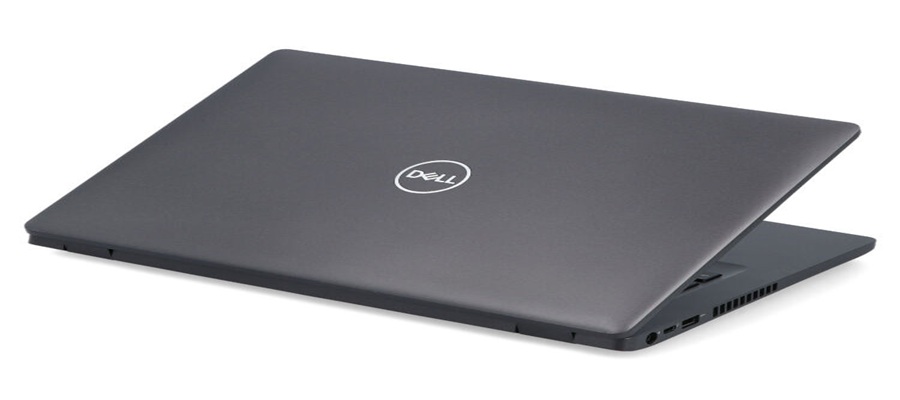
MENXTT TECH NG, a Lagos-based technology company, has launched an initiative to make quality Dell laptops more affordable for Nigerians through flexible payment plans and extended warranty support.

The company said the initiative was aimed at helping students, entrepreneurs, professionals and small businesses acquire reliable computing devices despite rising technology costs.
According to the company, customers can now purchase premium pre-owned Dell Latitude, Dell Precision and Dell Inspiron laptops at competitive prices, with selected models available under staggered payment arrangements.
The laptops, it said, are designed to meet the needs of users ranging from students and office workers to architects, engineers, software developers, graphic designers and video editors.
Speaking on the initiative, the Co-Founder of MENXTT TECH NG, Mr Anthony Emeka Nwosu, said access to quality technology should not be limited by financial constraints.

“A laptop is no longer a luxury; it is an essential tool for education, business and career development.
“Unfortunately, many people are forced to settle for unreliable devices because of the high cost of new laptops.
“At MENXTT TECH NG, we want to bridge that gap by providing durable Dell business laptops at affordable prices, backed by a full one-year warranty and flexible payment plans.
“We want every student, entrepreneur, freelancer and business owner to have access to technology that helps them succeed,” he said.
Nwosu explained that every laptop undergoes comprehensive testing before delivery and comes with a one-year warranty, an original charger, a complimentary laptop bag, Windows 11 operating system and Microsoft Office Suite pre-installed.
He added that the company, an authorised Bitdefender Antivirus reseller in Nigeria, also installs genuine Bitdefender security software on every system to protect customers against cyber threats.
According to him, customers requiring additional productivity tools can also have licensed Foxit PDF software installed on their devices.
Nwosu said the flexible payment option was introduced in response to prevailing economic realities, enabling customers to spread payments over an agreed period.
He noted that the arrangement would make it easier for students, startups and growing businesses to acquire quality computers without placing excessive pressure on their finances.
Beyond laptop sales, the company provides information technology consultancy, computer repairs, software licensing, cybersecurity solutions and digital transformation services to organisations across Nigeria.
He reaffirmed the company’s commitment to supporting Nigeria’s digital economy by making dependable computing devices and enterprise technology solutions more accessible to individuals and businesses.
According to him, the initiative reflects MENXTT TECH NG’s vision of combining affordability, quality products and professional after-sales support to help more Nigerians participate in the country’s expanding digital ecosystem. (NAN)
Telecom
Hon. Minister Dr. Kingsley T. Udeh and ASUS To Unveil First of a Kind Flagship Store in West Africa


In a landmark moment for Nigeria’s technology retail sector, the Honourable Minister of Innovation, Science and Technology, Dr Kingsley Tochukwu Udeh SAN, will on Monday, August 3rd, commission a landmark ASUS Flagship Store in partnership with Nigeria’s leading e-commerce group Konga. The state-of-the-art facility is widely regarded as the first initiative of its kind in West Africa.

The commissioning will witness the visit of senior executives from the world-renowned technology brand to Nigeria, including EMEA General Manager, Mr. Aaron Tsai, alongside other. One of the purposes of their visit is to reinforce the strategic partnership with Konga and solidify the collaboration between both organisations, further demonstrating ASUS’ commitment to the Nigerian market.
The event is expected to also bring together key stakeholders from government, the technology industry, business community, and the media for what promises to be a defining moment in the evolution of technology retail in the region.
The development comes as Konga continues to accelerate its strategic partnerships with some of the world’s leading technology brands.
For years, Nigerian consumers have demanded more than just access to genuine technology products. They have increasingly sought immersive experiences, expert guidance, after-sales support, and greater confidence when making technology investments. The next chapter in this journey appears to address many of these expectations in a bold and innovative way.
The forthcoming announcement is expected to bring together global innovation in a manner that reflects the changing realities of today’s technology consumer. It also reinforces the growing confidence that leading international technology companies continue to place in Nigeria as one of Africa’s most strategic digital markets.
Industry analysts note that partnerships of this nature are becoming increasingly important as consumers place greater emphasis on authenticity, hands-on product experiences, technical support, and trusted purchase channels. Beyond selling devices, the future of technology retail lies in building complete customer experiences.
As anticipation builds for Monday, one thing is certain: the ASUS-Konga partnership promises to set new standards for tech retail in West Africa, elevating customer experience and reinforcing Nigeria’s digital transformation narrative.
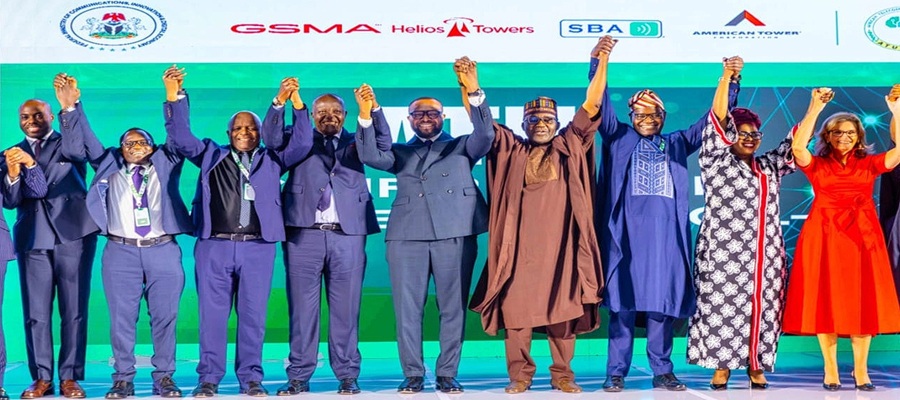
African ministers responsible for Information and Communication Technology (ICT) have adopted the 2026 Abuja Declaration on Meaningful Connectivity for Africa, committing member states to accelerate internet access in rural, remote and underserved communities across the continent.

The declaration was adopted at the Seventh Ordinary Session of the Conference of Plenipotentiaries of the African Telecommunications Union (ATU), held in Abuja.
The agreement seeks to address Africa’s widening digital divide by promoting policies and investments that will improve digital infrastructure, stimulate demand for internet services and ensure equitable access to digital opportunities.
In a statement endorsed by the participating member states, the ministers noted that Africa continues to lag behind other regions of the world in internet connectivity despite rapid global digital expansion.
The declaration, signed by Nigeria’s Minister of Communications, Innovation and Digital Economy, Dr Bosun Tijani, who assumed the role of Chairperson of the conference, highlighted the urgency of expanding digital inclusion across the continent.
According to the statement, global internet usage has reached about 68 per cent, rising to as much as 94 per cent in high-income countries, while internet penetration in Africa remains slightly above 38 per cent, the lowest among all regions of the International Telecommunication Union (ITU).
The ministers expressed concern that the disparity continues to limit socio-economic development, innovation, education, healthcare delivery and access to digital public services for millions of Africans.
They agreed that closing the connectivity gap, particularly in underserved communities, should become a continental priority requiring coordinated action by governments, regulators, development partners and the private sector.
The declaration establishes a framework centred on expanding digital infrastructure, increasing broadband adoption, stimulating demand for digital services and promoting equitable access to connectivity.
It also encourages member states to implement policies that will improve affordability, strengthen digital skills and create an enabling environment for sustainable investment in telecommunications infrastructure.
“Affirming that closing Africa’s connectivity and usage gap, particularly in rural, remote and underserved communities, is an urgent continental priority,” the declaration stated.
The conference further called on international development partners, industry stakeholders and civil society organisations to align their investments and programmes with the African Union’s Agenda 2063 and the Digital Transformation Strategy for Africa.
The ministers expressed optimism that stronger regional collaboration would accelerate digital transformation, foster inclusive economic growth and ensure that more Africans benefit from opportunities created by the digital economy.

EFCC Arraigns 4 over Alleged $5.3m Fraud Scheme

CBN Orders N19Bn Refunds to Customers as Complaints Rise

Access Bank Debunks Shutdown Report, Vows Action against Perpetrators

Oye, AERE Raises Alarm as 8m MSMEs Collapse in 18 Months

Kaspersky Uncovers Cyber Threats Defining the First Half of 2026 in Nigeria, Others

NRC, Ponzi Scheme Collapses Resulting Loss of Billions of Naira

EFCC Busts NIS Visa Overstay Racket, Uncovers N700m in an Account

From Scarcity to Scale: What Africa Can Learn from India’s Agricultural Transformation

Tokenization, Blockchain Technology will Transform Financial Institutions – IMF

BON Establishes Six Ad Hoc Committees to Modernize Broadcasting




 Telecom2 days ago
Fact-Check: Elon Musk’s “Tesla Pi Phone” is Internet Rumor

 E-Financial2 days ago
Malpass, Ex World Bank Chief Raises Alarm over Nigeria’s Secretive Debt Structures

 Telecom2 days ago
How and Why Apps Deplete Data – ALTON

 News2 days ago
CIBN, ACAMB Push for Financial Inclusion, Women Empowerment

 E-Financial2 days ago
S&P Global Acquires Agusto & Co. to Strengthen Credit Ratings Across Africa

 Telecom2 days ago
Galaxy Backbone Soft Launches Government Service Portal to Simplify Access to Public Services

 E-Business2 days ago
NDPC Directs DCPMIs to Register with Agency or Face Legal Consequences

 Broadcasting2 days ago
Africa Prudential Posts N1.59bn Profit in H1 2026, Reaffirms Digital Growth Strategy