

Broadcasting
Hundah, Multichice Boss, Happy BBA 4 Show

Mr. Joseph Hundah, managing director, Multichoice, owners of Digital Satellite Television (DStv) has said that the just concluded Big Brother Africa reality TV show had positive comments and that the housemates conducted themselves very well.
He also declared that the reality TV show tagged BBA4 Revolution was the biggest and best since inception five years ago.
Multichoice is the custodian of the DStv platform on which Mnet phenomenal show run.
Hundah spared kind word for Mrs. Biola Alabi, managing director of Mnet Africa, for putting up what he described as a fabulous job.
Alabi in her remarks said the fact that a Nigerian won the show for the first time gives her a lot of joy but that she still would have been happy if any other African had won.
She also thanked the housemates for making this year’s edition controversy-free.
For the winner, Kevin Chuwang-pam, the Jos-based 27-year old who’s ‘Jostified’ refrain is becoming popular with his admirers said he drew inspiration from Obama as the first Black President of America to become the first Nigerian to win the Big Brother show.
He said what made him stand out among other housemates was that he had the drive, passion, determination to be on the show, having tried for so many years.
“I have had this dream and have applied for Big Brother without success since it began five years ago and I can memorize the questions on the form now. That is to tell you how bad I wanted to be on the show.”
“Above all, it was not about the talent or the ability to entertain Africa, but every morning when I wake up I call on God to give me a garment of favour. I virtually passed through the wilderness to get to this fame and with the experiences I have had in the past and if I keep my head low and with humility I will achieve greater things,” he said.
On her part, the much vilified and maligned Nkenna Iwuagu said she was only acting out a script she prepared before going into the house as a strategy for winning what she said was “a movie called Big Brother Africa.”
“My name is Chinonso Iwuagu and not Nkenna, I was smart enough to choose that because I knew I was going to act in a movie called Big Brother Africa, so I wrote my script before going into the house. So whatever script I wrote was carried out in the house. Whatever I did in the house should not be used against me. I am a very wonderful person and I like to show the positive side of me by the grace of God,” she said.
Nkenna said she actually played the mother-hen for the other Nigerian housemates by trying to protect them.
“BBA is a game and when you have a head of the house, you try to get close to him or her so that you are not put up for nomination. At the point that Edward was the head of house, for me to be safe I had to get close to him so he does not put me up for nomination. I never in any way try to put down my Nigerian fellow housemates. When Big Brother asked me who I wanted to win, I said myself or Kevin because if he wins I will also consider myself a winner. People misunderstood the game I was playing. It is a game, we have played it and I thank God I made the final.”
Speaking on her dispute with Kevin in the house she said because he accused her of refusing to put Eddy up for eviction because she was falling in love with him made her sad.
“Since people are always watching and trying to pick out something to use against you and knowing that he is a fellow Nigerian it will be easy for the viewers to believe him. I was never in love with Eddy, it was just a game and I was being strategic that is all and I made up with Kevin right in the house, he is like my brother so there is no ill-feeling against him anymore.”


International Air Transport Association (IATA) has identified Nigeria as one of the most expensive countries in the world for airline operations, citing high taxes, charges and operational costs that continue to weigh heavily on local carriers.

IATA’s Regional Vice President for Africa and the Middle East, Kamil Al-Awadhi, disclosed this during the association’s Annual General Meeting held in Rio de Janeiro.
Al-Awadhi said that although Nigeria’s Minister of Aviation and Aerospace Development, Festus Keyamo, had been pursuing reforms aimed at improving the aviation sector, airlines operating in the country still faced enormous cost pressures.
According to him, the high-cost operating environment has continued to affect the profitability and competitiveness of Nigerian airlines, making it difficult for the industry to realise its full potential.
He noted that excessive taxes, regulatory charges and other operating expenses remained major obstacles to airline growth across the region, with Nigeria ranking among the most challenging markets from a cost perspective.
Al-Awadhi urged member states of the Economic Community of West African States to adopt a proposed 25 per cent reduction in aviation taxes and charges to ease the burden on airlines and passengers.
According to him, lowering taxes and charges would reduce airfares, stimulate passenger traffic and strengthen the competitiveness of carriers operating within West Africa.
He stressed that a more supportive policy environment was critical to unlocking the economic benefits of aviation, including increased trade, tourism and regional integration.
Industry stakeholders have consistently advocated lower taxes and regulatory fees, arguing that the current cost structure makes air travel less affordable and limits the growth of the sector.
IATA’s latest remarks add to calls for governments in West Africa to implement policies that will promote a more sustainable and competitive aviation industry across the region.
Broadcasting
NASENI Trains 50 Women in Kano on Renewable Energy Technologies Under She-Powers Initiative

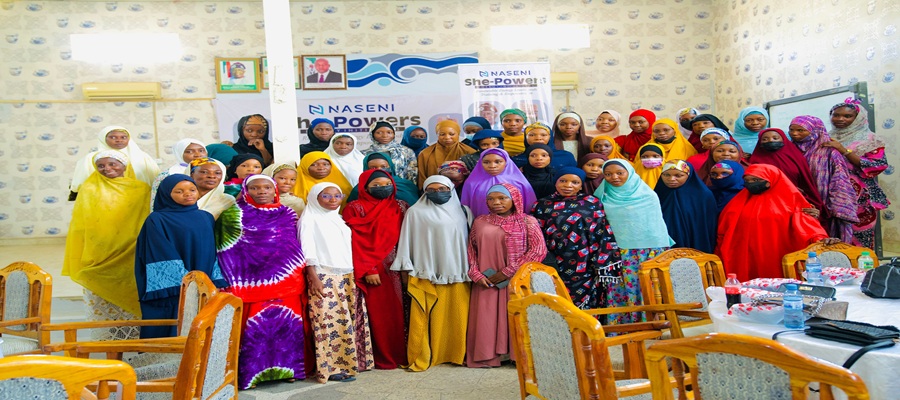
The National Agency for Science and Engineering Infrastructure (NASENI), under the leadership of its Executive Vice Chairman/CEO, Khalil Suleiman Halilu, has trained 50 women in Kano State on inverter and battery technologies through its She-Powers Energy Initiative.

The three-day programme, held at the Technology Incubation Centre, Farm Centre, Kano which ended yesterday, was designed to equip participants with practical renewable energy skills, promote women-led enterprises, and enhance sustainable livelihoods.
The initiative forms part of NASENI’s broader commitment to empowering women, creating economic opportunities, and expanding participation in Nigeria’s growing clean energy sector. It also aligns with the Renewed Hope Agenda of President Bola Ahmed Tinubu by supporting job creation, entrepreneurship, and inclusive economic development.
Through targeted interventions such as the She-Powers Energy Initiative, NASENI continues to demonstrate its commitment to leveraging technology and innovation to improve lives and drive sustainable development across the country.
Photos: Participants at the She-Powers Energy Initiative training organised by the National Agency for Science and Engineering Infrastructure (NASENI) held at the the Technology Incubation Centre, Farm Centre, Kano yesterday.
MultiChoice Nigeria has launched a month-long promotional campaign tagged “Open Time”, offering eligible DStv subscribers access to higher viewing packages at no additional cost.

The promotion, which runs from June 1 to June 30, 2026, is aimed at rewarding existing customers, reconnecting subscribers and attracting new users across Nigeria.
Under the initiative, active subscribers on selected lower-tier packages, including Compact and Compact+, will automatically be upgraded to higher viewing tiers, with some customers gaining temporary access to Premium content during the promotional period.
According to the company, eligible subscribers will not be required to register or manually activate the offer, as upgrades will be applied automatically once subscription payments are confirmed.
In a statement announcing the campaign, MultiChoice said the initiative was designed to provide customers with access to a wider range of entertainment content and enhance viewing experiences.
“The Open Time initiative is a simple way for our customers to enjoy more of the stories they love and discover new content across genres, as long as their accounts remain active during the period,” the company stated.
The DStv Premium package, which currently costs N44,500 per month, offers access to more than 160 channels, including sports, movies, documentaries, children’s programming, news and lifestyle content.
MultiChoice said the offer applies to subscribers who maintain active accounts throughout the campaign period.
The company added that the promotion forms part of efforts to enhance customer value by providing broader access to entertainment content, including drama, sports, action and children’s programmes.
To participate, subscribers are required to make payments through approved channels such as the official DStv website, the MyDStv mobile application, USSD banking platforms and authorised payment agents.
The company clarified that all promotional upgrades would automatically expire at the end of June, after which subscribers would revert to their original subscription packages.
Industry analysts say the campaign comes amid increasing competition within Nigeria’s pay television and streaming market, where service providers are introducing incentives and value-added offerings to attract and retain customers.
MultiChoice said the initiative reflects its commitment to delivering quality entertainment and ensuring subscribers enjoy greater value from their subscriptions.

CBN to Deploy AI in Fight Against Payment Fraud

NDPC, Meta Launch 2-Year M-SIDP after Regulatory Settlement

Report Faults Banks over N91.1 Trillion Sterilised at CBN

Telcos Fault Data of FDI Flow, Claim Investment of N1.86 Trillion on Service Expansion

NRS Accredits Afri Invoice as Access Point Provider to Drive Nigeria’s Mandatory e-invoicing

CBN Extends PoS Geo-Fencing Enforcement Deadline to August 2026

FG to Launch Nationwide Free Digital TV Platform June 17

MTN, Airtel, Glo Under Pressure as FG Demands Better Service Delivery

Jumia Nigeria Records Strong Q1 2026 Growth as Technology-Led Strategy Drives Market Expansion

Metro Digital, Nigerian Firm Accuses Multichoice Of Refusal to Obey Court Judgements




 E-Financial2 days ago
BOI Wins Dual Honours @ EMEA Finance Awards for Sustainability and Social Impact Leadership

 Telecom2 days ago
Price of Data in Nigerian Mobile among Top Four Cheapest Globally – MTN CEO

 E-Business2 days ago
NITDA Okays NiRA’s Annual, Business Report

 E-Financial2 days ago
CBN Imposes N100m Penalty on Dealing Bank Inadequate Processing of Forex Documents

 Telecom2 days ago
NAIFF Returns for 2026, Expands Focus on AI-Powered Storytelling in Africa

 General News1 day ago
SSDC Warns Businesses against Cyber, Election-Related Risks

 General News2 days ago
Moniepoint DreamDevs Bootcamp Graduates Second Cohort to Strengthen Homegrown Talent Pipeline

 Telecom1 day ago
FCCPC Refutes Airtime Market Takeover Claims