

General News
Nigerians Do Not Respect Credit – Okonyia

Robert Okonyia is the managing director/CEO, Bocal (UK) Limited, a consultant firm offering services to financial institutions on payment solutions. Bocal has been doing that for banks in conjunction with a card processor and a card provider. Okonyia spoke to funmi ilesanmi on industry issues.
Fraud in the e-Payment
There are lots of fraud in the e-payment system but every solution provider is trying to find solution to limit the fraud. Most importantly in Africa, we tend to escalate fraud by not actually knowing the statistics of that fraud. We know there is fraud in the e-payment system, for each payment solution, we try to incorporate other issues that will aid people not to be defrauded with their cards or any e-payment transaction. Like in the system, we also offer to other companies and banks, we have what is called a 3D secure layer whereby there is authentication before e-commerce is authorized. But this 3D secure layer is through only issued cards of Visa MasterCard.

When we talk about e-commerce fraud, first of all, is to be able to establish the statistics of that fraud and the losses of that fraud so that we can know how to go about it.
Integrity of ATMs
When we talk about ATM fraud and ATM card indenting, it is only because the knowledge of a technology must be known by the people using that technology. Secondly, when people do not understand what it means to give out their pin number or securing their pin number, they are exposed to the risk of loosing their money or people getting their information. But when we talk about ATM, most of the ATMs we have in Nigeria are on magnetic stripe approval, the country is trying to migrate to EMV but most in other issues there are other areas of check and balances which if introduced into ATM use will protect card holders’ interest. One is to create awareness, that if you have a pin number, it is not even supposed to be known by your bank officials. If you got information from your mail box to disclose your pin number, it means definitely that it relates to fraud because no human being will request for your pin number for any reason. Even the banks are not supposed to know that pin number but in today’s technology we are creating other areas whereby though your pin number is compromised, you can automatically generate a new pin number without going to the bank. We are also introducing other security measures whereby you can use your ATM card and block it on the same day so you do not have to be afraid of fraud or anybody using your ATM card to withdraw your money.
ATM Injecting Cards
Once your ATM card is taken by the machine, it means there is something wrong with your card because you could have entered your pin more than three times or you could have requested for more than was in your account. You may have entered the wrong pin before your card can be ceased by the ATM. Once that is done, you need to complain immediately to the issuing bank or to the authority that gave you that card, and if you do not do that within a particular time frame, then you are at risk. The most important thing is to understand where the risk starts from, where it ends and who is liable at a particular time. One is that for every transaction you make on the ATM and your card was ceased by the machine, you need to contact the bank immediately. The card may have been taken because the ATM suspected that you are not the actual owner of the card after entering the wrong numbers or trying to withdraw an amount that is not available on the machine or for any other reason. There is always a reason for a card been taken, a card is not just taken by the ATM indiscriminately except it suspects a fraud.
Chip and Pin Usage
Nigeria is very ripe for chip and pin usage but card holders must know that their pin number given is specifically for them and it is not to be known by any other person. If you got an e-mail from anybody asking you to disclose your pin number, you will definitely know it is a fraud because nobody in the bank or anywhere at all will request for your pin number.
Challenges in the e-Payment System
The challenge faced by the e-payment system in Nigeria is one, the type of card in use. Most of the card issued today work on the Interswitch network, followed by e-Tranzact and Valucard but you will find out that these are institutions not compatible to one another. If I am carrying a card which is issued by Valucard, I cannot withdraw money from the e-Tranzact platform and this is not what the country requires. The country must have a unified national switch whereby all cards must know one another and get approval from one another to dispense cash. There is no need saying I have an Interswitch card, I cannot go to the Valucard platform to withdraw money or I cannot go to the e-Tranzact platform to withdraw money. We need a unified system whereby if you carry any switching company’s card, you can withdraw money on any machine. We know Nigeria is trying to create a national switch but when will it be launched?
Secondly, when talking about ICT usage in Nigeria, you need to ask yourself, how many Nigerians are banked? First of all, it is going to take the banks creating awareness. If you have that confidence of depositing your money in a bank then you will be introduced to a form of technology that is offered by the bank. The challenge we have now is to make Nigerians have the confidence of going to banks for their monetary transactions. What we are seeing today with bank managing directors siphoning funds, it decreases the confidence of the population in going to the banks. Research has shown that the banked population in the whole world is not more than 35 percent and what banks are trying to do is to grow the number of the banked population but unfortunately, the meltdown created some problems.
In our society, the problem of corruption and fraud are also creating problems. What we were trying to achieve before is that the world would attain a certain position where it will be a cashless economy. That means everybody would know they need to carry a card to secure their monetary transactions that would also give a near risk free transactions. Unfortunately as at today, this awareness is negatively developed because, one is to convince someone that would go to the bank that his money is secure and do not have the fear of losing his money. We know that people of a particular age group will start getting the awareness that they cannot do without having a card because awareness is been created.
Also, due to issues of robbery, money laundering act and terrorism, you will find out that the only way to move safely is through a card. If that card can offer you so many functionalities, then you can also do it at the comfort of your home. This is why cards in the next decade might be the only way you can transact your monetary affairs.
Mobile Money
When you have avenues or channels where you can move your money seamlessly without having to queue at the bank, it gives you the benefit of using banking technologies to carry out your monetary transactions. Mobile now is the only thing that links everybody and everybody has a mobile phone because if you watched the NCC’s recent report, Nigeria is trying to achieve the one hundred million mobile phone users and with that kind of population, you will find that getting it to be used by Nigerians will make it a very seamless network for anybody to use, and with time it will get to the reach of everybody, anywhere they are.
Using Credit Card in Nigeria
Based on what is on ground, credit cards require credit card agencies and data profiling so that you can know the credit data of that particular client and because the banks are not unified in information, it becomes difficult to do the credit profiling of every banked customer. The credit card is not recommended here in Nigeria. One other thing is that Nigerians do not respect credit because to respect credit, you must have a continuous profiling that would guide the banks and if you changed to another bank, there must be a link to the other bank so that the bank would also know your credit worthiness. What gives you credit in Nigeria is the amount of money you deposit with the bank, which is not a way of assessing credit because credit is not the amount of money you have in your account but based on the management of your account to show whom you are and what you have.
Local Software
Nigeria software developers are very good. It is not only developing the software but also been able to support the software with the hardware with which it will work. When it comes to the development of software, Nigerians can compete with any other country in the world. If you look at the things they have on ground, they have done so much to achieve success but the problem in Nigeria is that of implementing the software. We have limitations whereby if you want to offer services to people and you say this is what I want to do then you have so many parameters preventing you from achieving that objective. When people are talking about bringing it from outside the country it is because they can get 99.999 percent availabililty; continuous service so they do not need to break and break. But if there is a backup service that will come up immediately and give them the service which would work as planned and as scheduled, there will be no hindrance to its availability.
Supporting Local Software Manufacturers
What we ask the government to do is to provide us the services needed as a nation to develop our industries. You cannot achieve any vision by not getting the necessary things to support that vision. There is no constant power, there is no water, no good road, no basic industrial structure, the petrochemicals is not functioning, the refinery is not functioning, the iron and steel is not functioning then the growth of the nation cannot be achieved.
Future of Bucal UK Limited
We looked at Bocal (UK) to offer a good payment solution that will link Nigeria to the outside world and provide them with seamless financial transactions and also have the same service available to every individual in a civilized nation. Bocal (UK) also seeks to protect Nigerians from needless crimes which put the country in bad light because with a good payment solution, if you participate freely there will be no need worrying about money laundering, terrorism acts and all acts of corruption. By this, Nigeria will join the League of Nations in a controlled and civilized way of handling money without getting involved in any dirty deals.



Federal government has launched Credit for Laptops, Internet, Connectivity and Knowledge Digital Devices (C.L.I.C.K.D.), a new consumer credit initiative, to provide affordable financing for locally assembled laptops and other digital devices.

L-R: Mr Uzoma Nwagba, managing director and chief executive officer, CREDICORP, and Dr Bosun Tijani, minister of Communications, Innovation and Digital Economy, at the launch
The initiative by the Nigerian Consumer Credit Corporation (CREDICORP) and the Federal Ministry of Communications, Innovation and Digital Economy, is aimed at equipping Nigerians with the tools needed to participate in the country’s growing digital economy.
During the launch, Dr Bosun Tijani, minister of Communications, Innovation and Digital Economy, described access to credit as critical to improving productivity and driving economic growth.
Dr Tijani said no nation could achieve sustainable development without a strong credit system that enables individuals and businesses to access resources needed to become more productive.
He noted that in today’s digital age, technology has become indispensable for education, innovation and wealth creation.
The minister explained that many talented young Nigerians possess the skills required to succeed in the digital economy but remain constrained by their inability to own computers and other digital tools.
Drawing from his personal experience, Dr Tijani recalled how his first laptop as a student in the university opened doors to international opportunities and eventually inspired him to establish one of Nigeria’s pioneering technology hubs.
He said the new programme would ensure that more young Nigerians are not denied similar opportunities because of financial barriers.
According to him, the initiative aligns with President Bola Tinubu’s vision of building a one-trillion-dollar economy by expanding access to technology, boosting productivity and supporting local manufacturing.
Mr Uzoma Nwagba, managing director and chief executive officer, CREDICORP, described the programme as a strategic investment in Nigeria’s future workforce and digital transformation.
Mr Nwagba said that while improvements in internet connectivity and digital skills training have positioned Nigeria for the Fourth Industrial Revolution, access to devices remains a major challenge preventing many young people from fully participating in the digital economy.
He explained that C.L.I.C.K.D. would bridge that gap by providing affordable consumer credit that enables beneficiaries to acquire laptops and other internet-enabled devices while they develop in-demand digital skills

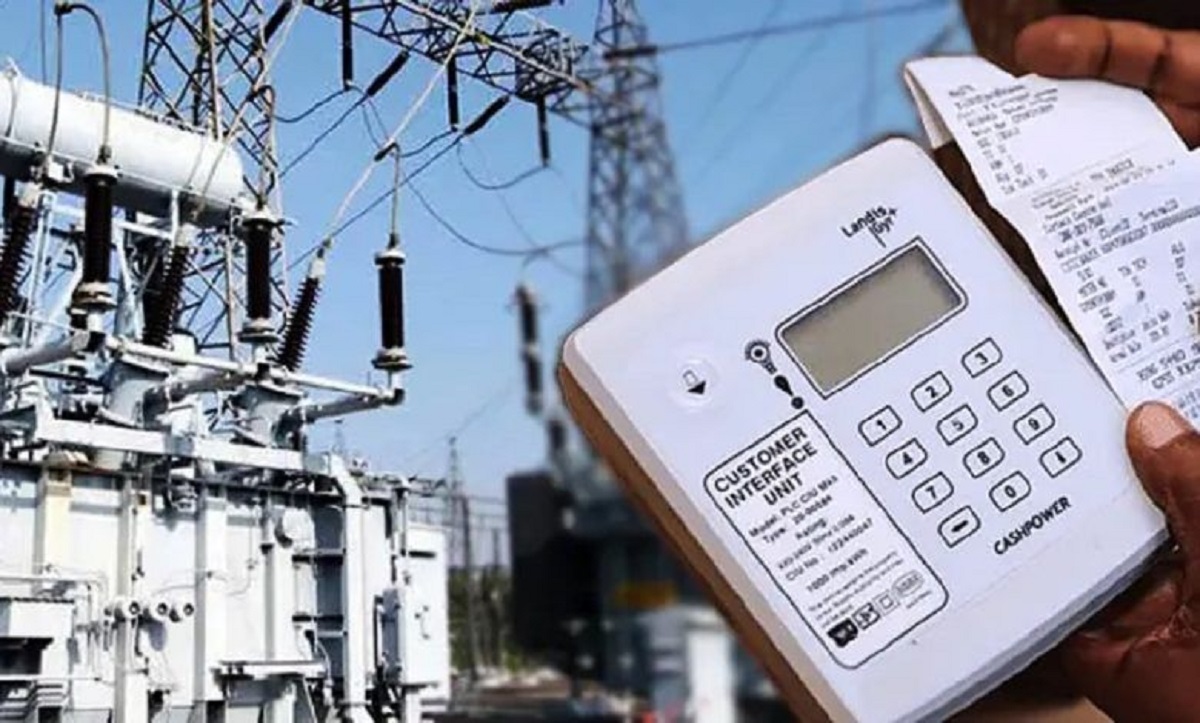
Federal Government has announced the disbursement of about N333 billion to eight electricity generation companies (GenCos) as part of measures to resolve outstanding debts in the power sector.

The government also disclosed the issuance of a second bond valued at N729 billion to settle verified legacy obligations and improve liquidity within the Nigerian Electricity Supply Industry (NESI).
The disclosures were made on Tuesday at an investors’ forum organised by the Nigerian Bulk Electricity Trading (NBET) Plc in Abuja.
Government representatives said the latest bond issuance marked the completion of the initial phase of the Presidential Power Sector Debt Reduction Programme, which was designed to address verified liabilities and attract private sector investment across the electricity value chain.
The Special Adviser to the President on Energy, Mrs Olu Verheijen, said the implementation of the first series of the programme demonstrated the administration’s commitment to meeting its financial obligations and improving investor confidence.
Verheijen disclosed that the Federal Government in February 2026 allocated about N501 billion under the first tranche of the programme, comprising N300 billion in cash and N201 billion in non-cash bond instruments to offset verified debts owed to power producers.
She said N333 billion had so far been disbursed to eight participating GenCos operating 17 power plants.
According to her, the government also paid the first coupon of about N63.5 billion on the seven-year bond in full on July 14, 2026.
She explained that the payments had enabled generation companies to meet critical obligations to gas suppliers, lenders and operations and maintenance contractors, thereby improving their operational capacity.
“Markets do not reward promises; they reward performance. Capital follows credibility,” Verheijen said.
She added that the second bond series would further strengthen liquidity in the electricity market and create a more stable financial environment capable of attracting long-term private investment.
The Presidential Power Sector Debt Reduction Programme is part of broader Federal Government efforts to address challenges affecting electricity generation, distribution and investment in Nigeria’s power sector.
Federal government has launched a N482.4 million investment fund to support 12 tech-enabled Nigerian startups.

The initiative under the federal government of Nigeria’s Investment in Digital and Creative Enterprises (iDICE) Programme was implemented by the Bank of Industry (BoI).
The initiative in a statement said applications have been opened for Growth Lab, a 12-week acceleration programme that will select the 12 tech-enabled Nigerian startups, from the six geopolitical zones, for intensive growth support, investment readiness training, and access to up to $350,000 in funding.
According to Ife Adebayo, national coordinator of the Programme, growth lab was designed to support startups that have achieved early traction and are seeking the expertise, networks, and investment required to scale following the implementation of Founders Lab.
“Growth Lab is the Startup Bridge accelerator programme, designed for startups that have developed an MVP and require structured support to scale. The programme focuses on strengthening venture fundamentals and preparing companies for external investment.
“The programme targets startup founders who are seeking the support, networks, expertise, and investment readiness required to accelerate growth and strengthen their position within the Nigerian innovation ecosystem,” he said.
He added that selected founders will gain access to structured growth support, investment readiness preparation, access to industry experts, market expansion pathways, a $100,000 cash investment (or Naira equivalent) for 7.5% equity upon entering the programme (terms and conditions apply), and up to $250,000 in potential follow-on investment should certain growth conditions be met.
“Eligible startups must be at the post-MVP stage, demonstrate evidence of market validation through users, customers, pilots, partnerships, waitlists or any other demand signals, and be willing to participate fully in the hybrid programme,” he said.
The programme will run as an intensive 12-week hybrid experience, including virtual engagements and two physical weeks in Lagos focused on collaboration, learning, and business growth.
The statement said applications opened on July 15, 2026, and will close on August 19, 2026.
According to him, female founders are strongly encouraged to apply. Selection will be conducted through a clearly defined, merit-based evaluation process aligned with published criteria.
iDICE is a $618 million federal government initiative backed by international lenders to boost the technology and creative sectors.
It provides young entrepreneurs with business skills training, mentorship, and access to capital through funds and accelerator programs like the iDICE Startup Bridge.

NPC Opens Nationwide Digital Birth, Death Registration Platform

FG Launches C.L.I.C.K.D., Consumer Credit Scheme for Tech Devices

Airtel Nigeria Expands Retail Footprint to Strengthen Customer Access Nationwide

Ovaloop Technologies Unveils Digital Tools to Formalize SMEs Operations Across Africa

Kaspersky Survey Highlights the Need for Smartphone Security

NRC, Ponzi Scheme Collapses Resulting Loss of Billions of Naira

NASENI Moves to Digitize CCB’s 5m Assets Declaration and Operations

Lebara Nigeria Launches Lebara Play, Africa’s First Telecom-Owned Micro-Drama Platform

CANAL+ Partners Samsung to Pre-Load DStv Stream on New Samsung TVs In Nigeria, Other African Countries

Tokenization, Blockchain Technology will Transform Financial Institutions – IMF




 E-Financial3 days ago
Access Holdings Sells 7.44% Stake in Ghana Unit

 News3 days ago
Adebutu, PDP Chieftain Accuses Nigerian Governors of Embezzling LG Allocations

 E-Financial3 days ago
NDIC Urges Youths to Shun Ponzi Schemes, Embrace Savings

 E-Business3 days ago
SERAP to Sue NASS over Bill Empowering NDPC to Regulate Social Media

 News3 days ago
NIMASA Unveils Accelerator Scheme to Drive Innovation, Sustainable Growth

 E-Financial3 days ago
NRS Issues July 31 Deadline for e-Invoicing Compliance

 News3 days ago
ICPC Secures Final Forfeiture of N941m Linked to IPPIS Fraud

 News3 days ago
eBusinessLife Advocates Greater Support for Girls in ICT as Students Showcase AI Innovations