

General News
Philips Renovates, Deploys Mobile Ultrasound at OriIyanrin Healthcare Centre

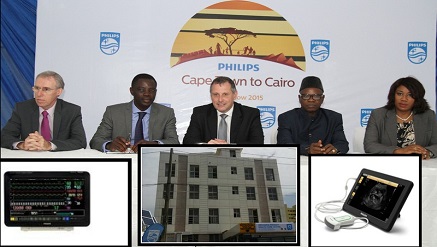
On the occasion of Philips’ sixth consecutive Cape Town to Cairo roadshow, Philips in collaboration with OriIyanrin Primary Healthcare (PH) Center popular known as the “Healthcare Centre”) unveiled an extensive overhaul and refurbishment of the mother and child care facilities at the Healthcare Centre.
Essentially, Philips upgraded the facilities in the labour, paediatric and new born baby wards, designing them to support the well-being and recovery of expectant mothers and their new born babies.
It is anticipated that over time, as a result of this pioneering project, many lives will also be saved.
The Healthcare Center, located in Iru/Victoria Island, LCDA, Lagos, has a very high patient in-flow with an average of 300-400 outpatients per month, as well as 30-40 follow up appointments per week.
The Healthcare Center records an average of twenty (20) births per month. The labour, pediatric and new born units in the Healthcare Center prior to the refurbishment were in need of an upgrade.
The Healthcare Center is the largest amongst three primary healthcare centers in the district- Oniru Primary Health Centre and TakwaBay Island Primary Health Centre being the other two; all of which have minimal manpower.
Therefore the upgrading of the Healthcare benefit all three centers, and enable them to provide more efficient patient care.
Calming Environment for Mothers and Babies
The project, undertaken by Philips has resulted in a complete overhaul and renovation of existing mother and child care facilities.
Philips began by painting and decorating the wards in order to create a serene and calming environment; Philips has also installed new toilets, tables, chairs, beds and cabinets.
In addition, all the light fittings have been retrofitted with the latest Philips LED lighting solutions; LED lighting enables rest and recovery, as it’s not as harsh as conventional fluorescent lighting, it requires minimal maintenance and also helps to reduce energy consumption.
Earlier, due to frequent power outages as well as poor and sporadic lighting, doctors found it very challenging to deliver babies at night time, this problem is now eliminated.
This new innovative solar LED lighting provides safe and uninterrupted illumination, while saving costs.
Philips has also invested in landscaping and beautifying the roundabout and streets surrounding the Healthcare Centre; all elements to provide a clean and attractive area, as well as easy access to the Healthcare Center.
Installing lifesaving Innovations
To further improve the maternal health and child care facilities, Philips has also provided the Healthcare Centerwith a range of its innovative solutions, many of which have been developed specifically with African conditions in mind.
Innovative Ultra-Mobile Ultrasound
Noticing the lack of basic ultrasound in the labour ward, Philips has equipped the Healthcare Center with its innovative ultra-mobile ultrasound system VISIQ; the size of a tablet, the VISIQ is the first ultra-mobile system from Philips.
VISIQ’s unique combination of mobility, ease of use and image quality, will enable clinicians in the Healthcare Centre to carry out comprehensive obstetric and abdominal scans themselves rather than referring patients to larger ultrasound centers or hospitals. This enables fast diagnosis and treatment.
Approximately ten times smaller than a traditional ultrasound machine and with reduced energy consumption, VISIQ can be used for screening, triage and fetal well-being scans, all of which helps to address the critical issue of maternal and infant care in Nigeria.
Monitoring with Assurance
In addition, Philips has also installed its Efficia Patient Monitor in the Healthcare Center.
Designed to be both portable and intuitive, and using time-tested physiological measurement algorithms the Efficia monitor will empower staff at the Healthcare Centre with actionable, care-specific information required to make patient management decisions and provide fast and efficient patient care.
Furthermore, to ensure proper usage of the technology, Philips is conducting an extensive training workshop at the Healthcare Center for midwives, maternity nurses, obstetricians and ultrasound practitioners; the objective is to provide hands-on application training, as well as a clinical refresher course on where to look and what to look for, and how to use this information to guide diagnoses and treatment decisions.
For new mothers and soon-to-be mothers in the Healthcare Center, Philips will be hosting demonstrations by experts on the importance of breast feeding and learning the correct techniques to enable comfort and ease for both infant and mother.
Breastfeeding is fundamental to reducing infant mortality. It can protect against common childhood infections such as neonatal sepsis.
According to the WHO (World Health Organization), exclusive breastfeeding for a baby’s first six months and partial breastfeeding into a child’s second year, reduces a child’s chances of succumbing to several preventable illnesses including diarrhoea and acute respiratory tract infections.
Maternity Screening Camp to Enable Early Detection of Complications
As per previous years, Philips is setting up a maternity screening camp during the Nigerian phase of the Cape Town to Cairo roadshow.
The screening camp at the Healthcare Center will give expectant mothers in the local community the opportunity to avail themselves of a free ultrasound screening. For the majority of the women in the area this will be their first time to have a scan during their pregnancy.
A pre-natal screening ensures that any complications can be detected in advance of labour; if any of the women require further medical attention they will be taken care of immediately at the Healthcare Center.
Speaking on these development, at the inauguration of the refurbished facilities, Robin Armstrong, general manager, Philips Healthcare, West Africa said, “It gives me great pleasure to unveil the renovation of the mother and child care facilitates at the Healthcare Center. This project will hopefully ease the burden for the healthcare workers in the district, and in time save many lives as well. Most expectant women visiting this facility can now have access to care which will help to keep both them and their babies healthy.”
Armstrong added that, “Since the beginning of the Philips Cape Town to Cairo roadshow we have continually sought to champion the UN Millennium Development Goals 4 and 5 (MDGs), related to reducing child mortality and improving maternal health.
“Our commitment to Mother and Child Care in Africa is unwavering – as the Sustainable Development Goals (SDGs) supersede the MDGs our focus will remain the same, and we will continue to advance healthcare in Africa, providing solutions, innovations and collaborations that bring meaningful change.”
On his part, Dr Wale Akeredolu, medical officer health, Public Health and Primary Health Centre Department, Iru /Victoria Island LCDA commented on the refurbishment thus, “The impact this project will have on our district cannot be overstated. Community Healthcare Centers are generally under resourced and sparsely equipped with technology. Our Healthcare Center is no different in this regard, and in particular our mother and child care facilities have been under enormous pressure in recent years. We are delighted to have collaborated with Philips, as this project will breathe new life into our Healthcare Center and enable us to improve care for our patients.”
Fourth Stop on the Sixth Cape Town to Cairo Roadshow
The announcement of the OriIyanrin Primary Healthcare Center formed part of Philips’ annual pan-African Cape Town to Cairo roadshow that kicked off on 11th May 2015, in Cape Town.
Nigeria is the fourth stop on a journey covering 12,000 km across 11 cities and 8 countries over a period of 4 to 5 months.
The roadshow has gained significant momentum over the past five years, allowing Philips to get to the heart of some of the key issues facing Africa – including Mother and Child Care, the rise of non-communicable diseases, energy efficient LED and solar lighting solutions, as well as shining a spotlight on the need for clinical education and training.
Last year when the roadshow stopped off in Nigeria, Philips unveiled a stunning LED lighting makeover of the well-renowned Nigerian National Arts Theater in Lagos, one of the most iconic buildings in the city.
Royal Philips is a diversified health and well-being company, focused on improving people’s lives through meaningful innovation in the areas of Healthcare, Consumer Lifestyle and Lighting.
Headquartered in the Netherlands, Philips posted 2014 sales of EUR 21.4 billion and employs approximately 108,000 employees with sales and services in more than 100 countries.
The company is a leader in cardiac care, acute care and home healthcare, energy efficient lighting solutions and new lighting applications, as well as male shaving and grooming and oral healthcare.



Haleon, a global consumer health company with a purpose to deliver better everyday health, is introducing its corporate identity across Nigeria in a phased transition. Trusted brands such as Panadol, Sensodyne, Macleans, Otrivin, Voltaren, Cac 1000 and Andrews Liver Salts remain unchanged in formulation, quality, and effectiveness.

Following the formal demerger from GSK, Haleon was launched on July 18, 2022, as an independent company 100% focused on consumer health. Haleon is the new home for brands like Sensodyne, Panadol, Centrum and others, trusted by millions worldwide for their proven effectiveness in improving everyday health.
From relieving tooth sensitivity or pain to providing essential vitamins and nutrients, our products are designed to fulfil Haleon’s purpose: to deliver better everyday health with humanity.
This revised corporate identity is a branding change only and does not affect the safety, quality, or efficacy of the products. Haleon is sharing this update as part of its commitment to transparency and consumer confidence, helping consumers continue to choose the brands they know and trust.
Haleon’s collaboration with Fidson Healthcare forms part of this approach, reinforcing the value of local production in supporting trusted everyday health brands in Nigeria.
Panadol Extra 100s and Panadol Pain & Fever 100s are currently being produced and supplied to the market under the Haleon identity. Sensodyne Rapid Action will bear the Haleon corporate identity from mid-June, followed by Andrews Liver Salts later this year.
In due course, additional brands—including Otrivin, Voltaren, Cac 1000, Macleans, and the wider Sensodyne portfolio—will also transition to the Haleon identity.
Haleon remains committed to ensuring consumers can continue to access the same high-quality brands at pharmacies, supermarkets and other retail outlets across Nigeria.
“As Haleon introduces its identity in Nigeria, we want consumers to feel informed and reassured. The trusted products they rely on remain the same in quality, formulation and effectiveness.
“At the same time, our local production approach in partnership with Fidson Healthcare supports reliable access to high-quality everyday health products in Nigeria,” said Himanshu Raj, Haleon General Manager for Sub-Saharan Africa.
Recent research by Kaspersky has shown that the so-called “grey” websites repeatedly target all world regions, and this may be driving both financial loss and large-scale data harvesting.

Grey websites are deceptive online platforms that fall outside traditional phishing definitions but still manipulate users into voluntarily handing over money and personal data. Kaspersky’s new report provides detailed insights into the threats posed by the grey websites on global and regional levels.
Unlike classic phishing attacks, which aim to steal credentials outright, grey websites rely on persuasion, misleading interfaces, and hidden terms to exploit users. They often impersonate legitimate services such as e-commerce platforms, financial tools, AI services, or subscription-based content, making them significantly harder to detect.
Kaspersky analysis shows that the majority of suspicious resources globally fall into several recurring categories:
- Fake browser extensions and “security tools” that actually harvest browsing data and track user activity.
- Fraudulent financial platforms including crypto exchanges, trading tools, and investment schemes promising unrealistic returns.
- Intermediary services (e.g., legal or real estate), charging for low-value or nonexistent services while harvesting sensitive personal data.
- Subscription traps offering low-cost trials that convert into costly recurring payments hidden in fine print.
- Fake online shops that either deliver counterfeit goods or nothing at all.
Example of a grey website.
A notable trend is the emergence of tools disguised as AI services or image-processing platforms, reflecting attackers’ ability to adapt to current digital trends and target younger audiences.
There are proven security solutions that help users to detect grey websites across different types of devices – those running on Windows, Linux, Android and iOS. The detection model is based on many factors, including domain name and age, IP reputation, stability of the infrastructure used, DNS configurations, HTTP security headers, digital identity and popularity of the web resource and other criteria.
Regional specifics
Regional variations in grey websites demonstrate how threat actors localise scams based on user behaviour and trending technologies.
In Europe, the threat landscape is dominated by links to suspicious browser extensions and fake “privacy-enhancing” tools.
These resources often present themselves as security solutions, promising safer browsing or anonymous search capabilities. In reality, they function as browser hijackers – intercepting traffic, collecting cookies, tracking user behaviour, and injecting advertisements.
The popularity of these threats reflects a high level of user concern around privacy and security, which attackers actively exploit. Additionally, these regions show a steady presence of phishing intermediaries and crypto-related scams, indicating a blend of technical and financially motivated attacks.
Across African markets, financial scams are the most prominent category of suspicious resources. Fraudulent trading platforms, fake brokers, and investment schemes frequently mimic legitimate financial services, often accompanied by fabricated licenses or endorsements.
These platforms typically prevent users from withdrawing funds, instead introducing additional “fees” or taxes to prolong the scam. The concentration of these threats highlights how attackers leverage growing interest in online investing while exploiting gaps in regulatory enforcement and financial literacy.
In the Middle East and North Africa region, suspicious resources frequently mimic communication (Internet telephony) tools, financial platforms, or betting services. Additionally, Ponzi-style investment schemes and crypto scams are widespread, often presented through polished interfaces that mimic legitimate platforms.
Web browser-based threats also play a significant role, with malicious extensions targeting user data and browsing activity. The regional threat profile reflects a convergence of financial fraud and technical compromise, where users risk both data exposure and monetary loss.
“Suspicious websites don’t look harmful at first glance. But they exploit trust, urgency, and familiarity, and a single click on what looks like a harmless AI image tool, a “secure” browser extension, or a heavily discounted online shop could be all it takes to lose money or expose sensitive data.
Instead of direct credential theft, attackers turn to behavioural manipulation – whether that’s subscribing, investing, or installing software,” comments Anna Larkina, Web Content and Privacy Analysis Expert at Kaspersky.
General News
MSMEs Paucity of Funds Receives Boost as Senate Backs Bill Seeking to Unlock Cash for them

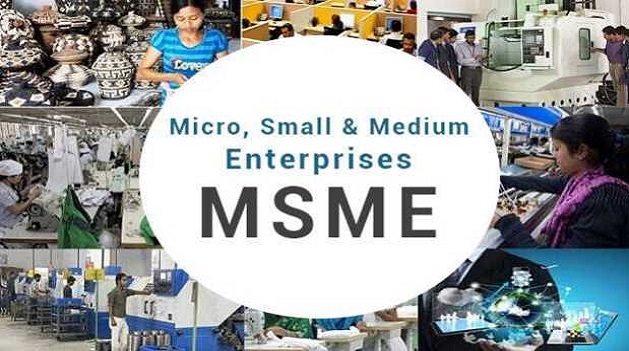
Businesses across Nigeria, particularly micro, small and medium enterprises (MSMEs), may soon be able to convert unpaid invoices and credit sales into immediate cash without relying on conventional bank loans following the passage of the Factoring, Assignments and Receivables Financing Bill for second reading in the Senate.

The bill, which seeks to establish a legal framework for factoring and receivables financing, is expected to improve access to credit, boost liquidity for businesses and enhance domestic and international trade.
It also seeks to provide legal certainty for the assignment of receivables through factoring, promote transparency, modernise assignment laws and facilitate greater access to credit for businesses across the country.
Leading debate on the bill which was sent from the House of Representatives for concurrence, Senate Leader Opeyemi Bamidele said on Tuesday that the proposed legislation would create an enabling environment for debt factoring to thrive in Nigeria while defining the rights and obligations of creditors, factors and debtors involved in such transactions.
He explained that the bill provides for factoring contracts between sellers and factors and clarifies the legal relationship among parties in receivables financing arrangements.
According to Bamidele, the legislation has already passed all legislative stages in the House of Representatives and has complied with the Senate’s procedural requirements under Order 78(3) of the Senate Standing Orders.
He told lawmakers that the Senate Ad Hoc Committee on Compliance, chaired by Abdul Ningi, had scrutinised and cleared the bill for concurrence.
“The committee confirmed that all procedural requirements for consideration and concurrence by the Senate have been fully met,” he said.
Seconding the bill, Adetokunbo Abiru said the legislation would provide businesses with an alternative source of financing by enabling them to turn credit sales into cash and improve their working capital.
Abiru noted that factoring has become increasingly popular across Africa over the last decade, largely through initiatives supported by the African Export-Import Bank (Afreximbank).
He disclosed that the African factoring market is currently valued at over $50 billion, but Nigeria’s participation remains below one per cent.
According to him, countries such as Egypt and Morocco have benefited significantly from the financing model, adding that Nigeria risks missing out on the growing market without a clear regulatory framework.
“I think that passing this major legislation will help support our micro, small and medium enterprises in terms of converting most of their credit sales into cash without going through the normal borrowing arrangement,” Abiru said.
In his remarks, Ningi also assured lawmakers that the compliance committee had reviewed the bill and found no legal impediments to its passage.
Following a voice vote, the Senate approved the bill for second reading and subsequently referred it to the Committee of the Whole for clause-by-clause consideration.

UK, Nigeria Launch £15 million Growth Programme to Accelerate Economic Transformation

Haleon Introduces New Corporate Identity in Nigeria

NITDA Unveils Ambitious Strategy to Turn Southwest into Nigeria’s Next Innovation Powerhouse

Airtel Africa Foundation Publishes Inaugural Annual Report

Mobile Internet Gender Gap Widest in Africa – GSMA

CBN Extends PoS Geo-Fencing Enforcement Deadline to August 2026

Jumia Nigeria Records Strong Q1 2026 Growth as Technology-Led Strategy Drives Market Expansion

NCC Drafts New Rules for Virtual Mobile Operators

TD Africa, HPE Drive Conversations on the Future of Intelligent Networking

Anthropic Raises $65 Bn to Expand AI Research, Innovation




 E-Business2 days ago
Firm Discovered a New Corporate Phishing Technique using a Popular AI Web Development Platform

 E-Financial3 days ago
Senate Moves to Regulate Crypto Sector, Seeks Investor Protection

 Telecom2 days ago
No More Deleting and Reposting: Instagram Unveils Long-Awaited Profile Update

 General News3 days ago
IMF Warns Nigeria of Risks in $5Bn Swap Deal with First Abu Dhabi Bank

 Telecom2 days ago
Airtel Nigeria Launches Web Data Calculator to Give Customers Greater Visibility into Data Usage

 Telecom2 days ago
All Set for 2026 Nigeria DigitalSENSE Forum and Awards: NLNG, IHS, and others rally support

 Telecom2 days ago
NCC Board Reviews Telecom Sector, Notes Progress in Network Expansion, Consumer Compensation

 Broadcasting3 days ago
MTN Launches One TV with Free-to-View, Pay-as-You-Go