

General News
Saving Tips on New Car Insurance

Buying a new car is a pleasant experience and every one’s delight. However one could be in for a surprise if you learn about the shocking premiums you would be paying on a new car. New car insurance can vary widely from one body style to another. For example, you may know that sports cars cost more to insure than others in family category.. That general rule of thumb does not just apply to traditional sports cars; it also applies to the two-door versions of popular family sedans such as the coupe version of the Honda Accord. That’s because people who drive these cars statistically tend to drive more aggressively than their sedan counterparts, making them a greater risk and causing their insurance rates to rise. Interestingly, convertibles tend to have lower insurance rates unlike the hardtop counterparts.
Interestingly also, since bigger cars are safer, you might think that larger vehicles are cheaper to insure. This is not always the case. The largest cars can inflict more damage on smaller cars in a collision, which may result in costlier repairs thus leading to higher insurance rates. Like body style, the car’s engine and transmission often can affect the insurance rate. Generally, the greater the horsepower, the higher the cost of new car insurance, even when you are considering the same car with a variety of engines. When it comes to transmissions, cars with manual transmissions are generally more costly to insure than those with automatic transmissions. An exception to this rule is the pickup, which often has a manual transmission because of its use as a work or tow truck. The reason for the higher rates again relates to the typical driver. Those behind the wheel of cars with higher horsepower and manual transmissions tend to drive more aggressively and become involved in more collisions. While body style, engine size and transmission type are all major factors in the way that rates are computed for new car insurance, rates can vary for similar, competing vehicles primarily due to their safety ratings and their likelihood of being stolen. To drive home this point, a comparism of similarly equipped versions of the 2010 Honda Civic and the 2010 Nissan Altima showed that the Civic cost less to insure on average over a five-year span. It is advisable to seek expert opinion when making a choice.If your new car insurance is not providing you with all these benefits then take time to ensure you are getting the best rates. You and your family deserve to have insurance you can depend on to be there when you need it and without any hassle. You have enough to worry about, especially in these days of economic stress .Let your new car insurance be one thing you can depend on. When one is unfortunate to be involved in a car accident the last thing you need is the added stress of an insurance company that is difficult to reach or delays in processing your claims. Too many people are paying too much for their new car insurance without being aware of the better options alternative insurance companies are offering. When you are purchasing new car insurance are you being offered GAP insurance in case your car ever becomes totaled? Without this important aspect of new car insurance you could be responsible for a large sum of money when you least expect it. Some insurance companies will charge more for your new car insurance policy simply because of the age of your vehicle, but a fair company will take into consideration your good driving record and discount your rate accordingly. Make sure you have the insurance you need at the best price here.
Prompt Claims Payment: Crucial to Survival of Underwriting Firms – Experts
To be able to rise up to prompt payment, insurers have been further charged to shorn in- fighting and sharp practices, by charging adequate premium that could carry the volume of expected claims. Analysts believe that insurance firms must adhere to this by making sure that risks brought before them are properly assessed before premiums are charged. Corroborating this position, Mr. Raymond Odamo, managing director, Afromart Group said insurers should publicise claims payment as a way of enhancing the egative image of the industry and boosting public confidence. He commended some of the insurance companies who inspite of the perceived secrecy in claims payment, have been publicizing claims paid out to clients. "One of the major challenges facing the local insurance industry, besides the negative image problem and poor awareness among the insuring public, is the correct assessment of risks. Once risks are correctly assessed, it becomes easy to charge the right technical price. Industry experts believe that much as insurance is based on the understanding that claims are paid from a pool of premiums from similar risks, it is logical that when losses occur, the pricing of the risks will go up at renewal.
The practice over time has been accusations and counter accusation between underwriters and reinsurers on one hand and between insurers and the insuring public on the other. Rather than point fingers at each other, he stressed that it is time for insurers to check their rates and make them commensurate with the exposures they cover while also paying the claims when the need arises.. Besides, he said it should be noted that reinsurers basically provide capital to insurance companies and this costs money, stressing that that when the cost of capital increases, cost of reinsurance also increases. Considering the relationship of adequate premium with prompt claims payment he enjoined stakeholders to always include underwriters, intermediaries and the regulators in every facet of insurance business. While emphasizing that responsible underwriting and professional claims handling can only serve to improve the image of the industry in the eyes of the buying public, he called on the National Insurance Commission (NAICOM), to adopt a policy of compulsory claims payment declaration as a tool to boosting public confidence.
It would be recalled that Sovereign Trust Insurance (STI) in its traditional style of letting the public know its claims payment profile, recently released its claims paid out last year. According to a breakdown of claims paid by the company from January-September 2009, the underwriting firm has settled claims totaling N425, 458,581.89 in the last nine months.
A rundown of the figures showed that a total of N138 million was paid in the first quarter, N173 million in the second quarter while N114 million went into claims settlement in the third quarter.
Claims paid under Motor Insurance amounted to N220, 843,530.59 (representing 52% of the total figure), according to the Head of Claims Department in the organization, Emmanuel Anikibe, Fire and General Perils Insurance accounted for N48, 605,626.69 while a total of N110, 181,338.39 was settled as Claims under General Insurance within the Nine Months period under consideration. Other figures provided are Marine Insurance N13, 463,627.23, Engineering Insurance N17, 650,878.03 and Energy Insurance N14, 713,580.96.
While commenting, the Managing Director of the Organization, Mr. Wale Onaolapo stated that Claims payment is key and paramount to the survival and reputation building of any underwriting firm in the country.
In his words “whenever the need arises to pay claims as at when due, we do not see it as doing our customers a favour or doing anything out of the ordinary; we are only fulfilling the promises we made at the point of picking up the business.” “We are obligated to settle claims as at when due and we will do all in our capacity to ensure that we do not disappoint when it matters most” The whole essence of insurance is premised on restoring to former status even after the mishap. I enjoin Nigerians both individuals and corporate organisations to see insurance an integral part of our lives just as we live with risk on a daily basis.
Stating further, Onaolapo said “we are forever committed to our vision of being a leading brand providing insurance services of global standards hence professionalism, integrity and sound corporate governance are values we hold in high esteem and abide by in the day to day running of the organization.
STI has over the years, demonstrated commitment to optimally maintaining a leading position in the industry in Nigeria. According to recent ratings, the underwriting firm has shown a great deal of consistency with a lot of potentials for growth in the years to come. In terms of peer to peer performance the company is also doing very well when compared to other Insurers in terms of capital, assets, gross premium income, investment income and net premium income .Odamo urged NAICOM to emulate the on-going reforms in the banking sector by totally overhauling the insurance industry and shed it of all its negative attachments.


The Nigerian Safety Investigation Bureau (NSIB) says the flight captain of the VMO Aero aircraft that landed on a roadway near Asaba Airport in Delta State told investigators that the observer pilot mistakenly identified the paved road as the runway before touchdown.

The bureau disclosed this in a preliminary report released on Thursday on the June 10 incident, which prompted the Nigeria Civil Aviation Authority (NCAA) to ground the private jet.
The aircraft had seven people on board, including the pilot-in-command (PIC), second-in-command (SIC), an observer pilot, a cabin crew member and three passengers.
According to the report, the aircraft was cleared by Air Traffic Control (ATC) to approach Runway 11 at Asaba Airport after the crew requested a right orbit.
The crew initially discontinued the approach, executed a missed approach and repositioned for a second landing attempt.

NSIB said the crew reported that the aircraft’s navigation systems indicated it was correctly established on the published RNAV Runway 11 approach.
“The PIC and SIC reported that the observer pilot identified the paved surface ahead as the runway,” the report stated.
However, the observer pilot gave investigators a different version of events.
According to NSIB, he said the aircraft remained inside cloud until late in the approach and that the Ground Proximity Warning System (GPWS) repeatedly issued “TERRAIN, TERRAIN, PULL UP” alerts.
He also said he observed a telecommunications mast directly ahead and instructed the flight captain to abandon the approach and climb immediately.
The bureau further disclosed that a cabin crew member reported that one of the passengers became concerned after overhearing discussions among the pilots and asked whether one of them was undergoing training. The passenger was reportedly reassured that all three pilots on board were experienced captains.
NSIB said no abnormal events were reported in the cabin before touchdown.
The aircraft eventually landed at about 8:57 a.m. on an under-construction paved roadway near Asaba Airport instead of the designated runway.
The bureau said its investigation into the incident is ongoing, while the preliminary report highlights conflicting accounts among the cockpit crew over the circumstances that led to the erroneous landing.


Federal High Court in Abuja has adjourned the Federal Government’s alleged tax evasion case against Binance Holdings Ltd. cryptocurrency exchange, until September 24, 2026, to allow both parties more time to pursue an out-of-court settlement.

Justice Emeka Nwite fixed the new date on Thursday after Moses Ideho, counsel to the Federal Government, informed the court that discussions aimed at resolving the dispute amicably were still ongoing.
Ideho, a deputy director of Legal and Prosecution at the Nigeria Revenue Service (formerly the Federal Inland Revenue Service), told the court that the matter, which had been scheduled for a report on settlement or continuation of trial, could not proceed.
According to him, one reason for the delay was the reported elevation of Justice Nwite to the Court of Appeal, while the second was the continued reconciliation efforts between the parties.
“The parties are still exploring settlement in the charge that led to this case,” Ideho told the court.
Sunday Agaji, counsel to Binance, did not oppose the application for adjournment, following which Justice Nwite postponed proceedings until September 24 for either a report on the settlement discussions or continuation of trial.
The case was previously adjourned on May 12 after both the Federal Government and Binance informed the court that negotiations were underway to settle the matter outside the courtroom.
Binance had first indicated its willingness to pursue an amicable resolution on March 24.
The cryptocurrency company was re-arraigned on July 12, 2024, on a four-count charge bordering on alleged tax evasion.
Ayodele Omotilewa, Nigerian representative, pleaded not guilty on behalf of the company.
The re-arraignment followed the removal of Binance executive Tigran Gambaryan and his colleague, Nadeem Anjarwalla, from the charge after the Federal Government amended the case to make Binance Holdings Ltd the sole defendant.
Justice Nwite had, on June 14, 2024, discharged and struck out the names of Gambaryan and Anjarwalla after the prosecution filed the amended charge.
Binance is also facing a separate criminal prosecution by the Economic and Financial Crimes Commission (EFCC), which accuses the company of laundering about $35.4m.
In addition, the Nigeria Revenue Service is pursuing a separate civil suit against Binance before another judge of the Federal High Court, seeking approximately $79.5bn in alleged economic losses linked to the company’s operations in Nigeria.
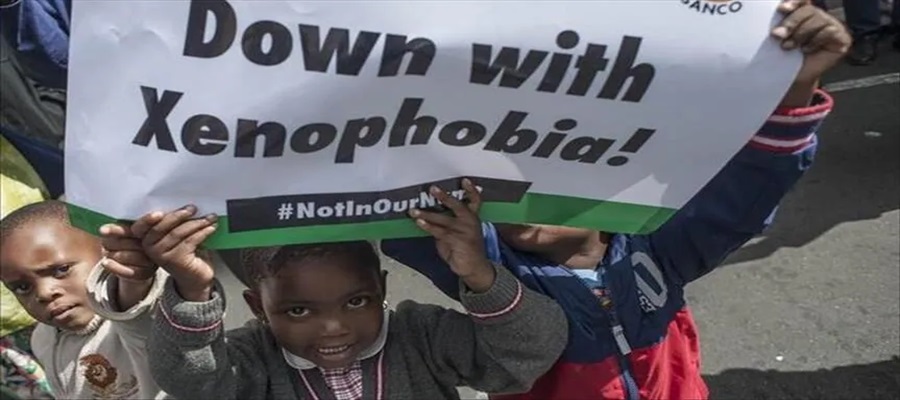
Oodua Youth Coalition (OYC), a Yoruba socio-cultural group, has issued a notice to stage peaceful picketing at MTN Nigeria offices nationwide.

This action stems from the company’s alleged failure to publicly condemn recent xenophobic attacks against Nigerians in South Africa.
This is coming despite statement by Karl Toriola, chief executive officer, MTN Nigeria, who recently said that MTN may have originated from South Africa, he explained, but MTN Nigeria is a Nigerian publicly quoted company, managed by Nigerians and with a Nigerian board.
However, in a statement jointly signed Olatunji Adejuwon and Olaoye Abolaji,vice president and national secretary respectively of OYC, described MTN Nigeria’s silence as unacceptable, given the company’s South African roots and the patronage it enjoys from Nigerians
The coalition said it would proceed with a peaceful protest if the telecommunications company continued to ignore its demands, stressing that the action was intended to draw attention to the need for corporate responsibility and moral leadership in condemning xenophobic attacks against fellow Africans.
“Consequently, the Oodua Youth Coalition hereby gives notice that we shall, without hesitation, commence a peaceful picketing of MTN Nigeria’s offices if the company continues to ignore our legitimate demands.
“Our action is intended to draw attention to the need for corporate responsibility and moral leadership in condemning acts of xenophobia against fellow Africans,” the statement said.
The group renewed its call on MTN Nigeria to immediately convene a press conference, with representatives of the coalition in attendance, to unequivocally condemn the xenophobic attacks and reaffirm its commitment to the safety, dignity and unity of all Africans.
It maintained that the proposed protest would be peaceful, orderly and in accordance with the laws of the Federal Republic of Nigeria.
According to the coalition, relevant security agencies have been notified of the planned action, while appropriate communications have also been sent to the South African diplomatic mission in Nigeria.
“We once again call on MTN Nigeria to immediately convene a press conference, with representatives of the Oodua Youth Coalition in attendance, to unequivocally condemn the xenophobic attacks and reaffirm its commitment to the safety, dignity and unity of all Africans.
“We emphasise that our proposed action shall remain peaceful, orderly and in accordance with the laws of the Federal Republic of Nigeria. Relevant security agencies have been duly notified, and appropriate communications have also been sent to the South African diplomatic mission in Nigeria.”
Reaffirming its commitment to defending the rights and dignity of Nigerians, the coalition vowed not to relent until its concerns received the desired attention.
“The Oodua Youth Coalition remains committed to defending the dignity of Nigerians and promoting African solidarity. We will not relent until our concerns receive the attention they deserve,” the statement added.
Responding to the controversy, Toriola further condemned all forms of xenophobia and violence against Africans living in South Africa, insisting that MTN Nigeria is a Nigerian company with substantial local ownership.
“We unequivocally condemn any form of xenophobia, violence or attacks against any community in the world. We’re a Nigerian company, through and through. We’re listed on the stock exchange with over 201,000 retail investors, and 11 million people hold shares through their pension funds in MTN Nigeria.
“We provide the digital backbone of the economy, and we have a completely Nigerian entity.
“Yes, MTN was founded in South Africa, and the parent company that is the majority shareholder is South African. But let’s also look at it objectively. The shareholding of MTN Holding South Africa is only 50 per cent African.
“The remaining 50 per cent is from across the world — 27 per cent from the United States, with the rest from the United Kingdom, Europe, the Middle East and the Asia-Pacific region,” Toriola said.

TeKnowledge, Equinix Partner to Advance Nigerian Digital Infrastructure

NSIB Faults Runway Identification, Reveals Cockpit Disagreement in Asaba Jet Incident

Airtel Africa to Connect 5,000 Schools to Free Internet by 2027

SEC Unveils Plans to Enforce Mandatory ESG Reporting for Large Firms Next Year

DStv, GOtv Owner MultiChoice Officially Joins Canal+ Group

NASENI Moves to Digitize CCB’s 5m Assets Declaration and Operations

Mobile Internet Gender Gap Widest in Africa – GSMA

Nigeria Launches FreeTV Nationwide

CANAL+ Partners Samsung to Pre-Load DStv Stream on New Samsung TVs In Nigeria, Other African Countries

Lebara Nigeria Launches Lebara Play, Africa’s First Telecom-Owned Micro-Drama Platform




 Telecom2 days ago
NCC Seeks Cost-Based Pricing Framework for Ducts

 E-Financial2 days ago
CBN Warns against Rejection of N100 Banknotes

 News2 days ago
Flutterwave Secures Circle Ventures Investment to Deepen USDC Payment

 Telecom2 days ago
Meta Introduces Muse Image With Advanced AI Image Editing Across WhatsApp and Instagram

 E-Financial2 days ago
BVN Enrollments Hit 69.55m- NIBSS

 Telecom1 day ago
Fixed Wired Internet Market Lags as Mobile Gains Ground

 News2 days ago
How EFCC Turned Recovered Loot Into School Supplies for Thousands of Nigerian Students

 News2 days ago
CJN Warns Judges: Reject Gifts or Risk Petitions and Ruined Careers