

Telecom
Giving Telephone Access to Rural Dwellers

The developmental history of telephony in Nigeria shows that the telephone service had always being targeted at the urban dweller to the exclusion of the rural dweller that forms a major thrust of the economy. Rather than being conceptualized as a tool for economic development, the telephone at inception in Nigeria was a tool in support of colonial administration.
At post-independence in 1960, there were a total of 18,724 lines to a population of 40 million. This translated to a teledensity of 0.5 telephone lines per 1,000 people. The telephone network consisted of 121 exchanges of which 116 were manual (magneto type).
The situation challenged post-independence governments, desirous of socio-economic developments. Several steps had to be taken at different stages; including segmented development plans and finally liberalization of the industry in 1992. All of these were aimed at increasing teledensity, modernizing the system and increasing the geographical coverage. In spite of all of these efforts, the gap between demand and supply remained embarrassingly wide in favour of demand.
Opening up the rural communities through integration into the national and global telephone networks will enhance exploitation of the economic potentials of the communities, improve the standards of living of the rural dwellers reduce, significantly, the level of poverty and improve the national income profile. Viewed from the fact that about 70% of Nigeria is rural and agrarian, this scheme is considered necessary and urgent, a fact that makes the use of easily deployable facilities necessary. It is appreciated that the rural communities may not be attractive to the private investor who is out to make profit; the scheme can be driven by government through legislations, inducements to private investors and possibly by forming partnerships with them.
ITU statistics show that there are 3.3 billion telephone subscribers in Africa, which is equal to about 40% of the population. It has been shown that up to 15 different people with different SIM cards in some villages may be using a single mobile handset, and that low income households are willing to spend 4-8% of their income on mobile-related costs. The London School of Economics alleges that 10 additional mobiles per 10,000 people improve GDP by 0.5%.
Benefits of Mobiles to dwellers
Farmers and other rural people have rapidly learned how to use their mobiles in various ways apart from phone calls. Farmers use SMS in relation to market access, interacting with traders and middlemen to distribute and receive information about products, prices, and availability. Some examples of concrete evidence were offered in reference to the direct benefits to farmers from telephony in rural sectors found in some IFAD projects:
In Zambia, farmers’ productivity has greatly increased along with their income. More so, in Tanzania, fishermen on the Great Lakes are able to communicate with one another and share information about the demand of fish and the prices in the various markets in which they sell. In this way, their productivity and income have increased, while they have avoided over-fishing and are protecting the natural resources.
Against this backdrop that federal government conceived Rural Telephony project geared towards affording dwellers access to communications tools which private operators may not afford them basically because such areas are not commercially viable, especially when there are no incentives to attract such investment.
Government’s aim of the project is to provide the nation’s rural communities with access to information and communication as a way of bridging the digital divide. The 218 LGAs benefiting from the project, in the phase I cover two local governments in each Senatorial District. The remaining phases II and III of the project, is being built by three vendors : Huawei Technologies, ZTE Corporation and Shangai Bell (all of China ) It is expected to provide 638,000 subscriber lines spread across 556 LGAs. The first phase of the NRT project, which was financed by the Chinese Government through a US$200 million concessionaire loan to Nigeria, is made to create in the rural areas, a critical infrastructure with which to build a development oriented information society where every one has access to a facility to share information and knowledge. The project is being supervised by federal ministry of information and communications.
The implementation of the project, a mix of technology was adopted involving Fixed Wireline and fixed Wireless Code Division Multiple Access, (CDMA), both of which are expected to provide Voice, Data, Internet and other value added services.
“The fixed Wire-line (Exchange) System provides such services as voice, facsimile and Dail-up connections at data rate of up to 64 kbps (Internet). Transmission to the switch/exchange is by two types of technologies namely, through Optic Fibre Cable (OFC) where there are short distances involved and, through Micro wave Radio system, where long distances are involved.”
Rural Telephony Project
The first phase of Rural Telephony Project (RTP), which Federal Government embarked upon in 2002, has now been handed over to some Private Telecommunication Operators (PTOs).
Prof. Dora Akunyili, Minister of Information and Communications, said Federal Government has transferred the project to PTO’s to ensure sustainability of the networks and achieve government policy objectives of universal access to telecommunications. The five companies are Key Communications Limited, Suburban Broadband Limited, Voicewares Network Limited, Gicell Wireless Limited and Hezonic Limited.
The project failed to deliver and government in 2008 went finding who could handle it within the private sector. All the five companies which bided and got the projects are not known to have installed telephones for rural usage anywhere in the world, said telecom industry experts.
According to industry watchers, chances are that one or two of the companies may just be able to do a few locations while others may never even take off ground going by the cost-and-effect analysis of the kind of fees government said they have offered to take over the remnants of the failed project and challenging issues of interconnection and cost of doing business at that level. This is happening as none of the five companies can boost of operating its won rural telephony network for the realization of the intensions of government to give communications access to the rural areas.
It is not unusual for governments in developing economies to use the argument that their citizens must be accessible to telephony to go into wild expenditure on grandiose projects without good technical or business plans. Forces of incapacity and corruption have their ways of making such plans turn out to be wastes in all places where they happened, the experts maintained.
They added that it is also not unusual for smart equipment vendors to talk corrupt governments into signing deals, which on the surface appear patriotic, but which really are ab initio designed to help such vendors to dump their untested technologies in rural communities of developing economies only to send the latter into several years of debt and confusion.
USPF effort
Apart from the positive bust in communications which has seen the country increasingly connected, the efforts of the Nigerian government in spreading modern communications growth and development to the far ends of the country which house the unserved and underserved population, is to say the least, insignificant.
However, the government had deliberately created the Universal Service Provision Fund (USPF), putting it in an auspicious position to serve as a vehicle for this essential service delivery.
Created under the Nigerian Communications Act (NCA) 2003, USPF is designed to promote widespread availability and usage of network services throughout the country by encouraging the installation of network facilities and the provision of network services to institutions and to unserved and underserved areas and groups in the country.
In brief, on behalf of the Nigerian government, USPF has the mandate to interface with the Nigerian people, facilitating and enhancing network availability and service quality where otherwise it would have been impossible.
Unfortunately, industry observers had expressed worry that 7 years down the line, the Fund as a body, was almost lacking in most of these functions.
USPF however, thinks otherwise, defending its position stoutly that it has been implementing strategies that can give teeth to rural telephony in the country.
But a USPF source said that with government providing a special vehicle in USPF which has further made it possible to quickly access far ends of the country and primary and higher institutions, it means therefore that a steady seed of progress has to be sown to make creation of those jobs possible.
Presenting a roadmap to this seed of progress, Mr. Funso Fayomi, USPF Secretary, said that "in trying to carry out its mandate of providing universal access to ICT to all Nigerians, the USPF has found that collaboration between government, community based organisations, the private sector and other stakeholders is the best approach. The public sector will typically provide the financial backbone while the communities and the private sector will remain primary drivers for the implementation and sustenance of services".
Giving what looks like a situation report but on which other development modules will be built, Fayomi said that across the different geopolitical zones of the country, USPF has 115 Community Communications Centres (CCC) and 76 subsidized Base Transceiver Stations (BTS) at different levels of completion.
In addition, the USPF has also provided 476 government secondary schools with 100 computers, a 5KVA generator and broadband connectivity, per school, under the School Access Programme (SAP), 68 Tertiary Institutions with 100 desktops and broadband connectivity (per school) under the TiAP Project.
In all of these what makes meaning to rural dwellers is availability of telecommunications tools necessary to facility their means of livelihood as well as better their live which will invariably reduce rural to urban drift. Observers are yet to see any evidence to shown that Rural Telephony Project of the federal government which its first phase has being completed is working, as no community as at today can make come out to attest that it is using the service in spite of the fact that it has been handed over to private operators.
What these communities need is functional network that will deliver the required communications tools at reduced cost and not media hype by various agencies saddled with the responsibility of providing them with such service.


MTN Nigeria has alerted the public to a fraudulent 25GB anniversary data offer currently circulating across social media and messaging platforms.

In an official advisory published on its support handle on X at the weekend, the telco warned customers against interacting with unverified links, sharing private credentials, or making payments to access the supposed anniversary promotion.
According to MTN, the official 25GB anniversary freebie is only accessible via the MTN eShop and the MyMTN NG App.
In the post, the company said, “Please beware of fake MTN 25th Anniversary 25GB giveaway offers circulating online.
“The official MTN 25GB Anniversary Giveaway is available ONLY via the MyMTN NG App and MTN eShop.
“Do not click on links, share your personal information or make payments on any other platform claiming to offer the giveaway.
“Only trust official MTN channels.”
In a different post, the provider explained how eligible subscribers could access the legitimate MTN data giveaway.
The company said, “Log in to the MyMTN App and tap ‘Redeem Now’ on the anniversary banner or via the MTN eShop.
“To access the 25GB offer, kindly visit the MyMTN App or the MTN E-Shop and follow the prompts to activate the bundle, if you are eligible for the offer.
“You may also click on the link contained in the SMS notification you received regarding the offer.”
To safely claim the reward, the telecom operator advised subscribers to rely strictly on details published through its official communication channels.
MTN added that the complimentary 25GB data allocation remains valid until 11:59 p.m. on the designated expiration date, urging eligible customers to redeem the package before it expires.
The warning follows a wave of viral posts and link-sharing schemes falsely offering free data under the guise of the company’s 25th-anniversary celebration.
Consequently, users are strongly cautioned against engaging with unauthorized platforms or providing sensitive personal information and fees to third-party sites claiming to offer the promotional data.

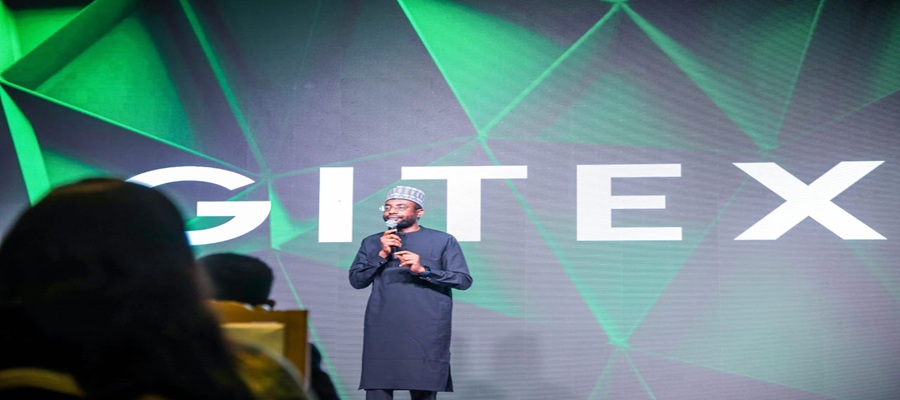
Nigeria is strengthening its position as a leading digital economy in Africa as it prepares to host the second edition of GITEX Nigeria, against projections that the continent’s artificial intelligence (AI) economy could generate up to $1 trillion in economic value by 2035.

GITEX Nigeria
GITEX Nigeria, described as West Africa’s largest technology, AI and startup event, is scheduled to hold in Abuja and Lagos from Aug. 31 to Sept. 3, under the patronage of President Bola Tinubu.
The event is supported by the Federal Ministry of Communications, Innovation and Digital Economy in collaboration with the National Information Technology Development Agency (NITDA), endorsed by the Lagos State Government and organised by KAOUN International.
With the theme, “Beyond Connectivity: The Bridge to Sovereign Innovation,” the 2026 edition is expected to bring together global technology companies, investors, policymakers, regulators, startups and other stakeholders to advance Nigeria’s digital transformation agenda.
According to the organisers, the event will focus on strengthening digital resilience, scaling AI infrastructure, attracting strategic investments and building partnerships to support digital sovereignty across Nigeria and West Africa.
Nigeria’s progress in digital skills development is expected to feature prominently at the event, with the Federal Government’s 3 Million Technical Talent (3MTT) programme highlighted as a major intervention.
The programme has recorded 1.87 million registrations across all 774 local government areas, while more than 135,000 Nigerians have been trained through three cohorts.
The programme has also extended learning opportunities to more than 300,000 people through community resources and created 15,000 job and opportunity pathways, according to figures released by the organisers.
Another key initiative, Project BRIDGE, is aimed at expanding Nigeria’s national ICT backbone and improving connectivity in underserved communities.
The project is expected to create up to 20,000 direct jobs and more than 150,000 indirect jobs, train 5,000 Nigerian youths, raise internet penetration above 70 per cent and extend high-speed connectivity to millions of households, businesses, schools and hospitality establishments.
Dr Bosun Tijani, Minister of Communications, Innovation and Digital Economy, said Nigeria’s objective was to build the foundations for digital sovereignty and a globally competitive AI-powered economy.
“Building on the momentum forged through the implementation of Project BRIDGE, our national blueprint for expanding digital infrastructure and connecting communities across Nigeria, our aspiration ahead of this year’s edition is clear: to solidify the foundations Africa needs for digital sovereignty, technological self-determination, and a globally competitive AI-powered economy,” Tijani said.
He said Nigeria was seeking to promote equitable access, accelerate cross-continental progress and position the country as a producer and exporter of digital technologies and AI solutions.
The GITEX Nigeria Government Leadership and AI Summit will open in Abuja on Aug. 31, bringing together ministers, governors and regulators to discuss digital public infrastructure and other issues shaping West Africa’s digital economy.
The GITEX Nigeria Tech Expo and Future Economy Conference, as well as the Startup Festival, will also return for the second consecutive year.
A new component, FDX Nigeria by GITEX, will focus on finance and digital asset exchange, with the organisers describing it as a platform designed to promote financial inclusion and connect emerging technology with global capital.
Gov. Babajide Sanwo-Olu of Lagos State said the state remained central to Africa’s digital transformation, noting its role in attracting talent, capital and innovation.
He said hosting GITEX Nigeria would further support Lagos’ ambition of becoming a smarter, more connected and globally competitive economy.
Kashifu Inuwa Abdullahi, Director-General of NITDA, said Nigeria’s digital future would depend not only on technology adoption but also on resilience, trust and effective governance frameworks.
“GITEX NIGERIA seamlessly complements this mandate, creating a unique environment for the dialogue needed to accelerate responsible AI adoption, develop a secure digital economy, and unlock new opportunities for innovation and economic growth,” Abdullahi said.
He said the expertise, investment and partnerships generated through the event would contribute to building an AI ecosystem that was secure, inclusive and capable of supporting Nigeria and West Africa’s long-term competitiveness.
The organisers said Nigeria’s National AI Strategy, 3MTT programme and Project BRIDGE were among initiatives strengthening the country’s capacity in talent development, digital infrastructure, investment attraction and responsible AI adoption.
They said GITEX Nigeria would provide an avenue for global stakeholders to establish partnerships and develop solutions capable of accelerating the region’s digital transformation.
Trixie LohMirmand, CEO of GITEX, said the event was intended to demonstrate that West Africa was ready to convert technological ambition into economic growth, resilience and global competitiveness.
She said GITEX Nigeria would facilitate strategic conversations and partnerships aimed at strengthening regional competitiveness and unlocking scalable growth across Nigeria and West Africa.
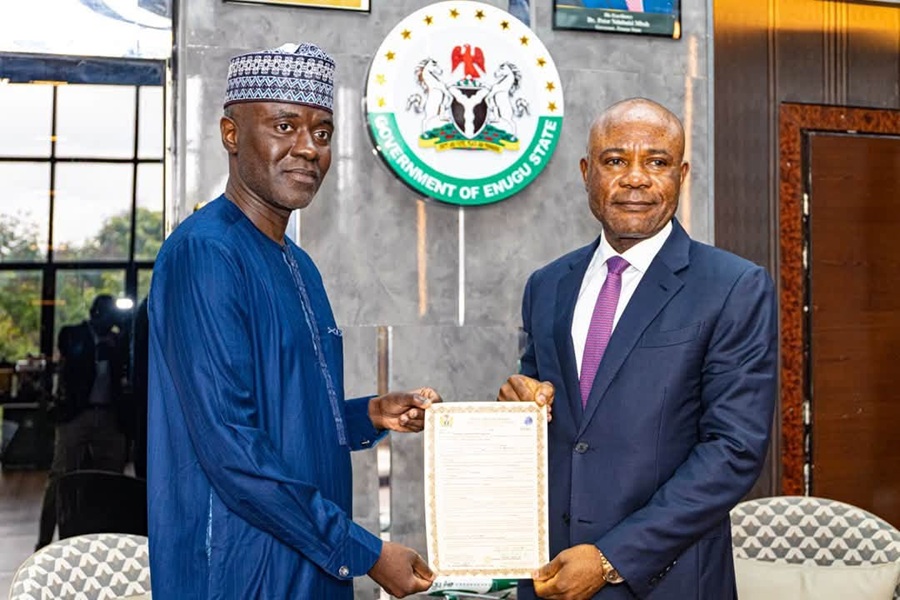
Nigerian Communications Commission (NCC) and the Enugu State Government have signed an agreement for the operational lease of the NCC Digital Industrial Park and NCC Learning Centre in Enugu.

The agreement was witnessed by Dr Aminu Maida, Executive Vice Chairman and Chief Executive Officer of the NCC, alongside members of the Commission’s Board and Management.
The development is expected to strengthen digital innovation, skills development and technology-driven opportunities in the state.
As part of the engagement, the NCC delegation also visited the Enugu Smart School Initiative, where technology is being integrated into teaching and learning.
The initiative is aimed at equipping young Nigerians with relevant digital skills and preparing them for future opportunities in an increasingly technology-driven economy.
The NCC said it remained committed to supporting initiatives that expand digital inclusion, strengthen innovation and develop the talent required to drive Nigeria’s digital transformation.
The Commission said partnerships with state governments and other stakeholders were critical to creating an enabling environment for digital skills development and technology adoption across the country.

Fake Agency: ICPC Indicts NITDA, Others over Inadequate Due Diligence

Tax Reform Built on Taxing Prosperity, Not Poverty– Adedeji

UNESCO Taps Oguamanam,Nigerian Scholar to Advisory Body on Science, Tech Ethics

MTN Alerts Subscribers over Fake 25GB Anniversary MTN Data Giveaway

X Replaces Revenue Sharing wit New Creator Rewards Programme

EFCC Busts NIS Visa Overstay Racket, Uncovers N700m in an Account

Fact-Check: Elon Musk’s “Tesla Pi Phone” is Internet Rumor

NBC Tasks Broadcasting Stations over 2028 DSO Global Deadline

NBC Scraps Annual Digital Access Fee on DSO

Glo Sponsored African Voices to Feature Netflix’s “The Polygamist” Stars




 General News3 days ago
Guinness Rewards Consumers with ₦17 Million in First Week of ‘Open for More’ Promo Draw

 News3 days ago
World Bank Debars United Aviation Services, Owner over Fraudulent Activities

 E-Business3 days ago
NITDA Introduces Cloud Certification Boost Data Localisation Compliance

 Telecom3 days ago
NCC, Enugu Sign Deal to Operate Digital Industrial Park, Learning Centre

 E-Financial3 days ago
BOI Opens N250Bn Bond Offer to Fund Businesses

 News3 days ago
Enugu State Approves Land for ITF’s Digital Fabrication Centre

 Telecom3 days ago
GITEX Nigeria to spotlight Africa’s $1trn AI economic potential

 General News3 days ago
Meta Hit With $567m US Court Order Over Alleged Harm to Children