

News
EFCC Arrests Akpabio, Former Akwa Ibom Gov over Alleged N108Bn Fraud

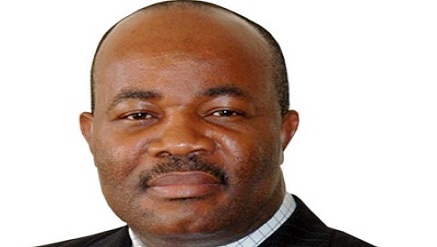
Senator Godswill Akpabio, Senate Minority leader and former Governor of Akwa Ibom State was yesterday, arrested and quizzed by operatives of the Economic and Financial Crimes Commission (EFCC) at about 5.30pm.
Akpabio was allegedly arrested by the nation’s apex anti-graft agency over allegations bothering on corruption and fraud during his time as governor. He is specifically being accused of alleged “stealing” of N108.1 billion of Akwa Ibom state funds.
He was said to have been accompanied a few aides and Ricky Tarfa, a Senior Advocate of Nigeria, SAN.
An aide to the former governor, who cannot be named because he is not authorised to speak on the matter said Mr. Akpabio is currently being interrogated by top officials of the EFCC.
e Department of State Security (DSS) recently raided Akpabio’s abode at the government house in Uyo, the capital of Akwa Ibom state where several startling discoveries including stashed monies were recovered from Akpabio.
But the invasion by the security agency however attracted stern criticism and outrage by Akpabio’s political party, the PDP and some political elders in the state loyal to the former governor.
The spokesperson for the EFCC, Wilson Uwujaren, did not answer or return calls seeking comment for this story.
The EFCC had begun investigation into alleged theft of N108.1billion of Akwa Ibom funds by the former governor in June.
The action followed a petition forwarded to the commission by an Abuja-based lawyer and activist, Leo Ekpenyong.
Mr. Ekpenyong had on June 8 petitioned President Muhammadu Buhari and the EFCC, calling for Mr. Akpabio’s probe and accusing him of looting Akwa Ibom state treasury.
Investigations by PREMIUM TIMES showed that several other indigenes of the state who are demanding the investigation of the former governor, have been invited by the EFCC to adopt their petitions.
On his part, Mr. Ekpenyong was summoned on Wednesday, June 17, to adopt his petition and provide more details to some of the allegations he made against Mr. Akpabio.
The former governor, now senator, was elected in 2007, at a time the nation enjoyed robust oil revenue.
Akwa Ibom and Rivers States are Nigeria’s largest oil-producing states. The two states alternate as first and second top producers periodically.
The two states receive the highest funds allocation from the Federation Accounts Allocation Committee, FAAC, monthly.
Data from the National Bureau of Statistics and the office of the Accountant General of the Federation indicate that under Mr. Akpabio, known for ostentatious spending, Akwa Ibom received a staggering N1. 6 trillion from FAAC between June 2007 and May 2014.
At the time he vacated office on May 29, the state received more, excluding other revenues like Ecological Funds, internally generated revenue etc.
In a new petition to the EFCC dated June 22, and copied to Mr. Buhari and the Inspector General of Police, Solomon Arase, Mr. Ekpenyong gave details of some of Mr. Akpabio’s alleged financial recklessness.
He alleged that between January and December 2014, the ex-governor colluded with two of his top aides to steal a whopping N108.1 billion from the state’s treasury.
Mr. Ekpenyong told the EFCC that the former Government House Permanent Secretary, Etekamba Umoren, and the former Accountant General of the state, Udo Isobara, colluded with Mr. Akpabio to steal the funds.
“Between January –December 2014, it is on record that the trio of Godswill Akpabio, Mr. Etekamba Umoren and Mr. Udo Isobara, made illegal but substantial withdrawals of cash from a designated state government-owned account with Zenith Bank with account number: 1010375881 amounting to N22.1 billion,” he stated in the petition.
“It is worthy of note that reasons for such ungodly cash withdrawals against financial regulations and due process laws range between sundry use and unjustifiable expenditures by Godswill Akpabio and his numerous surrogates and proxies.
“For example, a whopping N18 billion was withdrawn fraudulently from the state FAAC account with the United Bank for Africa in trenches of N10 million and above by Mr. Isobara in a surreptitious manner to conceal their dishonest intention.”
For assisting Mr. Akpabio retire billions of the stolen funds, Mr. Ekpenyong said Mr. Umoren was rewarded with an appointment as Government House chief of staff and now secretary to the state government under Udom Emmanuel’s administration.
The legal practitioner went on to state that over N50 billion of Akwa Ibom funds were spent by the former governor during the last general elections.
During the period under review, he said Mr. Akpabio also withdrew a whopping N18 billion from the state coffers under the guise of special services, reception of very important guests and sundry items.
“The cumulative aggregate of these monies stolen by Godswill Akpabio from the coffers of government as pocket money is the annual budget of some states in Nigeria put together,” the petition reads.
He listed the bouquet of assets acquired by the former governor through surrogates to include a multi-billion naira mansion at Plot 5 Okogosi Spring Close, off Katsina-Ala Crescent, Maitama-Abuja, a multi-billion naira mansionette at Plot 28 Colorado Close, Maitama, Abuja and another multi-billion naira mansion at 22 Probyn Road, Ikoyi, Lagos.
Others include a multi-billion naira mansionette at Plot 23 Olusegun Aina Street, Parkview, Lagos and a multi-billion naira 25 storey building at Akin Adesola Street, Victoria Island, Lagos.
“As earlier promised, more details of assets and graft-related funds illegally and fraudulently siphoned from Akwa Ibom State treasury and laundered to foreign destinations are in the offing. As usual, we will do the needful.
An EFCC source said senior officials of the commission held discussions with Mr. Ekpenyong on the petition on Tuesday.
“He also adopted the petition he forwarded to the commission and provided additional details about the alleged stealing of funds by the former governor,” the source said.
The source noted that many of those who have sent petitions to the commission against the former governor, now senator, have already been invited to adopt their document.
He confirmed that very soon the commission would invite the former governor for questioning.
Allegations, complete falsehood
Mr. Akpabio could not be reached for this story. Messrs Umoren and Isobara could not also be reached for comments.
But the commissioner of information during the administration of Mr. Akpabio, Aniekan Umana, described the contents of the petition by Mr. Ekpenyong as falsehood taken too far.
He said the petition betrayed a lack of understanding of the workings of government.
“Every sum withdrawn from a government account is tied to a subhead and there must be a budgetary provision. To attribute fraud to withdrawals which had the full sanction of Government and was accommodated in the budget is strange, mischievous and untenable. More so, when one understands that there are checks and balances which guide all aspects of government financial administration,” he said.
He also said the allegation that the State Government spent N50 billion on the March General Elections falls flat on its face based on his explanations of the workings of government as regards financial transactions.
“There was no such provision in the budget of this year and such an amount could not have been paid as an extra-budgetary expenditure and yet salaries and other commitments were met. We challenge the petitioners to provide proof to support this wild allegation. Who was it paid to? How was it paid? Where was it paid? And when was it paid?
“Senator Akpabio does not own a 25-storey building in Victoria Island or in any part of the world, as alleged by the petitioner. It is also a patent falsehood that the house at 22 Probyn Road, Ikoyi belongs to Senator Akpabio.
It is a rented building which ownership can be verified from Lagos State Lands Registry.
“Senator Akpabio does not own the properties mentioned in the petition to belong to him. You can verify the ownership of the properties (5 Okokosi Close, Maitama and Plot 28 Colorado Close, Maitama) from the land registry in Abuja,” he said.
He also denied the state received over N2 trillion as oil allocation.


News
CredibleVoteNG Opens Free Access to all Polling Units in Nigeria after INEC Demanded N1.Bn for Register

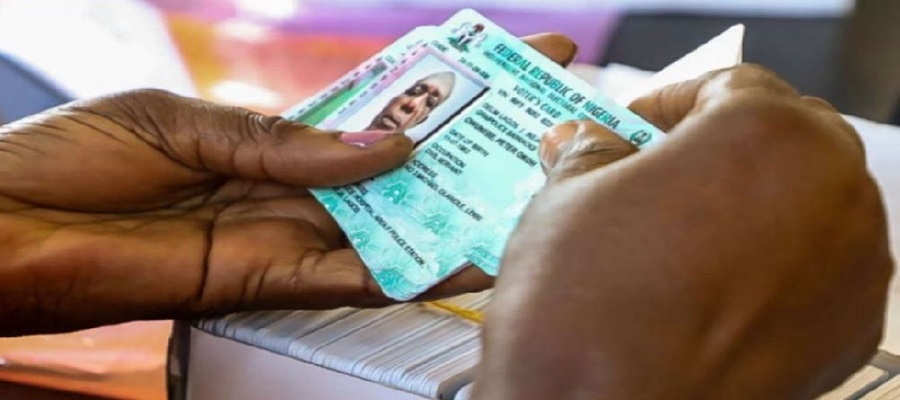
CredibleVoteNG, a citizen-built, open-access platform is hosting precise, verified information for all 37 states (including the FCT), 774 Local Government Areas (LGAs), and 176,846 individual polling units for free.

This is coming months after the Independent National Electoral Commission (INEC) placed a N1.5 billion price tag on requests for Nigeria’s complete polling unit register under the Freedom of Information (FOI) Act.
But CredibleVoteNG, being promoted by two Nigerian technology enthusiasts have built a platform that provides the same information free of charge.
The platform, offers structured digital access to all 176,846 polling units across Nigeria’s 36 states and the Federal Capital Territory, covering the country’s 774 local government areas and 8,809 electoral wards.
The initiative emerged against the backdrop of a public controversy that followed INEC’s October 2025 response to an FOI request by a Nigerian law firm seeking the commission’s polling unit database.
In its reply, the electoral body estimated that providing the information would cost N1,505,901,750, citing the need to print more than six million pages at N250 per page.
The response triggered widespread criticism from lawyers, civil society organisations and transparency advocates, who argued that electoral information critical to democratic participation should be readily accessible to citizens.
While the debate continued, Kelly Omobude, software developer and Uzoanya Grant, product owner, quietly worked on what would become CredibleVoteNG, a free and open-source platform designed to make electoral data available to everyone.
Accessible online through a public Application Programming Interface (API), the platform requires no registration, subscription or API key.
Developers, journalists, election observers, political parties and ordinary citizens can access the data without charge.
According to the founders, the project was inspired by the belief that credible elections depend on unrestricted access to reliable information.
“Independent observation requires independent data. If every organisation is working from the same verified, open baseline — that is the foundation for credible accountability. That is what we are trying to provide,” they said.
The platform enables users to navigate Nigeria’s electoral structure from the national level down to states, local government areas, wards and individual polling units through nine dedicated API endpoints. Information is delivered in a structured format within seconds, making it useful for both technical and non-technical users.
To broaden accessibility, the developers incorporated a Swagger-based interface that allows users with no coding experience to search and explore electoral data through a standard web browser.
Omobude, who designed the platform’s technical architecture, database infrastructure and cloud-hosting environment, said the project has been developed and maintained using personal resources since March 2023.
Grant, who led product design and user experience development, described the initiative as a civic intervention intended to bridge longstanding information gaps within Nigeria’s electoral ecosystem.
For election observers and civil society organisations, access to comprehensive polling unit data has often posed significant operational challenges.
Many monitoring groups spend weeks assembling information from multiple sources before deploying field personnel.
CredibleVoteNG seeks to eliminate that burden by providing a standardised and verified dataset that can be used simultaneously by multiple organisations.
Election monitoring experts say such access is particularly important for Parallel Vote Tabulation (PVT), a globally recognised methodology used to independently verify election outcomes through polling unit-level data collection and analysis.
The platform’s creators argue that a common and publicly accessible electoral dataset can improve consistency among observer groups and strengthen confidence in election monitoring efforts.
The database may also prove valuable to journalists and media organisations, enabling them to verify polling unit distributions, scrutinise electoral claims and undertake data-driven reporting on voter access and representation.
The platform further highlights variations in polling unit distribution across the country. Lagos State has 13,325 polling units, Kano 11,222 and Kaduna 8,012, while Bayelsa has 2,244 and Ekiti 2,445.
Analysts say access to such information could encourage deeper discussions around voter accessibility, electoral logistics and resource allocation.
Political parties are also expected to benefit, as accurate ward and polling unit data are essential for deploying agents, monitoring election-day activities and identifying organisational gaps during campaigns.
Although the project has attracted limited publicity since its launch in March 2026, the founders say adoption has continued to grow through referrals and online searches.
Hosted on cloud infrastructure and verified across all states and the FCT, CredibleVoteNG is increasingly being viewed by election stakeholders as a practical contribution to transparency, civic participation and electoral accountability ahead of the 2027 general elections.
As preparations intensify for another election cycle, the emergence of a citizen-built platform providing free access to one of Nigeria’s most important democratic datasets underscores the role innovation can play in advancing transparency and strengthening public trust in the electoral process.

National Environmental Standards and Regulations Enforcement Agency (NESREA), has said that the National Environmental Plastic Waste Control Regulations 2026 are aimed at tackling pollution and promoting a circular economy, not shutting down industries.

The agency made the clarification in response to concerns raised by the Manufacturers Association of Nigeria (MAN), saying some interpretations of the regulations are inaccurate and misleading.
NESREA said the rules provide a phased and consultative framework designed to improve recycling, producer responsibility, waste recovery and sustainable packaging across the value chain.
It stressed that the widely cited 80 micron requirement applies only to certain plastic carrier bags and does not amount to a blanket ban on single use plastics.
According to the agency, sensitive sectors such as food, pharmaceuticals and logistics are covered by separate provisions, while major requirements on recycled PET content will only begin to take effect from 2028 and 2030.
NESREA said the transition period is intended to give manufacturers and recyclers time to adjust operations and strengthen supply chains.
The agency argued that unregulated plastic pollution poses greater long term risks, including flooding, public health hazards and environmental degradation, adding that the regulations would create new opportunities in recycling and circular economy services.
It also maintained that the policy is guided by the polluter pays principle and is designed to strengthen Nigeria’s domestic recycling industry.
NESREA said it remains open to technical input from manufacturers and other stakeholders as implementation progresses.

Industrial manufacturing in Nigeria and West Africa at large has reached a historic milestone in 3D printing, as Arridex formally floated its breakthrough “Omnifactory” in Lagos.

The newly opened facility stands as the region’s very first multi-technology industrial additive manufacturing facility, paving the way for a major shift toward localized production and self-reliance.
The launch follows a strategic rebranding of the company’s corporate identity from RusselSmith to Ariddex.
BabajideSanwo-Olu, Lagos State Governor, who officially launched the plant, said: “Today, I opened West Africa’s first multi-technology industrial additive manufacturing facility in Lagos. By producing industrial components and spare parts here in Lagos, Arridex is helping to reduce our dependence on imports, strengthening critical industries and supporting economic growth.
“I commend the Arridex team for their vision and commitment to building solutions that serve not only Nigeria but the wider African continent. Lagos will continue to support investments that create opportunities, grow local capacity and position our state as a hub for innovation and industry,” he stated.
The ArridexOmnifactory aims to reshape industrial supply chains by housing several advanced 3D printing and fabrication techniques under a single roof. Utilizing cutting-edge systems like Laser Powder Bed Fusion (L-PBF), Cold Spray, Fused Filament Fabrication (FFF), and Selective Laser Sintering (SLS), the Lagos facility is built to create high-precision, on-demand industrial components and replacement parts.
Beyond standard gear, the site’s large-format machinery is robust enough to engineer full-sized marine parts and massive structural items for heavy industries.
Group Chief Executive Officer, Arridex, Kayode Adeleke, said: “We did not set out to build the biggest company, but a resilient one.
For over two decades, we have chosen the harder path, and that is to make in Africa what others import, to meet global standards without exception, and to put purpose before profit. The ArridexOmnifactory is where that conviction becomes infrastructure.
“The name on the door is new, but the work behind it is not. We are not stopping here. By the first quarter of 2027, we will commission the Arridex Mega Omnifactory, which will stand among the largest single-site industrial additive manufacturing facilities in the world. The next chapter of global manufacturing can be written from Lagos. We are building it,” he said.
According to him, this launch represents a massive leap forward for regional infrastructure, offering a direct solution to the supply bottlenecks that have choked West African enterprise for decades.
Historically, asset managers operating aging systems had to deal with grueling shipping lead times, complex international legalities, and the absolute vanishing of parts from long-defunct original equipment manufacturers (OEMs). The Omnifactory bypasses these hurdles entirely by enabling critical pieces to be conceptualized, rendered, and printed locally on demand.
The company currently holds Pioneer Status in additive manufacturing from the Nigerian Investment Promotion Commission (NIPC) and is the first enterprise qualified by the Nigerian Upstream Petroleum Regulatory Commission (NUPRC) for 3D printing deployments in the oil patch. Furthermore, Arridex has solidified a joint venture partnership with the Defence Industries Corporation of Nigeria (DICON) to locally manufacture military-grade components.
On the global stage, Arridex has also stepped up as the first African member of the Additive Manufacturer Green Trade Association (AMGTA) and is recognized as a Designated Strategic Partner of the Commonwealth Enterprise and Investment Council (CWEIC).

CredibleVoteNG Opens Free Access to all Polling Units in Nigeria after INEC Demanded N1.Bn for Register

NESREA Defends Plastic Waste Rules, Says Policy Targets Pollution

FG Engages Banks on RevOp, New Digital Platform for Revenue Generation

Kaspersky Discovered a Malware Campaign Targeting Steam Users Through Infected Wallpaper

Fiona Ahimie Launches LEADHER Mentorship Session to Inspire the Next Generation of Female Leaders

CBN Extends PoS Geo-Fencing Enforcement Deadline to August 2026

London Strengthens Global Investment Ties with Africa @ First Ever London-Africa Business Summit

FG Targets Alleged N3tn Capital Flight, Opens Airtime Credit Market to Nigerian Fintechs

Japan, UNESCO Boost Digital Learning in 15 CoEs with Donation of ICT Equipment

African Electric Vehicle Platform Raises $215m to Scale Electric Mobility in Nigeria, Others




 Telecom1 day ago
MTN Nigeria Commits to Ethical Conduct with IFRS S1, S2 Compliance

 E-Financial1 day ago
FG Moves to End Double Taxation

 News1 day ago
BoI’s EIB-Backed Financing Accelerates Fidson’s Pharmaceutical Manufacturing Growth

 General News1 day ago
ALTON Backs CBN on Local Data Hosting Rule for Banks, Fintechs

 E-Business1 day ago
NDPC to Review Data Law to Address AI, Privacy Concerns

 Telecom1 day ago
NCC, CAC Move to Block Unapproved Ownership Changes in Telecom Sector

 E-Business1 day ago
Galaxy Backbone @ 20, Unveils New Identity

 General News1 day ago
Nwanegbo Bags Africa Digital Award in Applied Artificial Intelligence and Data Science