

Telecom
Corruption, Politicians Killed Econet Wireless- Founder

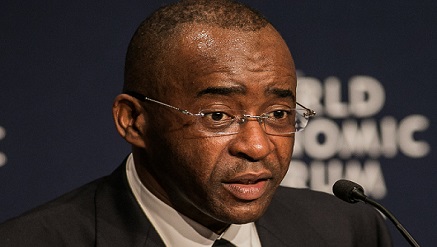
Strive Masiyiwa, CEO and founder of Econet Wireless, the first GSM operator to go live in Nigeria (in 2001) has opened fresh cans of worms up on how the company was killed by Nigerian factors.
Over the years, the company has undergone so many changes of name and management that we can hardly keep up.
Econet Wireless he said paid the stiff price for refusing to play by rotten rules.
In a recent blog post, Masiyiwa, revealed his side of the story behind the company’s downfall in Nigeria.
In his Facebook posts, the Econet boss who is also the richest man in Zimbabwe narrated how the Nigerian politician who is presently serving jail term in UK allegedly demanded a $4.5 million bribe from him.

This is to help in exchange of setting up the operation of Econet in Nigeria, with a threat of being sent out of Nigeria if he does not pay the bribe.
Accusing top politicians from Kenya, Zimbabwe and Liberia of being outrightly corrupt and asking him of bribe, with him being urged to pay about $9 million to top politicians in Nigeria.
Masiyiwa recounted how Lagos and Delta state governments were the only co-investors in Nigeria back then.
He also took his time to recount some spinning revelations and his bitter encounter with a Niger Delta governor.
Masiyiwa made it known in his posts how he was told by UK courts to testify against Niger Delta governor in London which he said he gladly did. He further opined that every corrupt act in Nigeria and Africa is always carried out by at least one foreign accomplice. Read his long but revealing posts below:
”I had the privilege of making Nigeria’s first GSM phone call back in 2001 when I called the regulator to say, “We’re live!” Who would’ve believed then that Nigeria today would have more than 167 million mobile phones?! It all started out as a very exciting new chapter for enterprise in Africa. Shortly after President Obasanjo was elected, the new government announced an incredibly transparent international auction process for three national mobile phone licenses.
”To participate in the bid, you not only had to raise money, but there had to be a member of the bidding consortium who was an experienced GSM operator. Econet Wireless met the requirements because of its experience in Zimbabwe and Botswana. Our Nigerian partners, which included state governments, local banks and high net worth individuals, were financial investors. The largest shareholder had only 10%. That was the written agreement. I managed to assemble a consortium of 22 investors to put up the money needed to bid. Our shareholders were all Nigerian, mostly institutional investors including leading banks and two state governments, Lagos State and Delta State. The license cost us $285m and was the most expensive license ever issued in Africa at the time. This was 2001.
”We considered the investment not only about putting together a network, but also about building a nation. We knew it had the potential to transform Nigeria’s entire business and social architecture. Most of our investors had between 1-10% shareholding.
Econet Wireless Nigeria had only 5% of the shares, but that was fine because it was 5% ownership of a very big pie. As the “technical partner and operator,” Econet was the company with the expertise to build and operate such a business. Our financial investors recognised this, and also allowed us to receive 3% of the turnover as our fees.
This was standard practice in the industry. We were one of the winning bidders and they gave us just six months to set up business and get our network operating. We were under a lot of pressure but our network was live two days before the others! Customers were pouring in. We were number one in the market with an estimated 57% market share. Then came the fateful day when I was told that our company must pay a total of $9m in bribes to senior politicians (in state government) who had facilitated the raising of the money to pay for the license.
”I refused to authorise the illegal payments. Meeting after meeting was held to try to get me to agree, but I would not. The money would not be paid as long as Econet was the operator and I had signing authority. James Ibori, the Governor of Delta State, was demanding $4,5m be paid to him in his personal capacity. He was one of the most powerful men in the country and had a reputation for violence. When he heard that I was refusing to approve payment he issued an ultimatum: “Pay or I will chase you and your people out of the country.” I refused.
”The shareholders met and voted Econet Wireless Nigeria out of management. They cancelled our management contract. James Ibori and his colleagues personally attended the meeting to remove us. After the meeting one of them (a prominent local businessman even today) came up to me and said: “Unfortunately for you, God does not have a vote.” I had to withdraw all my staff and their families: 200 people in all. We left Nigeria. Most of our people had to be retrenched. The loss of the contract almost drove us to bankruptcy as a group. They invited a big international operator to replace us as technical partner and operator. They changed the name of the company from Econet to V-Mobile. Within days of their arrival, the managers of the new operator signed off the payments demanded as bribes.
”Then what happened? A few noble Nigerians had both the integrity and courage to carefully collect all the documentation on the movement of the money, and pass it all on to me. There’s a saying worth remembering in uncovering the trail of destruction that is corruption: “Follow the money”… I bided my time… then I wrote a letter to the United States Department of Justice! It was 2003.”


ntel, has officially moved away from its traditional voice and data business, unveiling a major transformation that will see it focus on digital infrastructure, artificial intelligence and technology-driven services.

As part of the consolidation process, ntel unveiled The Next Frontier, a transformation agenda planned to see the firm transform into an integrated digital infrastructure, connectivity and real estate enterprise.
Its new focus is a now BET Agenda – anchored on three growth pillars, Beam, Eden, and Titan and the drivers said that the strategy reflected ntel’s commitment to creating new opportunities through technology innovation, infrastructure development, and strategic asset optimisation.
The launch comes as ntel continues its journey towards regaining spectrum assets, while actively leveraging strategic partnerships to redefine innovation in the telecommunications industry and unlock new pathways for growth.
Built on the company’s BET Agenda – anchored on three growth pillars, Beam, Eden, and Titan – the strategy reflected ntel’s commitment to creating new opportunities through technology innovation, infrastructure development, and strategic asset optimisation.
The launch comes as ntel continues its journey towards regaining spectrum assets, while actively leveraging strategic partnerships to redefine innovation in the telecommunications industry and unlock new pathways for growth.
The company also showcased a portfolio of initiatives designed to strengthen its position as a future-focused infrastructure platform.
Under Beam, ntel announced the launch of WakaGo, a global e-SIM solution that delivers seamless connectivity for international travellers, alongside AirFibre, a high-speed fixed wireless broadband service designed to provide reliable internet access for businesses.
Under Titan, the company highlighted its growing infrastructure business focused on tower development, fibre connectivity, duct infrastructure, colocation services, and infrastructure sharing solutions that enable operators, enterprises, and technology providers to expand efficiently and sustainably.
A major highlight of the launch was Eden, ntel’s real estate development platform, which is transforming NatCom’s extensive property portfolio into high-value commercial and residential developments.
To further push its transformation, the company unveiled three flagship projects. They are Eden Place, a premium multi-storey commercial development in Lagos’ prime business district.
There is also Nova Place, a modern commercial development strategically located within Port Harcourt’s growing technology and business hub.
Terenna Court, a premium multi-storey residential apartment development in Abuja.
Together, these projects demonstrate ntel’s ambition to unlock the full potential of its real estate assets through strategic partnerships, innovative design, and long-term value creation.
Speaking at the unveiling of The Next Frontier, Soji Maurice-Diya, managing director/chief executive officer, NatCom Development and Investment Limited (trading as ntel), described the initiative as far more than a business transformation strategy.
According to him, it represents the company’s commitment to building an integrated ecosystem that connects people, empowers businesses, drives digital inclusion, and creates sustainable economic value for Nigeria.

Airtel Africa Foundation, through Airtel Nigeria, has reaffirmed its commitment to developing Nigeria’s future workforce with a high-impact virtual masterclass designed to equip young people with the practical skills required to thrive in an increasingly technology-driven economy.

The Initiative, held to commemorate World Youth Skills Day 2026, themed “Skills for a Shared Future – The NextGen Advantage,” presented a platform on which experienced Airtel professionals provided mentorship and coaching to undergraduates, interns, and recent graduates for the current realities of formal work environments.
Organised on the auspices of the Airtel Employee Volunteer Programme (EVP), by which staff donate their time and expertise towards social programmes, the 90-minute virtual masterclass, which was attended by over 400 undergraduates and young professionals, extended the reach of the Foundation’s education and youth development programmes.
Speaking on the initiative, Chief Executive Officer of Airtel Nigeria, Dinesh Balsingh, said investing in young people remains one of the most impactful ways to build Nigeria’s future economy.
He said, “The future of work is changing faster than ever before, and success will increasingly belong to those who are equipped with the right skills, the right mindset, and the confidence to adapt. As an organisation, we believe that empowering young people with practical digital and professional capabilities is an investment in Nigeria’s future competitiveness.
Through our Employee Volunteer Programme, our people are sharing not just knowledge, but real industry experience to help shape careers, unlock opportunities, and prepare the next generation to lead in a digital world.”
Unlike traditional career seminars, the masterclass adopted an interactive learning model that offered participants the option to select specialised breakout sessions aligned with personal interests and career aspirations.
In his keynote remarks titled The Next Gen Advantage, Director, Corporate Communications and CSR, Airtel Nigeria, Femi Adeniran, noted that the future will be shaped by the skills to transform great ideas into impactful solutions.
He summed up the pathway to a future-ready career into five actions, namely learning continuously, solving problems, building a digital reputation, embracing Artificial Intelligence, and developing human skills.
“Technical knowledge remains important, but employers today are equally looking for adaptability, collaboration, communication, digital confidence, and the ability to learn continuously,” he said.
In the first general session titled Your Network is Your Net Worth, Adebimpe Ayo-Elias, Director, Human Resources and Administration, Airtel Nigeria, charged attendees to build character. The second general session themed Your Money, Your Future, delivered tips on budgeting and financial discipline was facilitated by Olakunbi Osigbesan, Head, Treasure, Smartcash PSB.
Following the general sessions were five breakout rooms, in which attendees were offered curated guides designed to develop contemporary workplace competencies.
The first session, Digital Transformation and Growth, led by Oyebowale Akideinde, General Manager, Digital and Innovation, Airtel Nigeria, presented a mechanism to leverage digital platforms for visibility and opportunity creation.
The CV Clinic and Interview Masterclass, which was led by Chidera Okoye, HR Outsourcing Lead, Airtel Nigeria, discussed practical recruitment strategies, including applicant tracking system (ATS)-friendly CVs, and the STAR interview framework.
A third session on Communication and Personal Branding, delivered by Sam Adeoye, Head, Public Relations, Airtel Nigeria, focused on value presentation, executive communication, and earned visibility, built on “V.I.R.A.L.”, a mnemonic device created for the attendees by the facilitator.
The programme also featured a dedicated session titled AI as Your Superpower, presented by Ezenwa Agbanusi, IT Governance Executive at Airtel Nigeria, in which participants discussed prompt engineering and AI-powered tools for enhanced learning, creativity, and workplace performance.
Corporate Social Responsibility Lead at Airtel Nigeria, Victoria Ndu, led the fifth breakout room on Emotional Intelligence, with a guide on building a high emotional intelligence quotient (EQ) for improved workplace and business performance.
By connecting future professionals directly with industry experts, the company continues to support the development of a workforce equipped to participate meaningfully in Nigeria’s rapidly evolving digital economy and contribute to shared prosperity.

U.S. ride-hailing giant Uber has agreed to acquire German food delivery company Delivery Hero in a deal valued at €12.7 billion ($14.6 billion), marking one of the largest transactions in the global food delivery industry.

Uber
The companies announced the agreement on Thursday, with Uber offering €41.50 per share for Delivery Hero, a Berlin-based company that has grown into one of the world’s largest online food delivery platforms.
Despite the announcement, Delivery Hero’s shares declined by 0.5 per cent in Frankfurt trading to €37.90.
Founded in 2011, Delivery Hero operates in more than 60 markets across Asia, Europe, Latin America and the Middle East.
The company has expanded beyond traditional restaurant delivery services into quick commerce, providing rapid delivery of groceries and other consumer goods.
Under the agreement, Uber will acquire Delivery Hero’s operations in 50 markets globally.
As part of the transaction, U.S.-based investment firm SSW Partners will acquire Delivery Hero’s businesses in 14 additional markets where the German company and Uber currently compete. The transaction is valued at approximately €1.4 billion.
Delivery Hero Chief Executive Officer and co-founder, Niklas Östberg, said the partnership would strengthen the company’s long-term growth by combining its local market expertise with Uber’s global technology and delivery platform.
“Uber’s global mobility and delivery platform and our shared commitment to innovation make this the right partnership to build on Delivery Hero’s strengths in local food delivery and quick commerce,” Östberg said.
Uber Chief Executive Officer, Dara Khosrowshahi, said the acquisition would expand the company’s delivery operations while creating new opportunities for merchants, consumers and delivery workers.
“A merger would extend affordable, reliable delivery to many millions more people in some of the world’s most dynamic economies, while creating more opportunities for merchants and couriers,” he said.
Delivery Hero’s management has unanimously recommended that shareholders approve the offer.
The companies said the transaction remains subject to shareholder approval and regulatory approvals, with completion expected in the second half of 2027.

FAAN to Replace Physical ID Check with V-Pass Biometric Verification

World Bank Says 79 Percent of Nigerians Still Trapped in Poverty despite Reforms

SEC Begins Drive to Recover Unclaimed Dividends

ntel Plays Down Calls and Data Services, Moves to BET Agenda

Nigeria Facing Rising Cybercrime Losses – Report

NRC, Ponzi Scheme Collapses Resulting Loss of Billions of Naira

Nigeria Launches FreeTV Nationwide

NASENI Moves to Digitize CCB’s 5m Assets Declaration and Operations

Lebara Nigeria Launches Lebara Play, Africa’s First Telecom-Owned Micro-Drama Platform

CANAL+ Partners Samsung to Pre-Load DStv Stream on New Samsung TVs In Nigeria, Other African Countries




 E-Business2 days ago
TD Africa Sponsors Check Point Secure 360 Summit to Boost Cybersecurity in Nigeria

 Telecom2 days ago
MTN Foundation, MUSON Celebrate Emerging Music Talents at 2026 Graduation Ceremony

 Telecom2 days ago
NITDA Calls for Digital Infrastructure Expansion to Drive Nigeria’s Industrialisation

 E-Financial2 days ago
Next Currency Crisis May Turn $300Bn in Stablecoins into National Currencies

 News2 days ago
Guinness Rolls Out Nationwide Consumer Rewards Promotion

 General News2 days ago
First Trustees Advocates Estate Planning as an Essential Tool in Every Wealth Creation Strategy

 E-Financial2 days ago
Gigbanc Nigerian Fintech Startup Closes Shop after 3 Years

 Broadcasting2 days ago
Mbunabo, Nigerian Filmmaker Accuses Ghana TV Stations of Pirating Nollywood Films